
Few, if any, movie stars achieve the level of celebrity of Paul Newman without good fortune. No one recognized that more than the screen legend himself.
Newman’s luck did not begin with his three-year stint in the U.S. Navy during World War II. He understood during his years in the Pacific (and then in Hollywood) that fate fell in his favor more than once.
Also Read: Why it took 2 decades for ‘Patton’ to make it to the big screen
While serving his country, forces beyond his control likely saved Newman’s life. If a pilot in his squadron hadn’t come down with an ear issue, Newman might have died at Okinawa—one of the bloodiest battles in military history. Then Newman was supposed to take part in the invasion of mainland Japan. Dubbed Operation Downfall, Allied commanders called it off after the bombings of Hiroshima and Nagasaki.
Newman, who died on September 26, 2008, at the age of 83, admittedly didn’t fully consider the potential consequences when he enlisted.
“I thought it would be a big adventure,” Newman said of joining the military during wartime. “I was really dumb. I never considered that it might be dangerous.”
Why Newman Didn’t Become a Military Pilot
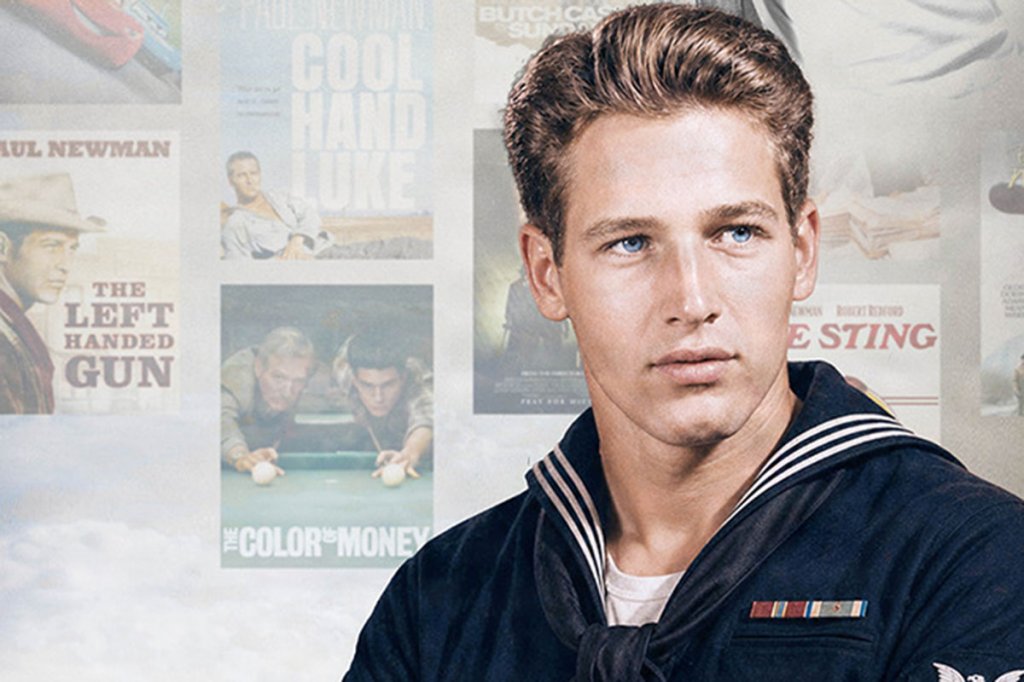
Born on January 26, 1925, in Ohio, Newman was in his first year at Ohio University when he dropped out. Newman signed up for the Navy with the intent of becoming a pilot. He never made it to the cockpit after a supposedly routine exam revealed he was colorblind.
Newman pivoted from that diagnosis and began training as a rear gunner and radioman for Grumman TBF Avenger torpedo bombers. In the Pacific, the Navy assigned Newman to squadrons that trained air crews and pilots. After a stint as a turret gunner, the plan was for Newman and his squadron to meet up with the USS Bunker Hill, an aircraft carrier stationed near the shore of Okinawa.
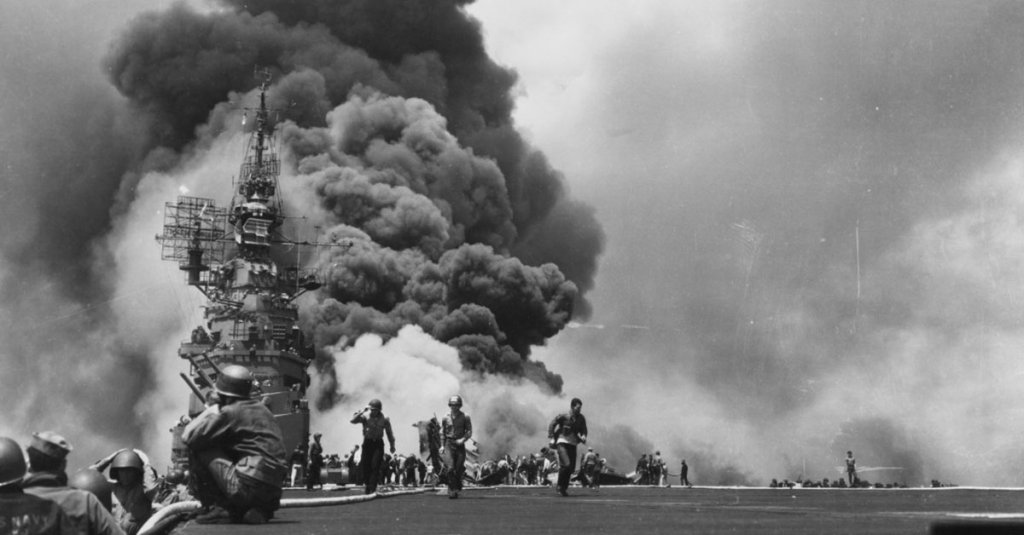
They never made it that far after their pilot wasn’t medically cleared to fly. That turned out to be a likely life-saver after the Japanese unleashed kamikaze attacks on the USS Bunker Hill on May 11, 1945. Nearly 400 men on the carrier died, with 264 more wounded.
It wasn’t the only time that Newman, then only 20 years old, skirted death during the war. He did it again a few months later. When the United States dropped an atomic bomb on Hiroshima on August 6, 1945, Newman was on an aircraft carrier several hundred miles from Japan. Three days later, another bomb destroyed Nagasaki.
Approximately 214,000 Japanese citizens, including roughly 38,000 children, died in the attacks, per the International Campaign to Abolish Nuclear Weapons (ICAN). Those numbers don’t include those who were maimed. While President Harry S. Truman’s decision remains a source of debate, but Newman didn’t question it.
“I know all of the controversy about those weapons,” Newman said. “But I’m one of those guys who says, ‘Thank God for the atomic bomb,’ because it probably saved my life.’”
Making It as an Actor
Newman—who later advocated for nuclear disarmament—received an honorable discharge in January 1946. He used his GI Bill benefits to earn a bachelor’s degree in drama and economics from Kenyon College in Ohio.
Newman was appearing in theater productions when his father died in 1950. Newman went home to help run the family’s sporting goods business. For his myriad talents, Newman didn’t find that work stimulating, certainly not to the degree he came to life while on the stage. Newman sold his share of the business in 1951 and enrolled in Yale School of Drama.
From there, Newman spent time at The Actors Studio and landed roles on Broadway and television. His first credited big-screen role came in “The Silver Chalice” in 1954. Newman starred in “The Rack” in 1956 as Capt. Edward W. Hall Jr., a Korean War prisoner of war facing a court-martial. For that role, Newman drew on the anguish he experienced during WWII of watching a friend die after a spinning airplane propeller hit him, one of the film’s screenwriters later recalled.
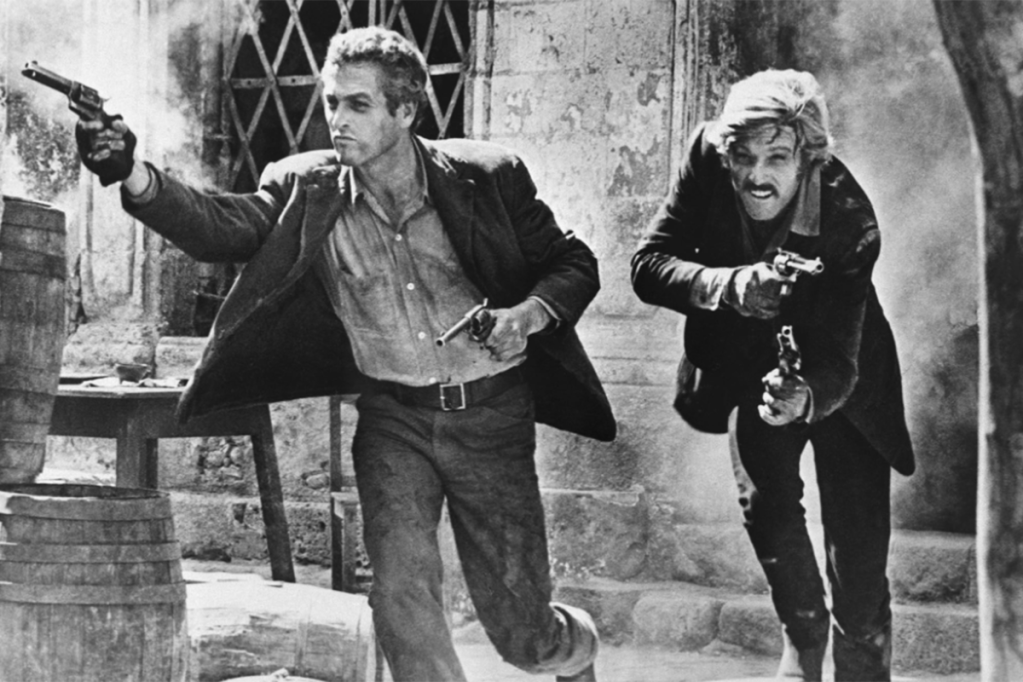
Newman went on to amass eight Academy Award nominations for Best Actor. That tied him with Jack Nicholson (“A Few Good Men”) and Peter O’Toole (“Lawrence of Arabia”) for third all time. (Spencer Tracy and Laurence Olivier have nine nominations each.) Newman received three Oscars but only one for Best Actor for “The Color of Money,” when he returned to the screen as Fast Eddie Felson. He previously played the pool shark in “The Hustler.”
Despite his fabulous success, Newman never equated awards to self-worth.
Giving Back
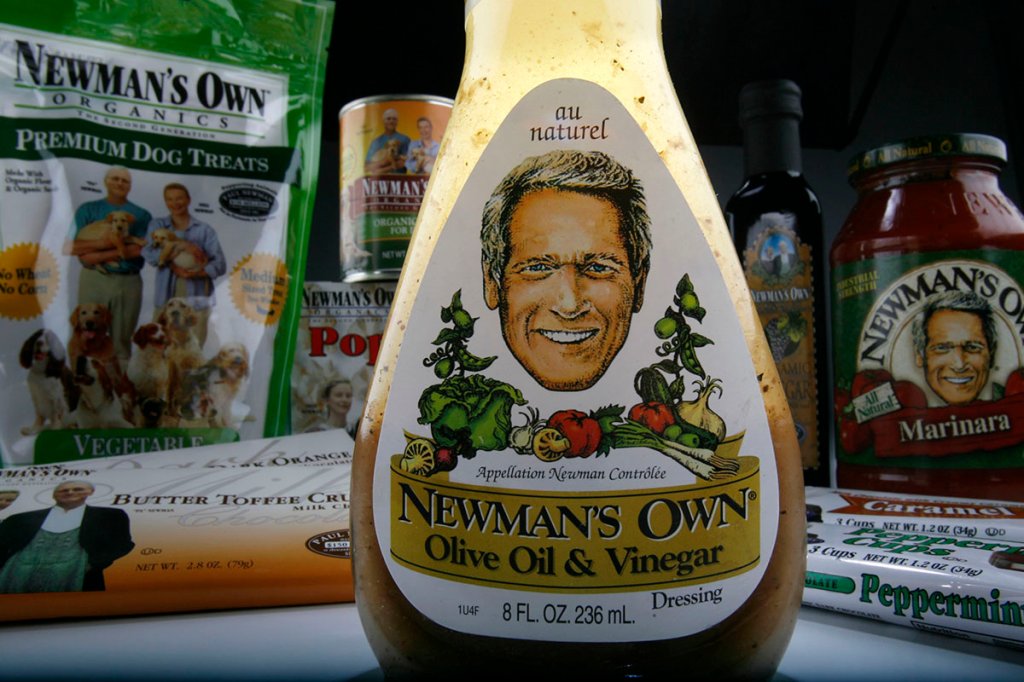
Newman was far more than a screen presence. He was a noted philanthropist, starting his Newman’s Own brand of grocery products in 1982. All proceeds from the sale of such items as salad dressing, tomato sauce, cookies, and pet food go to charity.
The actor started the Newman’s Own Foundation in 2005. Military veteran Bob Forrester formerly served as the foundation’s president and CEO. He said the actor knew how fortunate he was and refused to keep it all to himself and his family.
“He didn’t talk about that much,” Forrester told Fox News in 2018 of Newman’s military service. “People who’ve been in combat don’t talk about things like that so much, but it had a profound impact on him. He just knew he was lucky. He had a huge respect for the men and women of our military.”
And for the struggles of those in tougher circumstances than he ever confronted. According to its website, the Newman’s Own Foundation has donated more than $600 million to charitable endeavors.
Don’t Miss the Best of We Are The Mighty
• 7 celebrities who went above and beyond to lift our troops’ spirits
• History’s ‘Modern Marvels’ returns for the wonder weapons of World War II
• Christopher Nolan’s ‘The Odyssey’ reveals the true cost of a homecoming
Loading comments…
Comments couldn’t be loaded. Please refresh the page.