
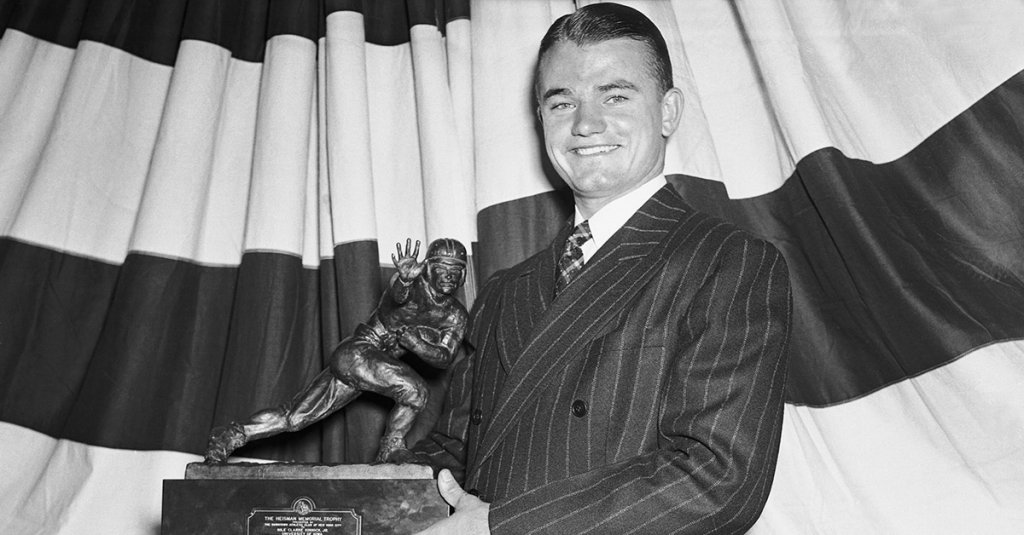
When Nile Kinnick reported to Naval Air Station Pensacola in Florida in 1942, the head coach of the base’s football team couldn’t wait to greet him.
Before joining the Navy, Kinnick played the sport at a high level for the University of Iowa. He was such a force that he accepted the Heisman Trophy, given annually to the best college football player in America, in 1939. Kinnick’s abilities intrigued NFL teams, with the Brooklyn Dodgers offering him the then-princely sum of $10,000 to sign. Kinnick pondered the generous contract, then attended law school instead.
Also Read: ‘The Mosquito Bowl’ is based on a real World War II football game
With war raging in Europe, Kinnick interrupted his studies and enlisted in the Naval Air Corps Reserve a few months before the Japanese bombed Pearl Harbor. When he arrived in Florida, Kinnick was still in football shape and undoubtedly would have improved the base team’s chances.
But Kinnick’s mind was elsewhere. He was determined to become a fighter pilot.
“[The coach] wanted to know how I would like to stay around here as an instructor and play football,” Kinnick wrote in his diary. “As politely, and yet as firmly, as I knew how[,] I told him I never again wanted to play any football, and that I would really rather go to the fleet than remain as an instructor.”
Kinnick never wore a football uniform again. His life ended tragically during a training accident on June 2, 1943. Kinnick was 24 years old.
Kinnick Could Do It All
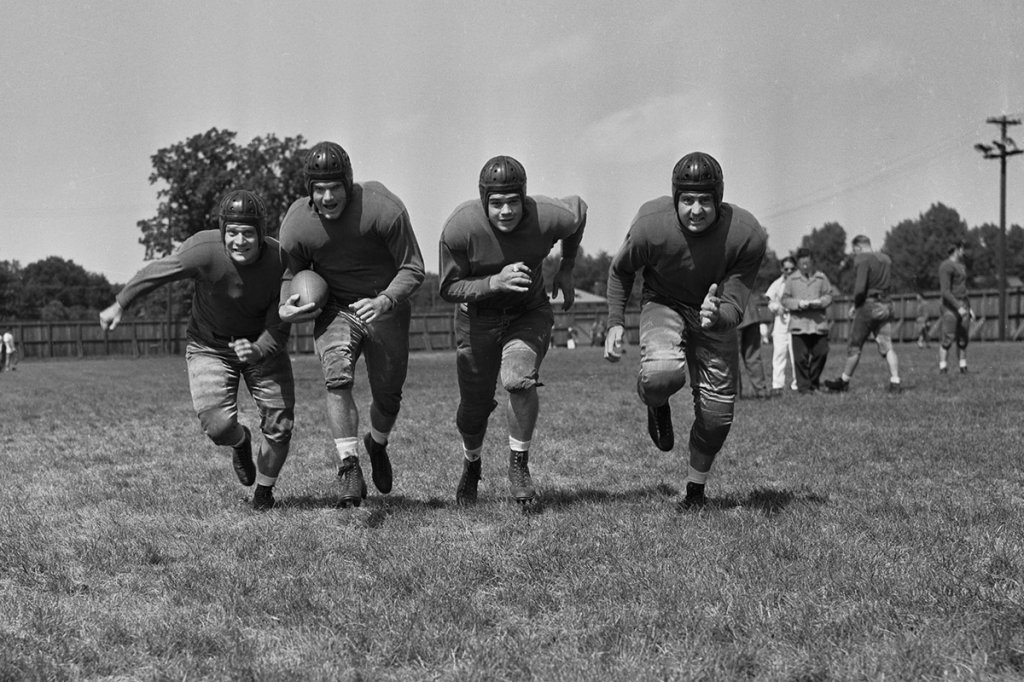
Kinnick, whose brother Ben was also killed during World War II, hailed from a family of achievers. His grandfather, George Washington Clarke, served as Iowa’s governor from 1913 to 1917. The year after Clarke’s time atop the state’s government, his daughter gave birth to Nile.
Kinnick more than met any expectations. His football skills developed to such an extent that the University of Minnesota, then arguably the best team in the sport, considered adding him to its roster. The Golden Gophers, however, passed on Kinnick, leaving him to sign with Iowa.
He became the most accomplished player in the Hawkeyes’ history. During that era, freshmen typically did not play on college varsity squads, so Kinnick only suited up for three years. His first two were largely uneventful, and Iowa only posted one victory in each season.
Then came Kinnick’s breakout season. As two-way players were the norm nearly a century ago, Kinnick’s versatility was on full display. His primary position on offense was running back, where he led the team with five rushing touchdowns. Kinnick also was the Hawkeyes’ top passer, accounting for 11 scores through the air.
That still didn’t present a full picture of Kinnick’s skills. He intercepted eight passes on defense, kicked extra points, and punted. The Hawkeyes scored 130 points in 1939, with Kinnick having a hand in 107, or 82%, of them.
Iowa finished 6-1-1 and ranked ninth in the final Associated Press rankings.
Ditching His Plane in the Water
Kinnick became the fifth player ever to receive the Heisman Trophy during a ceremony on December 6, 1939, in New York City. Understanding the state of world affairs, Kinnick devoted a part of his acceptance speech to what was happening in Europe.
“I thank God I was warring on the gridirons of the Midwest and not on the battlefields of Europe,” Kinnick stated as the audience applauded. “I can speak confidently and positively that the players of this country would much more, much rather struggle and fight to win the Heisman award than the Croix de Guerre.”
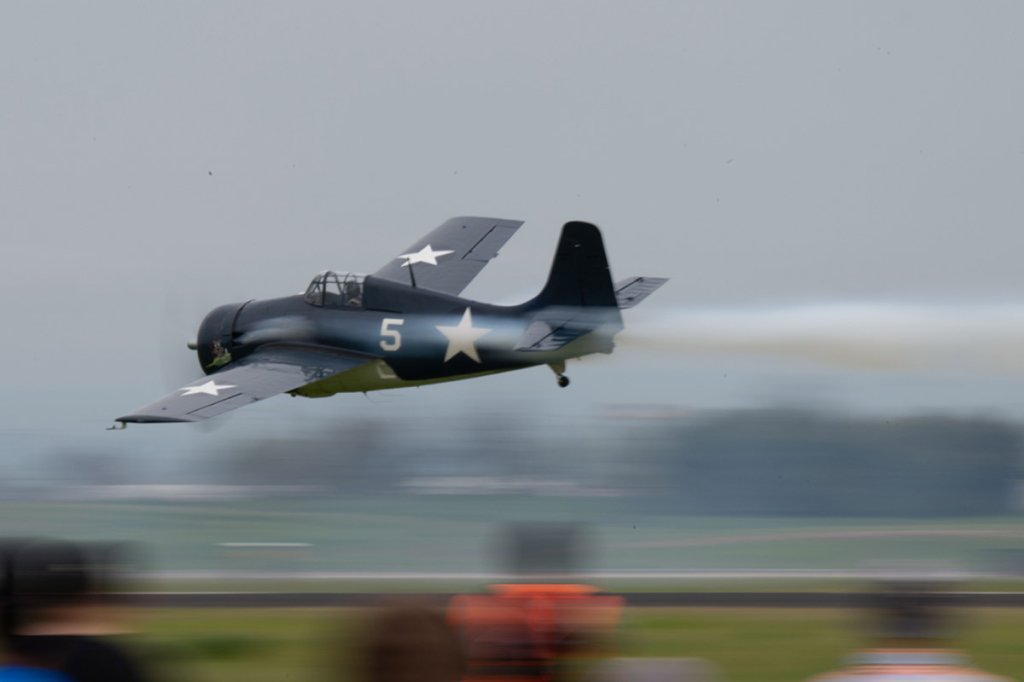
Although several Heisman Trophy winners served in the military, Kinnick holds the tragic distinction of being the only one to die at war. On June 2, 1943, Kinnick was at the controls of a Grumman F4F Wildcat off the coast of Venezuela when the aircraft began to leak oil.
When Kinnick noticed the issue, he was four miles from the USS Lexington—the aircraft carrier from where he took off. Kinnick didn’t think he could return to the Lexington in time, plus he worried about risking the lives of military personnel there. Kinnick took the only other option available to him; he landed on the water.
Rescue boats raced to the site, but they were too late. Kinnick was gone. They never recovered his body.
“I nerve had a shock like that in my life,” said Al Couppee, who played with Kinnick at Iowa and had a brief NFL career with the Washington Redskins. “Hell, I thought he was going to live forever.”
Iowa Names Stadium After Kinnick
In significant ways, Kinnick’s memory has.
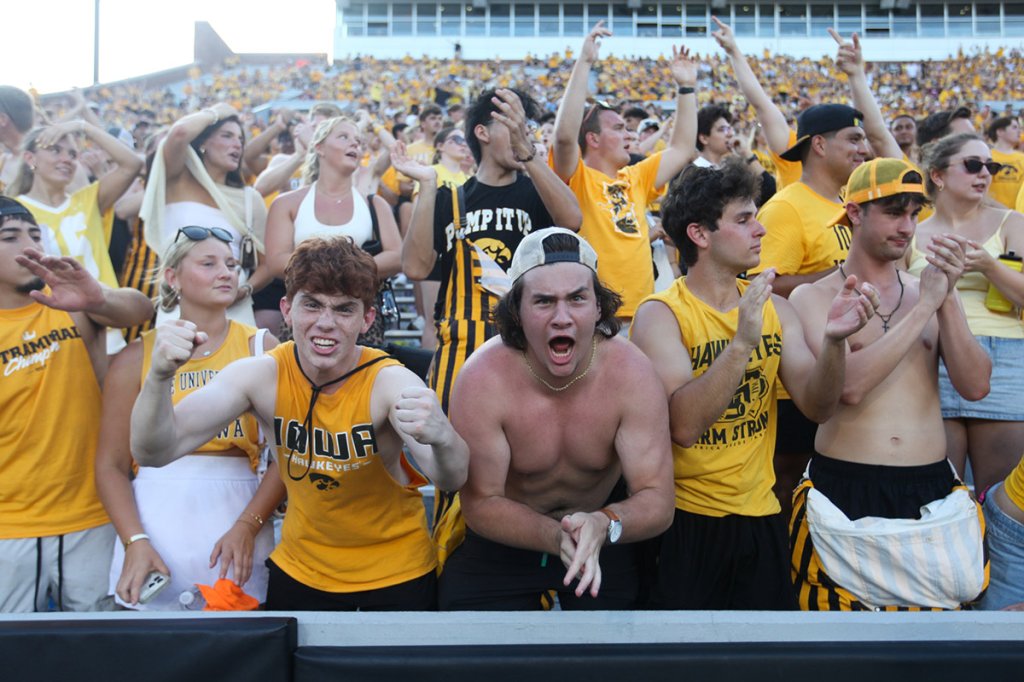
Since 1972, the year that the University of Iowa renamed its football stadium after Kinnick, the school’s fans have flocked several times a year to Kinnick Stadium.
They will do so again on Saturday when Iowa hosts Ohio State in a matchup of highly ranked teams. Some will pass a 16-foot bronze statue of Kinnick that stands outside the sports venue. And before the Hawkeyes and Buckeyes kick off, the captains will meet at midfield for the opening coin toss. An official will flip a coin that bears Kinnick’s likeness on one side, signifying “heads.”
Kinnick is the rare college football stadium whose name honors a military hero or someone who died serving the United States. (It should be noted that several universities nationally play their home games in “Memorial Stadium” or similarly named venue.)
Besides Kinnick Stadium, there is Michie Stadium—home of the Army Black Knights in West Point, New York. It is named after Dennis Michie (pronounced Mike-ee), the school’s first football coach who died in the Spanish-American War.
And in Knoxville, Tennessee, the state’s flagship university plays its football games in a stadium named in the memory of Gen. Robert Neyland. He served during both World War I and World War II.
Those are special places for a college football fan. So is Kinnick Stadium.
“There is no reason in the world why we shouldn’t fight for the preservation of a chance to live freely,” Kinnick once wrote. “No reason why we shouldn’t suffer to uphold that which we want to endure. May God give me the courage to do my duty and not falter.”
Don’t Miss the Best of We Are The Mighty
• 7 military lessons that made Roger Staubach a Hall of Fame football player
• The Army Black Knights are the cleanest team in college football
• Why military kids overseas have to outwork everyone to get recruited
Loading comments…
Comments couldn’t be loaded. Please refresh the page.