
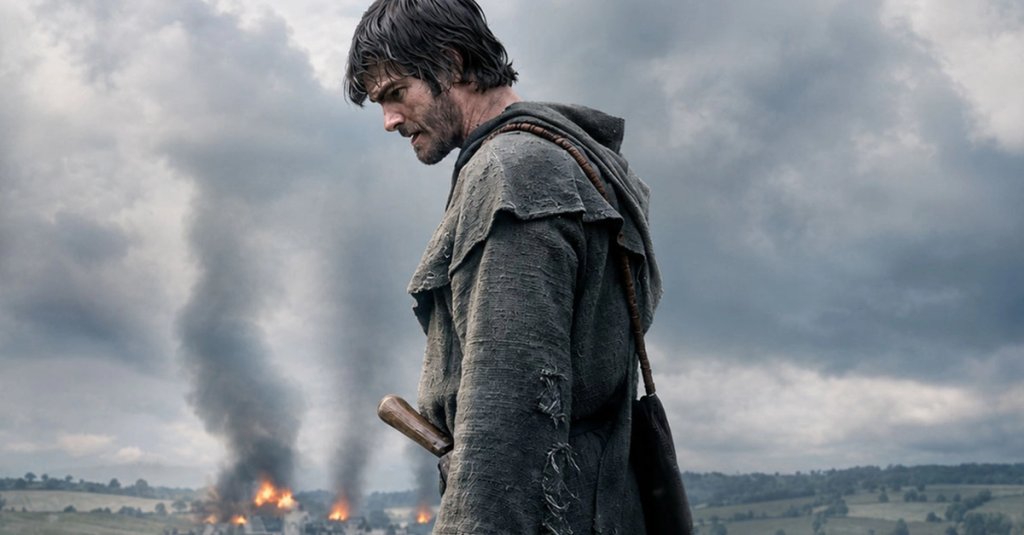
One of the week’s biggest bombs wasn’t dropped in Iran, it came at American theaters over the weekend. Director Paul Greengrass’ (“The One That Got Away”) new movie “The Uprising” stars Andrew Garfield (“Hacksaw Ridge”) as Wat Tyler, a ploughman who leads the peasants of 1300s England in a revolt against the council that rules for the young King Richard II.
Also Read: One of military history’s most lopsided beatdowns didn’t need to happen
“The Uprising” and its $20 million budget made a lackluster $3.25 million in U.S. theaters on its opening weekend, at a time when some of its core themes should have resonated more with American audiences. In the film, a peasant class still recovering from a deadly plague struggles with the cost of living by their own labor as a government led by a delusional child-king imposes more taxes on them to pay for the country’s ongoing forever war.
![THE UPRISING - Official Trailer [HD] - Only In Theaters September 10 thumbnail](https://i.ytimg.com/vi/ZVkrhHebz1Q/hqdefault.jpg)
THE UPRISING – Official Trailer [HD] – Only In Theaters September 10
The revolt depicted in “The Uprising” was real, as was Wat Tyler, King Richard II, and the Hundred Years War. The plague in question was the actual plague, the Black Death that wiped out roughly 30% to 60% of Europe’s population—upwards of 200 million people. The massive death toll meant a sudden labor shortage, increased wages for the peasants doing the laboring, and less of a profit for the landowners.
Moreover, many serfs were suddenly free to work land other than their lord’s. Those who weren’t free found themselves able to move freely for the best work. If moving was illegal, many did it anyway, with few, if any, consequences. Some were also free to not be farmers at all anymore.
The Hundred Years War
In 1337, England’s King Edward III decided he was the King of France too, and launched a seaborne invasion of France, defeating the French Navy at Sluys, ensuring the French could no longer threaten an invasion of England. On land, the English were initially successful, capturing Crecy and Poitiers, and even capturing France’s King John II. But financial troubles plagued the English from the start. England couldn’t actually afford a war, let alone one that lasted more than a century.
Between 1360 and 1369, the war enjoyed a brief respite, but once it restarted, England would lose nearly all of what Edward had won by the time he died in 1377. When his grandson, Richard II, took over, the regime began to impose taxes through Parliament. Tax after tax was levied, and not only was it never enough to pay for the war, the war was not going well for the English. Losing in France, and deep in the hole, the country was soon in danger fo defaulting on its debts.
Wat Tyler’s was not the only open rebellion to overtaxation. London saw rioting in 1377, but the rural serfs were (understandably) the most unhappy: they were unhappy that a faraway legal system in London was taking what was theirs, but they were also unhappy with being serfs at all. The 1381 tax, however, cost three days’ wages per person aged 15 and above was the catalyst for Wat Tyler’s rebellion.
An account from the period says a tax collector in what is today either Kent or Essex, lifted up the skirt of a young girl “to see if she reached the age of puberty.” That was the last straw. The tax collector was killed with a hammer. Court documents were burned. Peasants across England rose up and marched on London to demand not only relief from the taxes, but an end to serfdom. Tyler led the rebels from Kent into the capital city to meet with the king.
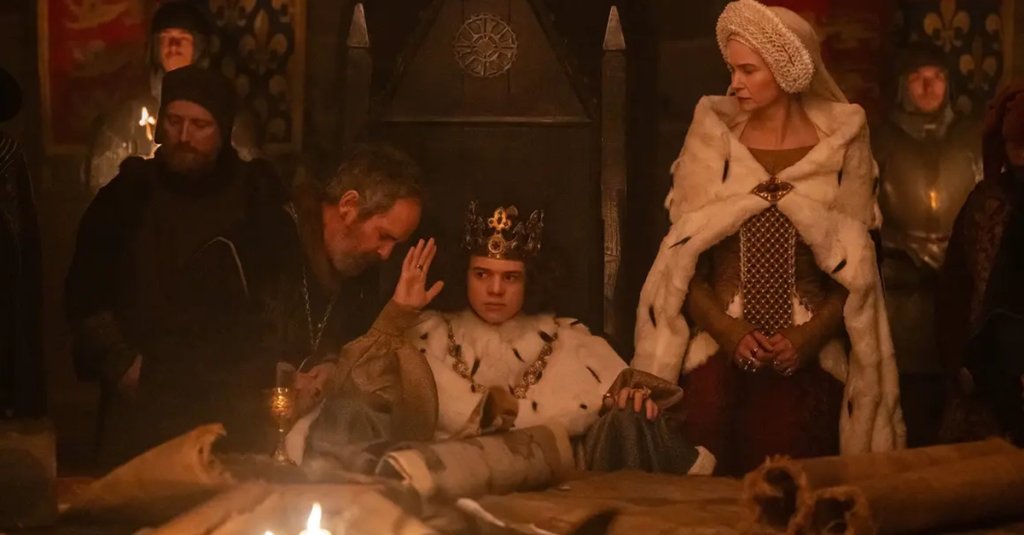
King Richard II did meet the rebels, and promised to make the reforms they demanded. that was good enough for most of the rebellion. Pardoned by the king, many returned home. Tyler, however, met separately with the king the next day. A meeting between the two started off well, but went downhill very quickly.
According to (surviving) sources, insults were exchanged, then blows, then Tyler tried to stab the Mayor of London who fought back, slashing the rebel leader across the neck. Tyler escaped but was found in a local hospital, detained, and beheaded. With their leader’s head hanging from London Bridge, the rebels were easily dispersed and later hunted down. King Richard revoked all the concessions he’d promised, and the Hundred Years War would continue, until England’s final defeat in 1453.
By the end of the war, the English crown was bankrupt, with a debt ten times the country’s annual income. It led to another civil war between the country’s many disgruntled nobles.
Don’t Miss the Best of We Are The Mighty
• Why George Washington tried to kidnap the future king of England
• How four college students stole Scotland’s ‘Stone of Destiny’ from England
• Medieval England required all free men to own weapons in proportion to their wealth

Sponsored Content
‘The Fix’ is an action movie for the post-War on Terror world

Loading comments…
Comments couldn’t be loaded. Please refresh the page.