Staff Sgt. Matthew Harvey was bent over the front of his truck, working a tangle of debris loose from under the lead vehicle on a route clearance run outside Najaf, Iraq, when three rounds poofed into the dirt by his boots.
Harvey spun, found the shooter half-hidden behind a berm, and put him down. Standing up to scan the rest of the ground, he caught movement at his five o’clock and turned toward it.
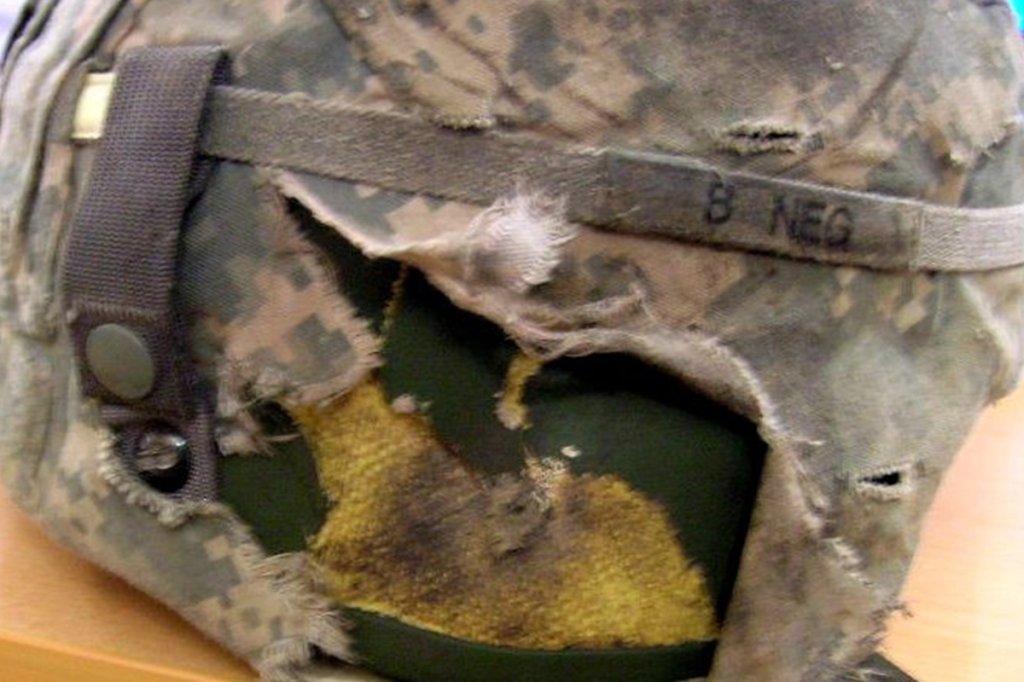
He’s alive to tell the tale because of the three pounds of Kevlar and foam he had buckled uncomfortably to his head that morning. Above and behind his right ear, the round punched through his helmet, but did not punch through Matthew Harvey. He kept fighting until the shooting stopped, then went home to Houston with a torn cheek, a second Purple Heart, and a helmet with a hole in it.
The bullet hole in the Army Combat Helmet of Staff Sgt. Matthew Harvey. (U.S. Army)
A soldier will gripe about every other piece of issued gear; very rarely will you hear about the helmet, for a simple reason. It is the only thing you wear whose sole job is to make sure your nugget stays on your neck.
Over the past 80 years, it has steadily become the most improved piece of gear you have. How a synthetic fiber bowl became the system that saved Harvey comes down to four ingredients mixing together: Better materials, more coverage, protection against the blow itself, and the day the helmet stopped being a glorified hat all came together to create an amazing feat of engineering.
Doughboy and a Steel Pot
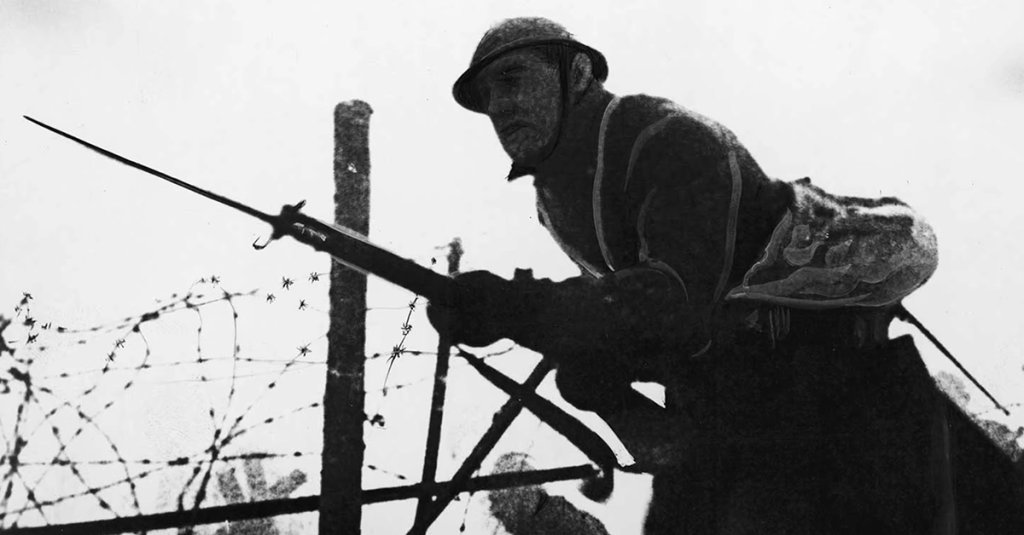
(Pictoral Parade/Getty Images)
Beginning in World War I, with, let’s say, a borrowed idea, America’s first standard-issue combat helmet, the M1917 “Doughboy”, was basically a copy of the British soup-bowl Brodie. It was good for catching shrapnel from above and not much else. In 1941, the Army replaced it with the helmet that would define the look of the American GI for the next 40 years.
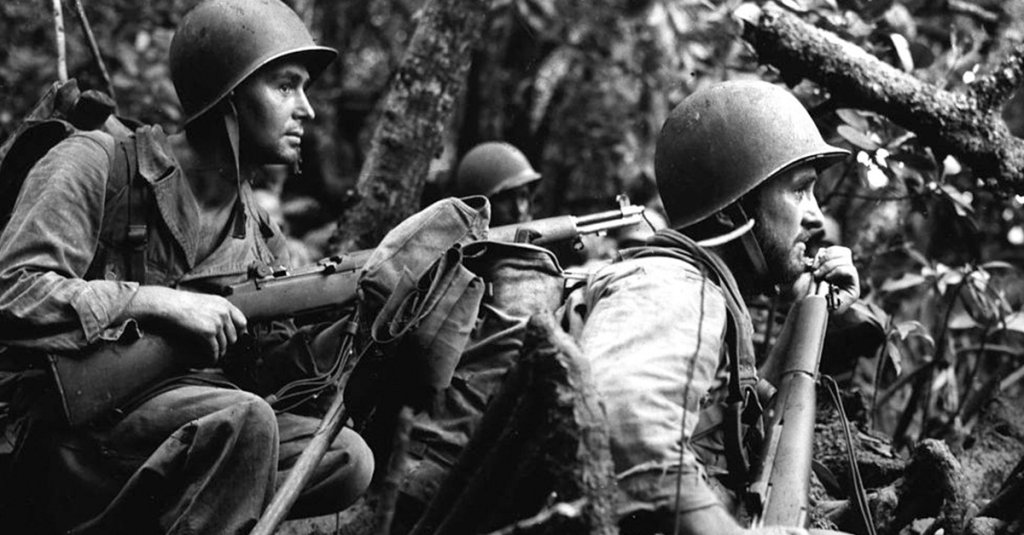
The Steel Pot M1 was a deep manganese-steel shell worn over a separate liner and held on by a web sling and chinstrap; it was made more than 22 million times and saw action in World War II, Korea, and Vietnam.
It was a true multiuse tool that could turn shrapnel and spent fragments, double as a wash basin or a cook pot, and keep a man’s cigarettes dry. Stopping a bullet was not its forte, and the sling inside did almost nothing to soften the blow of anything that struck.
Some soldiers famously left the chinstrap loose, half-convinced by an old, wrong smoke-pit rumor that a nearby blast could catch the helmet and snap your neck; the rest did it because those straps were very annoying.
Soldiers from the 25th Infantry Division in the Solomon Islands during Operation Cartwheel, Sept. 13. 1943. (U.S. Army)
Fritz and the K-pots
The biggest leap since the steel pot arrived came in 1983, in the form of the PASGT, the Personnel Armor System for Ground Troops. Whoever was tasked with naming this system hit the nail on the head. PASGT was a system: there’s a helmet matched to a flak vest, and both were built from Kevlar, the aramid fiber DuPont invented two decades earlier.
For the first time, an American helmet could do what steel never could: stright up stop fragments and even some small-arms rounds. Its sloped silhouette looked so much like the old German Stahlhelm that troops nicknamed it the Fritz, or the K-pot, a simple irony given whose heads that shape used to guard.
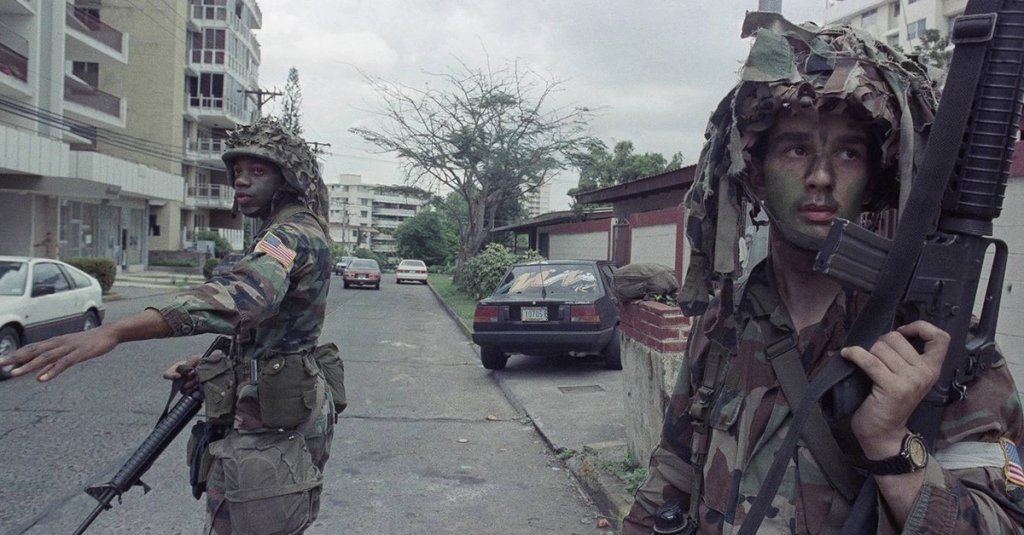
Wrapping lower around the sides and back than the M1 ever had, it carried American soldiers from Grenada through Panama and the Gulf War and then stayed the standard for the better part of two decades. Comfort was another matter.
Heavy and hot, it perched its weight on the crown of your skull through a bolted-in nylon suspension that had half the Army buying their own padding just to bear it.
American soldiers direct traffic as they stand guard in Panama City on Jan. 9, 1990. (U.S. Army)
The Marines’ Head Game
The next jump didn’t come from the regular Army at all. Wanting a helmet that played nicely with radios and optics, special operations built the Modular Integrated Communications Helmet (MICH), which the Army adopted in 2002 and renamed the Advanced Combat Helmet, or ACH.
That’s the helmet in the photo of Harvey’s near miss. Cut higher and trimmed back for clearer sight, hearing, and headset fit, it was lighter than the PASGT and stopped more.
The Marines, being Marines, went their own way with a PASGT-style helmet they called the Lightweight Helmet (LWH).
Real evolution happened on the inside, too; gone was the old sling, replaced by thick foam pads and a four-point strap that finally addressed the blunt impact and brain-rattle that head armor historically ignored.
Staff Sgt. Joseph McKenzie found out how well that worked when a round struck his ACH in Afghanistan, right where the night-vision mount sits, drove the helmet into his face, and left him a scar under his eye instead of a hole through his head. He kept fighting for another 12 hours.
Harder Helmets Prevail
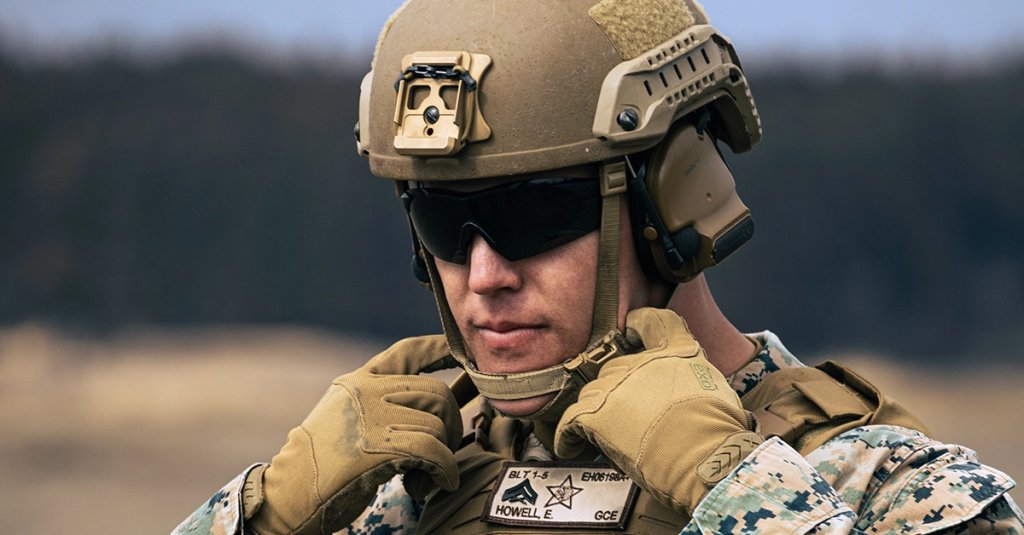
U.S. Marine Corps Cpl. Eric Howell dons an Enhanced Combat Helmet during a live-fire exercise. (U.S. Marine Corps/Lance Cpl. Cesar Ronaldo Alarcon)
A joint Army and Marine effort, the Enhanced Combat Helmet (ECH) traded out Kevlar for ultra-high-molecular-weight polyethylene, a plastic spun from chains so long that a thinner, lighter shell of it could stop more than Kevlar ever would.
Light enough to float and strong enough to defeat threats the older helmets wavered under, it was the kind of upgrade noone outside the gear heads ever noticed.
Staff Sgt. Steven McQueen (yes, real name) would test it the difficult way during an insider attack, when a 7.62 round struck the back of his head from about twenty feet and knocked him flat. It felt, he said, like a horse kicked him in the skull. Winded and ears ringing, he climbed back to his feet and started checking on his soldiers before anyone could check on him.
Military Helmets Only Get Better
Today’s helmet barely resembles the bowl your grandfather wore. Fielded since 2019 as the head-protection half of the Army’s broader Soldier Protection System, the Integrated Head Protection System (IHPS) is modular by design.
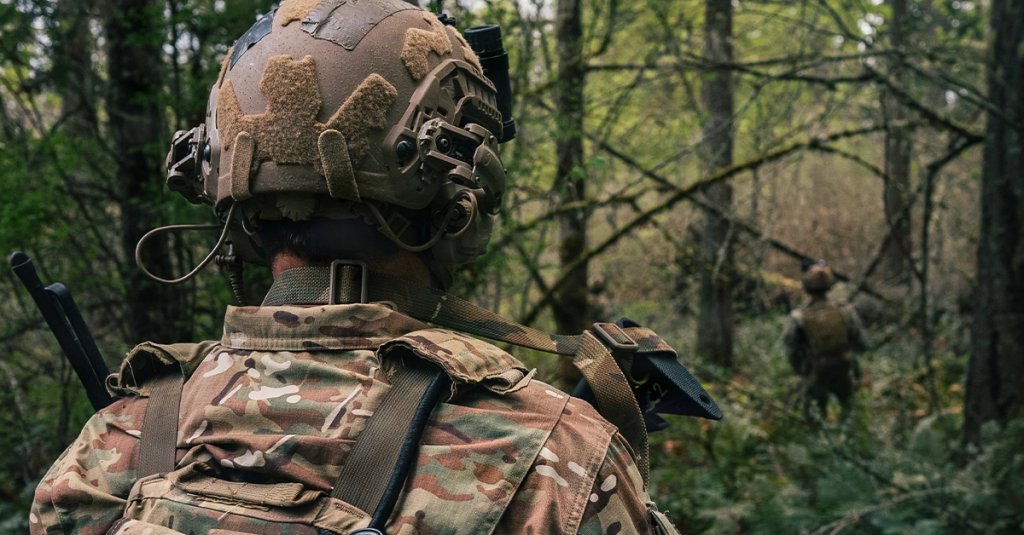
Combining rails for lights and cameras, a shroud for night vision, optional mandible and visor pieces, and scalable armor panels, a soldier can bolt on when the threat gets worse and strip off when speed matters more. More than 100,000 have reached the force.
Weighing in at around three pounds, the base helmet is no burden really, and its leaner sibling, the ACH Generation II, is the lightest combat helmet the Army has ever issued. Built to carry the optics, comms, and night vision a modern fight demands, it’s a platform a soldier assembles for the mission in front of him.
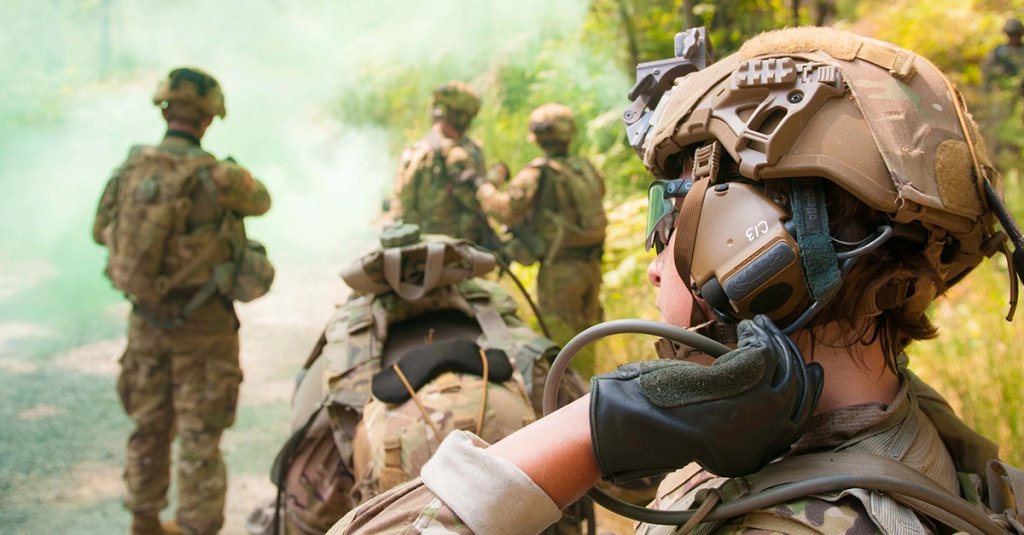
Green Berets assigned to 1st Special Forces Group (Airborne) navigate through dense vegetation on their way to an objective during a simulated ambush attack. (U.S. Army/Spc. Noah Martin)
So when someone asks whether the modern helmet truly beats what came before, the answer is yes, in more ways than one. Materials went from steel to Kevlar to a plastic lighter than water. Coverage grew from a shrapnel bowl to a wraparound shell. Padding finally started to guard the brain, not just the skull. And the dumb hard hat turned into a mount for the tools that keep a soldier breathing.
None of it makes a man bulletproof, or free from scrambling their brains getting out of an uparmored vehicle too quickly. A square, close rifle hit will still defeat a helmet, and every ounce of added safety is paid back in neck strain on a long movement.
However, you can ask Staff Sgt. Matthew Harvey what he thinks of the tradeoffs. There’s a small Army tradition that says everything about what this gear is for: when a soldier’s helmet takes the hit that should have taken him, the office that builds the helmets often gives it back, cracked and dented and holed, in a quiet ceremony.
Staff Sgt. Joseph McKenzie receives the helmet that saved his life from Col. Dean Hoffman IV during a ceremony at Schofield Barracks, Hawaii. (U.S. Army)
A man stands there, turning the thing over in his hands, looking at an entry point a few inches from where his thoughts live, from where his kids and his wife and his plans for Saturday all live. Every improvement in this long line, every gram of Kevlar, every foam pad, every degree of a better-cut brim, gets measured in exactly that moment.
That moment comes years later, when a child climbs onto the lap of a father who made it home because somebody, somewhere, decided a helmet could be a little bit better.