

Simo Häyhä recalled November 30, 1939, as the last night he and the other veterans, volunteers, and reservists in the Finnish Civil Guard slept well.
That was the day when the Soviet Union—after negotiations over territorial concessions broke down—attacked Finland, its much smaller neighboring country. Thus began the Winter War (also referred to as the Russo-Finnish War), which lasted for 3½ months. The Finnish people displayed their fierce fighting spirit during the engagement, none more than Häyhä.
In awe, Häyhä’s comrades called him the “Magic Shooter.” The Russians preferred a much more menacing name for the humble farmer: “The White Death.”
Also Read: The sensational defection of Stalin’s daughter to the US during the Cold War
“I had to go on many recon patrols with my men and lead many attacks, but sniping was the everyday duty,” Häyhä told Battle Guide, a media company in the United Kingdom that highlights military history. “We would observe the enemy activity during the day and would determine the most target-rich environment. Then I would go out at night and prepare a good firing position from which it was easy to shoot, but not so easy to spot.
“I was happy with the results.”
Rejecting the Soviets’ Offer
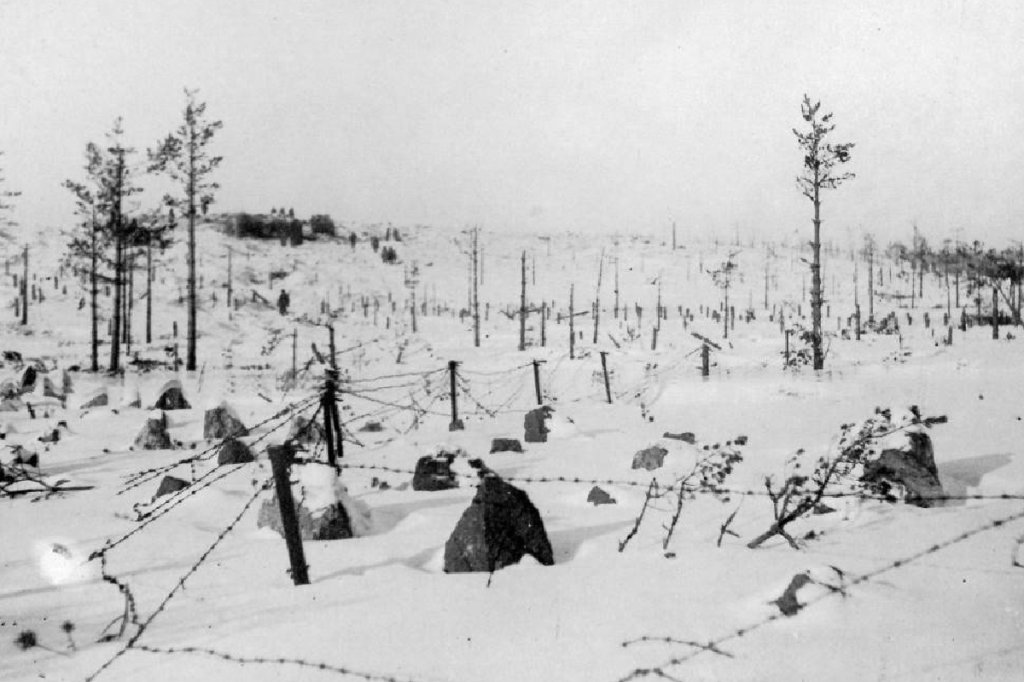
Finland fell under the Russian Empire’s control from 1809 to 1917 until it declared its independence after the Bolshevik Revolution. For the next two decades, the relationship between the Soviets and Finns was tenuous at best. Then the Soviets and Germans agreed to a nonaggression pact in August 1939. As part of that agreement, the sides created their own spheres of influence in Europe.
The Soviets’ sphere included Finland. Negotiations ensued, always with an undercurrent of suspicion from the Finns’ side. They didn’t trust the Soviets, who—according to a 2018 article from the National World War II Museum—proposed leasing land for a naval base and redrawing the borders of the Karelian Isthmus. A short distance from Leningrad (now St. Petersburg), the isthmus was strategically important to the Soviets.
In return, Soviet leader Joseph Stalin was willing to part with more land than he wanted. It didn’t matter to the Finns, who weren’t exactly big fans of the Soviet way of persuasion. Their offer came across as an ultimatum, the National WWII Museum article explained, and the Finns flatly rejected it.
War inevitably ensured, and for a while, the Finns fared well despite heavy deficiencies in manpower and weaponry. That was largely due to an array of tank traps, trenches, machine gun nests, and armored bunkers across the isthmus. It acquired the name the Mannerheim Line, after Finnish army commander Marshal Carl Gustav Mannerheim.
When the Soviets approached, the Finns decimated them. Sixty to ninety miles north of the Mannerheim Line, the Soviets faced another problem on the Kollaa front. Members of the Civil Guard fired on the enemy, and they didn’t often miss.
Especially Häyhä.
A Sniper’s Routine
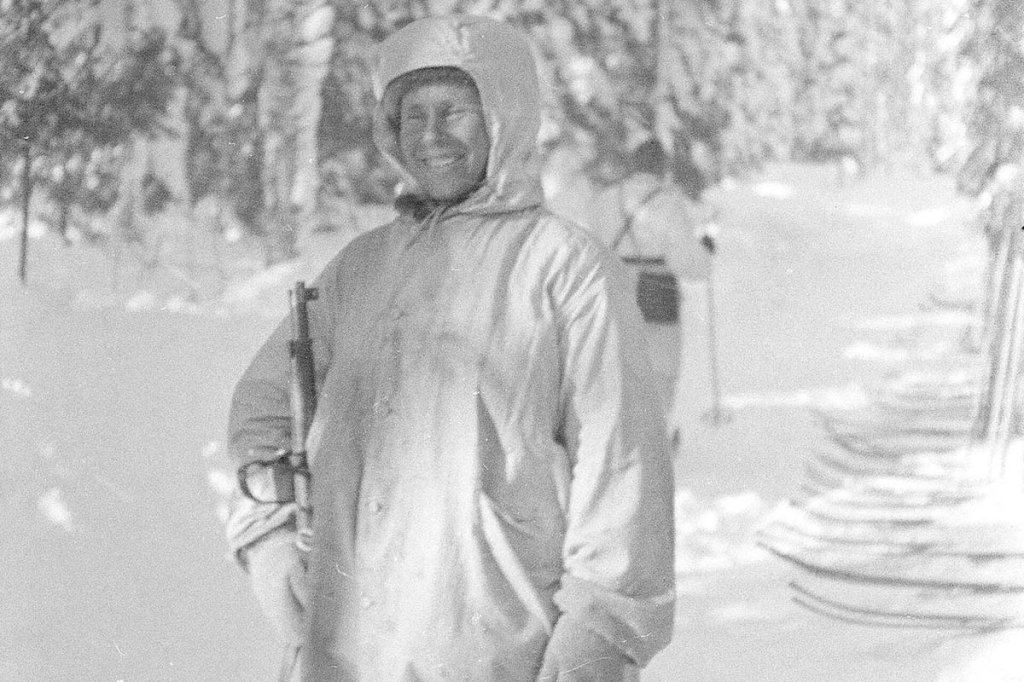
The seventh of eight children, Häyhä was born on December 17, 1905. He joined the Civil Guard when he was 17 years old. After a stint in the Finnish army in the mid-1920s, he returned to the Civil Guard—which used the M28-30 as its standard rifle. The Guard, though, couldn’t afford to give rifles to all service members, so it devised a deal. It offered the Guardsmen a chance to pay some of the cost in return for taking the rifle home to use for recreational purposes, Battle Guide reported.
Along with thousands of others, Häyhä accepted those terms. None of his comrades became as proficient as Häyhä. He often won shooting competitions that the Guard held, sometimes winning engraved teaspoons as his prize.
Even while serving in the Finnish army, which preferred a KP/-31 submachine gun, Häyhä usually stuck with his faithful M28-30.
Häyhä, who was 5 feet, 3 inches tall, developed a routine as a sniper. He memorized the terrain and always hid behind a boulder or tree. Dressed in all white, Häyhä wrapped his rifle—which he cleaned daily, according to Battle Guide—in white gauze. To conceal his position further, he threw white snow behind him. As a final touch, he poured water onto the snow in front of him so it wouldn’t fly into the air after Häyhä fired his weapon.
Using only iron sights, Häyhä was historically deadly as a sniper. Shooting in extremely cold temperatures, sometimes minus-25 degrees Celsius or lower, he averaged killing multiple Soviets a day during the Winter War. He killed a personal-high 25 enemy soldiers on December 21, 1939, Battle Guide reported.
Various sources credit Häyhä with anywhere from 219 to 542 confirmed kills. Häyhä kept what he called “his sin list.” He said it contained 500 names, give or take.
“I did what I was ordered to do, as well as I could,” Häyhä said in the Battle Guide documentary. “Had everyone else not done the same, there would be no Finland.”
“In the Army to Fight”
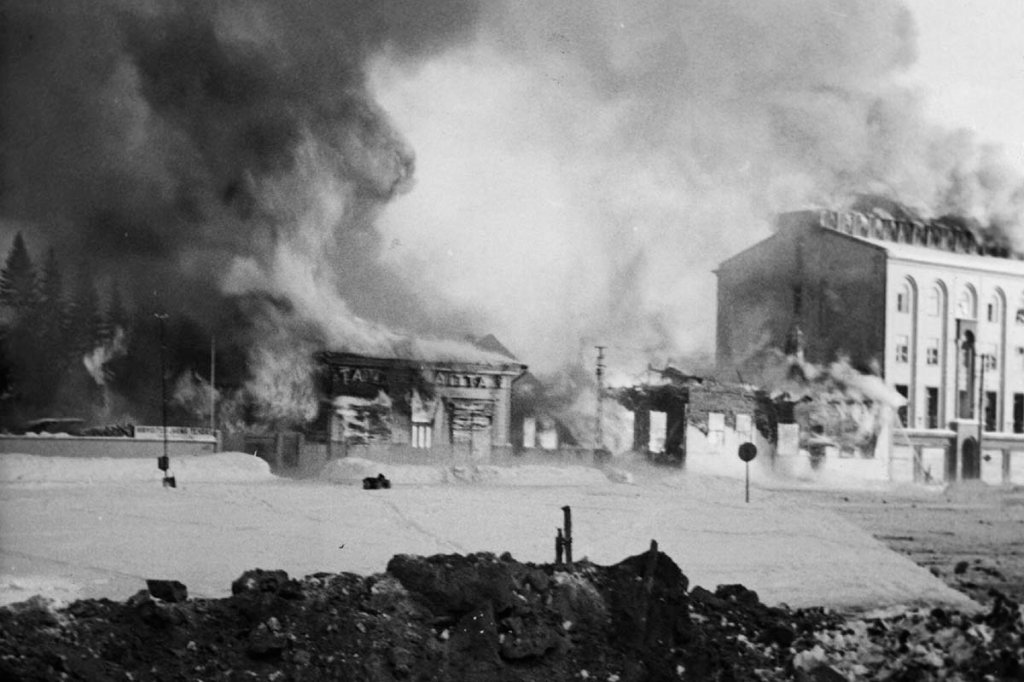
Despite Häyhä’s prolific kill rate, the underdog Finns couldn’t hold off the Soviets forever. The momentum in the Winter War shifted after Stalin installed Gen. Semyon Timoshenko as the Soviet forces’ commander. Timoshenko committed to pushing the Finns off the Mannerheim Line.
That assault began on February 1, 1940, and lasted until February 11. Although the Soviets incurred heavy losses, they successfully drove their opponents back. The Finns fought heroically, but they couldn’t ignore the numbers game. Their list of casualties paled in comparison to the Soviet total, but they were a much smaller country.
As part of the Treaty of Moscow, Finland agreed to surrender 11% of its territory. That didn’t take away from the respect that the world heaped on its fighting forces for battling a larger, more well-equipped foe.
“Finnish troops knew they were in the army to fight, not to march in parades, and in the kind of war they were called upon to fight, that was precisely the right set of priorities,” historian William R. Trotter wrote in his book “A Frozen Hell: The Russo-Finnish Winter War of 1939-40.”
A Painful Blow
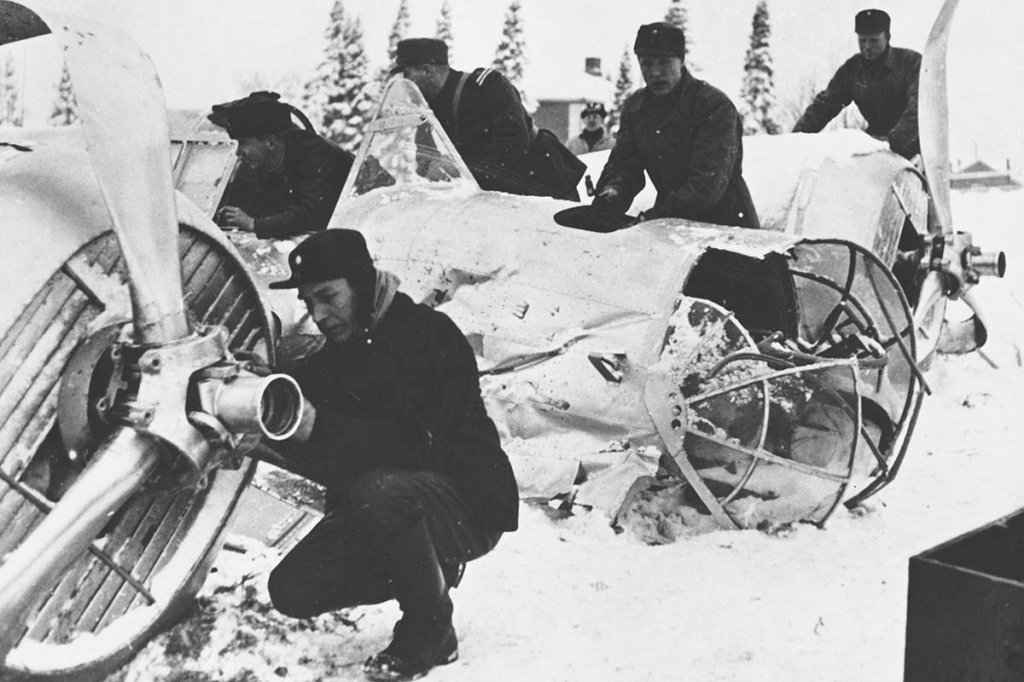
As the war wound down, Häyhä and his comrades were in Ulismaa on the country’s southern coast. They charged the enemy, forcing them to retreat. Some Soviets, though, stayed to allow their countrymen to get away.
One shot Häyhä.
“I just felt a suppressed bang in my mouth and lost consciousness,” he said.
Häyhä had trouble breathing as blood filled his lungs, according to Battle Guide. A bullet exploded, shattering his jawbone and multiple teeth. Häyhä was so severely wounded that he lost consciousness. His comrades retrieved Häyhä’s body, and he was in a coma for a week.
On the day he awakened, the armistice was signed. Häyhä’s personal battle was far from over, though. He endured a grueling 26 surgeries, and although he remained permanently disfigured, he eventually recovered and lived a full life.
He did so in a nation that overcame seemingly insurmountable odds during the Winter War, thanks to soldiers such as The White Death, and maintained its independence. Häyhä died in 2002 at the age of 96.
Don’t Miss the Best of We Are The Mighty
• The ‘Purple Heart Battalion’ fought Nazis abroad and injustice at home
• James Bond’s longest-running ‘Q’ survived 5 excruciating years as a POW
• A former violinist singlehandedly cleared a mountain fortress during World War II
Featured

Sponsored Content
Automated vs. self-directed investing: A guide for military families
Loading comments…
Comments couldn’t be loaded. Please refresh the page.