
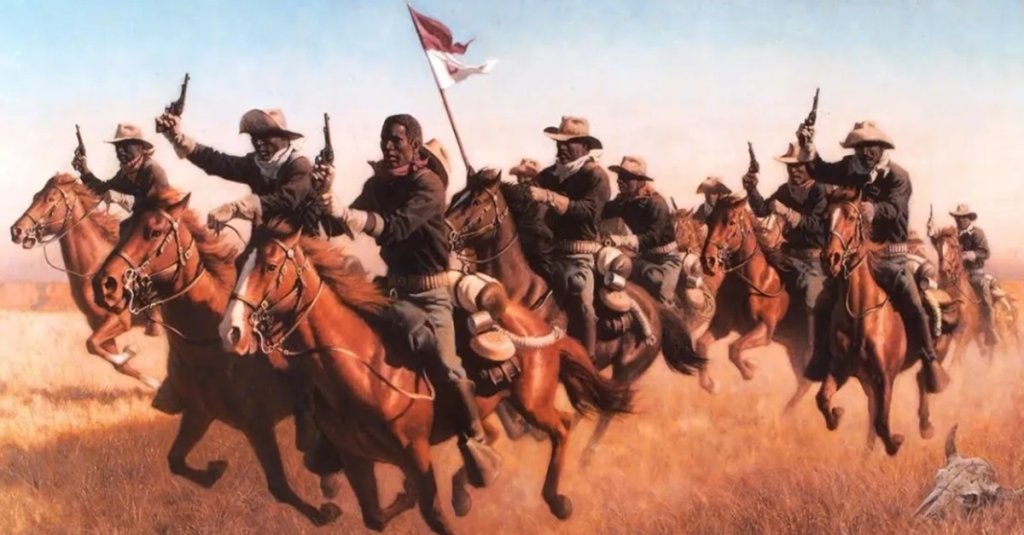
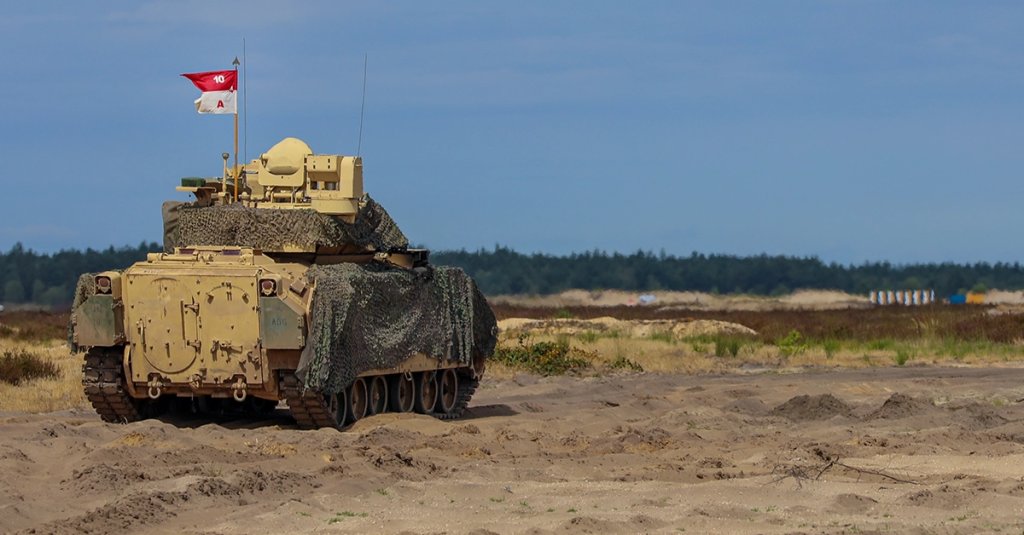
On July 28, 2026, soldiers of the 4th Squadron, 10th Cavalry Regiment, 3rd Armored Brigade Combat Team, 4th Infantry Division gathered for it final formation at Fort Irwin, California, marking an end to one of the U.S. Army’s oldest units. The unit, which traces its lineage back to the Buffalo Soldiers, was deactivated the next day.
The Army says the move is part of its ongoing structural modernization, specifically its “Transformation in Contact” initiative, which phases out certain traditional armor reconnaissance elements to integrate unmanned systems and advanced electronic warfare technologies. It’s not the last unit with ties to the Buffalo Soldiers, but its worth remembering the legacy of the original Buffalo Soldiers.
Also Read: The original Buffalo Soldiers and how they got their nickname
When the Civil War first started, Congress was apprehensive about training and arming Black men to fight it. But as the war dragged on the Union needed Black manpower to continue fighting the Confederacy. Following the Emancipation Proclamation in January 1863, the Union Army began recruiting Black men to serve.
It would enlist 179,000 Black men into the U.S. Colored Troops, of which many were former slaves. Although many were used as laborers and in support roles, the eventually saw combat. Some 37,000 died to win their freedom. Although officially disbanded in 1865, thousands of USCT veterans remained in the Army for occupation duty for years.
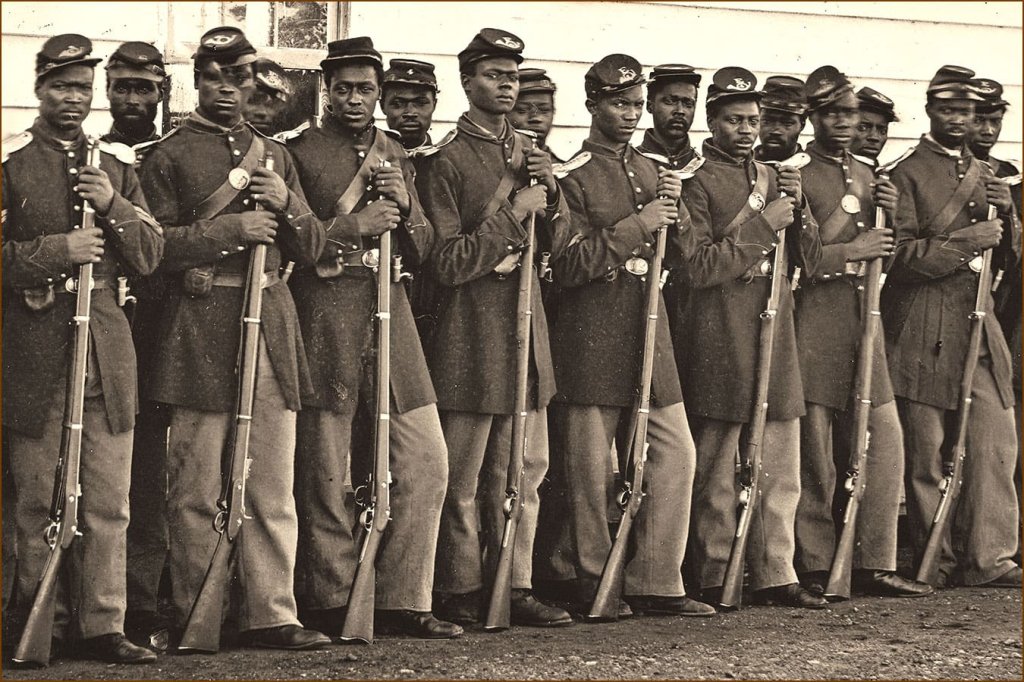
Black men in the Army didn’t disappear with the U.S. Colored Troops; they were there to stay. Congress passed the Military Peace Establishment Act in July 1866, which carried forward the USCT legacy by creating the first permanent, all-Black peacetime units in the regular U.S. Army. The legislation created six such units (later consolidated to four), the 9th Cavalry Regiment, the 10th Cavalry Regiment, the 24th Infantry Regiment, and the 25th Infantry Regiment—all under the command of white officers.
Their initial mission was subduing the American Frontier: maintaining law and order, protecting settlers, enabling trade, and guarding critical infrastructure, like telegraph lines, railroads, and stagecoach routes. They were even the first caretakers of America’s national parks. This means they were sent to the most remote, arid, and dangerous outposts in Texas, Arizona, and New Mexico, where summer heat and winter freezes were extreme.
Despite their regular Army status, these soldiers faced brutal conditions made more difficult by substandard support. They were routinely issued the worst horses, spoiled food, and obsolete weapons left over from the Civil War. The towns they were assigned to protect often resented their presence, barred them from local businesses, and refused to cooperate.
All the while, they were fighting the Native tribes on the Great Plains and in the American West. Still, they not only endured, these troops racked up an elite record with exceptional discipline, low desertion rates, and heavy combat involvement across multiple continents.
In the West, the 9th and 10th Cavalry fought in more than 170 engagements against the most famed tactical leaders, including Geronimo, Victorio, and Sitting Bull. Their campaigns in Texas and New Mexico required diligent tracking and constant skirmishes to protect mail routes and settlements. They proved instrumental in ending the Apache Wars of the late 1870s and 1880s, where their experience in the arid, mountainous terrain earned them their reputation for toughness.
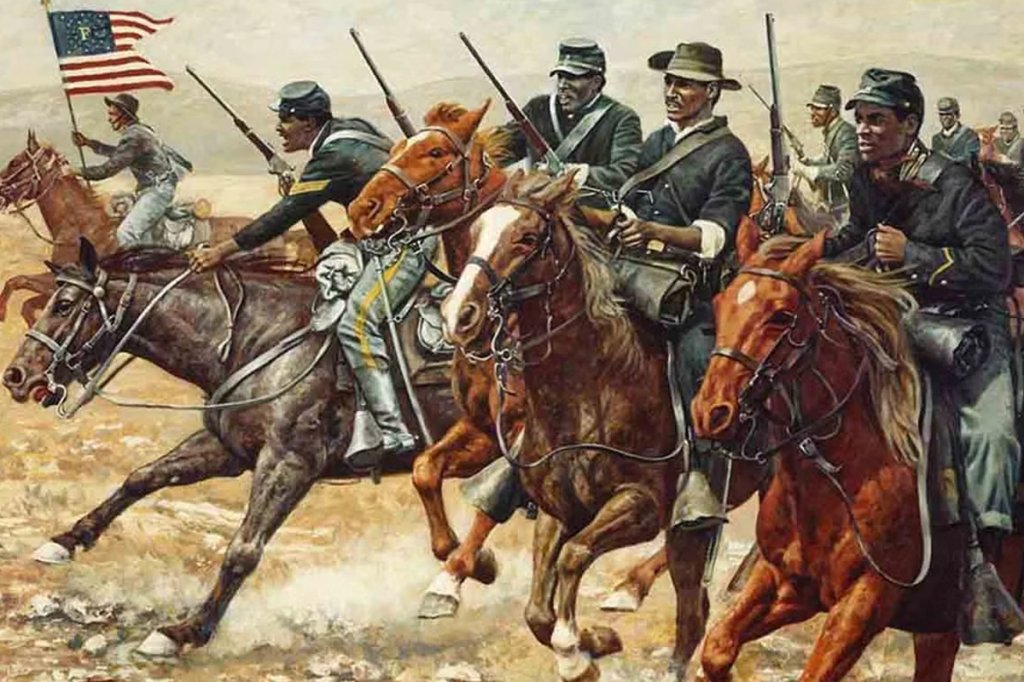
Eventually, the Plains tribes, especially the Cheyenne, dubbed them “Buffalo Soldiers” as sign of their deep respect. The tribes tied the soldiers’ tightly curled hair and fighting spirit to the sacred buffalo, an animal they equally respected for its strength and survival instinct.
The Buffalo Soldiers’ combat record went worldwide during the Spanish-American War in 1898. All four regiments deployed to Cuba, where they fought alongside Theodore Roosevelt’s Rough Riders. During Roosevelt’s charge up Kettle Hill and San Juan Hill, the 10th Cavalry and 24th Infantry advanced under devastating enemy fire, rescuing the pinned-down Rough Riders and ensuring the now-famous decisive American victory.
After the fighting in Cuba ended, the Buffalo Soldier regiments deployed to the Pacific to fight in the Philippine-American War. They fought a brutal guerrilla war in tropical terrain, hunting Filipino insurgents while building schools and infrastructure to win over local populations. In 1916, the 10th Cavalry returned to the American West as part of the Punitive Expedition, where they fought Mexican troops at the Battle of Carrizal in intense heat and taking heavy casualties.
The Buffalo Soldiers earned 23 Medals of Honor throughout these conflicts, cementing a legacy as some of the most decorated and steadfast troops in U.S. military history. They would go on to fight in World War II and the Korean War.
“Today we honor 160 years of service, sacrifice, and excellence that began with the very first Buffalo Soldiers and continued through every Trooper that followed in their footsteps,” said Lt. Col. Shawn Scott, commander of 4th Squadron, 10th Cavalry Regiment.
“Today we honor 160 years of service, sacrifice, and excellence that began with the very first Buffalo Soldiers and continued through every Trooper that followed in their footsteps,” Lt. Col. Shawn Scott, commander of 4th Squadron, 10th Cavalry Regiment, said at the 4-10 Cavalry’s final formation. “While this chapter comes to a close, the values and traditions of the Buffalo Soldiers will continue to live on in every Trooper who served in this extraordinary unit.”
Don’t Miss the Best of We Are The Mighty
• The Black Seminole Scouts’ ‘Unconquered Four’ Medal of Honor recipients
• The often forgotten Buffalo Soldiers must be remembered
• Buffalo Soldiers served as some of the first National Park Rangers
Loading comments…
Comments couldn’t be loaded. Please refresh the page.