
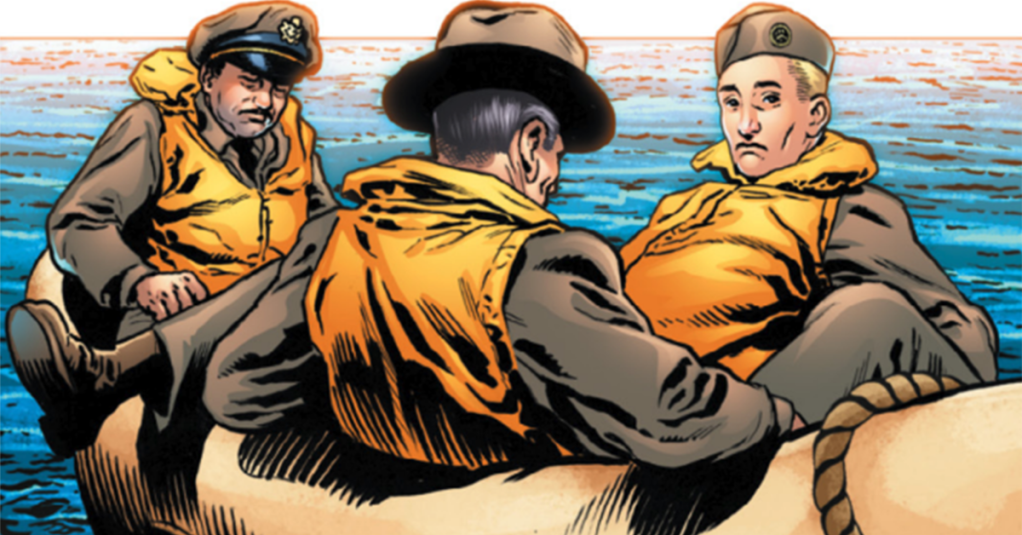
On October 21, 1942, a B-17D Flying Fortress encountered navigational problems over the Pacific Ocean.
Those issues caused the aircraft to veer off course and miss its scheduled refueling stop. Without any gas left, the pilot, Capt. William Cherry, ditched the plane in the water between Hawaii and New Guinea.
Besides Cherry, seven other men were on board, and they quickly filled three life rafts. One of the survivors was World War I flying ace Eddie Rickenbacker, who was en route to deliver a secret, verbal message to Gen. Douglas MacArthur.
Also Read: The WWII bombardier whose family spent 12 years bringing him home from the ocean floor
Rickenbacker, who died on July 23, 1973, at the age of 82, once contended that he made it through 135 close calls with death during his lifetime. Spending 24 days at sea certainly qualifies.
“We did not know where we were, and no one else did, either,” Rickenbacker confided in his autobiography. “We were the only ones in the whole world who knew we were alive.”
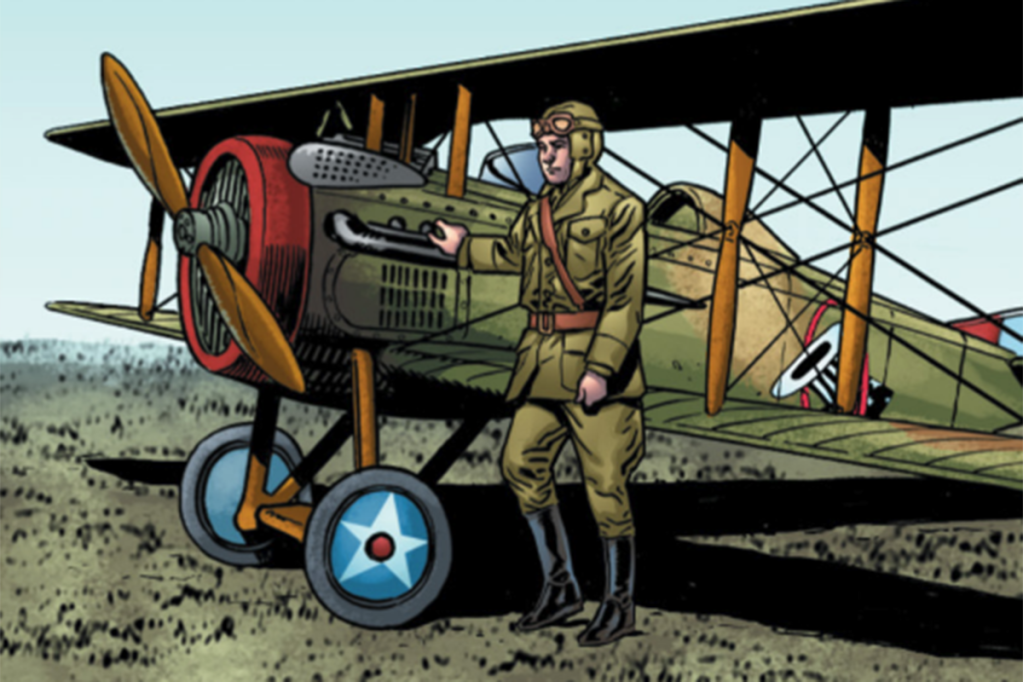
Rickenbacker’s time adrift in the Pacific provides the basis for the Association of the United States Army’s latest graphic novel, “Medal of Honor: Eddie Rickenbacker.”
Struggling with Low Morale
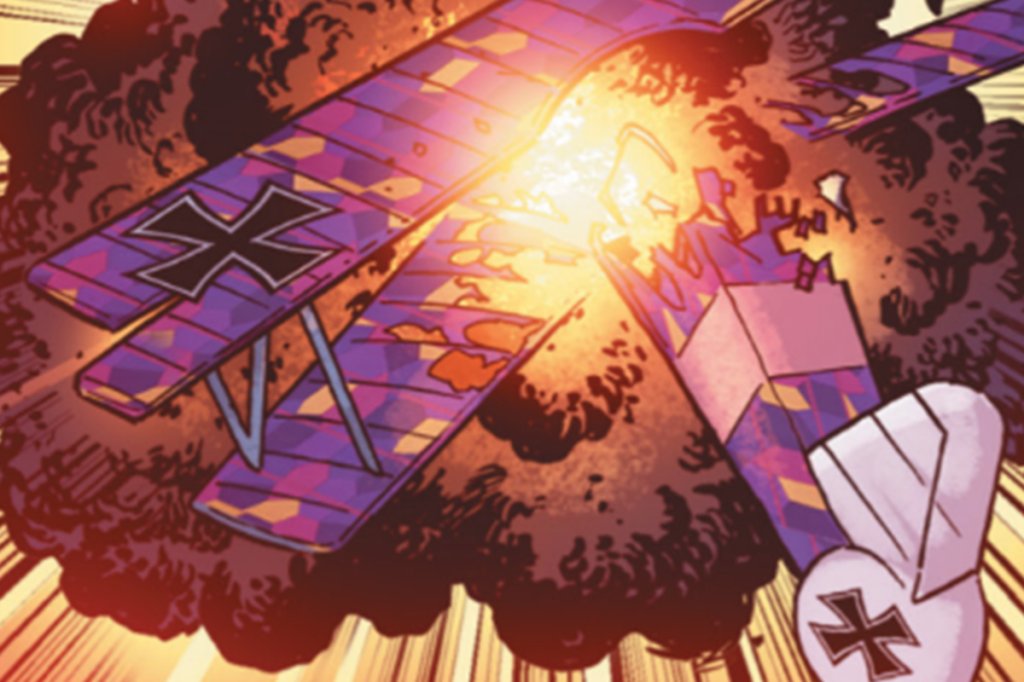
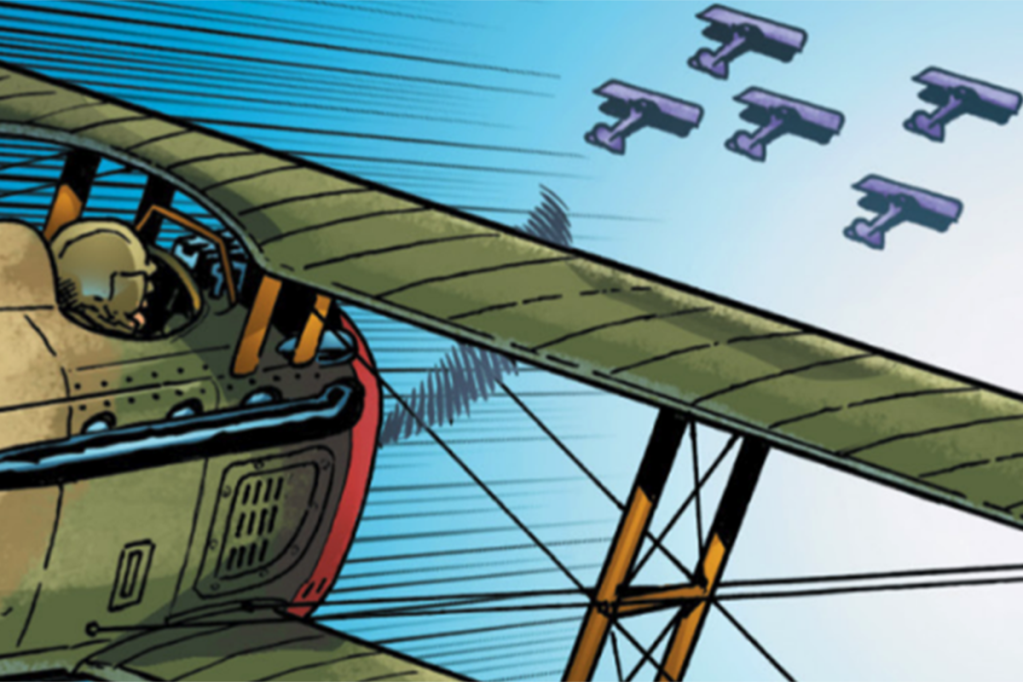
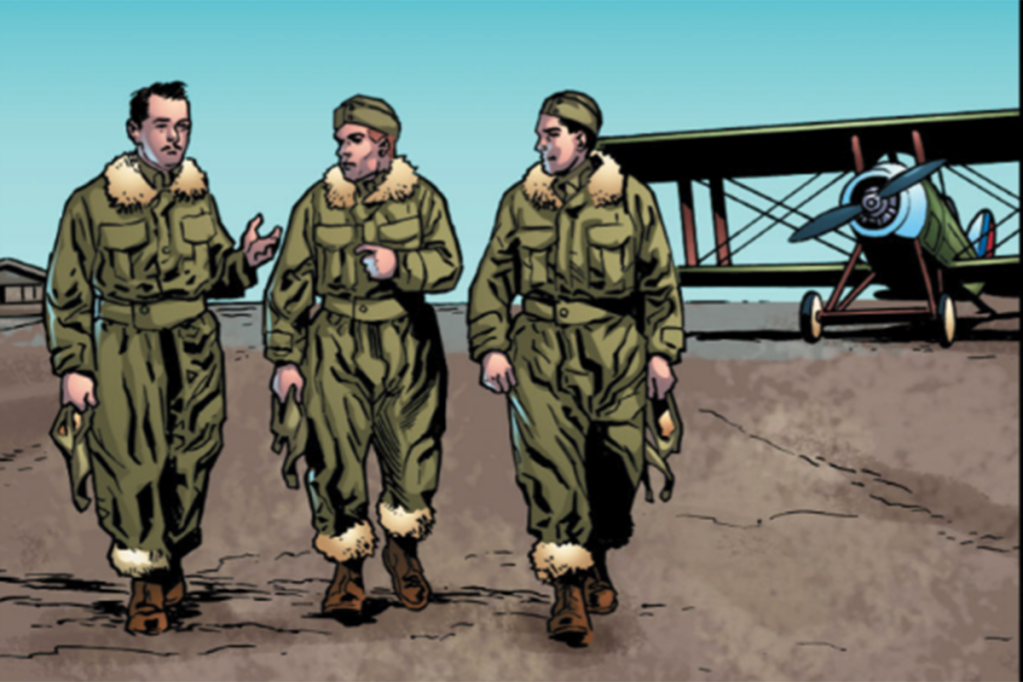
The graphic novel weaves a tale of Rickenbacker trying to distract his companions from their life-threatening predicament. In its telling, he regaled them with his exploits as a fighter pilot. In reality, Rickenbacker—who shot down 26 enemy targets during WWI—had little time for nostalgia.
Rickenbacker, who received the Medal of Honor after shooting down two German planes in 1918, had to stay focused on the present. It wasn’t pretty. Their food supply consisted of only four oranges, and they had very little water. In addition, most of the men had ditched their clothing in case they had to swim, leaving them painfully exposed to the brutal sunlight. Some sustained blisters so severe that they howled in agony.
Rickenbacker remained in his suit, and a hat covered his head. Although his clothes provided some protection from the sun, he still suffered. Rickenbacker developed sores on his body as a result of the saltwater that splashed on him, according to American Heritage, a history media outlet.
Whatever pain that Rickenbacker felt, he was determined not to succumb to the negativity of his situation. He was equally focused on making sure the other men didn’t, either, even if that meant becoming confrontational and sometimes flat-out mean.
“I used every trick I knew on them,” Rickenbacker said in his autobiography. “To some, I spoke with encouragement…, but others required stronger medicine. I rode them; I tore them to pieces; I struck at every raw nerve in their bodies. One of the men screamed back at me, ‘Rickenbacker, you’re the meanest, most cantankerous so-and-so that ever lived!”
One Passenger Didn’t Make It
American Heritage provided one startling example of Rickenbacker’s strategy in action. About halfway through their time on the ocean, Col. Hans Adamson couldn’t stand the pain from his blisters any longer. He went to throw himself over the side of his raft, only to have Rickenbacker pull him back just in time.
The next morning, Adamson apologized and thrust his hand toward Rickenbacker to make amends. The “Ace of Aces” didn’t take it.
“I don’t shake hands with your kind,” Rickenbacker fired back. “You’re got to prove yourself first.”
That reaction infuriated Adamson, but at least he focused his thoughts on Rickenbacker and not any feelings of despair. Adamson was not alone. Rickenbacker used that tactic on other survivors, who made a deal among themselves. They vowed to keep living just so they could have “the pleasure of burying Rickenbacker at sea.”
There is no indication whether Sgt. Alex Kaczmarczyk was involved in that pact. He was likely too ill to participate. His skin was terribly blistered, and Kaczmarczyk began feeling the effects of drinking too much seawater. It eventually became too much. He died on November 3, 1942—two weeks after their aircraft crashed.
For the others, the fight continued.
Spotting Planes
Rickenbacker divided the final orange on their eighth day on the water. He then caught a seagull and gave the others some of the meat. They also used some of it to bait hooks for fish.
Still, it was not nearly enough. Despite Rickenbacker’s best efforts, no amount of tough love was going to get these men to safety if rescuers didn’t save them.
They had 18 emergency flares at their disposal, per American Heritage’s account, and fired them all without attracting any attention to their plight. At that point, they hadn’t been on the water for very long. As the days passed, they spotted no planes as their rafts drifted farther out to sea.
That changed on their 19th day when Cherry noticed an aircraft overhead. After the plane disappeared in the distance, some men cried.
“Cut that out!” Rickenbacker roared, per American Heritage. “Where there’s one plane, there must be more!”
The survivors spied six more aircraft, but none of them resulted in their rescue. The men then separated. Cherry took one raft while co-pilot James Whittaker was in another one with the navigator, Lt. John De Angelis, and radioman, Sgt. James Reynolds. That left Rickenbacker behind in the third raft with Adamson and the plane’s mechanic, Pvt. John Bartek.
Rickenbacker was unsure how much longer any of them could hold on.
Finally Rescued
It was on November 13, 1942, when Bartek informed Rickenbacker that planes were flying overhead. Rickenbacker, who was sleeping, grabbed his hat and began waving it furiously. The planes, though, apparently didn’t see them because they continued on their path and out of the survivors’ view.
Their dejection quickly abated when the two U.S. Navy planes came back toward them and banked. A PT boat arrived and transported Rickenbacker, Adamson, and Bartek to the Ellice Islands, which are now called Tuvalu.
While they were hospitalized, they also learned De Angelis, Whittaker, Reynolds, and Cherry also survived. During their 24 days adrift, Rickenbacker lost 60 pounds, but he lived to tell about another close call.
The ordeal gave Rickenbacker a different perspective on what truly is important.
“The biggest lesson I learned from that experience was that if you have all the fresh water you want to drink and all the food you want to eat, you ought never to complain about anything,’” Rickenbacker told author Dale Carnegie several years later.
“Medal of Honor: Eddie Rickenbacker” is available to read or download for free at the AUSA’s Medal of Honor graphic novel webpage. All of the military nonprofit’s previous graphic novels on Medal of Honor recipients are there as well.
Don’t Miss the Best of We Are The Mighty
• This Medal of Honor recipient’s healing hands spelled trouble for the Japanese at Okinawa
• A former violinist singlehandedly cleared a mountain fortress during World War II
• How a decorated Navy aviator survived ‘the most replayed carrier crash’ ever
Loading comments…
Comments couldn’t be loaded. Please refresh the page.