
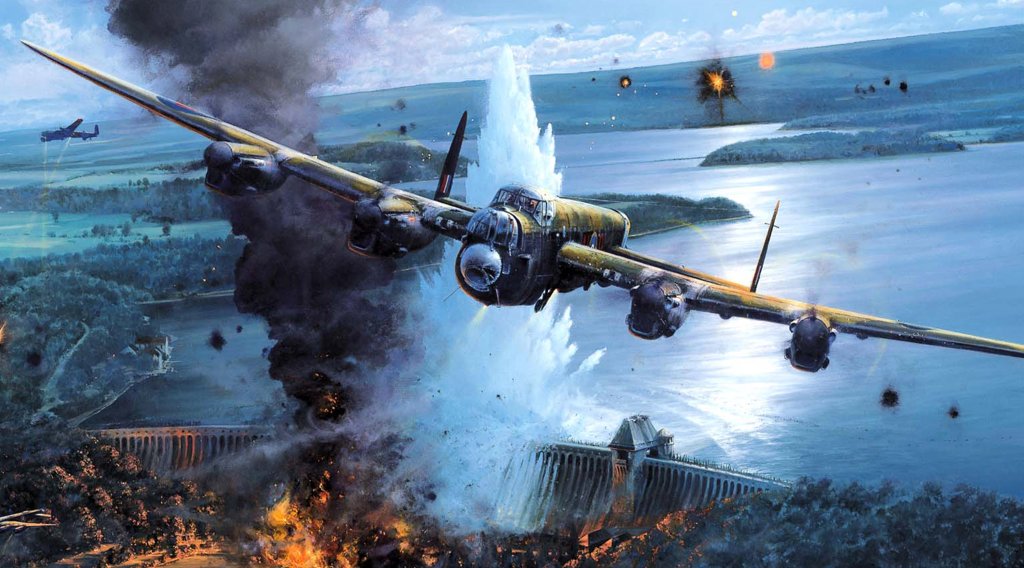
In 1977, “Star Wars” took the country—and the world—by storm. One of its most iconic scenes was the trench run, during which X-Wing and Y-Wing fighters defy the odds to put proton torpedoes down a thermal exhaust port, running a gauntlet of Imperial fighters and gun emplacements to do so. Well, that scene wasn’t exactly original.
That’s right, folks. George Lucas lifted that scene from a 1954 movie, “The Dam Busters.” And if you’ve seen them both, it’s painfully obvious. Some dialogue from the classic film was lifted nearly word-for-word and put directly into “Star Wars.”
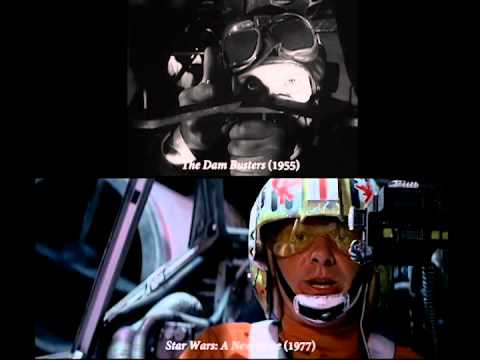
Star Wars Origins: The Dam Busters – Side by Side Scene Comparison
But the 1954 film that Lucas cribbed from portrayed an actual trench run mission flown by real bombers.
That bomber was the Avro Lancaster. The Lancaster was RAF Bomber Command’s primary bomber in the latter part of World War II. The Lancaster entered service in 1942, had a crew of seven, packed a total of eight .303-caliber machine guns for self-defense, and could haul a lot of bombs—up to 22,000 pounds of high-explosive candygrams. These included special bombs such as the anti-dam bomb developed by Barnes Wallis and earthquake bombs.
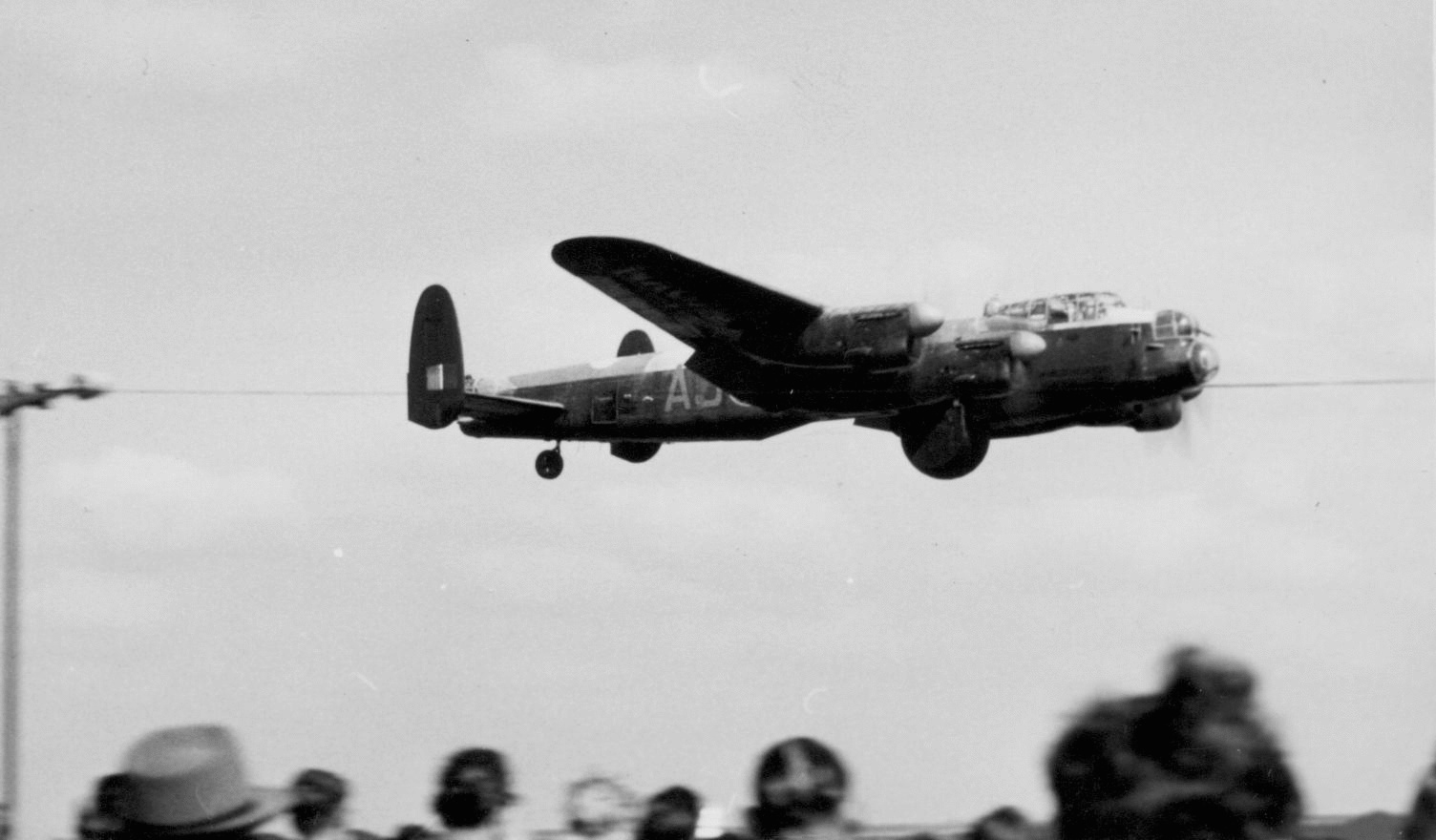
Outside the 1943 “Dam Busters” mission that inspired the 1954 film, which later inspired George Lucas, the Lancaster is credited with sinking the German Bismarck-class battleship Tirpitz and hitting several heavy fortifications. But it wasn’t all gloom and doom—the plane was also used to drop food to civilians in German-occupied territory.

The Avro Lancaster had a top speed of 275 miles per hour and a maximum range of 2,529 miles. Almost 7,400 of these planes were produced. They saw action over Germany, but in 1948, the Lancaster also took part in the Berlin Airlift, turning back Josef Stalin’s effort to get the Western Allies to abandon West Berlin.
Learn more about this British bombing workhorse in the video below.
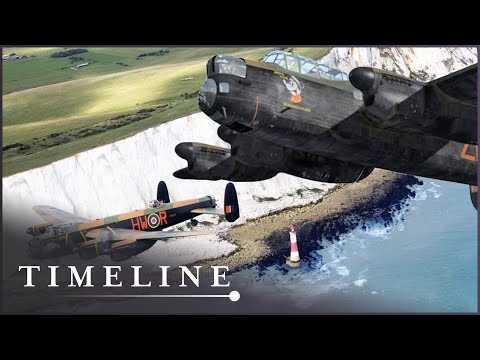
How The Lancaster Bomber Turned The Tide Of WW2 For Britain | Lancaster At War | Timeline
Don’t Miss the Best of We Are The Mighty
• 4 things that made the F-16 Fighting Falcon years ahead of its time
• How a Montana businessman built a Cobra attack helicopter from spare parts
• The tiny Cold War helicopter the Marines almost took into combat


Loading comments…
Comments couldn’t be loaded. Please refresh the page.