
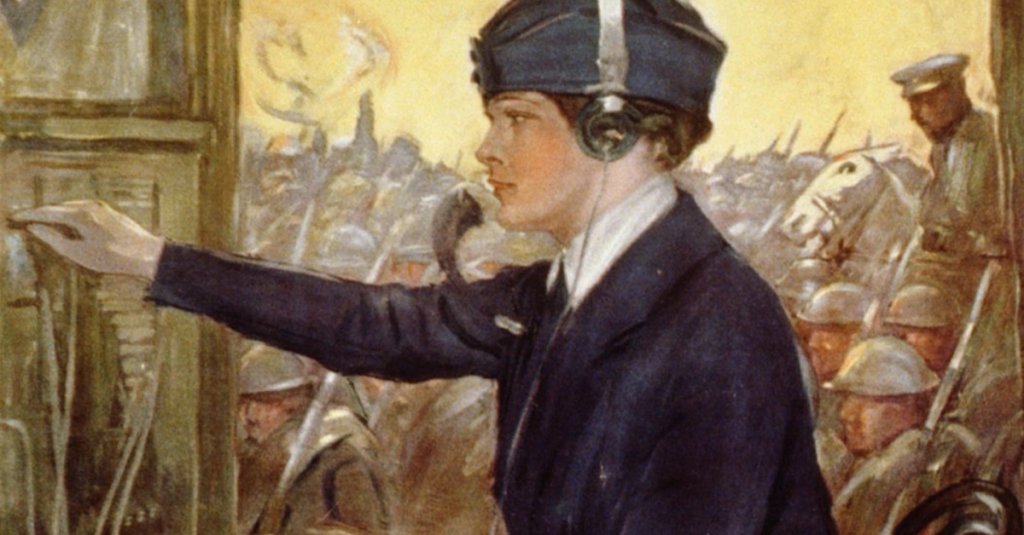
When we think of deployments these days, we think of long separations and physical distance. We don’t think of a total lack of communication. Between video calls, internet messages, texts, emails, and care packages, communication can pretty much stay constant using the myriad technologies available to us.
Also Read: Italian women quietly enabled a new front for the Allies in World War II
But as we all know, that was not the case in decades past. Military spouses at one time got nothing: no forms of communication at all. Then at some point—likely the American Civil War—letters could be sent to soldiers on a generally reliable basis. Even so, it often took weeks for them to be delivered and little detail could be shared.
But no form of communication could really replace a missing spouse.
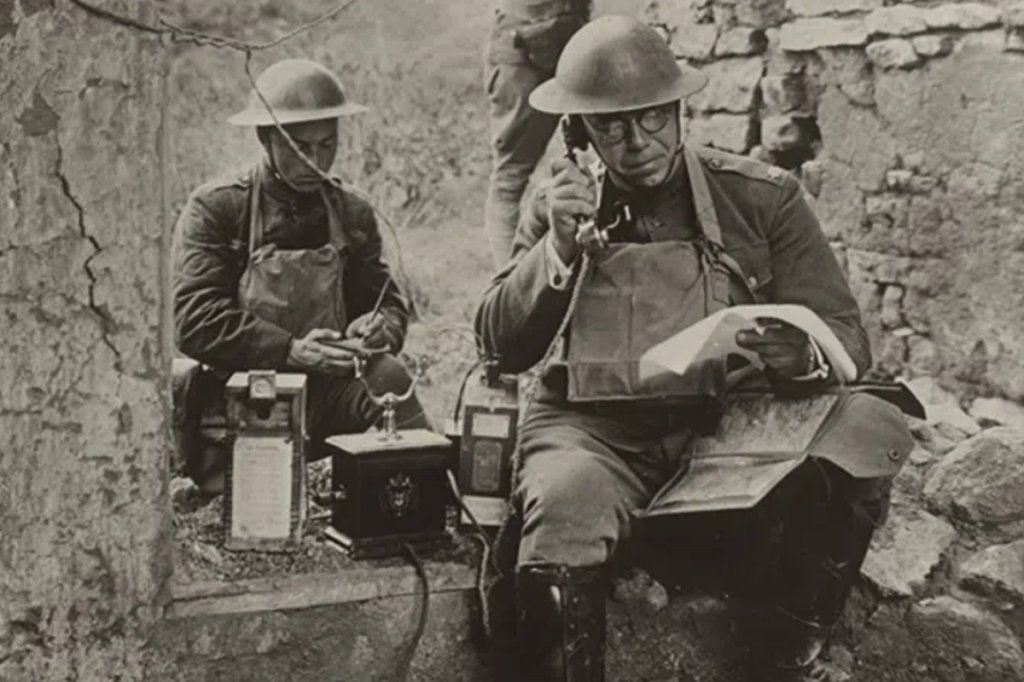
By World War I, technology had again advanced, allowing milspouses to hear their loved one’s voice via phone — at least, until they traveled overseas. Transatlantic voice calls simply didn’t exist yet; commercial radiotelephone service between the U.S. and Europe wouldn’t begin until 1927. Once a soldier shipped out, the mail was still the only line home.
There was, however, a bigger problem that arose as telephones became more and more important to war. They were used to call in orders, send messages, and coordinate movement between units—and as the First World War kicked off, the need to make more calls quickly outpaced the ability to field those calls.
This introduced women to an entirely new career opportunity as telephone operators. Known as the “Hello Girls,” the U.S. Army Signal Corps Female Telephone Operators Unit took the nickname from the standard American telephone greeting and the women who made those greetings. The unit was authorized in late 1917, deployed to France in March 1918, and was demobilized within roughly a year of the armistice, but there was hesitation to employing them at all.
At first, the War Department was against female service members who were not nurses. What changed the calculus was Gen. John J. Pershing. Communications between soldiers in the trenches and accompanying units had begun to deteriorate, and the American Expeditionary Forces required reliable and qualified personnel to handle their communications. A shortage of French telephone operators only made matters worse.
American soldiers put on the switchboards couldn’t do the job because they had no experience with the equipment and spoke no French. Late in 1917, Pershing cabled Washington and asked for bilingual women. Secretary of War Newton Baker relented, and AT&T went to work recruiting and training them.
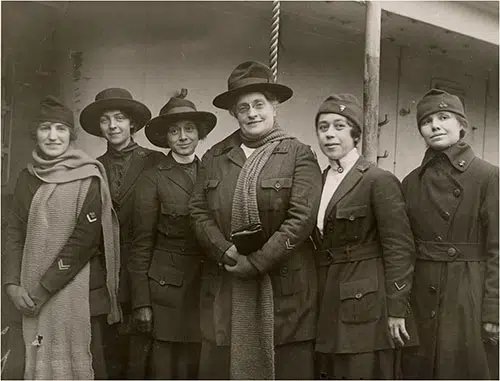
Some 7,000 women sent in applications, including many switchboard operators from across the United States. Roughly 450 were enrolled and trained; 223 ultimately shipped overseas in six operating units. Getting to the job wasn’t easy for any of them. On top of knowing the switchboard, operators had to speak both English and French to be able to communicate with those calling from the Western Front. They also had to pass physical and psychological exams and a Secret Service loyalty investigation, then train on code procedure and the geography of the front.
It wasn’t an easy life. The War Department required the women to be under constant supervision. They were also expected to dress sharp and provide their own uniforms: navy blue wool coat, skirt, hat, high-top shoes, and bronze insignia. In her book, “The Hello Girls: America’s First Women Soldiers,” author and historian Elizabeth Cobbs estimated the cost of their full kit at between $250 and $350. Either way, the Army never reimbursed a dime of it, and AT&T had to lend some of the women the money.
Pay ran from about $50 to $125 a month depending on rank, comparable to what male soldiers in the Signal Corps earned. For an operator on the base rate of $60, the uniform swallowed half a year’s salary. Some served barely long enough to pay off the debt.
The first 33 operators reached Paris in March 1918, and their workload swelled almost immediately. Before they arrived, American forces were placing around 13,000 calls a day; with the Hello Girls at the controls, that figure rose to roughly 36,000. More soldiers pouring in meant more calls coming through, leading to the need for more switchboards and operators to run them.
The U.S. also added more circuits, placing them under American authority rather than using French switchboards. By war’s end, more than 25 million local calls and 870,000 long-distance calls had moved over the American system, about 26 million connections across the unit’s full tenure.
By September, the Army needed 130 more operators, with another 40 hired every six weeks until 1919.
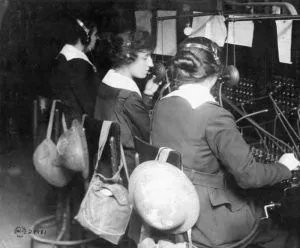
Their speed was essential, and was the whole point of hiring skilled women to work the switchboards. Male operators took as long as a full minute to complete a connection, even when the traffic was an order to advance or cease fire. The Hello Girls cut that time to about 10 seconds, with one captain estimating each operator could handle 300 calls an hour.
They also proved adept at spotting tapped lines and rerouting suspect calls. Without the Hello Girls, phones would have gone unanswered and soldiers’ messages unheard—not to mention an untold number of orders that wouldn’t have been relayed.
Most of the operators worked in Paris, Tours, and Chaumont, but the First Army detachment took it furthest forward. At Souilly, roughly seven miles from the front, they ran headquarters traffic through the St. Mihiel and Meuse-Argonne offensives, working switchboards under intermittent German artillery fire and restoring service after evacuations.
The unit’s chief operator at St. Mihiel and Meuse-Argonne, Grace Banker, became the only woman in the Signal Corps to receive the Distinguished Service Medal for World War I service. Two operators, Inez Crittenden and Cora Bartlett, died in service during the influenza pandemic. And a small detachment stayed on well past the armistice to handle communications for the 1919 Paris Peace Conference. Several units were held overseas longer than the soldiers they’d supported.
Through all of it, the girls (even the ones getting shelled by the Germans) were considered civilian employees. They took the Army oath, wore Army uniforms with rank insignia and overseas service chevrons, and were subject to military justice. But the adjutant general declared them civilian employees “authorized by contract and not by Army regulations.”
No contracts were ever drawn up.
Their commitment and service didn’t go entirely unnoticed. Suffragists folded the Hello Girls into the case for the Women’s Suffrage, and President Woodrow Wilson pointed to women’s war service when he came out for the federal suffrage amendment in January 1918.
The Army didn’t really care.
That operators would have to take up their own cause, and they spent the next half-century fighting for it. They wrote to senators, petitioned state bonus boards, and testified when anyone would hear testimony. Merle Egan Anderson was still pressing the case in her 80s, eventually pulling in the Veterans Administration and the American Legion.
More than 50 bills were introduced between 1927 and 1977 before one finally passed. President Jimmy Carter signed it into law that November as Section 401 of the GI Bill Improvement Act, granting the Hello Girls veteran status, honorable discharges, and the World War I Victory Medal.
Sadly, the discharge papers didn’t go out until 1979, and by then, only around 18 of them were still alive.
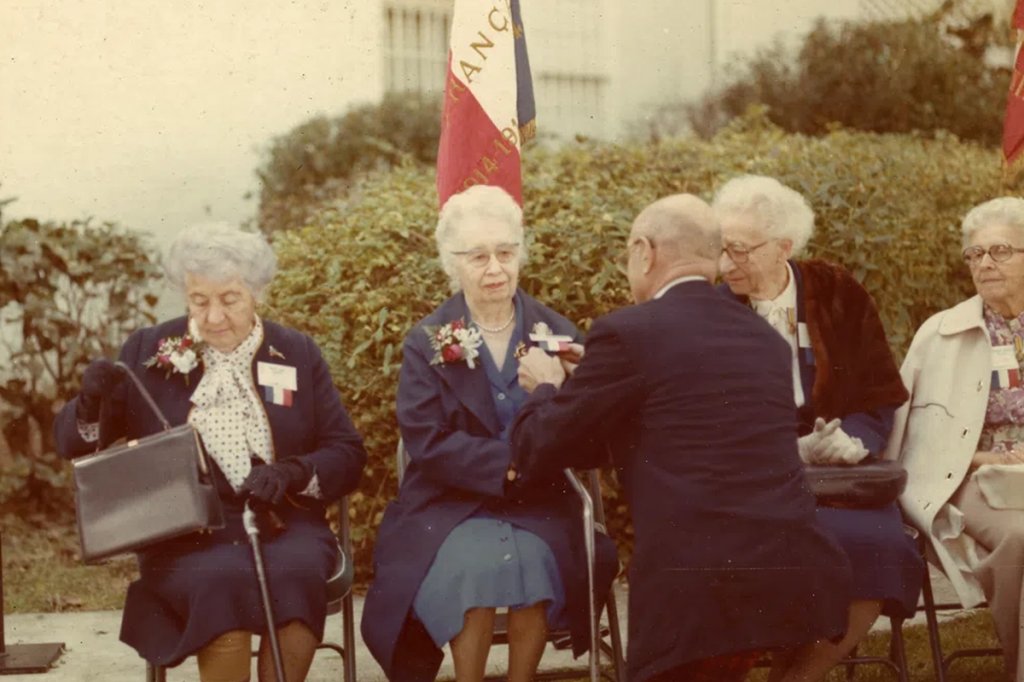
Recognition is still catching up. Researchers are working through the genealogies of all 223 operators and tracking down descendants, who have been getting service medals issued and VA headstone markers corrected a century later. In February 2026, a cemetery outside San Francisco marked the graves of nine Hello Girls who previously had none.
In late 2024, after a campaign led by the Doughboy Foundation and the U.S. World War I Centennial Commission, Congress authorized a Congressional Gold Medal for the unit as part of the National Defense Authorization Act for fiscal 2025, the same honor the WASPs received in 2009.
Nobody is left to accept it in person. A presentation ceremony is expected in 2027, 110 years after Gen. Pershing called them to serve.
Don’t Miss the Best of We Are The Mighty
• 8 Expectations of military spouses that no longer exist
• These healers changed soldiers’ fates. Here’s how the war changed them.
• When the Army barred men from serving as nurses, they fought back and won
Loading comments…
Comments couldn’t be loaded. Please refresh the page.