
Nearly four decades before Dwight Eisenhower signed a bill that created interstate highways, he received an up-close look at the state of America’s roads.
Eisenhower was not impressed.
“It seems evident that a very small amount of money spent at the proper time would have kept the road in good condition,” the future supreme commander of the Allied Expeditionary Force and president said.
Also Read: How Eisenhower’s ‘Atoms for Peace’ initiative started Iran’s nuclear program
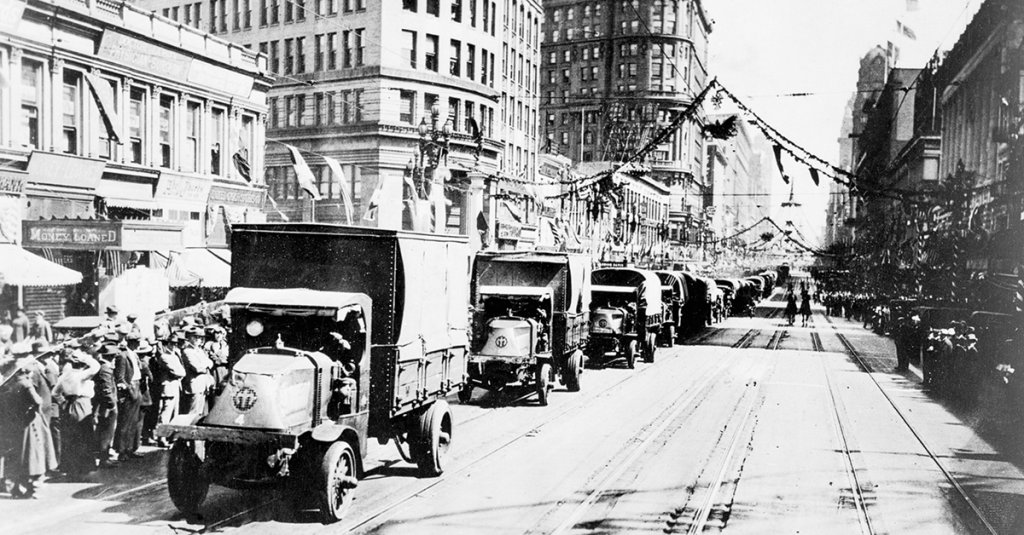
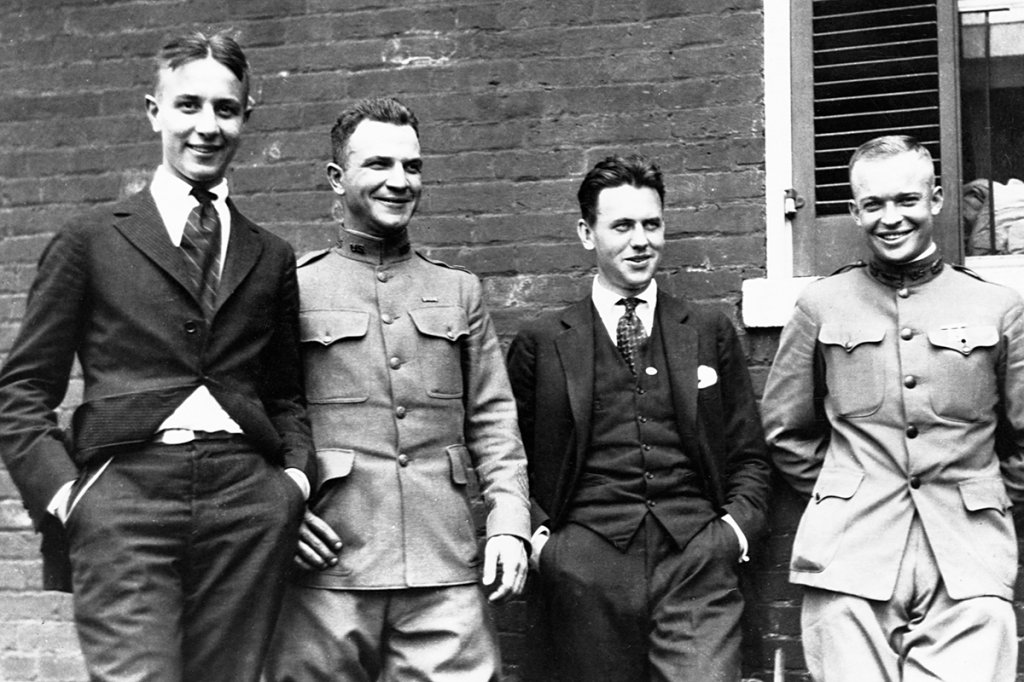
Eisenhower was a lieutenant colonel in 1919 when he volunteered to serve as a tank officer for the Army’s Transcontinental Motor Convoy. The Army undertook this unprecedented convoy largely to gauge the mobility of its equipment across the country. It also sought to assess the quality of roads.
The convoy began on July 7, 1919, in Washington, D.C., and completed its nearly 3,300-mile journey on September 6 in San Francisco. Along the way, the convoy stretched two miles and carried close to 300 military personnel.
They endured a bumpy ride on the then-relatively new Lincoln Highway. Eisenhower wasn’t just a passenger on the convoy. He was an official observer for the Army Tank Corps. Eisenhower was there to take notes and report back to his superiors.
Eisenhower gave them plenty to consider.
A Challenging Route
The convoy included 78 specialized military vehicles.
Thirty-four of those were cargo trucks. The others ran the gamut. There were tankers to carry fuel and water, as well as maintenance vehicles, a pontoon trailer, kitchen trailers, and an ambulance. One vehicle served as a mobile blacksmith shop and another that provided a searchlight. This arduous trek involved nine motorcycles, two of which surveyed the roads ahead each morning.
The Army even forked out $40,000 (or $772,000 in today’s dollars) for a custom-made tractor truck to extract vehicles if they broke down or got stuck.
Beginning its cross country journey, the convoy took seven hours to travel 50 miles on mostly good roads from the nation’s capital to Frederick, Maryland. The roads weren’t going to be as forgiving for most of their voyage. The convoy hopped on the Lincoln Highway, which spanned from New York City to San Francisco, in Gettysburg, Pennsylvania.
Once the convoy reached Illinois—one of 11 states through which it passed—the highway became unpaved for a stretch. In fact, almost 55% of the journey required the convoy to traverse “dirt roads, wheel paths, mountain trails, desert sands, and alkali flats,” the official convoy report, which Capt. William Greany compiled, noted.
Mechanical issues and breakdowns were inevitable.
Stalled and Broken Vehicles
The roads, or lack thereof, weren’t the only issue that the Transcontinental Motor Convoy experienced. Organizers couldn’t control the weather, and that became clearly obvious once the convoy hit the Midwest.
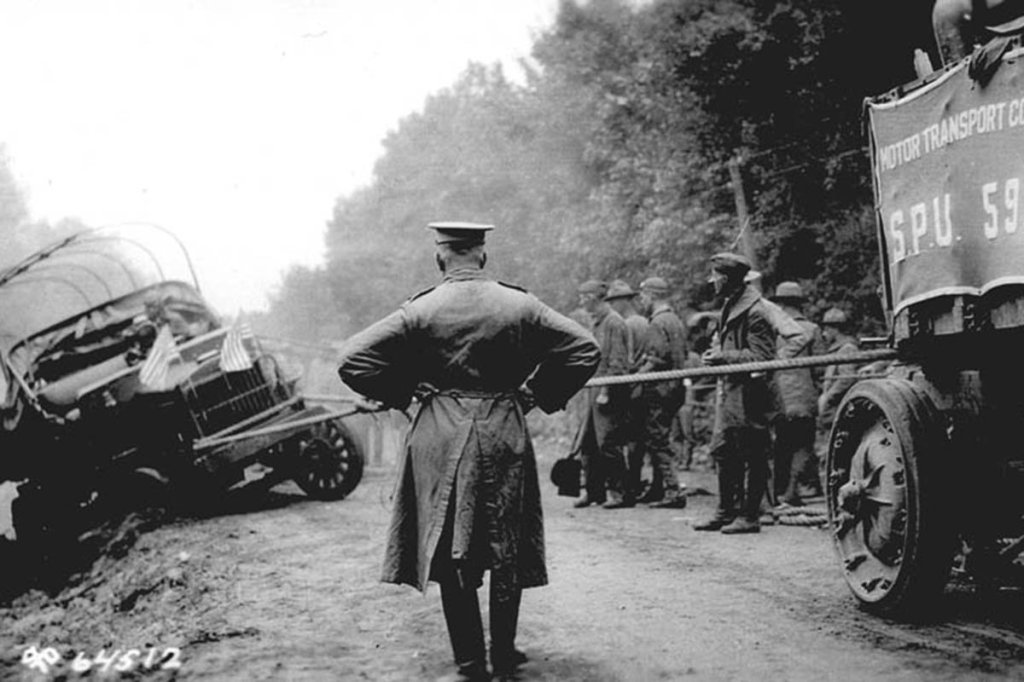
It arrived in Nebraska in early August 1919, just as heavy rains converted the convoy’s route into “gumbo mud.” Traveling became so difficult that convoy personnel stopped and reinforced two bridges in danger of collapsing before they crossed. The next day, their path became “sandy, some quicksand,” requiring the towing of 12 trucks.
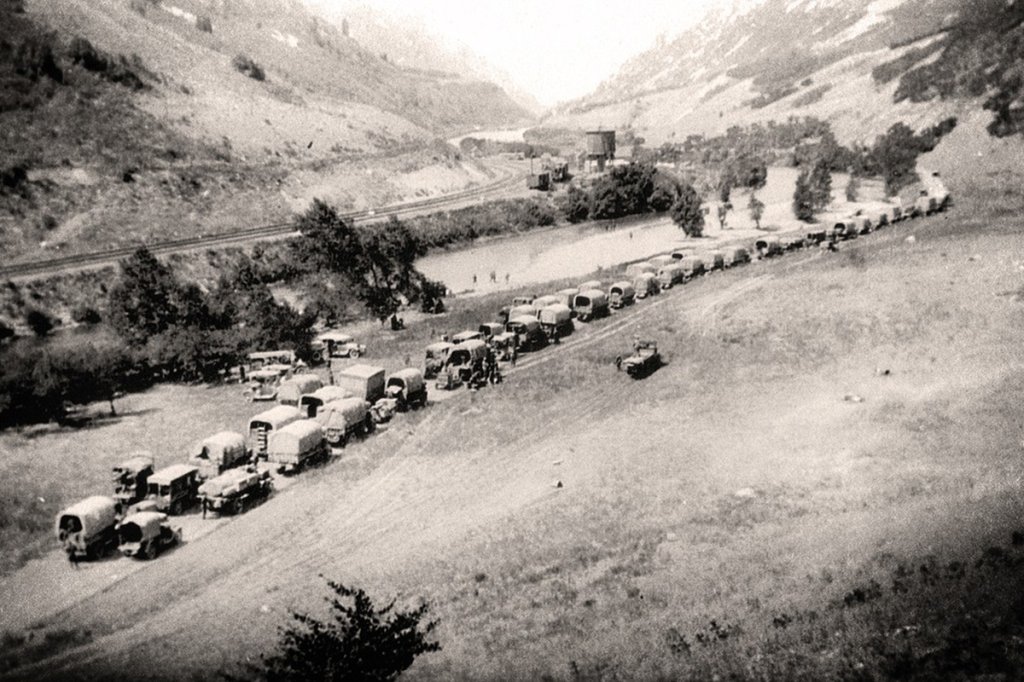
When the convoy reached Utah, the enemy was not mud. Crossing the rock-hard Great Salt Lake Desert made it slow-going for the convoy’s vehicles—if they could move at all.
“Practically every vehicle was mired and rescue work required almost superhuman efforts of entire personnel from 2 p.m. until after mid-night,” Eisenhower wrote.
Vehicles stalled in the drought-stricken desert. Sometimes, soldiers towed them out by hand. During this perilous part of their voyage, water became so scarce that the convoy’s leaders rationed it. Convoy leaders lifted the restrictions after the Utah Highway Commission provided more water. Horses carried that shipment.
Vehicles became stuck in ditches and frequently sustained broken parts. Nine vehicles actually didn’t make it to San Francisco, because they were too broken or destroyed.
As difficult as the route was on the convoy’s vehicles, its personnel also suffered.
Inconvenience and Hardship
When the Army conceived of a coast-to-coast convoy, it wanted to make the conditions as similar to wartime as possible. The service wanted those enduring the daily struggles to solve problems for themselves. In many cases, they did. In some, they could not. Either way, it challenged the personnel en route.
Long days were not uncommon, and as a result, they often were weary. They averaged 5½ hours of sleep nightly, according to the official convoy report.
“The living conditions of the personnel were comparable to those generally experienced in the advance zone of battle operations, but the tour of continuous duty was of a longer duration than is usual for such service…,” the report noted. “Much inconvenience and at times even hardship was experienced due to the almost continuous and excessive amount of strenuous work.”
Besides rationing and not enough sleep, the enlisted men and officers on the convoy often did not have proper shelter or places to bathe. The wide range of temperatures, wind conditions, sand storms, and dry climate out West further complicated matters.
As a result, the convoy sustained 21 casualties—an average of one every three days on its 62-day journey. Somehow, they persevered, all the way to their final destination.
Looking at Roads Differently
Tough times surfaced aplenty during the convoy. Greany’s report chronicled 230 road accidents. It also detailed 88 bridges and culverts that required stabilization before the convoy could advance.
“Even some of the bridges reinforced by the convoy engineers collapsed during use,” Greany explained.
Whatever the convoy personnel endured wasn’t likely top of mind for most people who turned out to see the military vehicles pass through their cities and towns. About 3.25 million people enthusiastically saw the military vehicles pass their cities and towns.
Eisenhower never forgot the experience. When he ascended to the presidency, Ike remembered how the convoy helped to convince him of the importance of improving U.S. roads. Seeing Germany’s roads during World War II also influenced him.
“After seeing the autobahns of modern Germany and knowing the asset those highways were to the Germans, I decided, as president, to put an emphasis on this kind of road building,” Eisenhower wrote in his 1967 book “At Ease: Stories I Tell to Friends.” “The old convoy had started me thinking about good, two-lane highways, but Germany had made me see the wisdom of broader ribbons across the land.”
Eisenhower signed the National Interstate and Defense Highways Act in 1956. America’s roads have never been the same.
Don’t Miss the Best of We Are The Mighty
• Why the Army’s longest battle ever involved multiple cease-fires
• The story behind the World War II aircraft that started Air Force One
• The ‘Purple Heart Battalion’ fought Nazis abroad and injustice at home
Featured


Loading comments…
Comments couldn’t be loaded. Please refresh the page.