
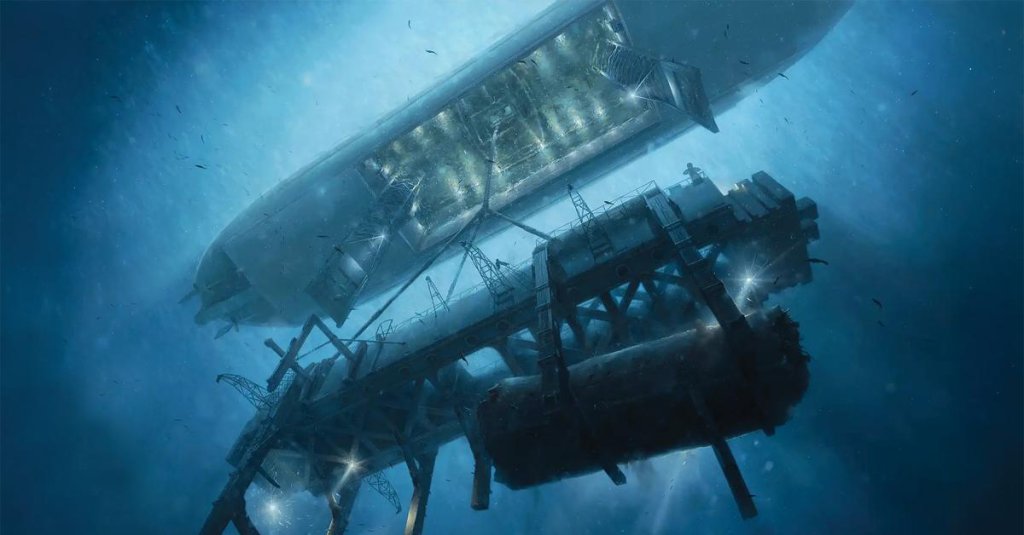
After a Soviet ballistic missile submarine sank in 1968, they tried unsuccessfully to retrieve the lost vessel for two months. Maybe the CIA would have better luck.
The American intelligence agency wanted to see what cryptological information the disabled sub possibly contained. To do that, CIA agents needed an alibi to explain why a ship was hovering around where the K-129 sub went down approximately 1,800 miles northwest of Hawaii. It needed something plausible, a reason that did not arouse the Soviets’ suspicion during the Cold War.
The CIA had a problem. It enlisted Howard Hughes to help solve it.
Also Read: How these Navy submariners worked to save themselves after their sub sank
“Someone came up with the notion of: ‘Well, ocean mining is a thing,’” Josh Dean—author of “The Taking of K-129”—told National Public Radio’s “All Things Considered” program in 2017. “‘So the CIA original task force decided, ‘Well, what if we pretended that we were ocean mining? We’ll tell people that this is a mining ship, and we are going to be the first people to mine the ocean.’”
So in the early 1970s, construction began on the Hughes Glomar Explorer as part of Project Azorian. Officially, the party line was that the eccentric billionaire was building a ship to hunt for manganese nodules on the ocean bottom. The CIA didn’t care one iota about manganese nodules. It cared greatly, however, about getting a closer look at the K-129—and fast.
What Was the Glomar Explorer?
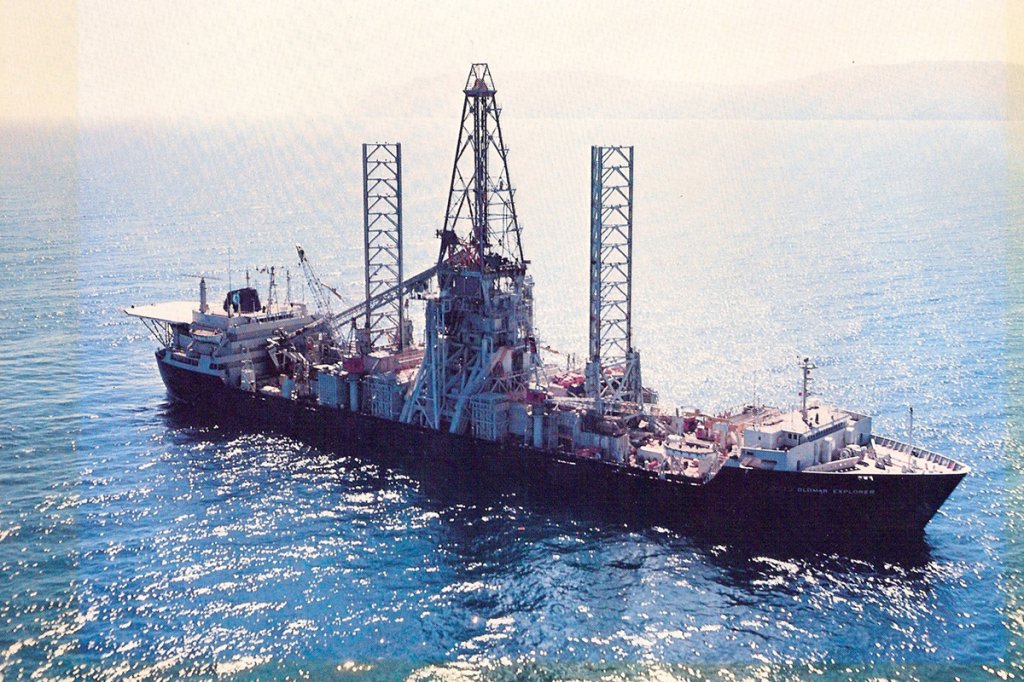
Before the K-129 sank, possibly due to a snorkeling system mishap, no salvage operation past a depth of 300 feet ended successfully. The K-129, along with its 98-person crew, rested a ridiculous 16,500 feet below the water’s surface. To have any chance at pulling off this Herculean feat, the CIA required a ship unlike any other.
Builders devised one themselves. Constructed over two years, the Glomar Explorer included a giant mechanical claw to pick up the sub and a large well for it to reside once on board. Once builders finished with the claw, or capture vehicle, they secretly moved it onto the ship via an underwater barge. Not only that, the roughly $350 million price tag also covered the installation of a derrick on deck and two imposing docking legs, according to the CIA.
The process wasn’t going to be as simple as deploying the claw, or capture vehicle, like one of those amusement park attractions where someone can grab themselves a stuffed animal. For this elaborate plan to work, the ship’s crew had to lengthen the capture vehicle’s reach. They accomplished that through connecting 60-foot sections of steel pipe as they lowered the claw, according to the CIA. Once the capture vehicle had the K-129 in its clutches, they reversed the lift process.
Before the CIA even began building the Glomar Explorer, it got Hughes’ approval for its ruse. One of the world’s richest men ever (when accounting for inflation) went along with it.
Hughes’ Eclectic Background
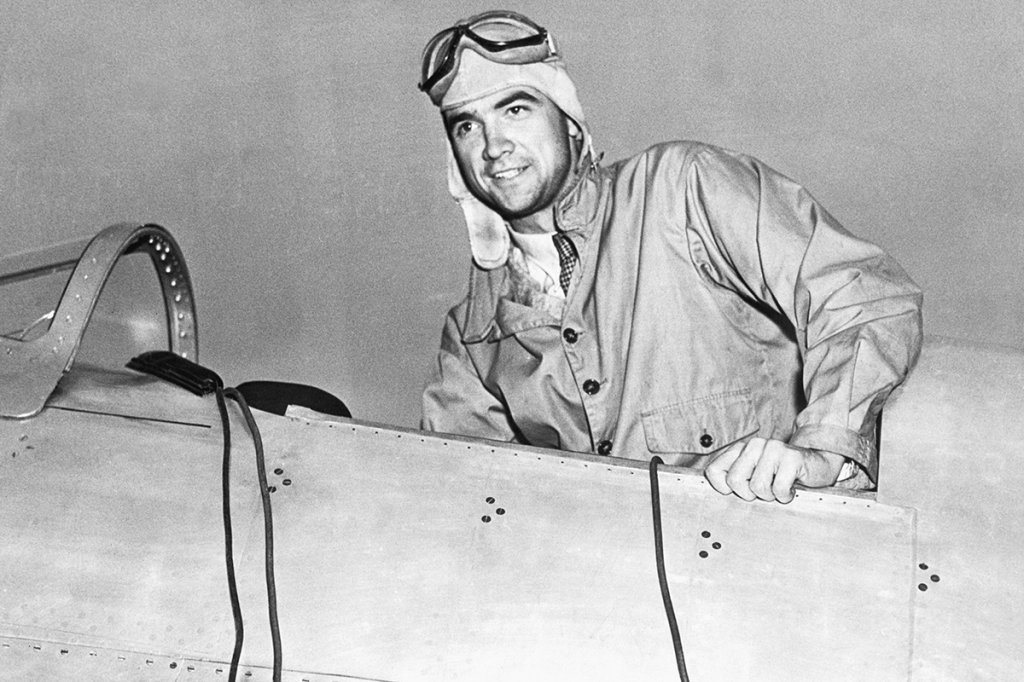
After both of his parents died before he turned 20, Howard inherited the Hughes Tool Company as an only child. His ambitions, though, extended far beyond business.
“I intend to be the greatest golfer in the world, the finest film producer in Hollywood, the greatest pilot in the world, and the richest man in the world,” Hughes once boasted.
Hughes was a good golfer, but he was no Gene Sarazen. Hughes received 26 credited or uncredited producer credits on 26 films, per the Internet Movie Database; there wasn’t a “Gone with the Wind” in the bunch. As a pilot, Hughes established multiple aviation records. In 1938, he flew around the world in 3 days, 19 hours, 17 minutes—a record at the time. And the very mention of his name became synonymous with incredible wealth.
Hughes was peculiar but also very determined, and the Glomar Explorer wasn’t the first time that he and the government worked together. During World War II, Hughes designed the largest wooden aircraft ever, the Spruce Goose, for the U.S. military to transport troops and tanks. Construction lasted so long that the war ended before the Spruce Goose was ready to fly.
Hughes testified before the Senate in 1947 as politicians questioned the potential misuse of government funds.
“I put the sweat of my life into this thing,” Hughes protested. “I have my reputation rolled up in it, and I have stated several times that if it’s a failure, I’ll probably leave this country and never come back. And I mean it.”
A few months after Hughes’ testimony, Hughes flew the Spruce Goose for the only time. The flight lasted for a mile and took Hughes not far above the water in Long Beach, California.
The End of Project Azorian
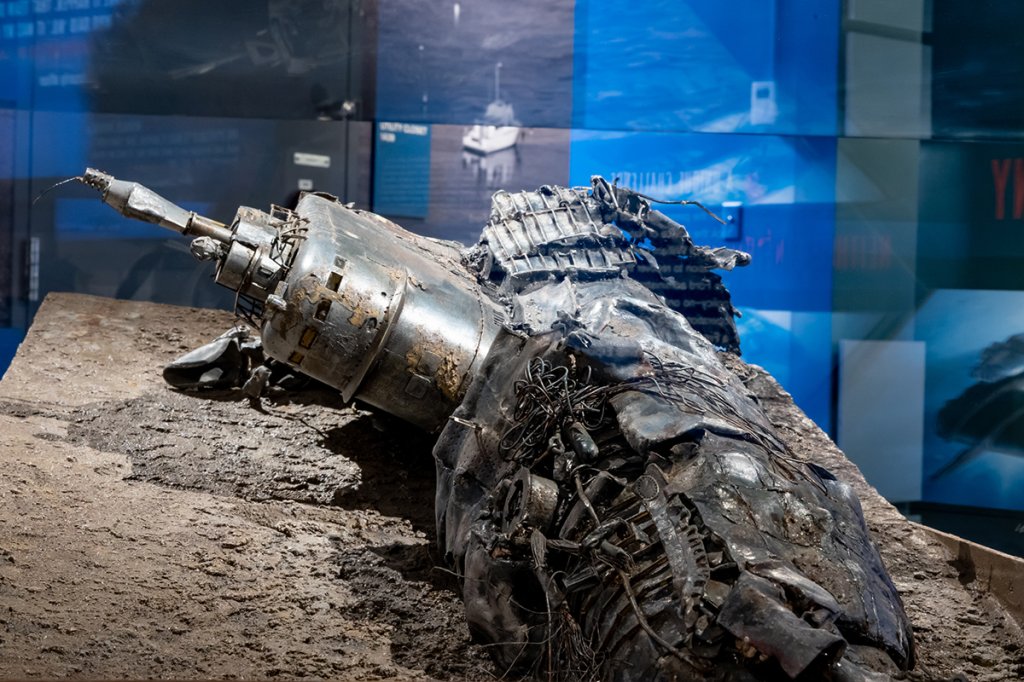
More than six years after the K-129 sank, the Glomar Explorer was finally ready to attempt to get it. With Soviet ships lurking in the vicinity, the crew conducted its mission in relative secrecy in July 1974, per the CIA’s account. Once the Glomar Explorer’s claw grabbed the sunken Soviet vessel, it attempted to lift it to the surface. During transport, it broke apart.
Although that was undoubtedly a setback, the crew still had a section of the K-129 in its grasp. Once they completed the retrieval, they learned it contained the bodies of six Soviet submariners. (In 1992, CIA Director Robert Gates presented Russian President Boris Yeltsin with evidence of their burial at sea.)
The Glomar Explorer never made a second attempt to extract the rest of K-129. Thieves thwarted the CIA’s goal when they absconded with secret documents from a Los Angeles office for one of Hughes’ companies. They included details about Project Azorian. In February 1975, a Los Angeles Times story connected the dots between the CIA, Hughes, and the K-129 sub.
That article further compromised the mission’s secrecy, which absorbed another blow when an investigative reporter Jack Anderson spilled details on national television. According to Anderson’s report, the CIA found nothing really of value on the K-129 and questioned the high cost of Project Azorian.
Those revelations got Congress’ attention and basically scuttled the CIA’s efforts. It didn’t help that the Soviets began to guard the salvage site more closely.
Project Azorian didn’t end the way the CIA or Hughes hoped. It made for a good story, however, adding another layer to the famous billionaire’s legend.
Don’t Miss the Best of We Are The Mighty
• The US Navy’s first submarine was a hand-cranked wooden egg
• Why the CIA once bought up the world’s supply of LSD during the Cold War
• Vietnam vet Bill Roedy left the Army for cable TV—and helped win the Cold War
Featured

Sponsored Content
Automated vs. self-directed investing: A guide for military families
Loading comments…
Comments couldn’t be loaded. Please refresh the page.