
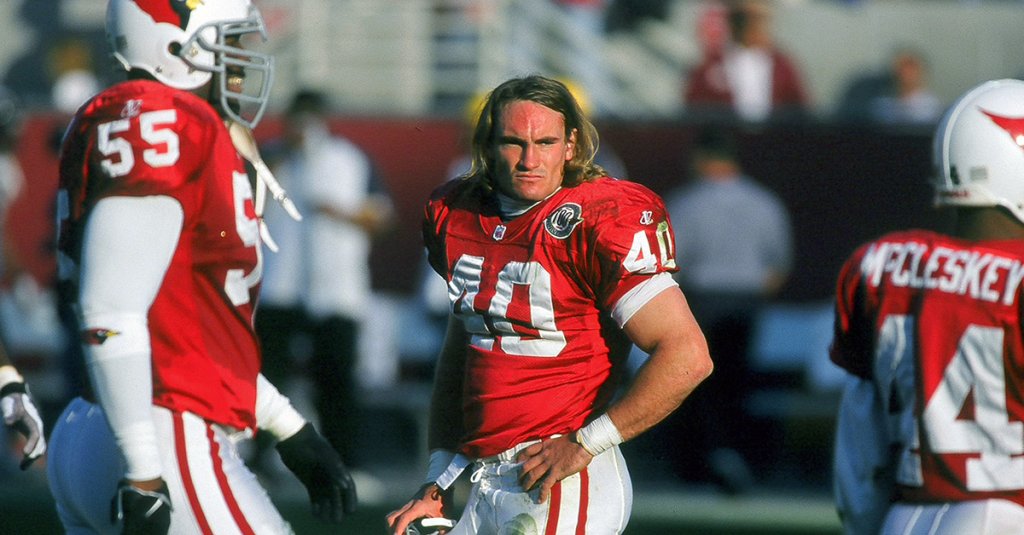
As terrorists attacked the United States on September 11, 2001, Pat Tillman sat transfixed in front of the television.
The attacks occurred on a Tuesday, and Tillman was in the Arizona Cardinals’ media room. Tillman didn’t say much. He just watched footage of terrorists flying two planes into the World Trade Center in New York and another one into the Pentagon in Washington, D.C. (A fourth plane crashed near Shanksville, Pennsylvania, after passengers fought with hijackers.)
Also Read: This No. 1 overall draft pick became the NFL’s MVP while in the Army
Those heinous, heartbreaking images compelled Tillman to join the U.S. Army the following year. His plan was to join the elite Army Rangers, which he accomplished. For Tillman, there was no turning back.
“My great-grandfather was at Pearl Harbor,” Tillman said before enlisting. “A lot of my family has done far more. I really haven’t done a damn thing [as far] as laying my butt on the line like that, so I have a great deal of respect for those that have, and what our flag stands for.”
Tillman risked a burgeoning professional football career to fight during the Global War on Terrorism. He played four seasons in the NFL, all with the Cardinals, who offered him a three-year contract worth $3.6 million to re-sign as a free agent. Accepting that contract would have been the safe option. Tillman wasn’t interested.
Those close to Tillman—and even some in the Pentagon—attempted to dissuade Tillman from joining the Rangers. He was not budging.
Achieving Goals
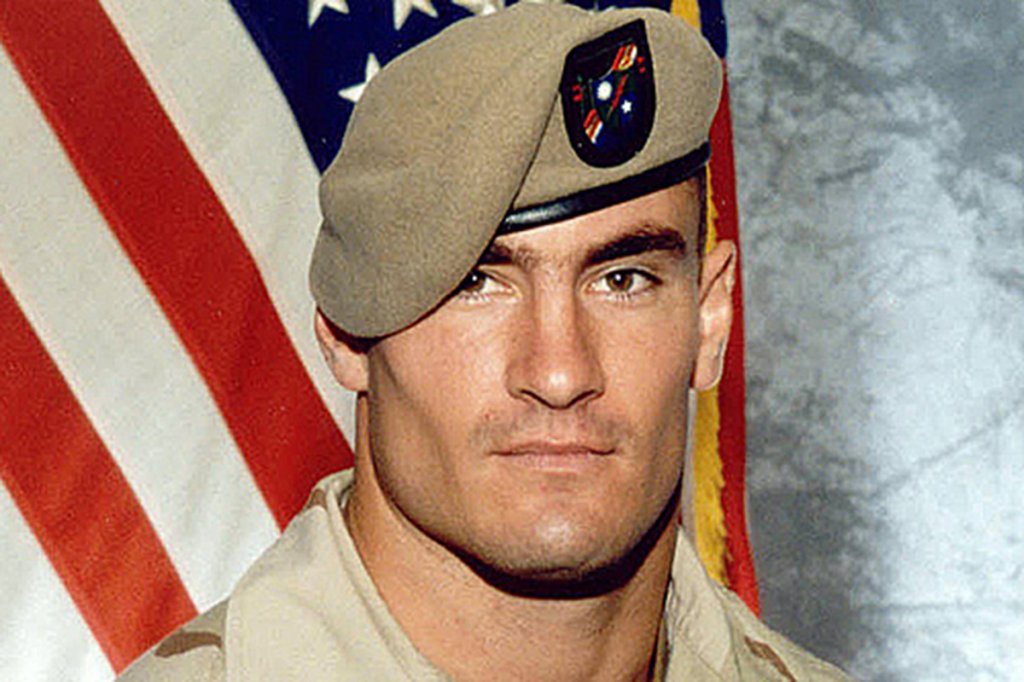
No one placed limits on Pat Tillman.
He entered the NFL as an undersized linebacker from Arizona State. The Cardinals selected him in the seventh round of the 1998 NFL Draft and converted him to the safety position. As the 226nd overall selection, Tillman didn’t enter the league with any guarantees of making the roster. He had to prove himself, which didn’t bother him at all.
His agent, Frank Bauer, tried to temper Tillman’s expectations. As Bauer related in the NFL Films documentary “Pat Tillman: The Cardinal Who Became an American Hero,” he told his client that his goal as a rookie should be to contribute on special teams.
Tillman thought that bar was too low. Instead, he vowed to start by the midway point of the Cardinals’ 16-game regular season. Tillman underestimated himself. He was in the starting lineup when the Cardinals faced the Seahawks in Seattle in Week 2.
Tillman was laser-focused as a player, but he also was patriotic. One of his favorite parts of the game-day experience was when the national anthem played. He lived in the moment, wherever he was.
“I set goals, like kind of short-term things for this year,” Tillman said in the NFL Films doc. “… I don’t know what I want to do when I’m 50. After I’m done with sports, I’d like to move on to something else, just to see if I can do it. You talk about doing different things. Well, it’s almost safe to stay in sports, so I might want to get out of it.”
“What Are You Doing, Man?”
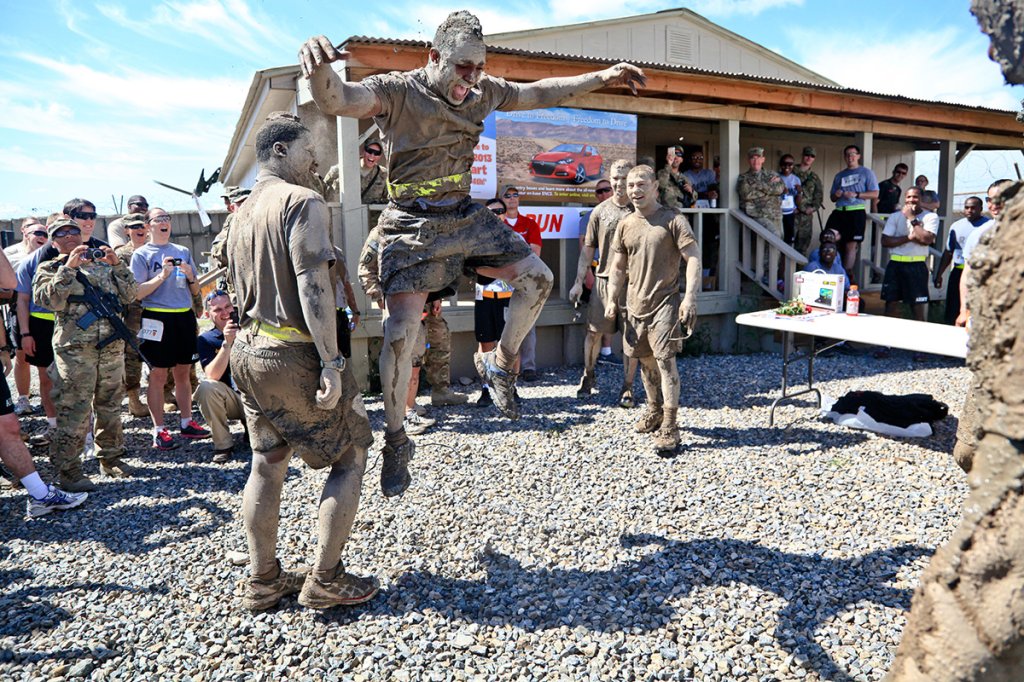
Tillman didn’t fit the mold of a typical NFL player. Hall of Fame football player Joe Greene, then a Cardinals assistant coach, thought Tillman was a hippie when he first saw him. Tillman didn’t have a cellphone. In the offseason, he trained for marathons and half-ironman triathlons, and he pursued a master’s degree in history.
Tillman didn’t mind being a lone wolf. After 9/11, the NFL allowed teams to vote about whether they would play the following Sunday. When the Cardinals’ players got together, Tillman was the only one who wanted to play.
“I’m not going to let these people dictate my life,” teammate Dave Brown recalled of Tillman’s explanation for his vote. No NFL games were played the following weekend.
When Tillman became a free agent after the 2001 season, Bauer called him with the Cardinals’ offer. It was life-changing money, and Bauer implored Tillman to take it. At Pat and Marie Tillman’s wedding in May 2002, Bauer learned about Tillman’s intention to become a Ranger.
That same month, Tillman and his brother Kevin enlisted for three years at a military recruiting station. The news stunned Bauer, as it did some of Tillman’s teammates.
“What are you doing, man? Why are you going to put yourself at risk like that?” Jake Plummer, who played with Tillman at Arizona State and with the Cardinals, remembered thinking. “But that kind of puts me on my level and puts him on his.”
The military was also concerned with Tillman’s plans.
Offered a Way Out of Combat
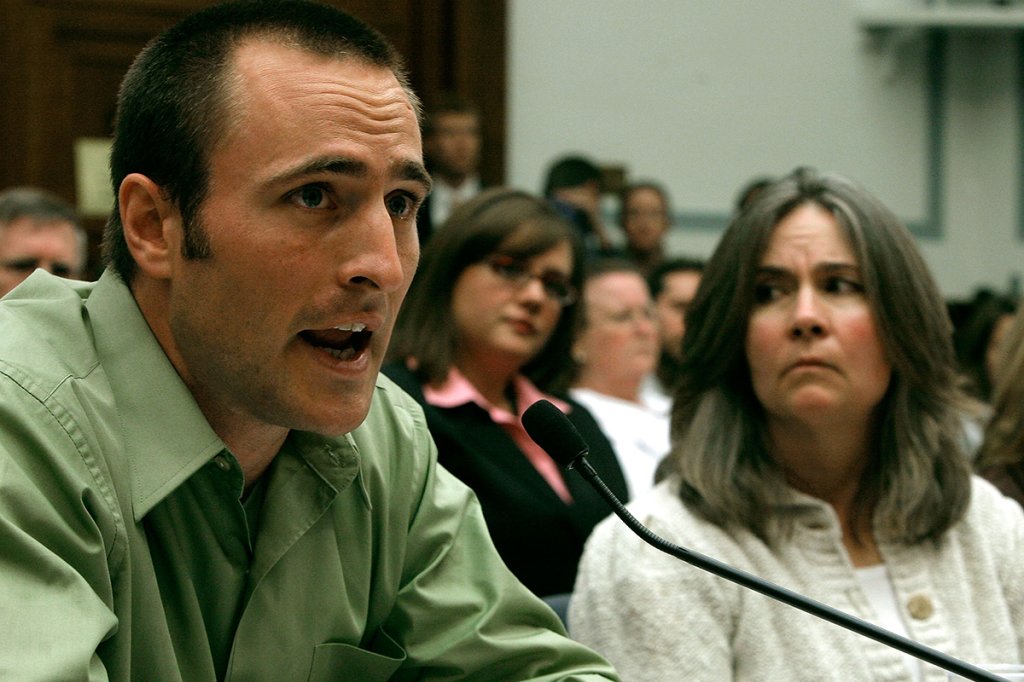
When a Pentagon official called Tillman’s agent, she came prepared with an offer.
She told Bauer that Tillman could travel and speak to Army troops during his service, thereby avoiding combat. The Defense Department wasn’t absolutely sure that Tillman fully realized the implications of his choice.
“She kept saying, ‘We want to keep him out of harm’s way, because special forces in battle, the life expectancy is 7½ minutes,’” Bauer said. “She goes, ‘You’ve got to convince him not to do this.’”
Bauer tried, but Tillman wasn’t interested in using his status as an NFL player to avoid the front lines. Tillman deployed twice to the Persian Gulf, first to Iraq in 2003 and then to Afghanistan the next year. On April 22, 2004, Tillman was with Company A, 2nd Battalion, 75th Ranger Regiment when he was shot and killed.
The Army initially said enemy combatants killed Tillman, but later acknowledged it was a friendly fire incident. Tillman was 27 years old. He became the first NFL player killed in combat since Bob Kalsu, an offensive lineman with the Buffalo Bills, died during the Vietnam War in 1970.
In Tillman’s memory, his family and friends—including his widow, Marie—established the Pat Tillman Foundation. Its goal is to develop the next generation of leaders in the military community. Since its inception, the foundation has produced nearly a thousand Tillman Scholars.
“Somewhere inside, we hear a voice,” Tillman once said. “It leads us in the direction of the person we wish to become, but it is up to us whether or not to follow.”
Tillman followed his voice. It allowed him to live an exemplary life.
Don’t Miss the Best of We Are The Mighty
• The history of Rip It, the beverage that fueled the War on Terror
• This former Navy pilot became one of the unlikeliest Super Bowl champions ever
• This Medal of Honor recipient came up with the idea for the Super Bowl
Loading comments…
Comments couldn’t be loaded. Please refresh the page.