
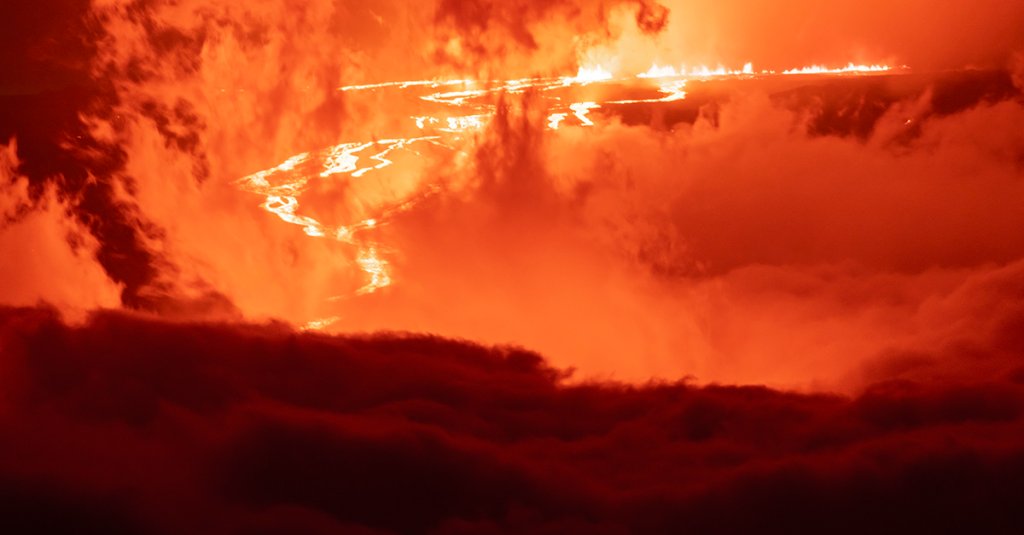
In the late 19th century, the city of Hilo on the island of Hawaii was in peril.
Mauna Loa, the world’s largest active volcano, posed an imminent threat to Hilo (pronounced HEE-low) after it erupted on May 1, 1880. It blew again six months later, and as the lava flow poured down the mountain and toward Hilo, its residents became increasingly concerned.
Also Read: Why the lessons from the attack on Pearl Harbor still matter today
They nervously made preparations for the damage that the encroaching lava might cause. Some put their faith in God. Others prayed to Pelehonuamea, the goddess of fire and volcanoes, so she would spare Hilo, according to the U.S. National Park Service. One resident was willing to do anything, go so far as to offer his most prized pig (plus chickens, fruit, and some of his own hair) if Pelehonuamea protected the town.
Officials even considered bombing to divert the lava flow. They never dropped any explosives that time. A half-century later, when Mauna Loa erupted again, the U.S. Army Air Corps was called in to save Hilo.
That time, the bombs fell.
How Immense Is Mauna Loa?
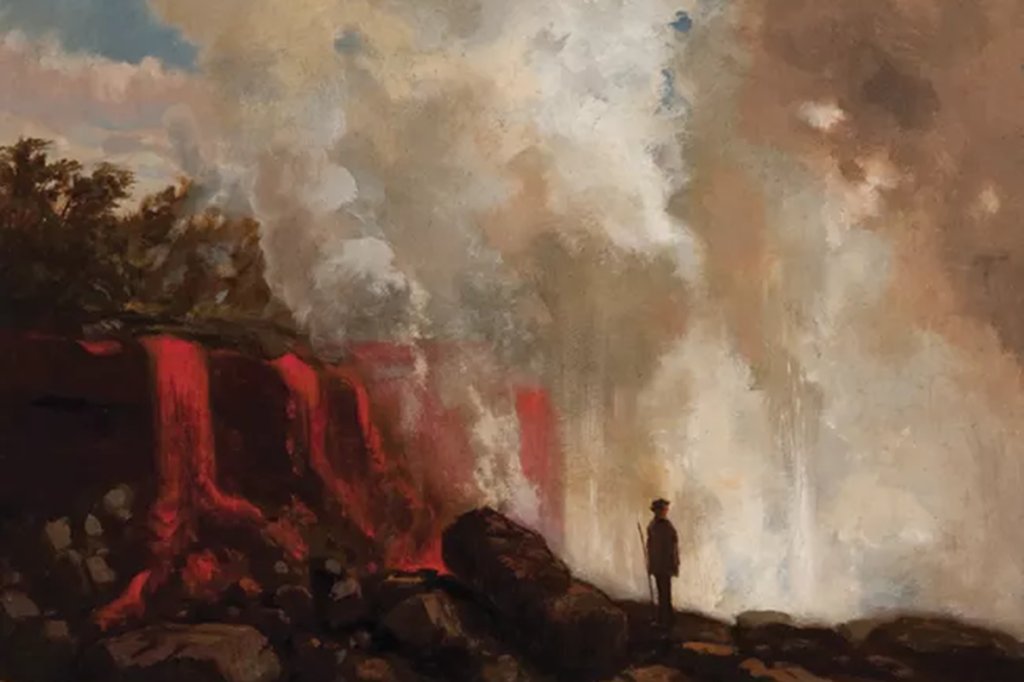
Eight main islands comprise the state of Hawaii. The biggest is the island of Hawaii, of which the Mauna Loa volcano covers about half of its land mass.
Mauna Loa, which means “long mountain” in Hawaiian, rises nearly 13,700 feet above sea level. That doesn’t provide the full context of how massive this volcano actually is. Why? Because more than half of the mountain, or approximately 16,400 feet, sits below the surface of the Pacific Ocean.
All told, its height is roughly 30,000 feet, or about a thousand feet taller than Mount Everest. That is impressive enough, but Mauna Loa’s base to summit measures a nearly unfathomable 56,000 feet.
“It is so heavy that it has depressed the underlying seafloor, like placing a bowling ball on a mattress,” Jeffrey Karson, founder of the Syracuse Lava Project, told Syracuse University Today.
Even though Mauna Loa has erupted 34 times since 1843, per the U.S. Geological Survey, Karson told the university that it is not the world’s most dangerous volcano.
When it blows, though, the residents of Hilo have no choice but to take notice.
Asking the Military for Help
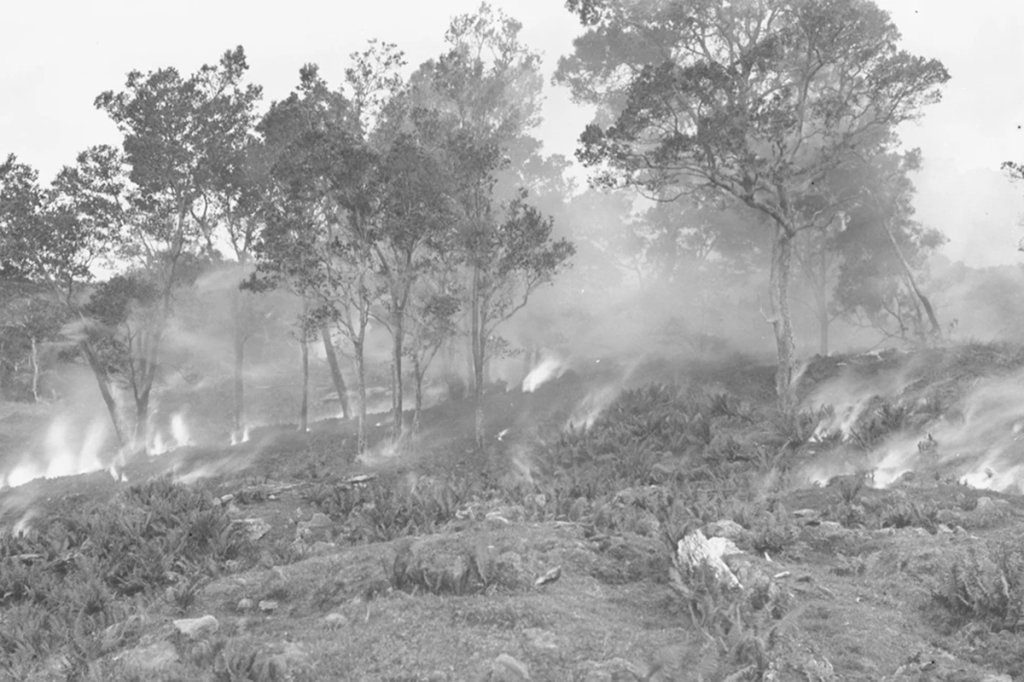
Thomas Jaggar was just a boy in Philadelphia when Mauna Loa threatened Hilo in 1880 and 1881. When it erupted on November 21, 1935, Jaggar was a highly regarded volcanologist. He founded the Hawaiian Volcano Observatory in 1912, so he was a point person on how Hilo responded to Mauna Loa’s latest eruption.
Six days after initially erupting, a vent on one of the volcano’s flanks opened. As lava made its way between the Mauna Loa and Mauna Kea (“white mountain”) volcanoes, it moved ever closer to Hilo. The lava flowed at an average of a mile daily, according to a 2024 article in “Air & Space Quarterly.”
Along with colleague Ruy Finch, Jaggar needed to do something, and quickly. Besides the safety of Hilo’s residents and protecting their property, Jaggar also considered the impact on the city’s water supply if the lava flowed into the Wailuku River. That potentially catastrophic outcome prompted Jaggar to contact the U.S. military for help.
Lt. Col. George S. Patton, who was recently stationed in Hawaii, approved the military’s involvement in the bombing of Mauna Loa. Six Keystone B-3A bombers and four LB-6 light bombers flew from Pearl Harbor to Hilo. They combined to drop 20 bombs on the volcano’s lava channels on December 27, 1935.
Each bomb weighed 600 pounds and included 300 pounds of TNT. Fifteen of the explosives targeted the channels’ margins. Five others were direct hits, per Air & Space Quarterly.
Did the Bombings Help?
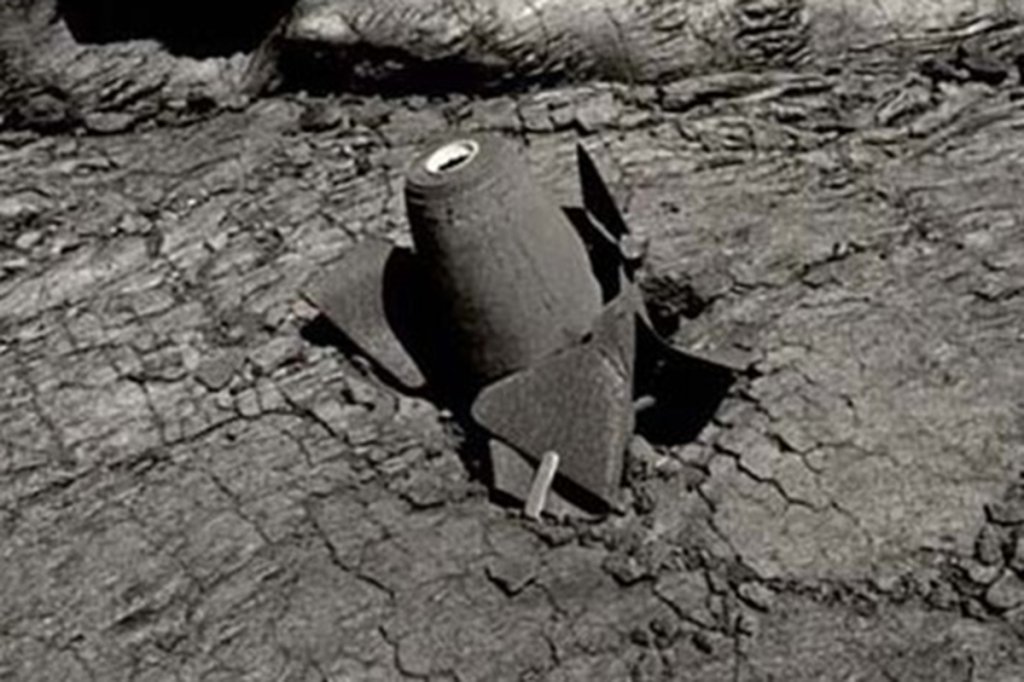
Mauna Loa stopped erupting six days after the bombs were deployed. Whether they were successful in stopping the lava flow depended on the person answering the question.
“[It] helped hasten [the] end of the flow,” Jaggar asserted, according to a National Park Service article. “… In a natural end, the lava would not cease so abruptly.”
Geologist Howard Stearns, whom the NPS reported was on the last planes to drop bombs on Mauna Loa in 1935, didn’t think the explosives had much effect. He considered the timing of the campaign and when Mauna Loa calmed down a coincidence. Other opinions varied, leaving us with no definitive answer nearly a century later.
That doesn’t mean the U.S. military stopped bombing volcanoes. They did it again a few months after the Japanese attacked Pearl Harbor, when Mauna Loa erupted on April 26, 1942. The U.S. military acted quickly. First, it placed a media blackout on the news, fearing the Japanese would use the lava’s bright glow at night to assist their pilots in finding their targets. Then the Army Air Forces dropped 16 bombs on Mauna Loa.
“This time the vents feeding a lava flow were targeted, but again the hits were few and also some bombs didn’t explode,” geologist David Bressan wrote in Forbes in 2018. “Three days after the bombing, the vents partially collapsed by natural processes and caused the main flow advancing on Hilo to cease movement.”
In 1975 and 1976, the Air Force targeted the volcano. Airmen dropped 2,000-pound explosives on Mauna Loa, which hadn’t even erupted. It was simply an experiment. Whatever they found out, the volcano hasn’t been bombed since.
Mauna Loa last erupted in 2022.
Don’t Miss the Best of We Are The Mighty
• Big Tech wants the Navy’s old nuclear reactors to power the AI revolution
• How the fastest manmade object ever was once a manhole cover launched by a nuke
• A former violinist singlehandedly cleared a mountain fortress during World War II
Featured
Sponsored Content
Military Connect wants to help your family find great deals


Sponsored Content
Military Tee Times has discounted rates on top-tier greens

Loading comments…
Comments couldn’t be loaded. Please refresh the page.