

For 15 years, Air Force spouse Jessica Hulter was the parent of a daughter with profound medical needs—all that time, she faced the secondary challenge of navigating the military’s Exceptional Family Member Program, or EFMP.
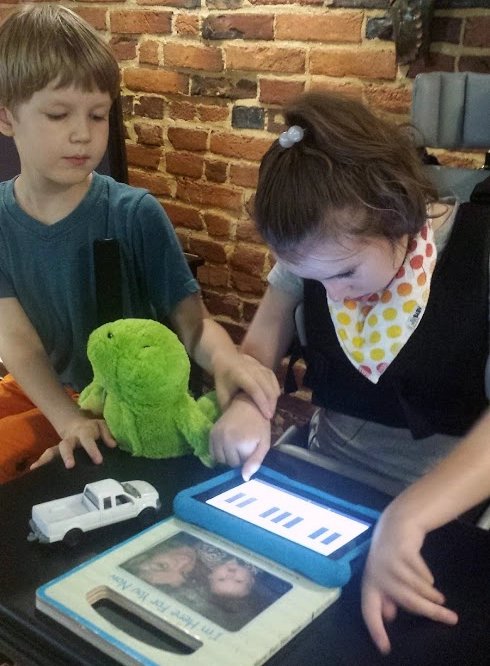
Her daughter, Rebecca, was diagnosed with Rett syndrome after months of doctors trying to understand why she had stopped gaining weight, growing, and developing normally.
Also Read: The military’s EFMP families may feel PCS moves more
“The condition that my daughter had was not something that was immediately visible,” Hulter told We Are The Mighty. “Unlike a lot of families where you are in the hospital with your baby, and they say ‘You know something is a little different here,’ we had our first few months go by with everything being just fine, until she was about five months old.”
The diagnosis changed the trajectory of Hulter’s life and taught her how difficult it could be for military families to navigate medical care across duty stations. That became especially clear when her husband received new orders while Rebecca was on hospice.
After repeatedly requesting that the assignment be canceled because of Rebecca’s medical needs, the family was told the three-year assignment would instead become an unaccompanied tour.
Hulter recalls explaining the situation to someone at their local base. Rather than working to address her concerns, the contact simply said her husband could take his assignment and call the Red Cross if Rebecca got worse.
When Hulter asked whether they understood what “worse” really meant for a child on hospice, she said the response was that her husband could travel if Rebecca passed away.
“That was shattering for me, that you would take somebody away from their child, and so callously say, ‘You know, he can come back for the funeral,’” she said.
Hulter rejected that. Her family eventually got orders to Hawaii after her fierce and continued advocacy. Upon arrival, they discovered something that would shape how she viewed EFMP for years to come.
Rebecca received some of the best medical care she had ever had at Tripler Army Medical Center.
“After all of that, everything she needed was actually there, and they just didn’t know,” Hulter said.
For Hulter, the problem was not necessarily a lack of dedicated people. It was a lack of information.
“I think the truth is that the Exceptional Family Member Program is designed with the very best of intentions, and I think it is staffed by incredibly diligent, hardworking people,” she said.
But overworked case managers and limited information about spread-out medical systems can leave families falling through the cracks. Hulter’s experience eventually became a mission.
After Rebecca passed in 2020, Hulter spent some time grieving, but she quickly realized she wanted to put the expertise she had gained advocating for her daughter toward helping other families.
“I am a person who likes to be doing something. I like to have a mission,” she said.
Hulter thought about the mother she had been when Rebecca was first diagnosed—how much she had learned over the years out of necessity. She wanted other families to have a different experience.
“I don’t want that for anybody else ever,” she explained.
That led Hulter to CareStarter, where she now works as director of innovation and family services. The organization developed technology that creates customized “maps of care” to help families navigate complex medical systems.
“A family in the military is required to relocate every two to three years, depending on their AFSC,” she said. “When you look at that, you see that this family is new over and over again.”
Her pilot program at Travis Air Force Base adapted that technology for military families, who often face the struggle of needing to rebuild care networks every few years.
However, because the Exceptional Family Member Program has a policy office but no dedicated program office with the authority to take over and fund a technology like CareStarter’s, Hulter noted that the successful pilot was essentially “put back on the shelf” until there is an office with the buying power to implement it.
Still, Hulter and CareStarter are advocating for better systems and information for military families. Her advice to families entering EFMP is simple: Find people who understand what you are going through.
“I did not do that because I’m not a terribly social person, and I wish that I had,” she said. “It wasn’t until much later that I found a group of people who were going through all the same things that I had been feeling for many years.”
One of the greatest barriers to aid can be the feeling of isolation, which is often magnified by the requirements of military life, she said.
“Just get involved somewhere, because there are more of us than people think,” Hulter added.
Don’t Miss the Best of We Are The Mighty
• Raising a neurodivergent child in military life, from PCS to EFMP
• EFMP families don’t get one PCS move, they get three
• Understanding EFMP: What it means for your family and how to navigate it


Loading comments…
Comments couldn’t be loaded. Please refresh the page.