
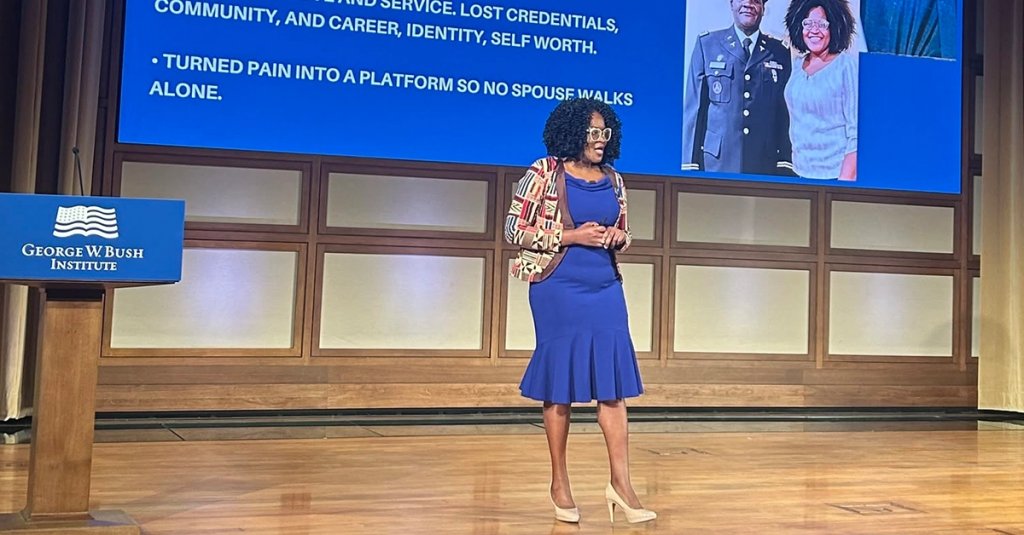
Lydiah Owiti-Otienoh knows what it feels like to be the military spouse who doesn’t know where to look or where to go for help. And that’s precisely why she became the incredible human she is today who helps others find what they need.
Owiti-Otienoh was born and raised in Kenya and studied law. She built a career, became a wife and a mother—then she became a military spouse. A U.S. military spouse.
Also Read: Lydiah Owiti-Otienoh: A Kenyan lawyer’s fight for foreign-born military spouses
Suddenly, the woman who spent years building a professional identity was navigating a completely different world: a world filled with deployments, moves, children, career disruption, and a system she hadn’t grown up in. She was educated, accomplished, and more than capable. And still, there were moments when she felt completely lost.
Does any of this sound familiar?
That’s the part of military spouse life we don’t always like to think about, much less talk about. There are likely times you aren’t struggling because you aren’t capable. You’re struggling because nobody gave you a guide accompany your journey into uncharted territory.
She Found the Brochure
Years into her military life, Owiti-Otienoh came across information about military spouse resources while going through her husband’s outprocessing materials and she had a moment that would change the trajectory of her life:
How did I not know about this?
After all those years, she was now discovering resources that might have helped her navigate the challenges she experienced and then came the question that changed everything:
If I didn’t know, how many other spouses don’t know either?
So she did what military spouses have done throughout history. She started talking. She wrote about her experience, then other foreign-born military spouses started finding her. They told her their stories and shared their struggles.
They talked about employment, immigration, language, culture, professional credentials, and trying to find a place in a community that wasn’t designed with their experiences in mind.
She then realized something else. This wasn’t just her story, it was a community story. So she built the community she needed and created the Foreign-Born Military Spouse Network, an organization focused on supporting and advocating for military spouses who were born outside the United States.
She also helped develop the Foreign Military Spouse Playbook, giving foreign-born spouses something she once wished she had: a place to start, a place to find answers, and a place to find other people who understood because sometimes the most powerful resource isn’t a website. It’s another spouse saying, “Me too!”
Owiti-Otienoh understood that deep in her soul.
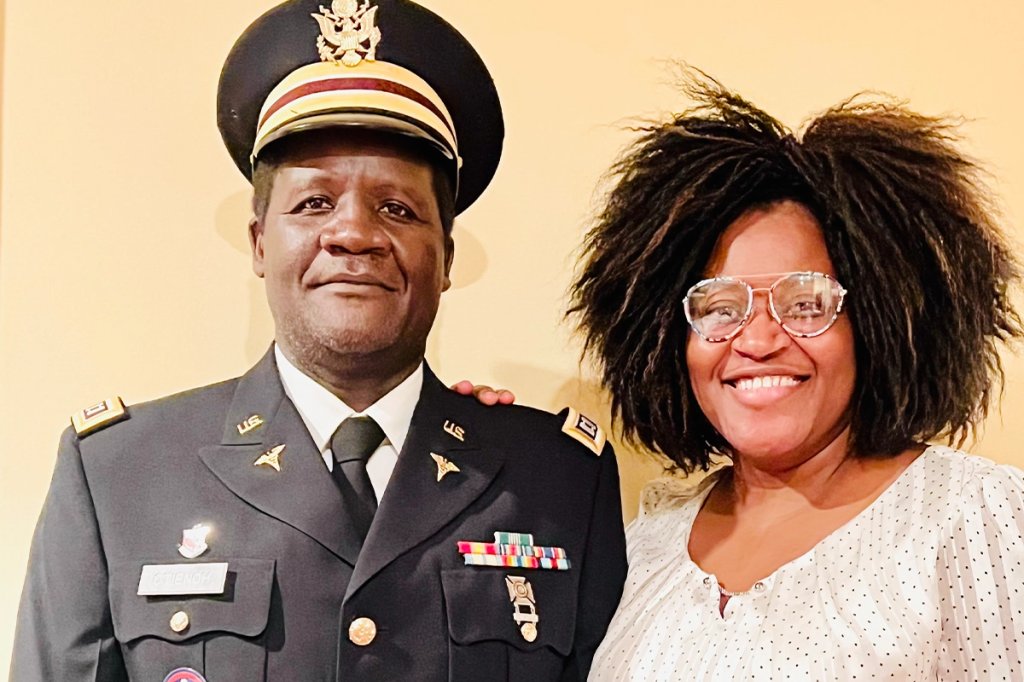
She understood what it meant to arrive in a new country and what it meant to have professional credentials that didn’t translate into a new job market. She understood what it meant to become a military spouse while simultaneously figuring out the realities of what the new norm looked and felt like.
But instead of letting those experiences define her, she turned them into purpose.
A Voice to Amplify Others
There is strength in taking something that once made you feel invisible and morphing it to make somebody else feel seen. That’s what Owiti-Otienoh did. She took the questions she once had and started finding answers. She also took the resources she couldn’t find and started creating them. She took the isolation and turned it into connection. Her experience as a foreign-born military spouse created a larger conversation about what military families actually need.
It goes back to how the military spouse community isn’t one-size-fits-all: We aren’t all from the same place and we don’t all speak the same first language, much less experience military life in the same way. Some spouses arrive at their first duty station having grown up around the military, or at least an understanding of military life, while others arrive from another country and are learning everything for the first time. Owiti-Otienoh is making sure those spouses have a voice.
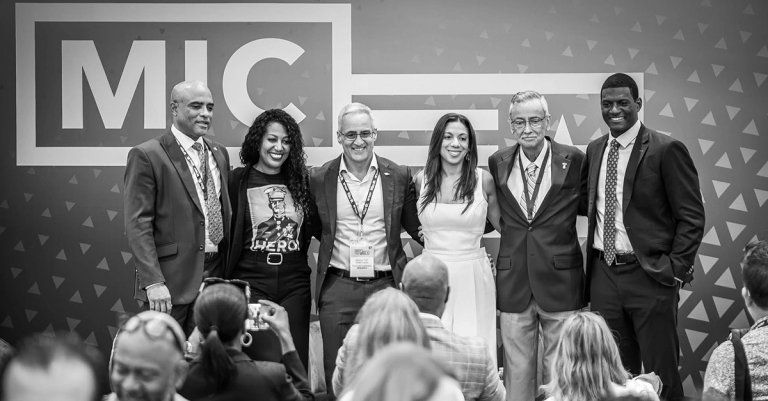
And the Military Influencer Conference (MIC) called her name. At MIC 2026 in Tampa, she was recognized as one of We Are The Mighty’s Mighty 25 and also received one of three Impact Awards.
“Being recognized among the Mighty 25 was a moment of mixed emotions,” Owiti-Otienoh said. “It was joy, excitement, and pride. The investment in time and effort that my team and I have put into ensuring foreign born military spouses are served, and receiving the impact Award, was such a validating experience. It felt like finally, the military community which we have been part of for generations, fully recognized us and our contributions. And that it is invested in ensuring we leave no spouse behind.”
“I have been to MIC for the past five years consecutively, because it is a place I feel a strong sense of belonging,” she continued. “This year was simply the best of them all, and for good reason—proof that we all truly deserve a seat at the table and MIC is where there is space if you feel left out because there will be a space built just for you. There’s truly something special about MIC.”
It feels bigger than her receiving an award because when you look at her story, you realize what was really being celebrated. Not just the lawyer, the mother, the founder, the military spouse. MIC 2026 celebrated the woman who saw a gap and refused to leave it empty; The woman who heard other spouses say, “I don’t know where to go” and decided to help build the answer; The woman who understood that belonging doesn’t happen automatically.
Someone had to build the door and then hold it open for others to follow.
For the Milspouse Still Searching
Somewhere right now, there is a military spouse who feels exactly the way Owiti-Otienoh once felt. They may have moved across the world, had to leave behind a career, fought to understand immigration paperwork, or have a degree that isn’t recognized the same as in their home country.
Because there is always a military spouse sitting in a new house, in a new community, surrounded by unfamiliar faces wondering how everyone else seems to know what they’re doing, but also wondering, “Where do I fit?”
Her vision and work offers an answer to those seeking support where the message is clear.
You belong here, too. Your country of origin or accent doesn’t make you less of a military spouse. In fact, your story bolsters the military spouse because your expanded worldview and experiences do not make you any less of a military spouse.
And because Lydiah Owiti-Otienoh was willing to tell hers, thousands of other spouses have a little more room to tell theirs and that is worth celebrating.
Our military spouse culture has historically lumped us into together without fully understanding or acknowledging us as individuals. The overall characterization of military spouses has relied heavily on resilience, but we should shift focus and talk more about military spouse creation.
For a woman who once wondered why she couldn’t find the resources she needed, that’s a pretty extraordinary full circle. She went looking for a place where she belonged but instead, she helped build one that refuses to leave anyone behind.
Don’t Miss the Best of We Are The Mighty
• Why the Eagles’ Joe Walsh relates so closely to Gold Star families
• The P320 is so safe and reliable that SIG released the P385
• Bulova recreates iconic A-11 World War II watch for ‘Jimmy’ movie
Loading comments…
Comments couldn’t be loaded. Please refresh the page.