
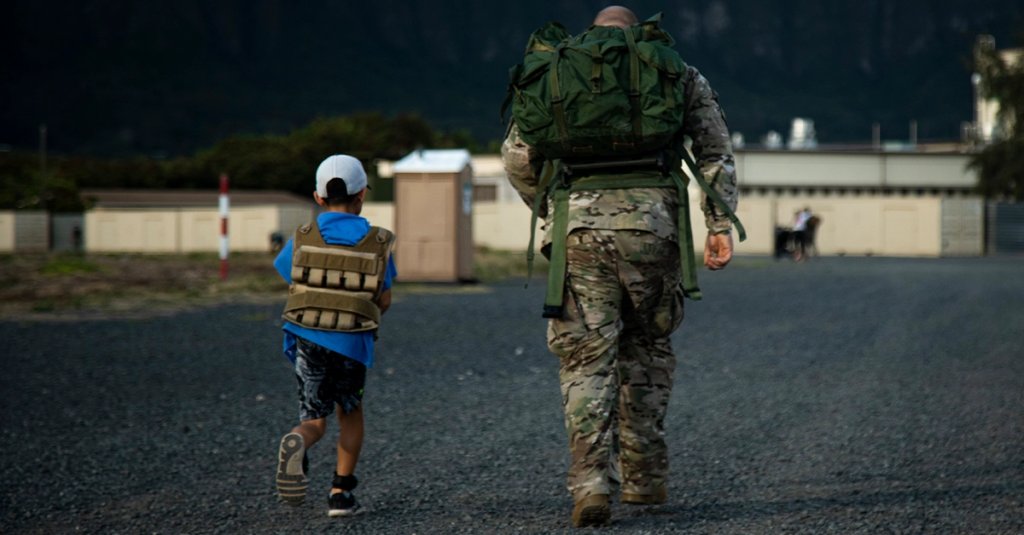
The term “milspouse” is a portmanteau of “military” and “spouse,” which might not be the most creative construction, but it gets the point across, and that’s what matters. Its origin is about as clean as these things get.
“Army brat,” on the other hand, is a genuine mystery. Nobody actually knows where it came from. What we’ve got instead is a handful of competing theories, each with a little evidence behind it and none with a smoking gun.
Also Read: 8 Signs you grew up a military brat (and are forever ruined for civilian life)
The theory you’ve probably heard is that “BRAT” started as an acronym: British Regiment Attached Traveler. The story goes that it was a status handed to families cleared to travel along with a British soldier—not just the kids, but spouses too—and that over time it narrowed to mean the children.
It’s a tidy little story. And Uncle Sam loves a good acronym. Or a bad one, for that matter.
The trouble is there’s almost no proof this is the case. The acronym theory traces back to a 2011 blog post by retired Air Force Lt. Gen. Michael M. Dunn, who cited a 1921 book making the claim. Unfortunately, it came from a book that researchers at the National Defense University later couldn’t actually locate.
If that wasn’t bad enough, the timeline is also against it: the Oxford English Dictionary traces the word “brat” back to at least the 1500s in Irish and Scottish, centuries before anyone was supposedly stringing those four words together. Words almost never come from acronyms that old, and when they seem to, it’s usually a sign someone worked backward from the letters to build a story. So put the acronym version at the bottom of the pile: most repeated, least likely.
So if not an acronym, then what? The earliest military reference we actually have is older than the acronym story by a full two centuries. It shows up in a 1707 satirical play by George Farquhar called “The Recruiting Officer,” in a song about soldier life that lumps a soldier’s dependents together as “brats and wives.”
Dr. Grace Clifton of the UK’s Open University flagged it as possibly the first time “brat” gets attached to a military family—though, fair warning, it may have just meant “kids” in the plain old sense.
Back then, married soldiers split into two camps: the lucky few whose families were allowed to live in the barracks on the regiment’s funds, and everyone else, whose families had to fend for themselves outside. In an era when housing was scarce and life was expensive, getting your family into the barracks (with its paid housing, regular food, somewhere to wash up) was a real perk.
This is almost laughable today—can anyone imagine military spouses living in the barracks? Let alone with children? And being counted lucky for it? It’s a decent measure of how far things have come.
There’s a competing British theory that’s just as plausible and as unprovable. This one posits that “brat” is a mash-up of “barracks” and “rat.” So, a barracks rat.
Dr. Clifton notes “barrack rat” was in use in Britain by the late 18th century for kids growing up on post, and it surfaces again in “Old Soldier Sahib,” a 1936 memoir by British soldier Frank Richards recounting his service in India and Burma. In his book, kids growing up in the barracks there are called exactly that: “barrack-rats.”
Notice the pattern? Every one of these theories is British, and every one of them dates “brat” back to England. That may well be where it started. But none of it is actually pinned down. But what we can pin down is when the American version turns up in print.
The earliest documented U.S. appearance researchers have found comes in 1942, in a military slang publication called “The War Dictionary.” It defined “Army brat” specifically as the children of Army officers and, notably, framed it as a term of endearment.
After that the trail mostly goes quiet but the word gets used more and more until it becomes the standard way to describe kids who grew up military, moving through base after base, school after school, country after country.
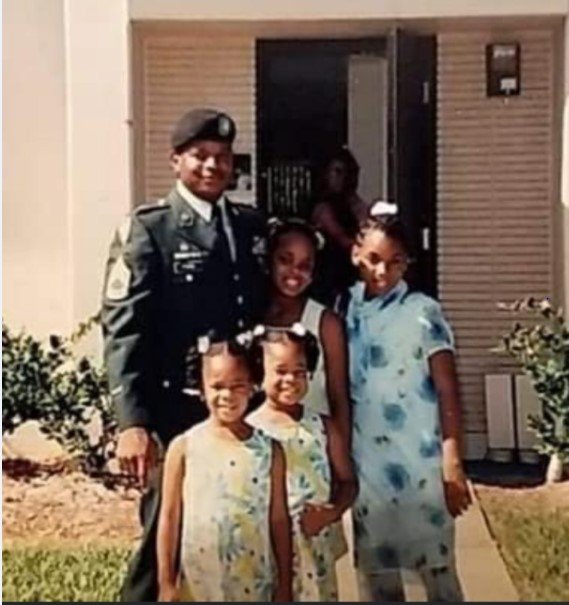
Somewhere along the way, the “brat” flipped. The civilian version of a spoiled kid with a bad attitude is forgotten, and the military one turned into a badge of honor.
So while we may never know exactly why brats are called brats but brats claim the word for themselves now, with a lot of love and pride behind it.
Don’t Miss the Best of We Are The Mighty
• Why one of the largest Soviet war memorials is in Berlin
• A New York artist painted each of the Red Baron’s 80 aerial kills
• Military spouses pioneered the Gold Star and the support that comes with it
Loading comments…
Comments couldn’t be loaded. Please refresh the page.