
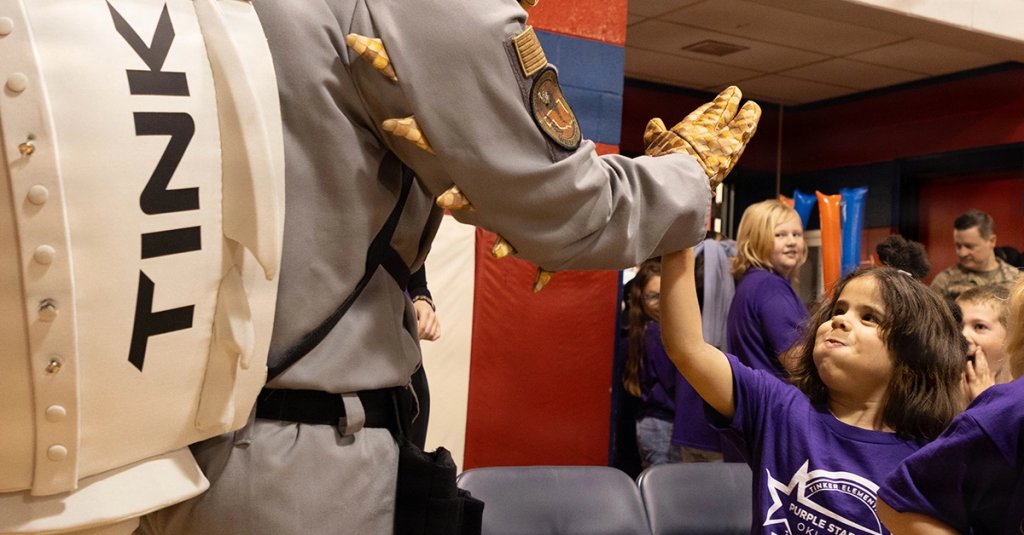
A Purple Star School designation isn’t just an extra credential or logo schools can use to impress passersby. For military families, it’s a sign of public recognition and reassurance that communicates, “Welcome Military Families! We’ve been expecting you. Your child belongs here.”
Also Read: Free, flexible ideas to keep military kids engaged this summer
Military life is programmed for constant change, so seeing the distinction of a Purple Star School might not seem like a big deal for non-military folk, but it can mean so much more to their students and families. It means knowing that military-connected students are seen, supported, and welcomed automatically eases worry as these children undergo transitions of their own.
Purple Star Schools are strategically designed to help military-connected students navigate a multitude of challenges throughout all transition phases. And here’s how they do it.
“Before we moved here, I had never even heard of a Purple Star School,” said one South Carolina high school student. “Moving away from my friends, my own room, and home for four years was hard, but my new high school counselor brought all of the military kids together. I didn’t realize how many military students were in my school, much less my classes, so it made me feel more at ease knowing that I was going through the same things as a lot of my classmates.”
“The connections made my mom’s six-month deployment a little less stressful because I was able to share similar feelings during our monthly lunches at school,” they continued. “It definitely was a benefit being at a school that recognized our family was going through challenges at home and that I didn’t have to carry it alone.”
Purple Star Schools are clutch for military-connected students because they provide stability, continuity, and advocacy at every stage of a military family’s journey, not just after a student enrolls. They can reduce educational and emotional disruption that often accompanies military life by intentionally supporting students before, during, and after a transition.
A “Purple Star School” designation means the institution recognizes the unique needs of military-connected students and provides dedicated support to help them thrive academically, socially, and emotionally where the impact carries the potential to positively transform young lives.
So, how did the concept of a Purple Star School come into fruition? Purple Star Schools Founder, Pete LuPiba (fondly known as the “Godfather of Purple Star”), was called to action where he, accompanied by a military-focused group of leaders from Ohio, carried the charge to create a grassroots initiative to promote and increase schools commitment to support military-connected students.
The program was established in Ohio in the 2016-2017 school year, but soon spread to Virginia, Texas, North Carolina, South Carolina, and Arkansas. By late 2025, 44 states established Purple Star programs or enacted legislation to implement support with additional states considering adoption. To date, only three states—New York, Oregon, and Rhode Island—have not implemented or officially introduced a program.
The drive to create support in schools spawned from Pete’s story being raised in a home that prioritized service over self.
“My Pops and Mom were the best,” he said during an interview about the origins of Purple Star. “Even though I was born after my dad’s time in the Air Force, our family prioritized community service and patriotism.”
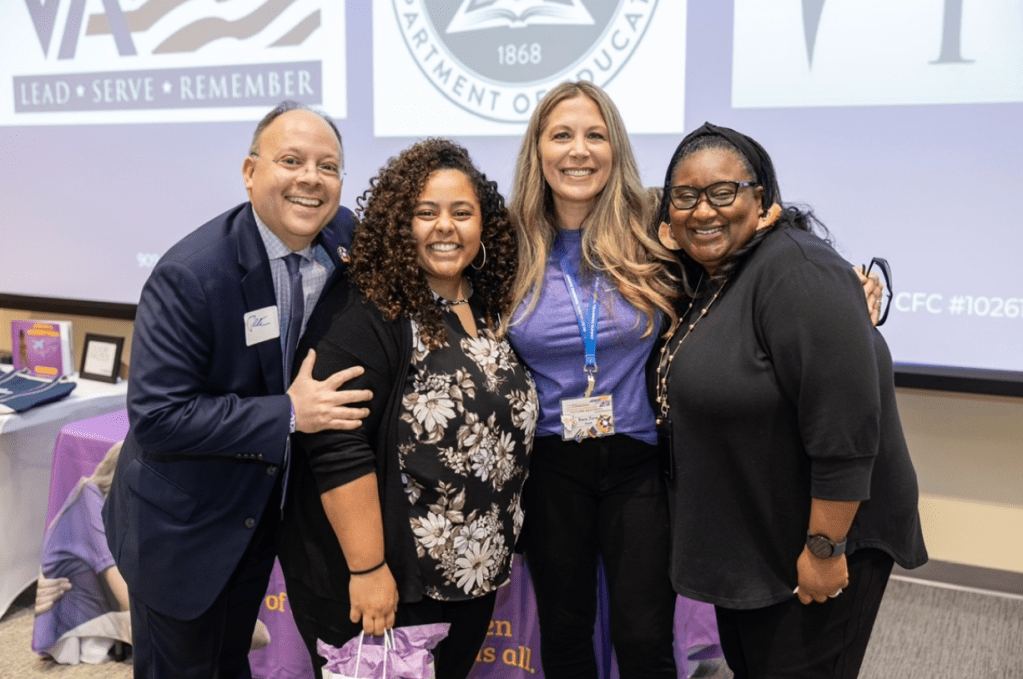
“We organized focus groups that consisted of educators, parents, students, military personnel, VSOs, and other state stakeholders committed to support military-connected communities,” he continued. “Consistent feedback from all focus groups was that the states should lead all aspects of their own Purple Star School program from designing the requirements for designation, renewal process, program efficiency and sustainment, and ultimately how their program would best serve their military-connected students and families.”
Before a Move
Purple Star Schools help military families make informed decisions and reduce uncertainty. Families arrive at their new duty station feeling welcomed instead of overwhelmed.
These centers of learning are meant to complement the Military Interstate Children’s Compact (MIC3). The compact covers the legal aspects of evening rigors on the academic playing field, whereas Purple Star Schools directly affects all military-connected students where they are: in schools.
The Military Interstate Children’s Compact mitigates educational challenges of military children due to their frequent relocations and allows for the uniform treatment of military children as they transfer between school districts in member states. The compact only applies to public schools and United States Department of Defense Education Activity (DoDEA) schools. All 50 states and D.C. adhere to the compact.
During Transition
Creating immediate belonging within the first few weeks is tough for military-connected students. Purple Star Schools welcome new students through a peer-led transition program so that students can connect with schoolmates. The connection with students can also lead to introductions to clubs, athletics, leadership opportunities, and new relationships that often bud into friendships.
Students spend less time feeling out of place or being the new kid, and end up with more time building a new community while learning their new surroundings and culture.
“I remember we were looking for a new school where we flew out to my dad’s new duty station a couple of times to look for houses and different schools to go, and when I saw that the school that I now go to was a Purple Star one, I decided this was the one,” said an Ohio middle school student. “I thought the Purple Star was pretty cool. Then I could actually be around people that have experienced the same thing, but it is still initially hard because I have to find new people to hang out with and like, make new friends and start all over.”
“It’s just hard because I don’t want to start off on a bad foot and just that’s just how people expect me to be,” they added. “I came from Arizona to Ohio. The hardest part is fitting in at a new school with new students who don’t know me and I don’t know them. My dad and I believe knowledge is power and that a good education and school doesn’t compare to anything else. I’m glad my school invests in me and other military kids.”
After the Move
Purple Star Schools ensure military-connected students continue to thrive by sustaining growth and resilience because support doesn’t stop once students enroll. One best practice of Purple Star Schools is to build a school culture where military-connected students remain visible and feel valued.
One of the easiest ways to build the school culture is through routine, relatable, and helpful communication not only with military-connected students, but their families.
Students develop all sorts of life skills they can pull from while maintaining academic, social, and emotional momentum despite frequent moves and transitions. This is where military-connected kids start to figure out life and build their own database of best practices to mitigate challenges, work through difficulties, and come out on the other side with learned outcomes that shape their growth and development.
Calls to Action
Include Purple Star School research into your family’s next PCS plan. This research will add significant value to your student’s overall educational journey and will identify practices that improve educational equity, continuity, and well-being for military-connected students and their families.
Families in New York, Oregon, and Rhode Island should help get Purple Star School state implementation to the finish line. You can also follow-up by contacting founder Pete LuPiba at pete.lupiba@obm.ohio.gov, as he is committed to seeing the entire Nation proudly showcase the power of Purple Star Schools.
Visit Military Child Education Coalition (MCEC) additional resource links:
Military Child Education Coalition
Center for Public Reaserch and Leadership Report 2022
2026 Military Child Education Coalition Issue Paper
Best Practices Report 2025
Don’t Miss the Best of We Are The Mighty
• 7 hacks for the hard truths about raising kids in a dual-military household
• A 4-step action plan for milspouses to reclaim their own ambitions
• The Longest Drive: What my godsons taught me about saying goodbye




Loading comments…
Comments couldn’t be loaded. Please refresh the page.