
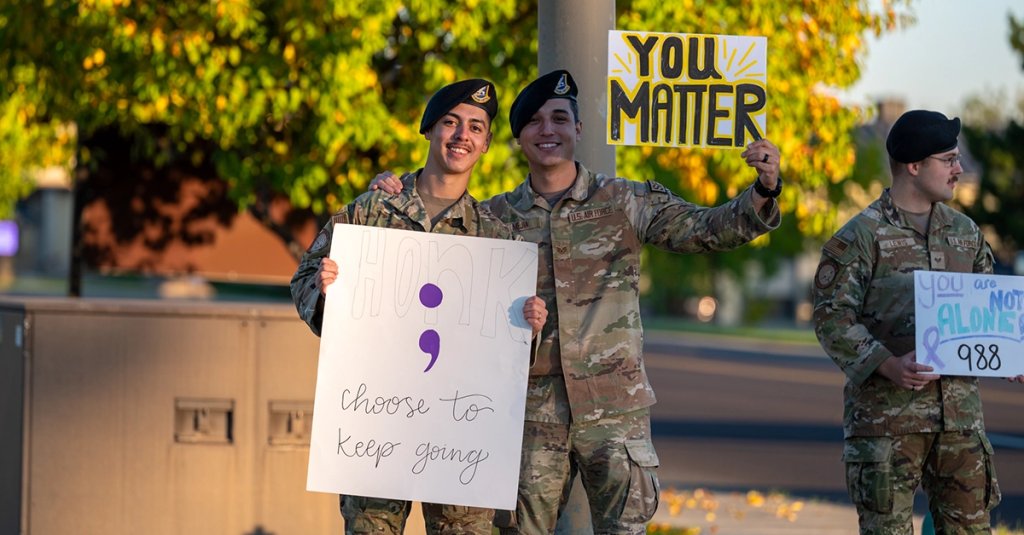
September is Suicide Awareness Month, a time to talk about something that can be incredibly difficult to say out loud. Sometimes, and oftentimes, people are hurting more than we realize.
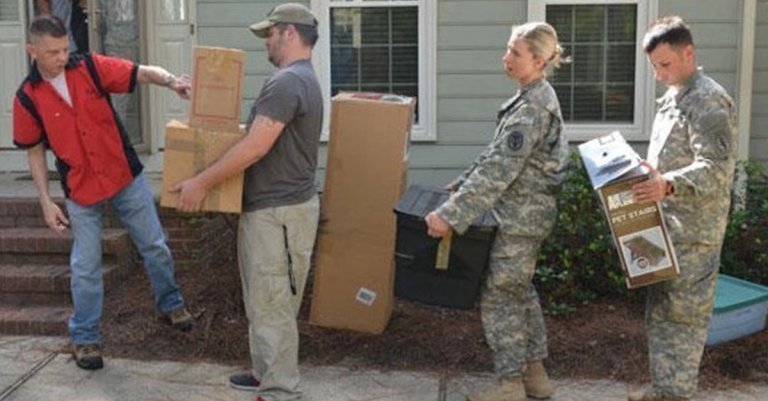
For military families, connection can be complicated. We move, start over, and we say goodbye on repeat. We make new friends, only to eventually pack our stuff and categorize into moving boxes year after year. We watch our service members leave for training, deployments, schools, missions, and assignments where we learn how to keep life moving when the person we love is separated from us.
Also Read: Mental Health and the Military Spouse: What spouses are really thinking
And somewhere in the middle of all the constant upheaval and transition, it can become easy to feel alone. That is why connection matters so much. Military spouses understand something uniquely important about military life: sometimes the person who looks like they are doing just fine is the person who desperately needs someone to ask them, “How are you really doing?”
Military spouses become experts at organically finding connection. We walk into a new neighborhood and introduce ourselves. We sit beside someone we’ve never met at a unit event. We learn the names of our children’s teachers and their favorite things. We join spouse groups, volunteer organizations, churches, gyms, coffee groups, playgroups, and community organizations.
We put in the work to build our families into new communities where friendships quickly evolve because we know what it feels like to lean on someone. Some connections last for decades where others only last for one duty station, and that’s okay because every connection matters.
Those truly meaningful connections start with one person’s awareness and communicates, “I’m glad you’re here. It’s good to see you. How have you been?”
The Spouse Who Notices
Military spouses aren’t clinicians, therapists, or crisis counselors. Well, some are (and thank you to those of you that are because the world needs you), but the point is that we shouldn’t be expected to diagnose what someone else is experiencing, thinking, or feeling. We’re more likely to notice things because we have a keen awareness of what to notice and those signs are as follows:
- The spouse who suddenly stops coming around.
- The friend who doesn’t reply to texts anymore.
- The neighbor who seems more and more isolated.
- The person who used to laugh easily but now seems withdrawn.
- The military spouse who says, “I’m fine,” but you can hear pain in their voice.
- The parent who seems overwhelmed and easily agitated.
- The newly arrived spouse who hasn’t found their people yet.
- The veteran who has quietly disappeared from the community.
None of these things automatically mean someone is suicidal, but they can be an invitation to connect. And that connection can begin with, “I’ve noticed you’ve been quiet lately. I just wanted to check in on you.” And that’s where the connection attempt begins. No need to fix or try to say something that will encourage them to open up. Just be present.
We don’t have to have the right words, or any words at all.
One of the biggest misconceptions about difficult conversations is that we have to know exactly what to say and when to say it, but we do not. We can listen. We must listen first. In fact, here are some things you can say to reinforce connection and trust:
- “I hear you and I’ll listen as long as you want/need”
- “You don’t have to go through this alone.”
- “I’m glad you told me.”
- “Do you want to talk about it?”
- “Can I sit with you?”
- “How can I support you?”
When someone is in immediate danger or talking about suicide, we have to take it seriously and connect them with professional help. That is not overreacting or negating an experience that you’ve been allowed to be a part of. It is caring enough to not look away and ensure your friend is safe. Please take it seriously and know that your presence is considered a safe place.
Connection is bigger than the military family.
Military spouses understand community because we have had to create it every three to four years, on average. But suicide prevention isn’t just a military-family issue. It belongs to all of us. Our communities include service members, veterans, spouses, children, parents, teachers, coworkers, neighbors, first responders, healthcare workers, students, retirees, friends, and family.
Related: An honest look at how relationships evolve during and after military service
Some are struggling silently where others may be carrying grief or navigating divorce. Some are facing financial pressure and hardship where others are lonely or grieving an identity they once had or separating from their military career. All of these scenarios create a damaged sense of self and belonging.We don’t always know someone’s story which is why thoughtfulness and kindness matters.
The military spouse superpower isn’t saving everyone.
Military spouses are often celebrated for being resilient. Other words used to describe us are adaptable, resourceful, strong, flexible, and independent. All of these sound good, but don’t really matter a hill of beans when you’re in the thick of it trying to manage your entire family’s day-to-day while running on fumes.
But perhaps one of our most important strengths is something much simpler. We know how to build community because we see things that others can miss. We know how to find a new person in the room, or when to invite someone to Girls’ Night. We aren’t scared or intimidated to walk up to a complete stranger and say, “Come sit with us” because we’ve been that person before and we know what it means to be included. The biggest difference between feeling alone and feeling connected is a single invitation you’ve not given or accepted. Yet.
We cannot love someone out of a mental health crisis or carry another person’s pain for them. What we can do is take notice. We can ask the questions, listen and stay connected. When something feels beyond what we can handle, we can connect someone to people who have the knowledge, experience, education, and background to help.
We cannot “friendship” someone into recovery.
Military life teaches us that departures are inevitable. PCS orders come. Deployments, trainings, and schools happen, and never with perfect timing. Assignments change and people move away. But while we’re here, we can choose connection and check on the spouse who you haven’t heard from in awhile. Text a friend whose spouse is deployed and ask the teenager how they’re really doing without their parent at home. We can even sit with someone through an uncomfortable conversation rather than trying to make the discomfort disappear.
Military spouses need connection. The person checking on everyone else may need someone to check on them. Please remember the friend who always says, “I’ve got you,” may need someone to say, “I’ve got you right back.”
Sometimes we think impact has to be enormous to matter but that’s a myth. It does not. Sending a text to check in, a phone call, or an invitation for someone to join you for coffee is enough. It’s definitely a start. Giving someone the feeling of “you belong here” can make a difference. We may never know the full impact of those moments and that’s okay because it isn’t about you in that moment. It’s about you lending yourself to create a connection and ensuring someone doesn’t feel invisible.
This Suicide Awareness Month, let’s remember that military spouses don’t have to be superheroes. We don’t have to have all the answers and we certainly don’t have to carry everyone else’s pain. We are part of a culture where asking for help is being more acceptable and welcomed, where checking in is normal, and where nobody has to wonder whether anyone would notice if they disappeared.
If You or Someone You Know Is in Crisis
If you or someone you know is experiencing a mental health crisis or thinking about suicide, call or text 988 to reach the 988 Suicide & Crisis Lifeline. Military service members, veterans, and their families can also access specialized support through the Veterans Crisis Line by calling 988 and pressing 1, texting 838255, or using the Veterans Crisis Line online.
If there is immediate danger or someone has already attempted suicide or seriously injured themselves, call 911 or go to the nearest emergency department.
Don’t Miss the Best of We Are The Mighty
• The history of the word ‘dependent’ and why it’s cringe to military spouses
• Military families need more than awareness to address spouse suicides
• Reports show a military spouse commits suicide every 8 days


Loading comments…
Comments couldn’t be loaded. Please refresh the page.