

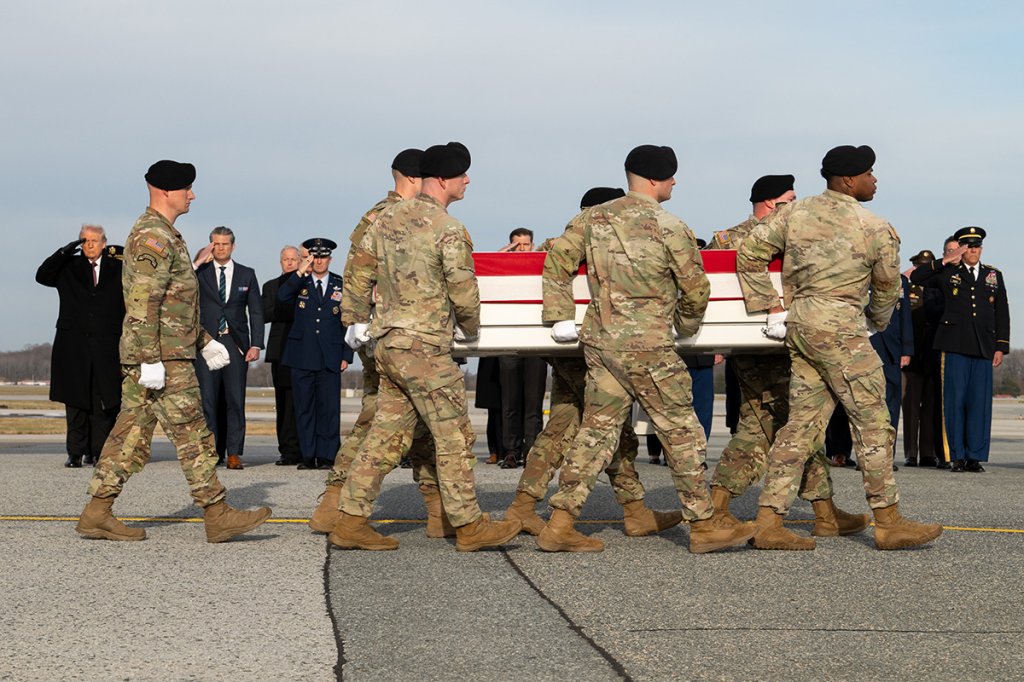
Today, the loss of a service member comes with a $100,000 price tag. Known as a “death gratuity,” the tax-exempt payment covers up to three family members to witness the return of their fallen family member at Dover Air Force Base in Delaware. This fee was first established in 1908 when military spouses or next of kin received six months of pay in the event of their service member’s death. In 1991, a flat rate was set at $6,000, which increased dramatically in 2005 to $100,000.
That’s where the number remains today.
It’s also worth noting that in 1908, soldiers made between $13 and $33 a month. Adjusted for inflation, that’s between $471.89 and $1,197.87 in 2026. In addition, $6,000 in 1991 would be $14,711.54 in 2026, while $100,000 in 2005 would be $170,994.37 today.
Also Read: Military spouses pioneered the Gold Star and the support that comes with it
However, that’s not the only forms of payment grieving widows receive. After World War I, Uncle Sam paid to ship them overseas to mourn on the spot. More than 100,000 Americans died during this time, leaving an incredible amount of loss back home. Grieving wives, mothers, fathers, siblings, and more missed their loved one.
Gold Star Mothers and Widows Pilgrimages
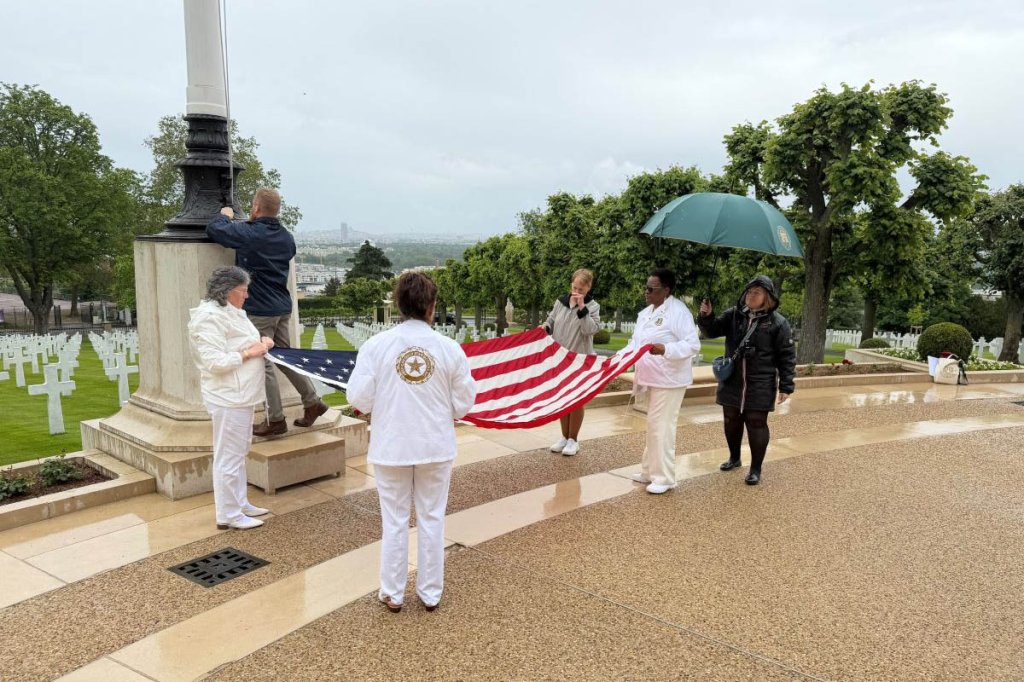
To help account for the massive loss, the U.S. government created a program: the Gold Star Mothers and Widows Pilgrimages. From 1930 to 1933, 6,654 mothers and widows participated by traveling overseas and visiting their loved one’s grave.
Authorized in 1929, all mothers and wives, who had not remarried after losing a soldier at an American Battle Monuments Commission (AMBC), were invited. Notably, the trips were segregated in tandem with Jim Crow laws that were in place.
The U.S. government paid for the program, including travel expenses. Army officers and nurses escorted Gold Star family members, and they also stopped at tourist stops throughout their trip.
Each cemetery included graves decorated in both American flags and the flag of the country in which the grave resided. A chair for the Gold Star member sat next to each headstone. A picture of the member at the headstone was also provided after laying a memorial wreath.
In addition, Gold Star members received luxury travel accommodations. However, some sources say they place Black members on commercial steamers rather than the upscale liners. More sources note that white women were wined and dined, while Black attendees were provided whatever services could be given under segregated circumstances. Women spent two weeks getting across the ocean, time in country, and another two getting back to the United States.
How the Pilgrimage Program Developed
The program came after American Gold Star Mothers lobbied for years. Founded in 1928, the organization asked for a federally sponsored program to pay for trips to Europe. Congress approved legislation the following year.
It allowed any mother or widow from the U.S. whose family member died in service between April 5, 1917, and July 1, 1921, and whose remains are interred in European ceremonies, to travel overseas for free. They later allowed for trips for relatives of those who died at sea or whose places of burial were unknown. Although 17,389 women were eligible, less than 40% of that total, or 6,693, took advantage of the program.
In total, the Gold Star Mothers and Widows Pilgrimage program incurred an estimated cost of $5 million, or approximately $747 per person. The program ended on October 31, 1933.
The overall goal was to help the grieving process by bringing closure. With large numbers of American military personnel buried overseas during World War I, this was a new approach to a new problem. In decades since, protocol has changed. Instead, the Department of Defense brings back soldiers to the U.S. so they can be buried on American soil.
Don’t Miss the Best of We Are The Mighty
• How military spouses were targeted by propaganda during World War II
• The Red Star Banner gives families of veteran suicide a new name and national community
• The mental health crisis of military-connected families and the system that doesn’t protect us




Loading comments…
Comments couldn’t be loaded. Please refresh the page.