
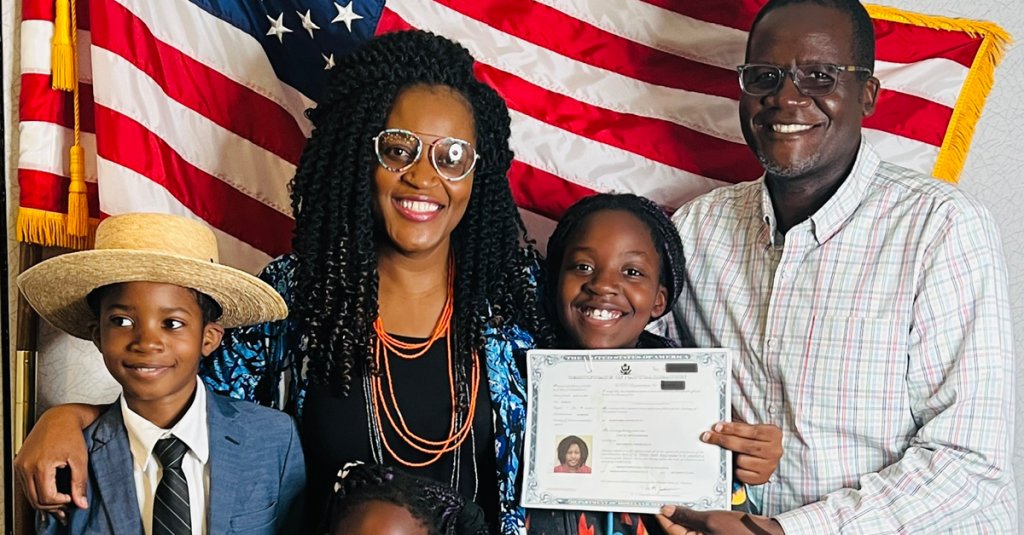
With her husband’s Army career close to ending, he brought home a stack of brochures for Lydiah Owiti-Otienoh to look through. She shared that she flipped through them almost absentmindedly until one stopped her cold: Resources for Military Spouses.
She’d been married to her soldier for a decade and never connected the dots.
When she wrote a brief post about the discovery on LinkedIn, the response was immediate. Foreign-born spouses from across the globe, women married into the U.S. military but educated and acculturated elsewhere, poured into her inbox with their own stories of confusion and invisibility.
Within their messages, Owiti-Otienoh recognized the same disorienting mix she had carried for years: gratitude for opportunity, pride in service, and a deep, unspoken grief for what had been lost or misunderstood.
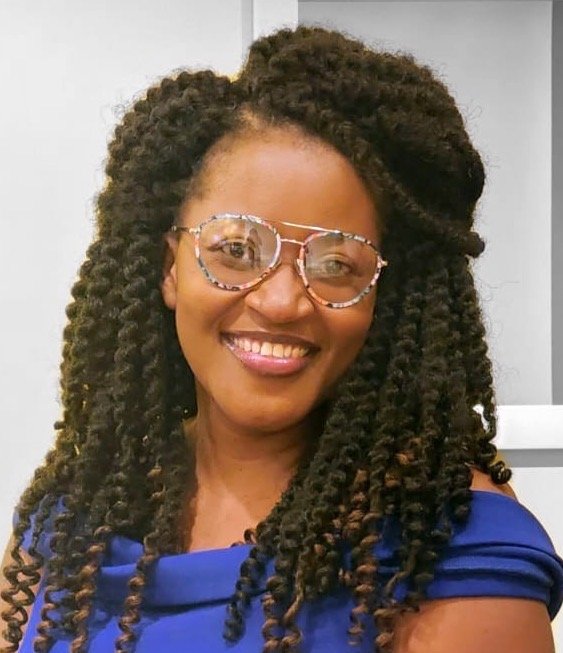
To understand how she ended up in a Maryland kitchen, flipping through military paperwork she barely recognized, you have to go back to a different continent and a Facebook message.
Owiti-Otienoh was raised in a small village in Kenya until she was a teenager, when she left to attend boarding school in the capital of Nairobi.
“That time really shaped my sense of self, and I had to grow up really fast. I had to take care of myself for the first time,” she explained.
After completing high school, she attended Moi University in Kenya, earning an undergrad in law in 2006, followed by a follow-on degree in law at the Kenya School of Law.
Owiti-Otienoh was working as a legal and human resources officer in Nairobi when she received a Facebook message from her future husband.
“He insisted that we had met at a mutual friend’s party in Kenya, but I didn’t remember him,” she laughed.
It was 2008, and the two began visiting each other whenever they could. He was a soldier in the Army, a life Owiti-Otienoh admitted she didn’t truly understand, even as he deployed to Afghanistan.
While he was gone, she moved to London to work on her first master’s degree.
“I was going to look for a job when I finished school, but he convinced me to move to America, saying that he was almost done with the Army. In 2011, we were married, and a year later, I was living in America alone while he finished his tour in Kuwait,” she recalled. “He came back two weeks before I gave birth to my first child, and that’s when we started living together after two years of marriage.”
The new family PCS’d from Delaware to New Jersey, a concept she didn’t understand.
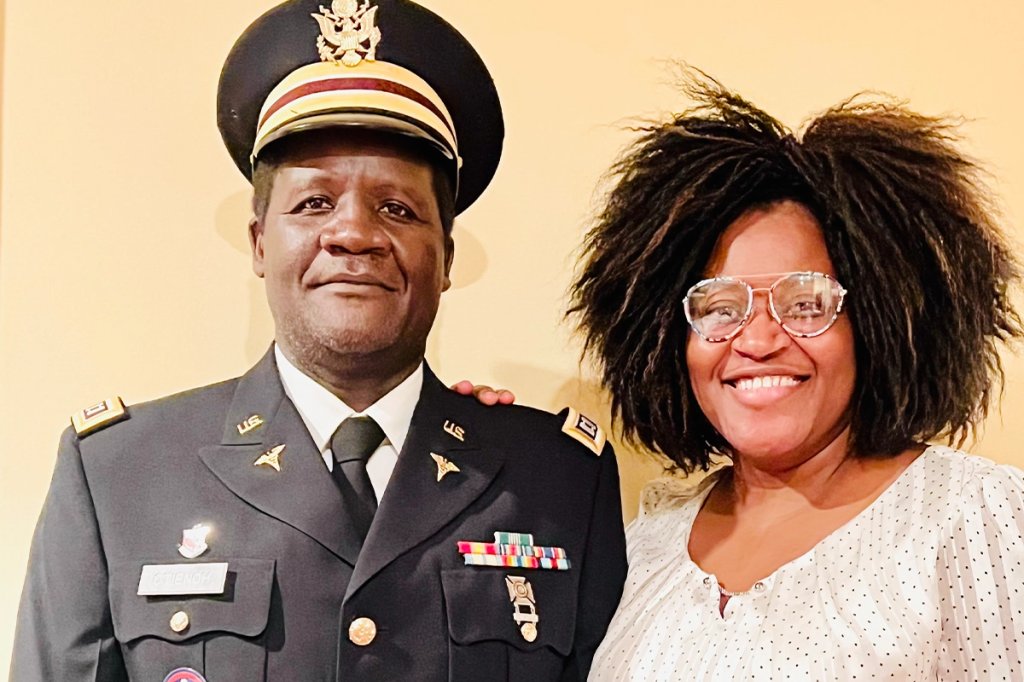
“Our son was two weeks old when he came home with these orders. I remember telling him to tell his boss he couldn’t move, that his wife had just had a baby. I think I found it so ridiculous, because I didn’t understand the whole system,” she explained.
The law degree she had earned in Kenya and her first master’s didn’t translate to anything that she could use in America, so Owiti-Otienoh went back to school to earn a second master’s degree in project management.
After giving birth to her second child and being unable to find meaningful work, she hit rock bottom.
“I think I didn’t even take time to breathe the loss of my career. To acclimate to my new life, things were just happening so fast that I didn’t have time to really pause and acknowledge certain things,” she explained. “I got severely depressed and didn’t recognize it until I started to feel suicidal. At that point, I told my husband I was leaving with the kids and going back to Kenya.”
Her husband went into the Army reserves and relocated with his family. The family moved to Mombasa on the coast to get away from the fast pace of the city, and it was there Owiti-Otienoh said she was able to heal and find herself again.
“I went back to work to manage an international development project for the Common Market for Eastern and Southern Africa, for about 19 countries, for the Kenyan government,” she said.
After four years of not finding work, Owiti-Otienoh basked in being able to not only fuel her mind but also feel purpose again. Four years later, her husband wanted to return to America to go back into active duty.
In 2018, the family relocated back to America, this time in California.
She continued to work for the government in Kenya remotely and had her third child in 2020 when they received orders and relocated to Maryland. Her husband had begun the outprocessing when she found herself looking through brochures and realizing there had been resources available for her the whole time.
That first year, she immersed herself in understanding what was available to military spouses and why she hadn’t been aware. Realizing there were probably others in the same boat, she made that LinkedIn post and discovered a whole community of women struggling.
At the time, she was a wellness fellow with JPMorgan Chase, and her role helped her understand the value of networking and building relationships. From there, she was a program manager for the spouse network at Hiring Our Heroes.
That’s where the idea for the Foreign Born Military Spouse Network was born.
“I developed what I call the Foreign Military Spouse Playbook, a step-by-step guide to help people understand what this life is about,” Owiti-Otienoh said. “Using all the data, resources, and knowledge I’d gained, it turned into a 100-plus-page booklet for foreign spouses to have as a guide.”
It’s been a year and a half since she followed her heart and built the nonprofit.
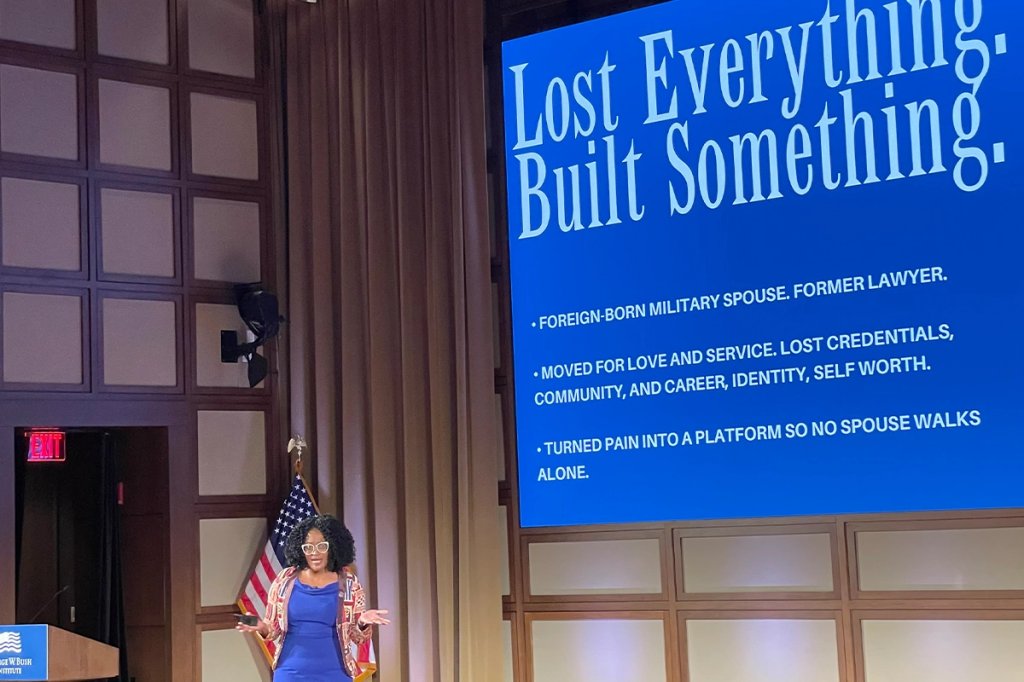
“I am just oversaturated with joy at what we’ve created and how far we’ve come,” she smiled. “We are not there resource-wise, but we are already there in terms of community, in terms of how much it just keeps growing, the number of volunteers we have, and those who come every single day.”
“Foreign-born spouses have a thirst. They have been waiting for someone to serve them, and they’ve been waiting to also serve others.”
The goal is to continue raising awareness and advocating for the needs of foreign-born military spouses and create more education specifically for this population.
“I realized that this intersection between immigration and the military is so complex that without particular investment in resources and support, many of us just get lost in the system,” Owiti-Otienoh said. “I am hoping to change that.”
You can learn more about the Foreign Born Military Spouse Network here.
Don’t Miss the Best of We Are The Mighty
• No one showed up for rural military towns like hers. Michelle Lang did.
• Richard Brookshire sued the VA for its own data. It proved Black veterans right.
• Kenneth Fisher’s relentless commitment to America’s military families

Loading comments…
Comments couldn’t be loaded. Please refresh the page.