
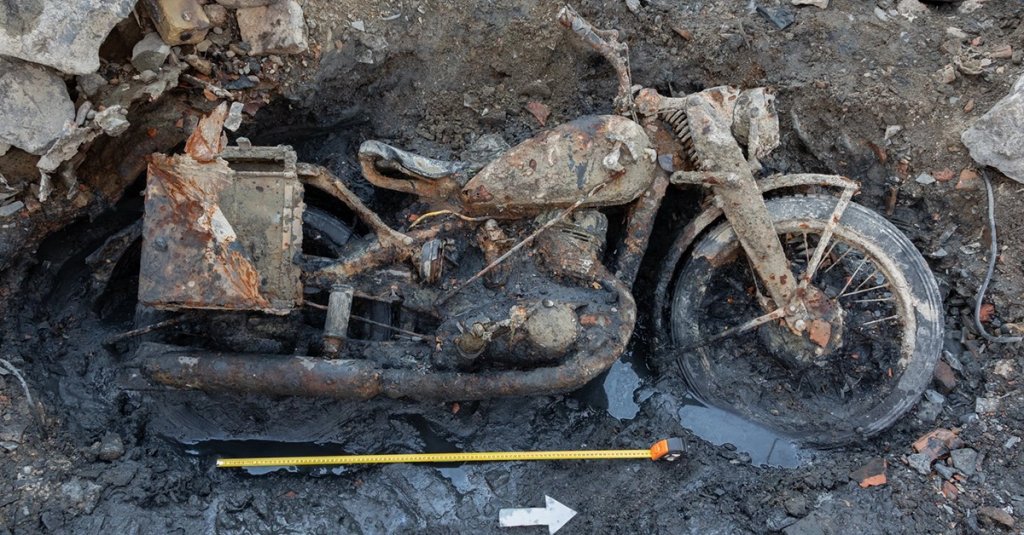
Passersby walking along the banks of the Danube in Hungary’s capital city noticed a strange set of handlebars protruding from the rocks on Aug. 2, 2026. Authorities would uncover the remains of a wreck—from more than 80 years ago.
The handlebars belonged to a German Army motorcycle, recovered intact from the river waters. Also uncovered were the bodies of two German soldiers (with their identification tags), a wedding ring, and some anti-tank mines. Discovering World War II-era remains on what was once the Eastern Front is a find that could spark hope for many families whose loved ones were lost in the fighting.
Also Read: A former violinist singlehandedly cleared a mountain fortress during World War II
German troops occupied Budapest (and all of Hungary) starting in March of 1944 to prevent the country from leaving the Axis Pact. The Soviet Red Army laid siege to the city in October of 1944, encircling it until it surrendered in February 1945. Casualties numbered in the hundreds of thousands—as many as 30,000 German troops were killed, along with 17,000 Hungarians and 80,000 Red Army soldiers. Another 78,000 civilians died.
According to the Hungarian Institute and Museum of Military History, the bike is a DKW NZ350, produced exclusively for wartime use beginning in 1944. It was a model popular with German Army troops at the time for its reliability and top speed (up to 65 miles per hour). They were typically used for dispatch couriers.
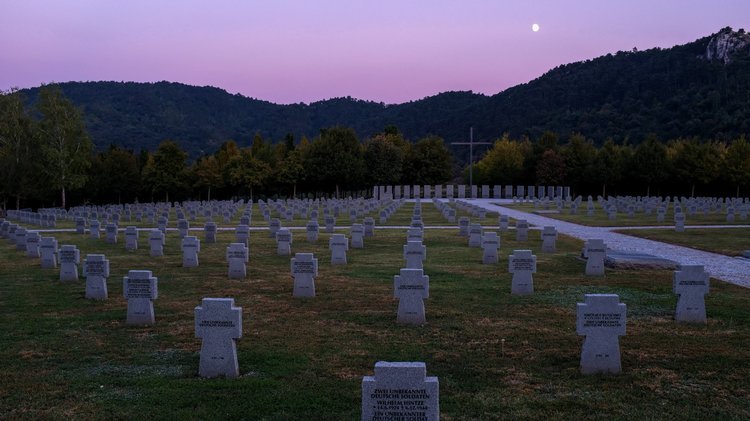
The trove of war material found at the site leads experts to posit that this part of the river might have been used as a debris dump. When the soldiers’ remains were found, the Volksbund Deutsche Kriegsgräberfürsorge (German War Graves Commission), took charge of recovery. Their bodies will join the remains of 16,000 other German war dead at the war cemetery in Budaörs, near Budapest.
Since the bodies were so close to the port at Batthyány Square, the waters (referred to as “harbor sludge”) was mixed with gas, which allowed for the preservation of the German troops’ identity tags. The Volksbund that both name and identification numbers were clearly legible. Since they were found “complete,” it meant that Berlin was never informed of their death and their families never learned their fate.
One of the bodies was discovered with a Kuban sleeve combat badge, meaning the Wehrmacht soldier had fought at the Kuban bridgehead in the Caucasus. The Volksbund believe that the extremely low water levels will soon reveal more World War II relics, including shipwrecks, along with more remains.
Don’t Miss the Best of We Are The Mighty
• The new Jimmy Stewart biopic depicts his World War II service
• How Paul Newman survived 2 close calls in the Navy during World War II
• World War II alliances fueled the resurgence of the post-war American mafia


Loading comments…
Comments couldn’t be loaded. Please refresh the page.