
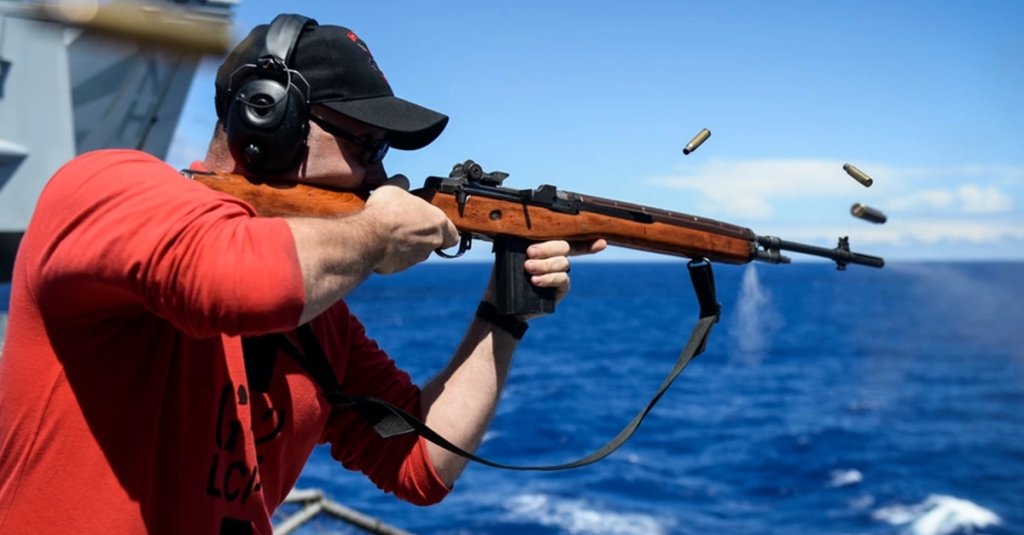
During the Spanish-American War, Theodore Roosevelt noticed that some civilians-turned-soldiers displayed some fairly poor marksmanship skills. So when Congress considered creating the National Board for the Promotion of Rifle Practice under the Office of the Secretary of the Army to address the problem, President Roosevelt was its biggest champion.
Under the NBPRP, the Office of the Director of Civilian Marksmanship became responsible for civilian firearm training and safety. In 1996, the entire program was privatized and became the Civilian Marksmanship Program (CMP). Today, the CMP continues the same mission by hosting shooting competitions like the President’s Hundred Match at the National Matches in Camp Perry, Ohio.
Also Read: The President’s Hundred tab is more rare than Sapper, Ranger, or even Special Forces
Since the CMP now lacks Congressional support, its operations are funded by the sale of surplus military firearms. By law, the government is able to provide surplus .30-caliber rifles like the M1, M1903, and even Krag-Jorgensen to civilians to promote civilian marksmanship and fund the CMP mission.
The law that governed the rifles was later expanded to allow the transfer of surplus .45-caliber pistols, specifically permitting the CMP to sell surplus M1911 pistols. Luckily, the specification of .30-caliber rifles has allowed the CMP to announce the forthcoming sale of surplus M14 rifles to civilians.
“The CMP anticipates first order fulfillment in the late 2026 to early 2027 timeframe,” the CMP said in an announcement on July 24, 2026. “More details will be published on the M14 order submission process, pricing, limits and sales channels (mail order and physical stores) at a later date.”
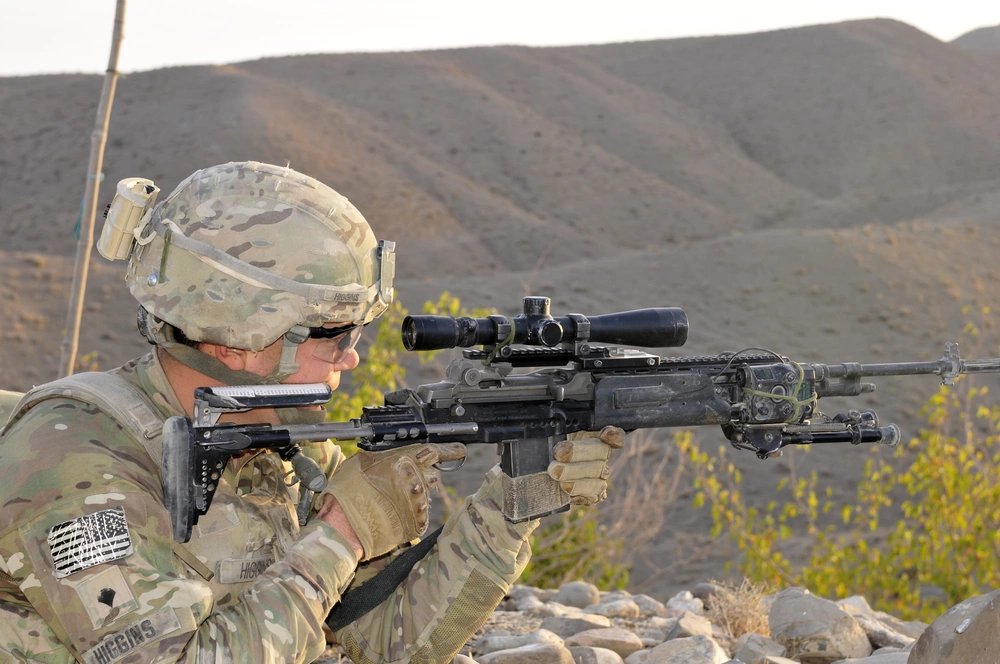
CMP sales can only be made to U.S. citizens aged 18 and older (21 in certain states). Additionally, customers must be members of a CMP-affiliated organization like the Glock Shooting Sports Foundation. Eligibility can also be accomplished through Active, Reserve, or National Guard service.
While the sale of genuine military surplus is long-established with the CMP, the announcement of M14 sales is unique. Bolt-action and semi-automatic rifles are generally legal across the United States, but the M14 was originally manufactured to fire in both semi-automatic and automatic modes.
This is an issue for civilian sale and ownership with the application of the National Firearms Act and Gun Control Act which restrict firearms that are designed to be or can be readily converted to machine guns. Although semi-automatic National Match M14 variants were built and approved for sale by the ATF, this decision was later reversed.
All but one of these rifles were confiscated from their owners; Robert E. Sauerman took the issue to court in 1980 and the judge ruled that his (and only his) National Match M14 was designed as and is a semi-automatic weapon not designed to shoot automatically.
The big issue with M14 sales is the ATF’s definition of what is, was, or could be a machine gun. I’m not a lawyer and this isn’t legal advice, but broadly speaking, the serialized receiver is the machine gun and always will be regardless of modification to only shoot semi-auto. This is why the CMP’s announcement that they received “special authorization” for the M14 sales is so significant.
Details on how this authorization was obtained weren’t shared, but the CMP noted that the rifles “will be modified to be permanently and irreversibly semi-automatic rifles.”
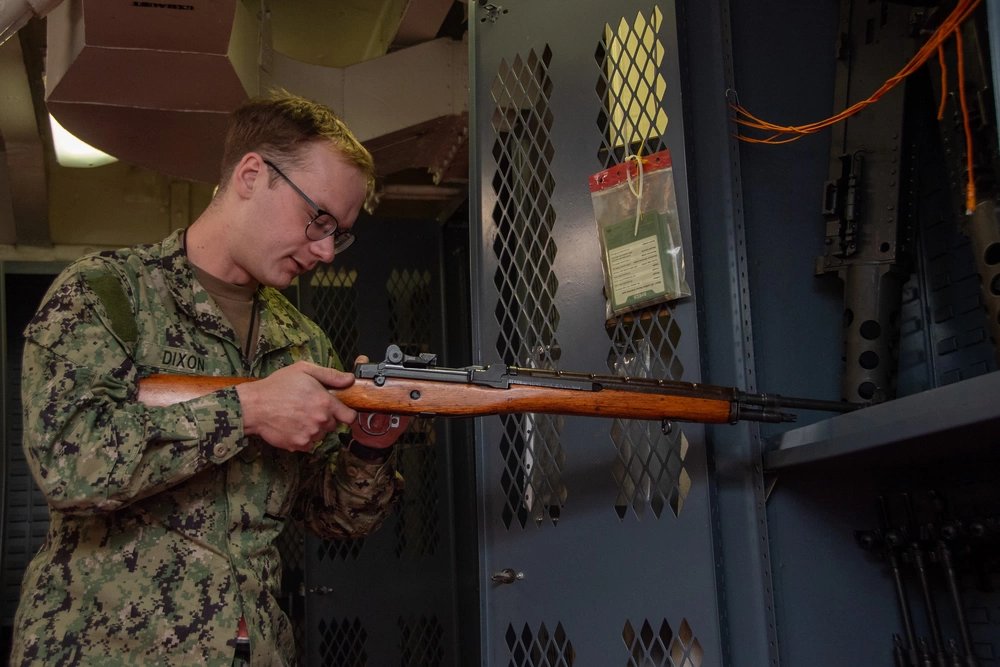
Senator Cynthia Lummis of Wyoming commented on the announcement, noting that the CMP worked with both the ATF and the Army, the owner of the rifles before transfer to the CMP.
“We’ve been pushing the Civilian Marksmanship Program (CMP) to start selling over 100,000 historic M14 rifles to American citizens,” she posted on X. “After approvals from the Army and ATF, the first sales are now expected to occur in late 2026 or early 2027.”
Despite being the U.S. service rifle with the shortest service life (possibly second-shortest), the M14 enjoys strong demand in the civilian market.
Spring Armory Inc. (a private company completely separate from the government-run Springfield National Armory) capitalized on this demand with the release of the M1A, a civilian-legal, semi-auto reproduction of the M14 that typically sells for around $1,800. The modern Harrington & Richardson, under the Palmetto State Armory brand, also released a limited run of approximately 60 M14s assembled from genuine surplus parts and reproduction components that sold for $2,200.
Despite the circulation of rumors online, pricing for the CMP M14s has not yet been released. Although they’ve largely sold out, CMP M1 Garands sell for between $1,150 and $1,650 depending on condition. Nearly 5.5 million M1s were made, compared to just under 1.4 million M14s.
With numbers like those and an unmet demand for genuine military surplus M14s, Civilian Marksmanship Program pricing will likely be higher than the M1 or M14 reproductions.
Don’t Miss the Best of We Are The Mighty
• 9 reasons why the 1911 should be America’s national weapon
• Green Beret says SOCOM’s hypervelocity rifle will kill SIG M7 rifle
• Letterkenny Army Depot the heart of more SIG Sauer M17 incidents

Loading comments…
Comments couldn’t be loaded. Please refresh the page.