
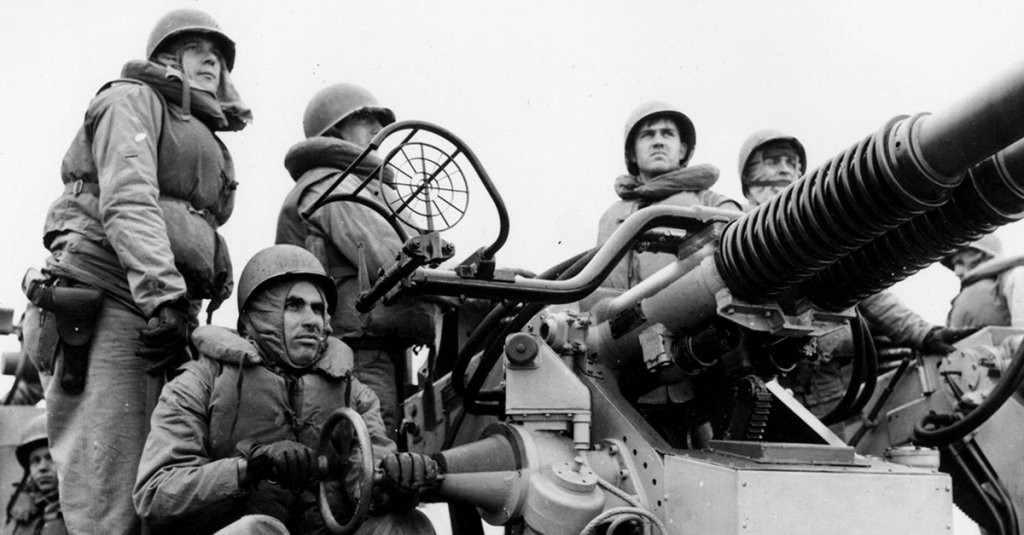
In 1863, Adm. David Dixon Porter famously wrote, “A ship without Marines is like a garment without buttons.”
Remembering that this was a time before t-shirts when people dressed properly, his words hold true. Sailors crew and fight a ship, but a Marine detachment is a critical element on a warship.
Also Read: The role of the Marine Corps during the Civil War
The Army loves to remind the Marine Corps that the largest amphibious invasion in military history was conducted by soldiers. Marines fought their way across the Pacific in World War II and forged their amphibious legacy on islands like Iwo Jima and Okinawa (where Army troops also fought), but D-Day and the landings at Normandy belong to the Army… mostly.
Of course, the Army couldn’t get there without the Navy; and wherever the Navy is, so too are the Marines.
Most of the ships floating off the Normandy coast on D-Day had Marines ready and waiting to take up arms against the German defenders, and one detachment did… sort of.
Dedicated readers will remember that the battleship USS Texas famously flooded herself during the Normandy invasion to achieve a firing angle that could continue to provide naval artillery support to American troops as they pushed inland.
Embodying this fighting spirit, Texas’s Marine detachment reportedly stood to as the Rangers at Pointe du Hoc struggled to secure the cliffside defenses. While the Marines were never sent ashore, they did come face to face with the enemy.
After the Rangers battled up the cliffs and secured the Pointe, they sent prisoners down to the beach. In addition to German POWs, the Rangers captured Italian and French laborers. Embarked aboard landing craft, the prisoners were first taken to the Texas. There, the Marines drew their weapons to process and guard the prisoners.
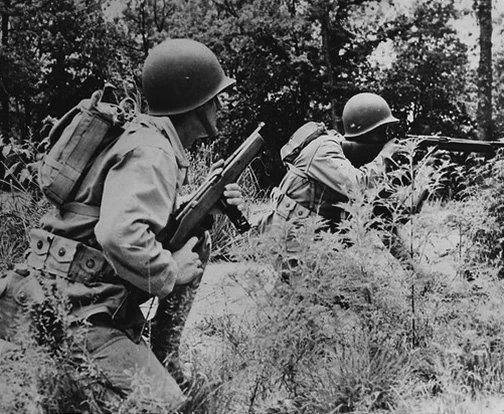
Of course, the Marine weapons room was stocked with M1 Garand rifles (every Marine a rifleman, we know) but for guard duty aboard the battleship, the Marines picked weapons more suitable for close encounters. While the NCOs were armed with M1911A1 .45 ACP pistols, the Marine guards carried M50 Reising submachine guns.
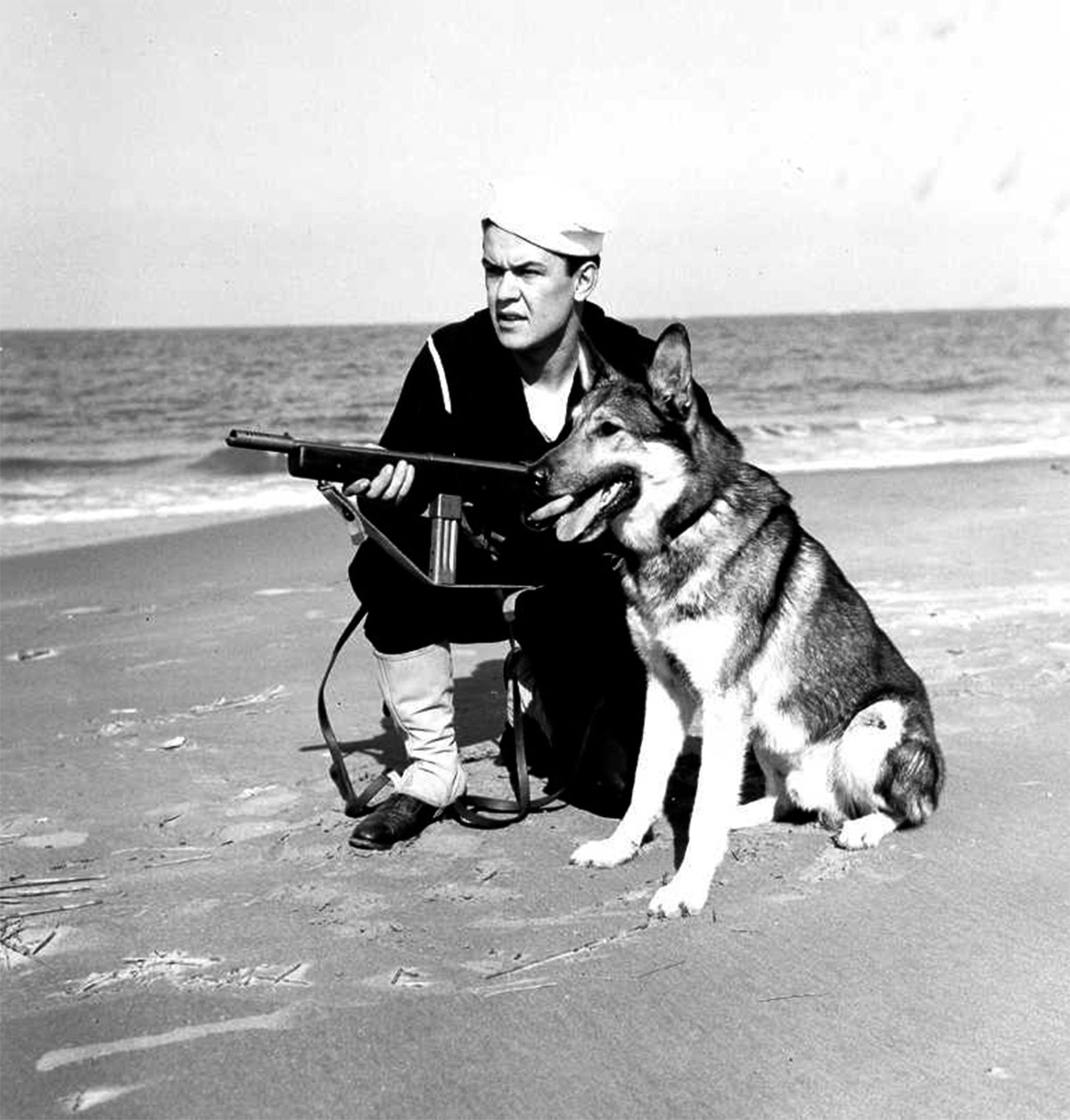
Designed and patented by Eugene Reising in 1940, the M50 was a .45 ACP submachine from Harrington & Richardson. Compared to the famous Thompson, the Reising was more accurate, lighter, and cheaper. However, tight tolerances and delicate magazines resulted in poor performance of the Reising in combat conditions. Aboard the comparably clean conditions of a ship, Marines continued to use the M50.
The Pointe du Hoc POWs were eventually transferred from the Texas to a Landing Ship. Although the Marines did not carry their Reisings onto the beach at Normandy, they were an integral part of the greater invasion force with a unique place in U.S. military history.
Don’t Miss the Best of We Are The Mighty
• America’s last combat revolver served from World War I to Vietnam
• This classic carry pistol was used by gangsters, generals, SWAT, and spies
• This plane survived Pearl Harbor and struck back at Midway
Loading comments…
Comments couldn’t be loaded. Please refresh the page.