
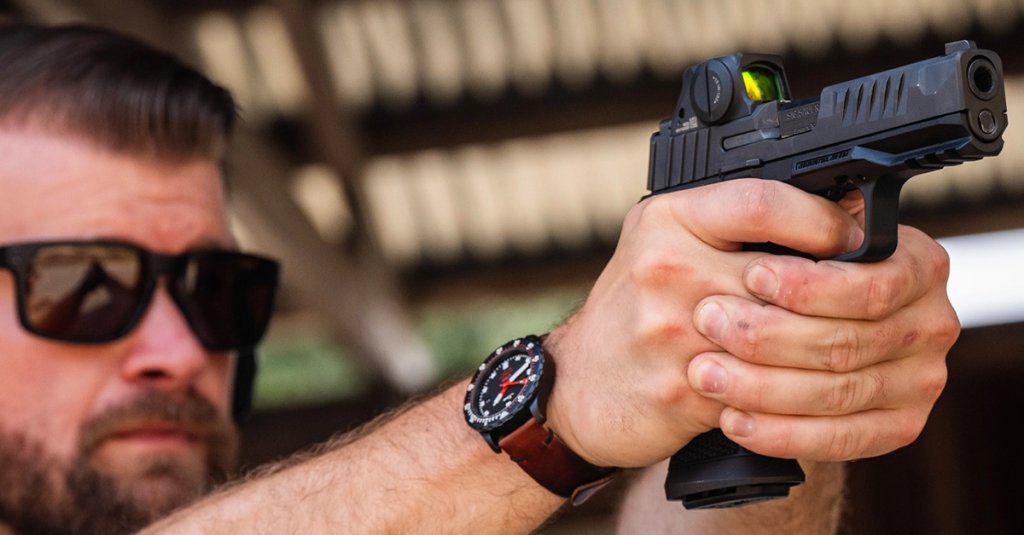
When SIG Sauer released the P320 in 2014, it had difficulty breaking into a polymer-frame, striker-fired duty handgun market dominated by the likes of Glock and Smith & Wesson. Following the win of the Modular Handgun System contract with the Army and subsequent adoption by the rest of the U.S. military, P320 sales exploded.
Also Read: The Civilian Marksmanship Program sells M1 Garand rifles, M1911 pistols, and M14s
To complement the full-size, compact, sub-compact, and carry P320 variants, SIG released the micro-compact P365. The slim and extremely carriable P365 was an immediate success in the concealed carry market and variants with longer grips and barrels/slides later emerged. In an interesting twist of fate, the micro-compact P365 has grown up into the full-size P385 which takes P320 magazines.
Anyone who has paid any attention to the used firearms market knows that pre-owned P320 values have sunk like the Iranian Navy. Following repeated incidents where P320s reportedly experienced uncommanded discharges in civilian, law enforcement, and military use, the P320 is about as popular as a Blue Falcon at a unit potluck.
SIG Sauer maintains that, “The P320 CANNOT, under any circumstances, discharge without a trigger pull – that is a fact.”
Despite this, multiple law enforcement agencies have banned their officers from carrying the P320 and juries awarded a combined $13.3 million to plaintiffs who sued SIG for alleged uncommanded discharges of their P320s.
Following the death of a Security Forces airman, Air Force Global Strike Command conducted a full review of all the command’s P320-based M17 and M18 handguns. An investigation into the death placed blame on the negligence of another Airman and the Department of War and Department of the Air Force later released a statement affirming that the M17 and M18 are “safe and reliable.”
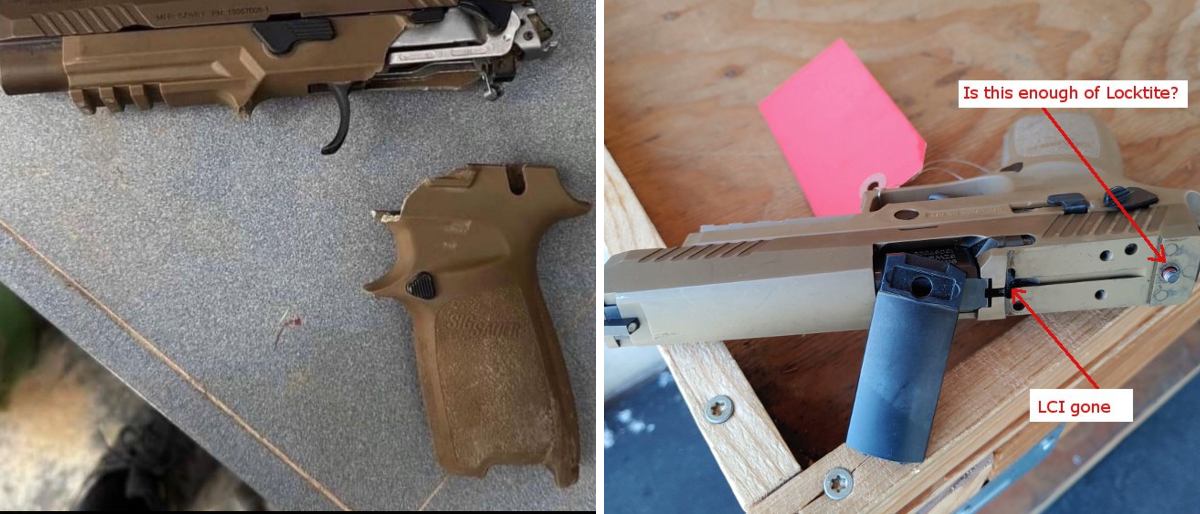
Interestingly, military P320s had to undergo an update to correct a different issue. Multiple troops experienced the rear sight/optic plate of their M17 or M18 flying off during firing, sometimes hitting them. To correct this, the military required that the red Nylok be removed from the screws holding the plate in and reinstalled with Loctite 243. That’s the kind of simple issue that might have been discovered if the Army finished testing the P320 during the MHS competition.
On Sept. 22, the month after the military made its “safe and reliable” statement, SIG released the P385. While SIG notes that it’s “an all new design” with “an innovative new Fire Control Unit,” the new P385 has visual cues of the smaller P365 and appears to fill the shoes of the larger P320. While the P320 and P365 both use removable FCUs that can be swapped between grip modules, the two are not interchangeable with each other and their respective ecosystems.
Like the P320, the P385 is being offered in full, carry, and compact sizes. There is also a comp variant with an integral compensator. While all P385 models can be had with or without a manual safety, SIG continues to omit a trigger safety like that found on Glock or Smith & Wesson M&P pistols.
Interestingly, SIG notes that the P385 uses an “All new Fire Control Unit featuring a patented trigger block design.” Aside from that, SIG highlights the P385’s lower bore axis compared to the P320 and improved grip texture to reduce recoil; interesting points to highlight given that the P320’s FCU allows it to be switched into grip modules with different angles and textures.
Otherwise, the P385 appears to fill a nonexistent gap still occupied by the P320.
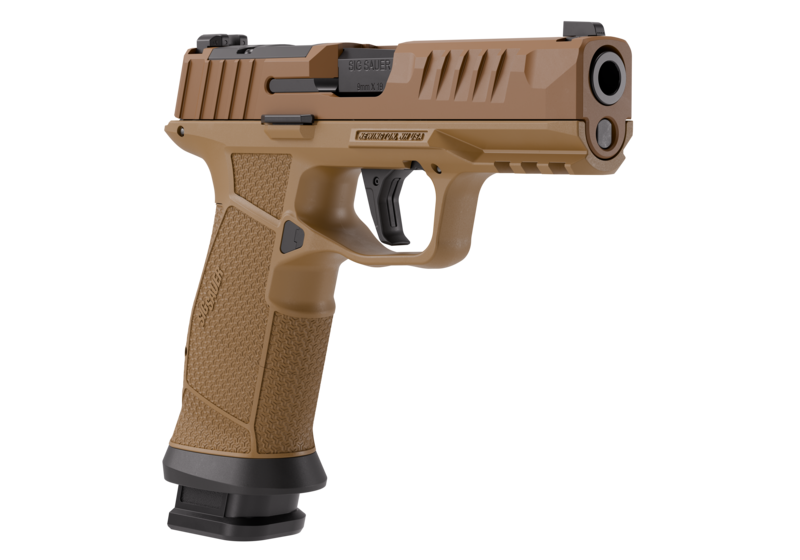
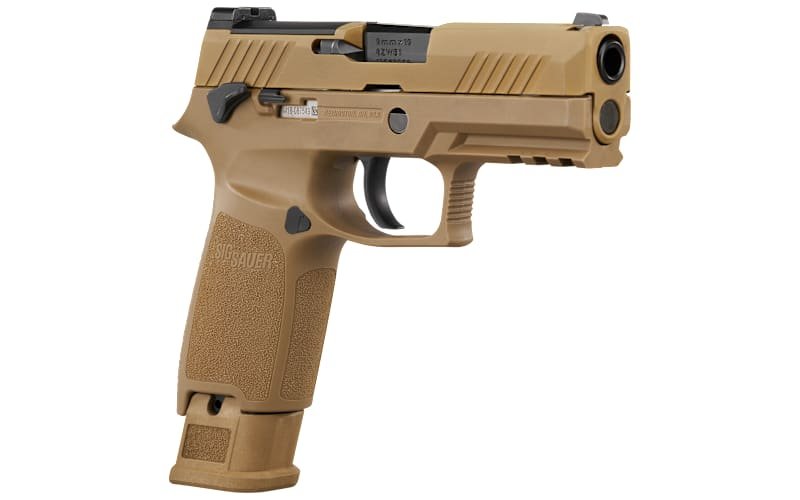
So, is the P385 replacing the P320? After all, P365+320=P385.
While the release of the seemingly unnecessary P385 could be seen as the first step in a move away from the P320, SIG did announce two new versions of the P320. The new M17 SOF is a Special Operations-focused P320 variant that uses a Brouwer M1811 grip module, which Brouwer says “corrects the main ergonomic issues with the P320 platform – high bore axis, rounded slippery grip, short beavertail.”
First, it’s hilarious that SIG should release a factory P320 variant with an aftermarket grip module advertised by calling out issues with the standard P320. Second, it turns out that the issues of bore axis and grip can be corrected with a different grip module. So, why the need for the P385?
Meanwhile, the new P320 Nightshift offers “performance focused components” like a compensator and “a striking two-tone finish.” Not exactly groundbreaking.
The 10-year, $580.2 million contract awarded to SIG by the U.S. military in 2017 (do the math) resulted in a reported cost of just over $200 per pistol. As a result of the military endorsement, SIG was able to sell the P320 to law enforcement agencies across the country and to civilians at a starting price of about $600. P385 prices will also start at $599.
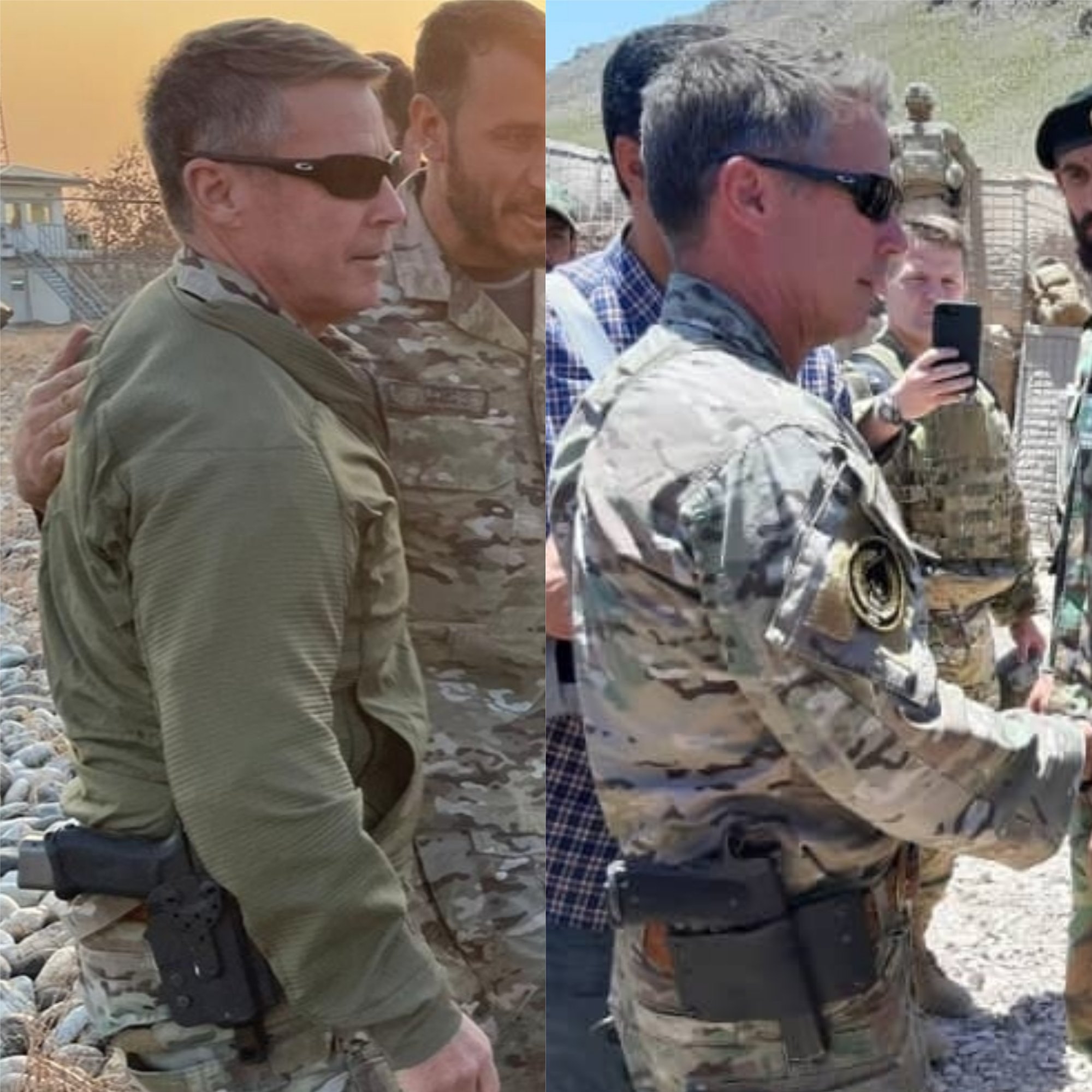
SIG Sauer currently employs retired Lt. Gen. John Deedrick as advisor to CEO Ron Cohen. General (ret.) Scott Miller also serves as a SIG Sauer Defense Advisor. Despite the availability of the M17/M18 in the military and the issuance of an M18 General Officers Pistol, Miller was photographed carrying a 1911 and a tricked out Glock in Afghanistan.
Moreover, while the M17 and M18 have been adopted as standard sidearms across the military (except the Coast Guard under DHS), Special Operations Forces like Naval Special Warfare Command and Air Force Special Operations Command do still choose to field their Glock pistols.
Don’t Miss the Best of We Are The Mighty
• Everything you need to know about short-barreled rifles, shotguns, and silencers
• The fight to recognize Doris Miller’s valor at Pearl Harbor
• ‘Band of Brothers: Legacy’ d celebrates 25-years of HBO’s legendary miniseries
Loading comments…
Comments couldn’t be loaded. Please refresh the page.