
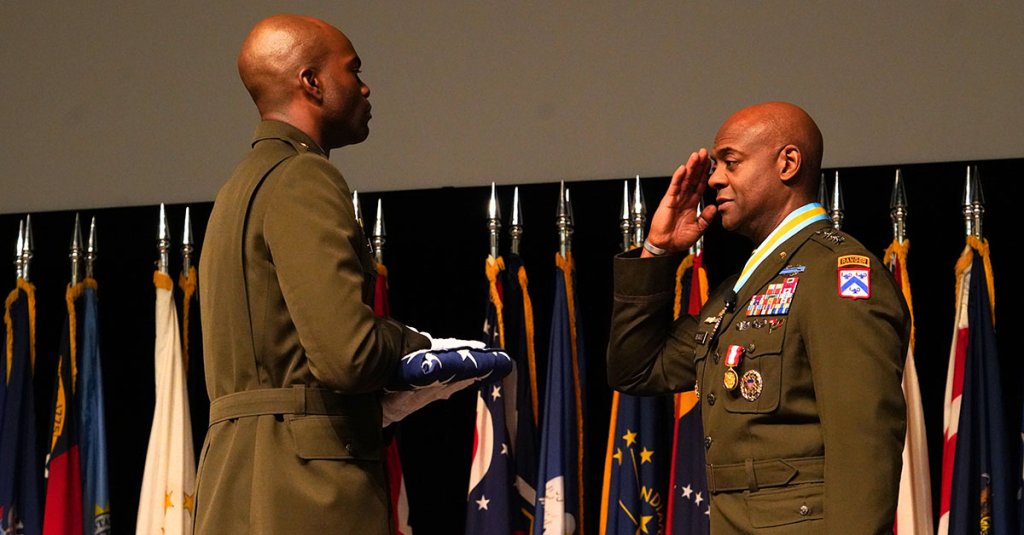
Milford Beagle Jr. had been in the Army for about a year when a new battalion commander took charge of his unit.
It was 1991, and Beagle and five other lieutenants waited nervously together for their one-on-one meetings with the colonel. The furniture was hard, and there was a faint smell of pine oil in the air, Beagle recalled last week at the 2026 Military Influencer Conference (MIC) in Tampa, Florida. The six young service members shared a collective sense that they were heading into the principal’s office.
Why were they in trouble?
Also Read: 10 life lessons that William McRaven learned in Navy SEAL training
Beagle was the last of the six to meet individually with the commander. The other lieutenants did not spend much time with the colonel, probably only a few minutes each. As Beagle entered the office, he reminded himself again not to say anything dumb. Then the colonel asked him what he wanted to do with his career.
And without much delay, Beagle blurted out that his goal was to become a two-star general and command a division. The colonel adjusted his glasses and told Beagle to take a seat. This was going to take awhile.
Forty minutes, to be exact. Three-and-a-half decades later, Beagle remembers the length of that meeting exactly, because it so powerfully impacted him. Beagle can’t recall everything the commander said, though, but he didn’t raise his voice. He told Beagle that leadership isn’t solely about someone’s rank or title. Other qualities were more important.
In 2018, Beagle tracked down that colonel and identified him as the lieutenant who boasted in his office of wanting to become a two-star. Clearing possessing a good memory, the colonel remembered Beagle, who thanked him for that conversation.
“I could hear a crackle in his voice, and there was a crackle in my voice because I was tearing up,” Beagle said at MIC. “‘I’m calling you because it was less about what you said and more about what you did. For the longest time, I thought that conversation changed my life, and then I thought that conversation changed how I lead.’”
Beagle told the colonel he recently learned he was going to make the rank of two-star. When he retired in 2025 after 35 years in uniform, Beagle was a lieutenant colonel—a three-star. Here is how that long-ago conversation shaped Beagle’s leadership style.
1. Leaders Don’t Make Assumptions

As soon as Beagle answered the colonel’s question, he thought his answer came off as overly egotistical. So if he believed that, then what must the commander be thinking? The colonel didn’t try to deflate Beagle’s sense of self-worth. Instead, he listened and learned more about the ambitious lieutenant.
In less capable hands, that conversation easily could have spiraled in the other direction. Beagle could have left embarrassed and admonished. That’s not how he felt. He and the colonel had an honest conversation that resonated deeply with the person sitting on the other side of the desk.
“[Leadership] happens in micro-moments, so when I sat down, I thought I was going to get a lesson in humility, ego, and attitude,” Beagle said. “We talked about success. We talked about other things, but the fact that [he was] present in the moment and [was] willing to have a conversation and listen without judgment… That’s what I learned.”
2. They Understand the Impact They Have
Beagle explained the difference between “lead measures” and “lag measures” to the audience at the military conference. When leaders have conversations, lead measures are when those on the receiving end expect almost instantaneous results. On the other hand, lag measures happen when a service member or civilian remembers what a leader says long after they said it. They are everlasting.
Unlike Beagle’s colonel, leaders rarely will remember the exact words they imparted to their audience. Depending on the circumstances, however, that message might stay with those who heard them forever.
“Whatever seed I plant—good, bad, or indifferent—it’s going to be there, so you have to make sure it’s good,” Beagle said. “It’s about being mindful.”
3. They Don’t Wing It
As Beagle progressed further into his career, he realized that the colonel’s part in their exchange was not extemporaneous. It wasn’t rehearsed, either.
The colonel probably didn’t know exactly what he was going to say, but when he asked Beagle about his ambitions, he likely thought of various responses in advance of their meeting. How was he going to react to them? What would those conversations look like? What key points did he want to make?
No one values preparation more than military members, veterans, and their families. It’s ingrained in them. Winging an important conversation is a recipe for misinterpretation. Don’t be that leader.
4. They Don’t Have ‘Hard Conversations’

That doesn’t mean there aren’t difficult topics to discuss. But labeling a conversation before the first word is uttered doesn’t serve anyone, Beagle said. In that case, the leader already has lost and risks putting the listener on the defensive. Once that happens, a tuning-out process is likely to occur, and both sides are likely to become uncomfortable.
“Crucial conversations have three ingredients: high stakes, varying opinions, and emotions,” Beagle said.
As any military member or civilian can attest, that is a potentially combustible cocktail of factors. Slapping a label on it doesn’t help.
5. They Can Read a Room
Beagle’s conversation took 40 minutes. They don’t have to be that long. All these years later, Beagle can’t pinpoint what it was that convinced the colonel to allot him that much time. The commander just knew intuitively that their conversation required some time.
Others could be much shorter, although the message has the potential to become just as impactful. Leaders don’t watch the clock. They listen as long as required so they can empathize with the other person’s situation and offer sound advice.
“I’m completely zoned in on what you’re saying,” Beagle said. “I may not get to the exact spot you’re on, but if I get beside the spot you’re on, I’m much better off. I’m not just listening to respond. I’m listening to help you move from one point to another.”
6. They’re Adaptable
Beagle stated at MIC that good leadership involves the leader, follower, and one other component: context. The circumstances of a situation can’t be discounted. They vary, based on the individual, and so good leadership requires a certain flexibility.
Rigid thinking will not work. Throughout his career, Beagle explained, sometimes he saw himself as a servant leader. Other times, it was as a spiritual leader or transformative leader. There are several other types of leaders as well, and they’re not appropriate to every scenario.
That’s why listening is so important.
7. They Seek Out Honest Criticism Themselves
Beagle didn’t become a good leader by himself. Once he became an officer, he had aides who were around him constantly. Beagle didn’t want them there to just agree with everything he said. He wanted an honest assessment, and to achieve that, he afforded those working underneath him the freedom to speak the truth.
These conversations often occurred in what Beagle referred to as “the vehicle of trust” when they were leaving an event. Beagle wasn’t looking for filtered answers.
“They knew they could tell me [anything] without any retaliation or retribution,” Beagle said. “I’m not going to be mad, because I asked them. ‘I need you to tell me what I need to hear. Can you do that for me—no sugar, no chaser, no nothing? Just tell me.’”
Beagle said everyone should have two people in their lives who are allowed to tell them the unvarnished truth.
8. They Know What Not to Do
Examples of poor leadership are everywhere. Beagle cited one example during his talk in Tampa. He mentioned that when he served in Iraq, a commander inexplicably walked around with two pistols. It made no sense. Even the Iraqis couldn’t figure it out.
Well, one time, the commander pointed a pistol at Beagle, who didn’t mention the exact context for the incident. In any regard, it unsettled Beagle enough that he immediately questioned the commander’s actions.
Just like his conversation with the colonel in the early 1990s, Beagle never forgot what bad leadership looked like.
“Those moments make an impression on you,” Beagle said. “… You have to become an umbrella. You can umbrella those who are at least close to you. I saw that repeatedly throughout my career. ‘OK, I can take this, but I can’t let everybody else take this. Shield them as best as you possibly can.’”
Don’t Miss the Best of We Are The Mighty
• How to increase TSP contributions without shrinking your paycheck
• What ‘Duty, Honor, Country’ meant to Douglas MacArthur
• A former soldier with a TBI found his purpose in helping other veterans
Loading comments…
Comments couldn’t be loaded. Please refresh the page.