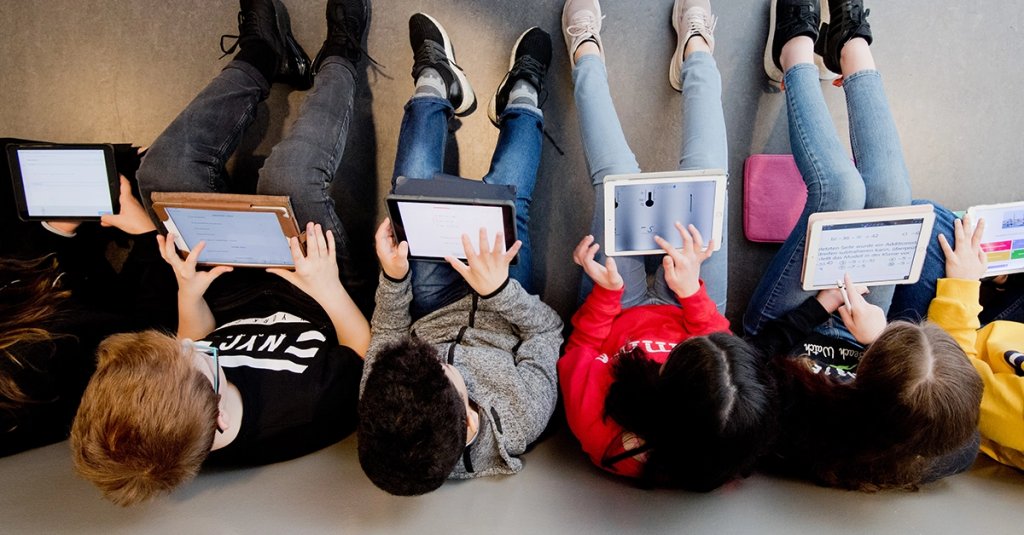
In January 2026, neuroscientist Jared Cooney Horvath testified before the U.S. Senate Committee on Commerce, Science, and Transportation. His message was clear: “Our kids are less cognitively capable than we were at their age.”
From a military and national defense point-of-view, the declaration might catch the War Department’s attention. But it’s really the Department of Education that should be paying attention. If a viewer stopped viewing after that first sentence, they missed a whole lot of important nuance.

Doctor on How Screen Time Hurts Kids' Cognitive Development
Since the moment Horvath uttered those words, the headlines only read some variation of “kids are getting dumber.” But even Dr. Horvath himself would tell you that the headlines are not only sensational, but they’re also incredibly misleading. Most importantly, they make everyone miss the underlying issue.
The reason the media has a white-knuckle grip on that hot take is that Horvath’s testimony included a sidebar about the Negative Flynn Effect, an observation by researchers that IQ scores are beginning to decline in high-income Western nations.
The Flynn Effect
The Flynn Effect is the surprising observation that average IQ scores have been steadily rising over the past century—typically by about three points per decade.
Simply put, the Flynn Effect says if you gave today’s IQ test to people from 1950 (and scored them by today’s standards), their average score would be around 80, technically “below average” by modern norms. But this doesn’t necessarily mean people today are fundamentally smarter than past generations.
Researchers think it’s due to environmental and cultural changes, like better nutrition and healthcare, more years of schooling, exposure to more complex, abstract thinking (through technology, visual media, and problem-solving tasks), and greater familiarity with test-taking in general.
In the early part of this century, however, researchers began to see the opposite, now dubbed The Negative Flynn Effect, and believe the reason for it is entirely environmental. And Horvath’s written and oral testimony to the U.S. Senate tried to explain what those environmental causes likely are, and what could be done about them.
But all the media saw was a chance to dunk on teenagers.
Educational Devices Aren’t Necessarily Helping
Kids these days spend a lot more time on screens at school, but their test scores and core skills haven’t improved. Horvath says reading and math skills (and things like focus) have stalled or slipped during the same era that schools went heavily digital, so a lot of learning on devices time isn’t actually learning. His data suggests students often drift into non-school stuff while on computers, and that off-task time can add up fast.
You do this, too. I’m shocked you even read this far without switching over to Instagram. But I wouldn’t say you’re dumber because you dipped to the gram.
His written testimony also notes bigger international data sets that demonstrate that more classroom computer use equals lower scores. International exams (like PISA) show that students who report heavier in-class computer use tend to score lower in reading, math, and science.
Then there’s the Educational Technology studies from the EdTech companies. These studies look positive, but Horvath says the real-world effect is smaller. A lot of EdTech research compares a new tool to a weak baseline (or short-term outcomes), so results can look better than what happens in normal classrooms over time. After all, these companies are trying to sell devices to school districts, so they’re going to put their best foot forward.
It’s important to note that Horvath is not an anti-tech crusader for American schools, and even says as much. But the facts don’t lie: paper beats screens for deep reading, and handwriting often beats typing for learning. People understand and remember complex reading better on paper, and handwritten notes help learning more than laptop notes.
The big reason for this is that screens make it easier to split attention. Constant switching, notifications, and easy distractions make it harder to build strong memory and deep understanding, even when students are doing schoolwork on a device. But it matters beyond schoolwork. Horvath links weaker learning to long-term issues, including workforce skills and national competitiveness.
Horvath suggests schools demand better proof of an educational device’s effectiveness before going all-in on them. He also advocates for student data privacy protections, transparency in what schools purchase and why, limits and age-appropriate guidance, more long-term research (not just “engagement” or short pilot results), and to ensure digital tests are fair and don’t disadvantage students because of the format.
The Kids Are Alright
What the data actually says is that measured skills like reading comprehension, math performance, sustained attention, and writing quality may be slipping or not improving. It also suggests that a heavy, poorly controlled digital environment can make it harder to learn and retain what the school is trying to teach.
Test scores and classroom performance aren’t IQ. They’re snapshots of learned skills, practice, curriculum, and environment. Attention and study habits are trainable. If devices encourage distraction and constant switching, kids can look worse academically without being less capable. There are also a lot of other variables moving at the same time. You can’t blame it all on the kids.