The Black Seminole Indian Scouts stand among the most skilled and effective irregular fighting forces ever to serve in the United States Army. Operating between 1870 and 1914, they inherited a legacy forged through centuries of resistance, migration, cultural fusion, and frontier survival. Their abilities in tracking, reconnaissance, border security, and small-unit tactics made them indispensable to the Army during the final decades of the Indian Wars.
Their service took place alongside and in support of Buffalo Soldier regiments, creating a unique chapter in American military history where two communities of African descent shared the burdens and dangers of frontier defense.
Related: The Indian Scouts that forged the legacy of American Special Forces
These skilled warriors descended from the Black Seminoles of Florida, an Afro-Indigenous people who forged a powerful alliance with the Seminole Nation. After the brutal Seminole Wars and the forced migration of many Seminoles to Indian Territory, hundreds of Black Seminoles moved to northern Mexico to escape slave raiders and discriminatory laws. By the 1850s, they established the settlement of Nacimiento de los Negros in Coahuila.
Their reputation for discipline, marksmanship, and survival skills soon attracted the attention of U.S. Army officers stationed along the Texas frontier, and by 1870, the Army officially authorized the enlistment of Black Seminole scouts.
Early Service
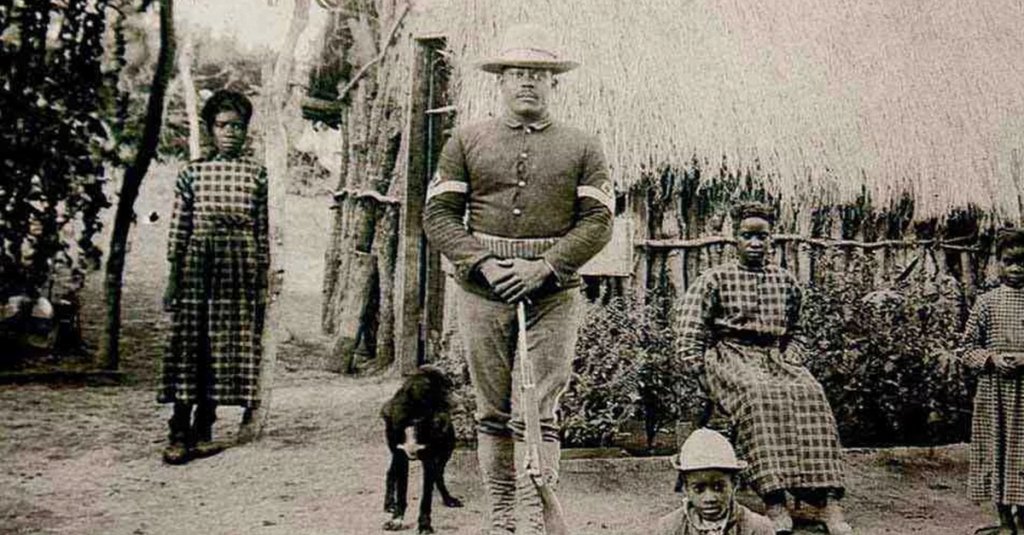
The first group of Black Seminole Indian Scouts enlisted on Aug. 16, 1870, at Fort Duncan near Eagle Pass, Texas. They served under officers such as Maj. Zenas R. Bliss and Capt. Frank Perry, and later under Lt. John Lapham Bullis, who became their most famous commander. Many of the original scouts were bilingual or trilingual, fluent in English, Spanish, and Afro-Seminole Creole. Their experience navigating both sides of the Rio Grande made them uniquely suited for missions involving cross-border raiding, smuggling, and intercepting Apache or Comanche war parties moving between Texas and Mexico.
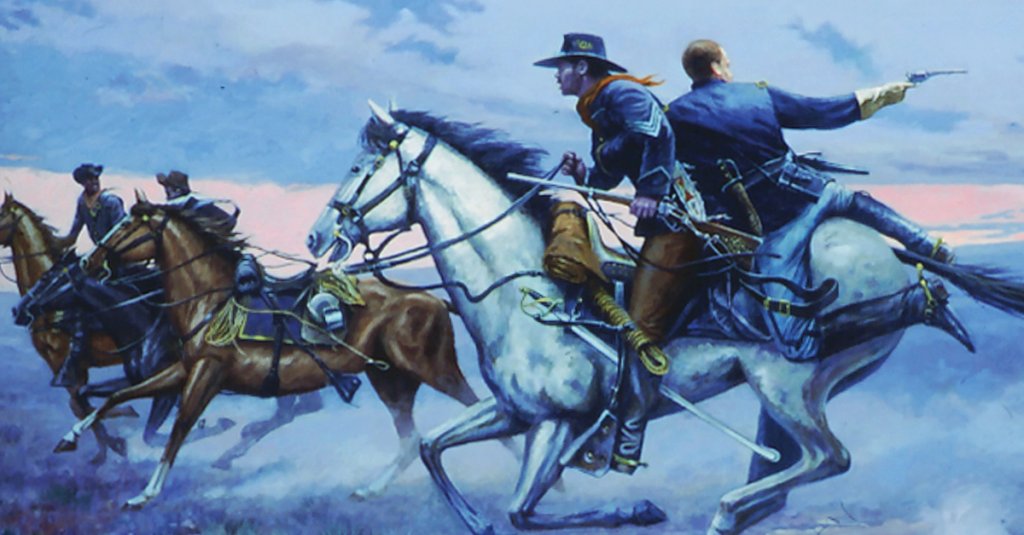
These skills quickly proved invaluable. The scouts often worked with Black regulars in the 24th and 25th Infantry and, at times, with the 9th and 10th Cavalry regiments, units composed of Black men known as the Buffalo Soldiers. Together they patrolled hundreds of miles of hostile ground in a region filled with raiding parties, cattle thieves, desperados, and guerrilla fighters. The Buffalo Soldiers often relied on the scouts for intelligence, navigation, and rapid movement through difficult terrain. Army officers frequently commented that the Black Seminole Scouts could find a trail where others saw nothing and could follow footprints across bare rock, a feat few others could attempt.
Unparalleled Achievements
Between 1870 and 1890, the scouts participated in dozens of engagements, patrols, and pursuit missions. Their duties included locating hidden trails used by raiding parties, identifying crossings along the Rio Grande, tracking warriors across desert and canyon, and negotiating passage through regions where even experienced soldiers hesitated to travel.
One of their most notable tactical achievements came in 1873, when the scouts accompanied the 4th Cavalry on a daring raid into northern Mexico against Lipan Apache and Kickapoo raiders near Remolino. Acting as guides and pathfinders, the Black Seminole Scouts led the column for days through punishing terrain, located the enemy encampment, and helped set the conditions for a surprise attack that broke a major raiding base.
The operation demonstrated how their cross-border knowledge, stealth, and mobility could give the U.S. Army a decisive edge in some of the harshest country on the continent. Throughout the 1870s and 1880s, the Scouts participated in major actions along the Texas border, earning a reputation for loyalty, discipline, and bravery that impressed even their most skeptical observers.
Their ultimate headquarters became Fort Clark near Brackettville, Texas. This post served as both their operational center and their community home. The scouts’ families lived in settlements nearby, forming a small but resilient cultural enclave that still exists today. The most prominent scouts combined profound combat skill with the intelligence and cultural knowledge required for frontier operations.
Medal of Honor Recipients
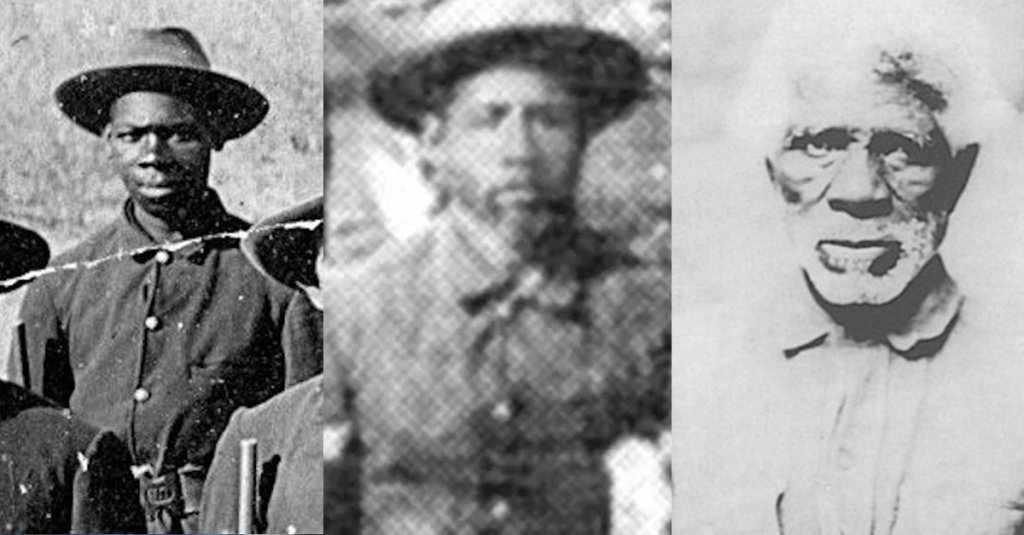
Four Black Seminole Indian Scouts received the Medal of Honor for extraordinary acts of valor in the turbulent borderlands of Texas during the 1870s. Operating in a region marked by rugged canyons, mesquite thickets, and hostile crossing routes along the Rio Grande, these scouts repeatedly risked their lives to protect frontier communities.
Although their official citations were brief—as was common during the Indian Wars—their actions were anything but ordinary. Each displayed remarkable courage, tactical skill, and dedication to the mission. Their heroism represents the apex of the Black Seminole martial tradition, rooted in generations of resistance, survival, and service.
Adam Paine
Adam Paine’s Medal of Honor action occurred on Sept. 26–27, 1874, during the Red River War at Canyon Blanco, a tributary of the Red River in Texas. Serving as a scout under Col. Ranald S. Mackenzie and the 4th Cavalry, Paine rendered invaluable service in a campaign aimed at breaking the power of raiding bands on the Southern Plains.
Moving through difficult country under the threat of attack, he helped guide the column, locate hostile camps, and contribute to a decisive blow against Comanche forces. Paine’s courage and steadiness under fire earned him the nation’s highest military honor and reflected the long-honed skills of the Black Seminole scouting tradition.
Isaac Payne
Isaac Payne was recognized for his heroism on April 25, 1875, during a fight at Eagle’s Nest Crossing on the Pecos River. Serving as a trumpeter and scout under Lt. John Lapham Bullis, Payne joined John Ward and Pompey Factor in tracking a band of Comanche raiders across harsh terrain until they reached the crossing.
When the small party dismounted and attacked, they found themselves outnumbered and under heavy fire. As the situation deteriorated, Payne helped guide the movement through the rough ground and delivered steady covering fire that allowed the others to maneuver. His composure under pressure and precise shooting were critical to the party’s survival and to Bullis’ eventual rescue.
Pompey Factor
Pompey Factor received the Medal of Honor for what is widely considered one of the most dramatic rescue efforts of the Indian Wars. During the same April 25, 1875, fight at Eagle’s Nest Crossing, Lt. Bullis was left stranded on foot in a deadly crossfire zone after his horse bolted or went down under fire. Recognizing that hesitation would mean certain death for his commander, Factor volunteered to ride ahead across open ground.
His advance immediately drew concentrated enemy fire, allowing other scouts to reach Bullis. Factor then helped pull him onto a horse and shielded the rescue as they rode back to safety. His selfless decision to become a living target exemplified the Black Seminole creed of never abandoning a comrade, a value shaped by generations of communal survival in Florida, Indian Territory, and Mexico.
John Ward
John Ward received the Medal of Honor for his role in that same fight on April 25, 1875. As a sergeant leading the scouts under Bullis, Ward joined the charge against a much larger force of Comanches at the Pecos. When the engagement turned against them, and Bullis was unhorsed, Ward wheeled back into the kill zone under heavy fire. He hauled the lieutenant up onto his own horse, then fought his way out while Payne and Factor fired to cover their withdrawal. Ward’s combination of leadership, quick decision-making, and personal courage saved his commander’s life and helped ensure that the tiny scouting party escaped against overwhelming odds.
These four Medals of Honor represent more than isolated moments of heroism; they reflect the continuation of a warrior culture forged through the Seminole Wars, refined in exile in Mexico, and brought into U.S. service on the Texas frontier. The Black Seminole Scouts inherited a legacy of endurance, intelligence, and tactical innovation from ancestors who survived one of the longest and hardest-fought Indigenous resistance movements in American history.
Their battlefield actions in the 1870s were not accidents of circumstance, but the result of generations of training, communal resilience, and an unbreakable ethic of protecting one’s people. Today, their names stand among the most honored in frontier military history, embodying the spirit and courage that defined the Black Seminole contribution to the United States.
Closing the Frontier
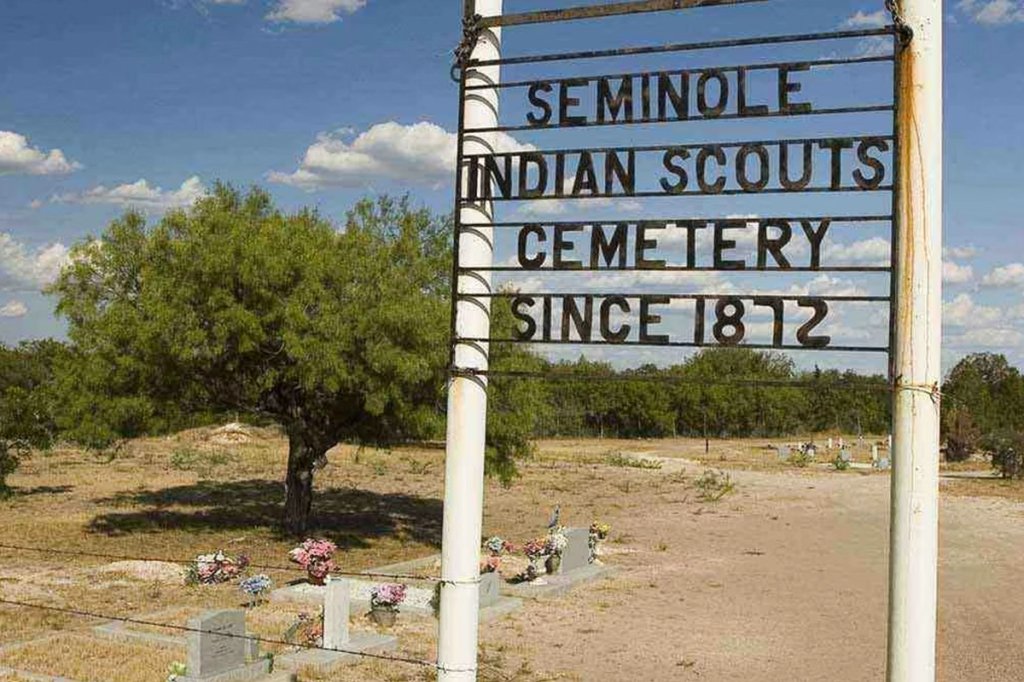
The Black Seminole Scouts continued to serve until 1914, when the Army disbanded the unit following the end of the frontier era. Many scouts had already been discharged due to age or disability. Though they were promised land and support for their service, most never received what they had been led to expect. Nevertheless, their descendants remained in and around Brackettville and Fort Clark and maintained their cultural traditions. The Seminole Indian Scouts Cemetery stands today as a testament to their service and sacrifice.
Their legacy survives through both military history and the ongoing recognition of their contributions to modern irregular warfare. The principles they demonstrated—tracking, adaptation to terrain, cultural intelligence, and strong small-unit cohesion—echo in the ethos of today’s special operations units, even if there is no formal organizational lineage.
Their service connects directly to the Indian scouts who came before them and resonates with the specialized forces that came after them, forming a long, if not unbroken, tradition of irregular warrior service in the United States.
Warriors of Two Worlds
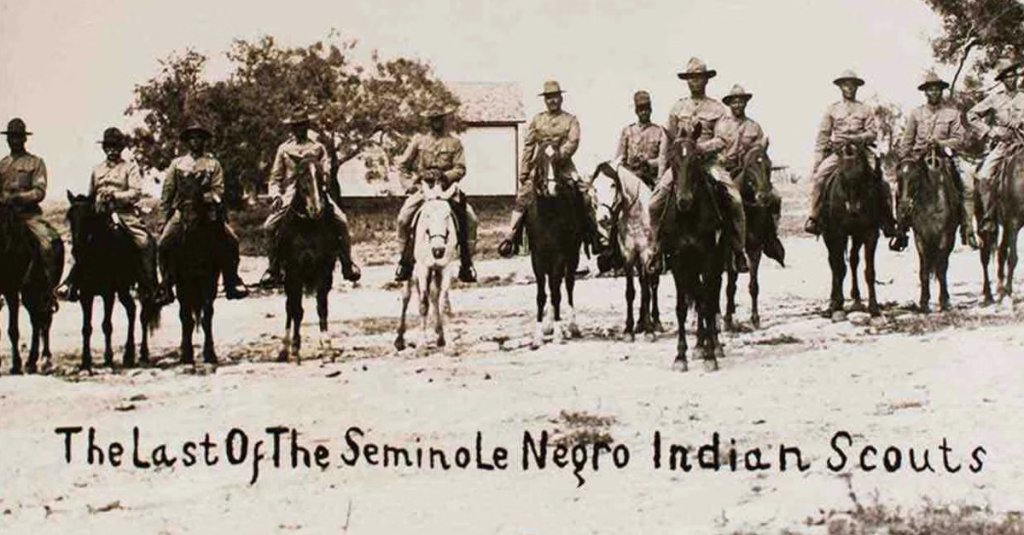
The Black Seminole Indian Scouts were more than auxiliary troops. They were elite frontier warriors who blended Seminole resilience, African American endurance, and Mexican borderland knowledge into one of the most capable scouting forces ever assembled. Their courage alongside the Buffalo Soldiers, their receipt of the nation’s highest military honor, and their role in securing the Texas frontier mark them as some of the most important yet underrecognized figures in American history.
Their story is not only a narrative of survival, but also a testament to the power of culture, memory, and community. The Black Seminole Scouts remind us that America’s military strength has always depended on the contributions of diverse peoples whose stories deserve to be preserved, studied, and honored.