

Dr. Saul Lankster has lived many lives. Civil rights foot soldier. Vietnam veteran. Recipient of the Congressional Gold Medal. The first Black firefighter to integrate the Compton Fire Department. A Compton police officer who rose to the top detective rank. And then, what he says he always was, even when he tried to run from it: a teacher.
When I asked him what connects all those chapters, he didn’t start with his own résumé.
“It goes all the way back…to my great-grandfather, who was an emancipated slave,” Lankster told me. His great-grandfather was taught to read “when it was still illegal for people of color to read,” and the people who taught him “broke the law to teach him.”
In Lankster’s telling, that act became a family inheritance.
“Education is the key,” he said. “It opens doors that would not be open otherwise.”
That throughline matters because it reframes everything that comes next. His story is not just about being “the first” in different institutions. It is about a lifelong commitment to opening doors and then holding them open for others.
Selma, Alabama
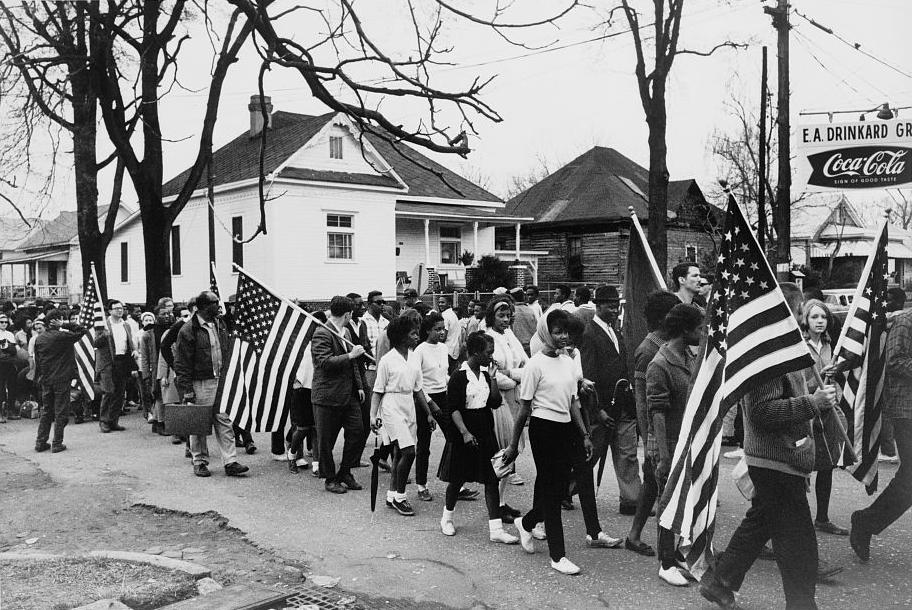
Lankster grew up in an Alabama of “Black only” water fountains, where the KKK burned a cross on his front lawn. But he was never taught to hate.
“We were taught that people are just who they are,” he says, “but we don’t hold that against them.”
This grounded spirit led him to the front lines. When future Congressman John Lewis arrived to recruit students to join the Selma march. Lankster joined after Lewis explained that young people would be the beneficiaries of the movement. Lankster was later arrested for his participation. His release came with a life-altering ultimatum: “The conditions were that all of us, once we graduated, had 24 hours to get out of Alabama.”
This forced exit was a painful parting from the home that shaped him even as it pushed him out.
The Road to California
When Lankster describes the drive west, he is matter-of-fact.
“The Green Book was still in effect,” he said.
They had to know where they could safely stop to eat, sleep, or use the restroom. He remembers joining Route 66, where he now owns a home. He remembers the heat.
“It was hot sitting in the back seat with four of us in a relatively small car.”
But based on his positive energy and his philosophy on life, I found myself smiling and imagining the car ride. A car full of young Black men, cramped into his cousin’s brand-new 1960 Pontiac GTO, heading west with their whole lives ahead of them.
I imagined The Supremes or Marvin Gaye on the radio, maybe Sam Cooke or The Temptations. Laughter breaking through the heat. Conversations swinging between nerves and excitement. The sense that something important had just happened, even if they could not yet name it.
They were driving into their future without knowing their participation would become part of one of the most consequential chapters in Black history.
I imagine the quiet stretches, too. The long nights. The same questions humanity has always asked itself. And the same determination to keep going. They arrived in Compton, where Lankster stayed with his cousin and aunt. And before he could fully begin again, history arrived in the form of a draft notice.
“On Christmas Eve in ’65 I got my draft notice,” he said. “I had a week to get ready to go into the military.”
Vietnam, Compton, and Becoming the First Black Firefighter
After Vietnam, Lankster returned to Compton. He did not plan to become a firefighter. He resisted it. But the NAACP approached him with a mission.
“They needed somebody to integrate the fire department,” he said. “Somebody who didn’t have a chip on their shoulder.” He accepted the challenge. He took the exam and placed first.
He turned this opportunity into a pipeline.
“I felt an obligation to recruit other African-Americans and other people of color,” he said. He told them what books to study, helped them prepare, and practiced interviews with them. Once others were coming through the door, he moved on to become a police officer.
Compton Police Department
Lankster later joined the Compton Police Department, rising through the ranks to detective and serving as president of the Police Officers Association. His purpose stayed rooted in community.
“Most of the officers didn’t live in the community,” he said. “So I had an obligation to make sure that we got the best law enforcement where I live.”
Because he showed up to neighborhood gatherings and barbecues, people trusted him. That trust often led to information that helped move cases forward and bring justice to the people he served.
His Life’s Purpose

Even when he swore he wouldn’t teach, teaching kept finding him. Lankster said he and his roommates at Selma University pledged they would not become teachers. Their parents and grandparents were teachers, and they wanted something different.
For years, he resisted that pull. He built full careers elsewhere. Eventually, he stopped fighting it. He describes that moment not as a career decision, but as a surrender.
The moment it crystallized came during an unexpected conversation. While hosting a cable television show, he interviewed a man who said he knew his life’s calling was to become a bank teller and that he was “born to cash checks.” Lankster laughed, then paused.
“It occurred to me,” he said. “So you were born to teach, and you know it. Stop fighting.”
At National University, Lankster now teaches criminal justice and education courses, bringing decades of lived experience into conversations about law, leadership, and responsibility.
Why National University Was the Right Match
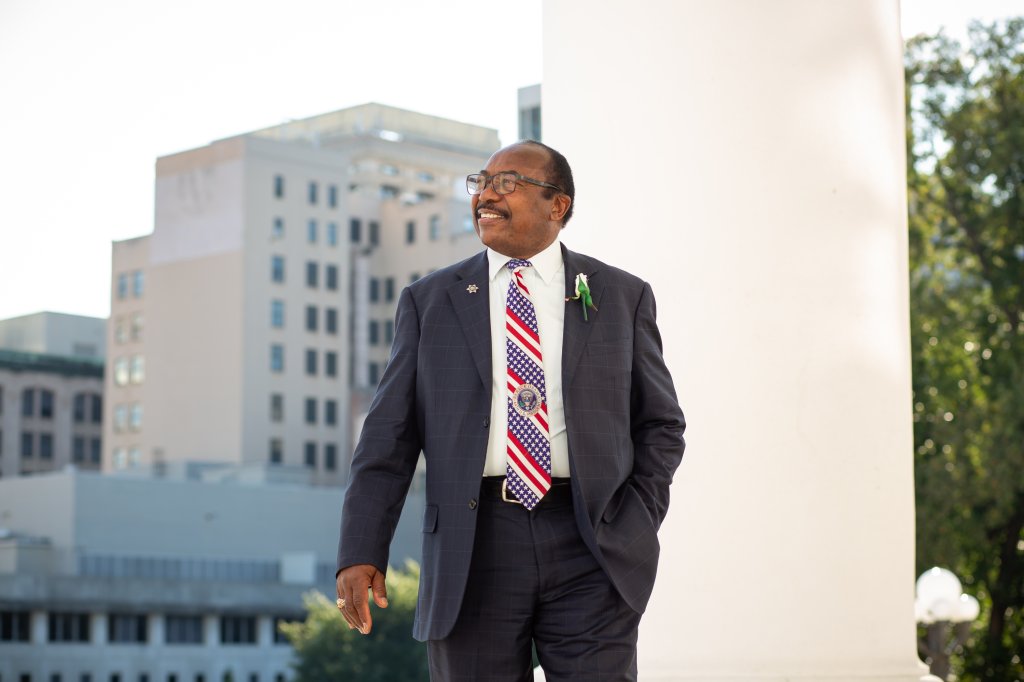
When Lankster talks about National University, he describes it as a place that feels like home. What stood out to him as a student was how intentionally the university served people already carrying full responsibilities. People who were working, raising families, or serving.
At National University, those students are known as ANDers. People who are students and parents, professionals and caregivers, service members and scholars, all at the same time.
For Lankster, that distinction mattered. It created an environment where people were not asked to fragment their lives in order to learn. He felt the faculty made it clear that his success was part of the institution’s responsibility, not something that he had to navigate alone. In contrast, he said other institutions often felt transactional.
When he became a professor at National University, he brought with him the philosophy he has carried since Selma, shaped by Dr. Martin Luther King Jr.’s message on excellence, which he so movingly recited during our conversation.
Inspired by that speech, Lankster believes you do not aim to be “good enough” just to get by. You do your life’s work so well that it honors your full humanity, reflects who you are, and brings excellence into the world in a way no one else can.
When a student once told him they did not need to finish an assignment because they had already secured a B, Lankster didn’t let it pass. He told them “ I cannot believe someone with your brilliance would take that attitude.”
He invoked Dr. Martin Luther King Jr.’s message on excellence, reminding the student that you do not aim for what is sufficient when you are capable of more. “No, we don’t settle. That’s not who we are. That’s not how we got to be where we are.”
For students who think they missed their window, his message is steady. “It’s never too late,” he said. “You always have an opportunity to learn and to grow.”
Lankster told me he has been “gifted, lucky, blessed…with opportunities.” But listening to his story, what stayed with me was this: he didn’t just walk through open doors. He prepared himself to enter them, then turned around and helped others do the same.