
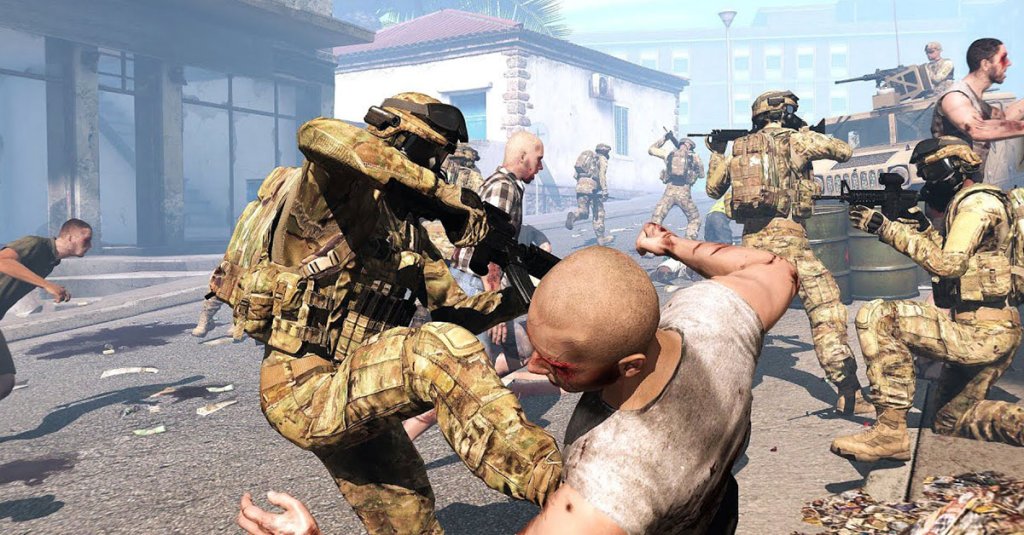
If Hollywood has taught us anything, it’s that the undead are often the undefeated. Whether it’s World War Z, The Walking Dead, or Resident Evil, America’s finest are somehow always outmaneuvered by flesh-eating forces.
On paper, the U.S. military should have a battle against bags of bones, well, in the bag. We’re talking the world’s most expensive defense machine—over a million active-duty troops, fleets of armored vehicles, drones that can sneeze precision munitions from the sky. Yet every time the corpses come for us in a movie or show, the chain of command collapses faster than a hungover private doing PT. Here’s why.
Command and Control Go Out the Window
Every zombie movie follows the same script. First, there are a few reports of rabid rogues biting random civilians. Before long, there’s chaos unbound. But no fear, because top brass at the Pentagon “has a plan.”

Related: This is how well a zombie horde would fare against the US military
Unfortunately, the U.S. military runs on a fragile web of comms networks, satellites, and encrypted data streams. Lose that—say when your operators are eaten—and suddenly that F-16 pilot has no idea what to target. Simply put, you can’t carry out a counter-zombie operation without
Logistics: Zombies Don’t Need MREs
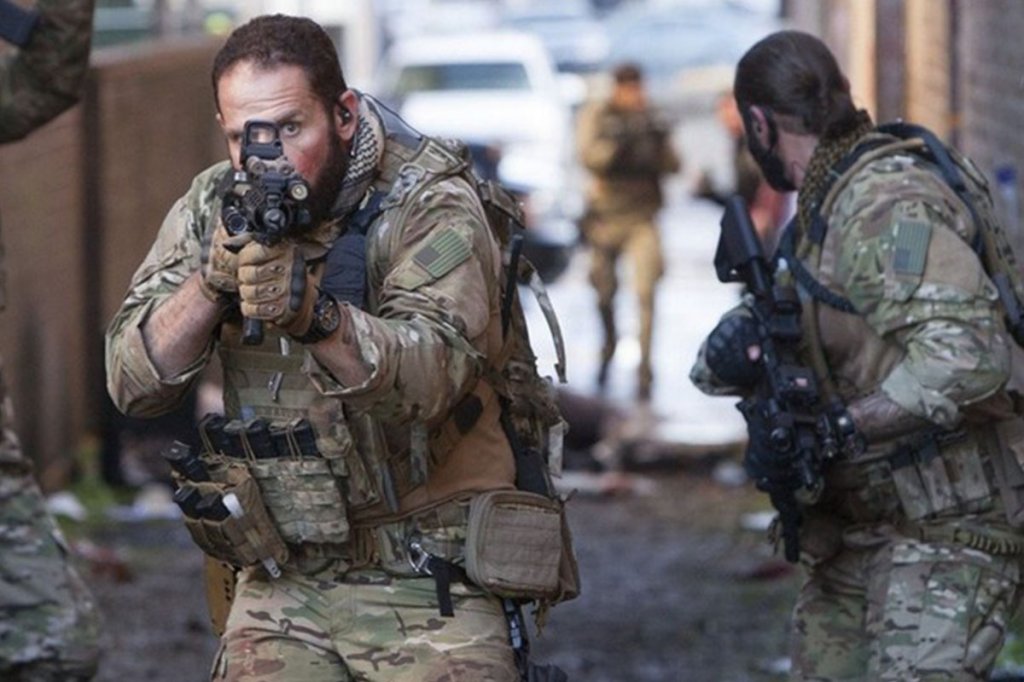
The U.S. military’s true superpower isn’t firepower; it’s logistics. The problem? Those collapse the moment your supply officers become lunch for zombies. Imagine trying to resupply a fighting force during “The Last of Us.”
In addition to having a steady stream of flesh to snack on, zombies don’t sleep, get tired, or need to wait for the DFAC to open. Humans do. The zombies don’t have a sustainment problem. They don’t need food, sleep, morale briefings, or air conditioning. They don’t get trench foot, they are trench foot.
Once the supply chain is broken, and there’s no fuel, no ammo, no coffee, and no chili-mac, you lose the thin veneer of good order and discipline, and your fighting force becomes consumed, either by zombies or the struggle to find food of their own.
Bureaucracy Kills Faster Than Bites
Before the military can shoot a zombie in the head, it has to fill out approximately 17 forms, request authorization, and hold a press conference. Now imagine trying to process a “Request for Fire” through the chain of command when your XO is half-eaten.
The Pentagon moves at the speed of molasses. By the time they reach “we’re forming a joint task force to evaluate potential options pending interagency review” and build a 600-slide PowerPoint on op-tempo, zombies are already chomping on the Joint Chiefs.
Morality Meets Existential Horror
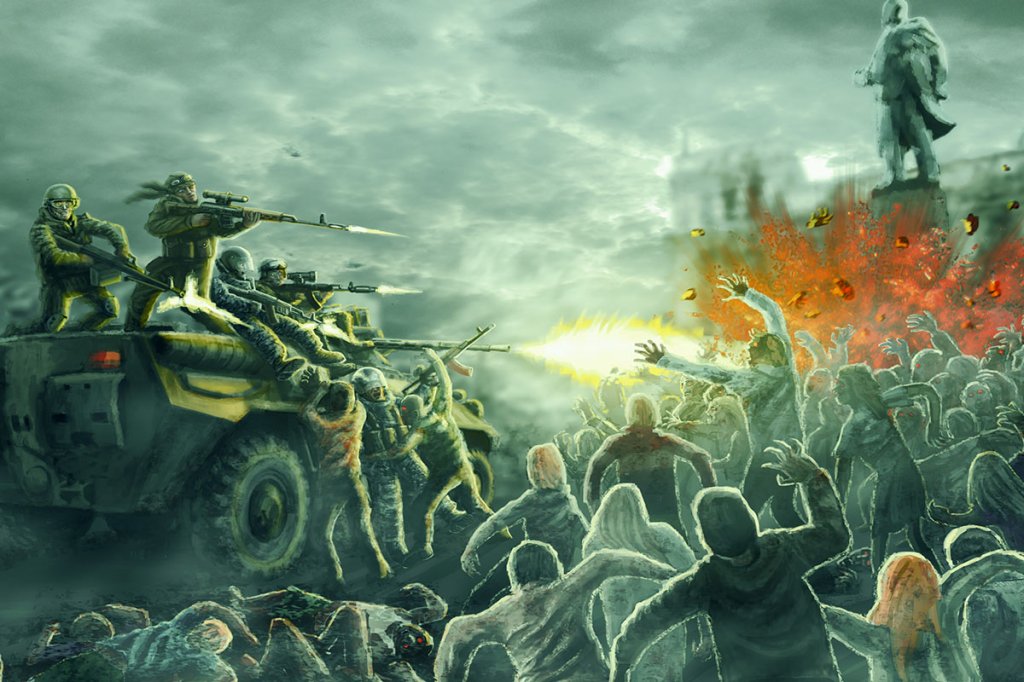
Counterinsurgency is bad enough. Now imagine watching your squad leader get eaten, stand up, and salute the grass.
Zombies remove the morality and justness of warfare. You can’t win hearts and minds when the enemy has one thing on its mind … brains. Plus, the Geneva Convention was designed to protect life where possible, not give rights to the undead.
Troops are trained to fight enemies with intent, not viral entropy. Once the line between “combatant” and “kid from next door who got bit” blurs, so too does will to fight. Cue the collapse.
Nature Wins (and So Do the Zombies)
Even if by some miracle the armed forces stabilized a perimeter, nature doesn’t care. Rot spreads. Water supplies go foul. Bases become buffet tables. The zombies don’t need a strategy. They just need time — and the military, for all its structure and discipline, runs on the illusion that time can be managed. Spoiler: it can’t.
Rot spreads. Water supplies go foul. Power grids fail faster than the newly minted LT at land-nav. Diesel runs out, metal rusts, and suddenly the tech that keeps a global military humming is reduced to a handful of generators, a stack of MREs, and a lot of wishful thinking.
Does the U.S. military ever stand a chance?
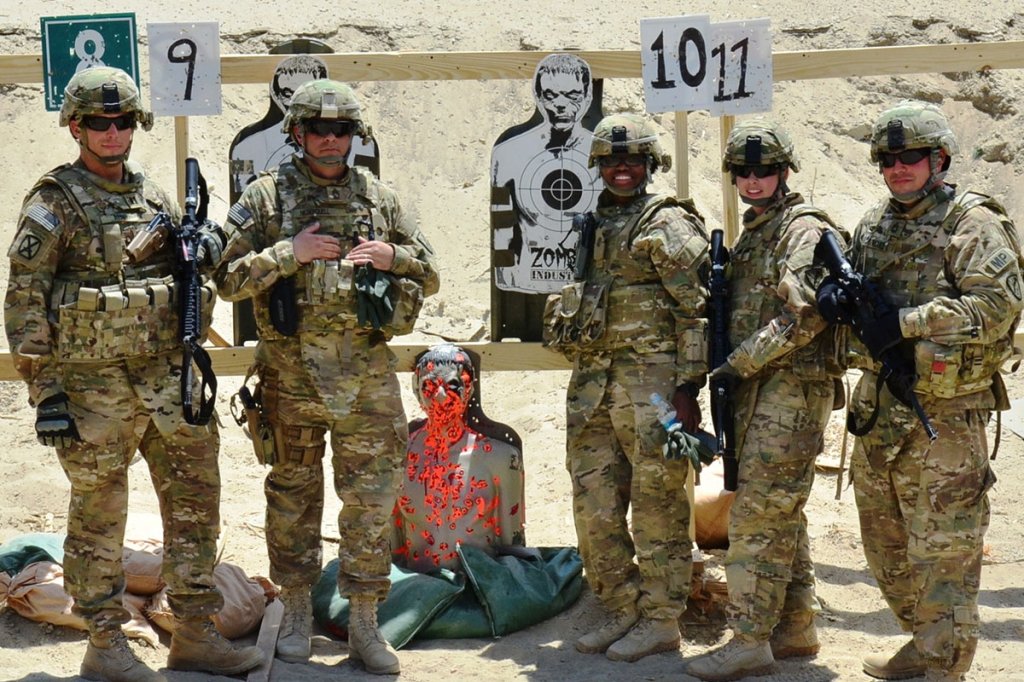
Maybe. Victory in a zombie war would come not from superior firepower, but from adaptability—the same kind that small-unit veterans, medics, and logisticians practice every day when the plan goes to hell. Unless the entire force adjusts, the undead will remain undefeated.
You can’t drone-strike a pandemic. You can’t out-admin a plague. And no matter how many acronyms the Department of Defense throws at it, you can’t classify “apocalypse” as a winnable war.
Don’t Miss the Best of We Are The Mighty
• Some US troops reportedly saw Bigfoot in Vietnam
• 4 Revolutionary War ghosts that refuse to die
• 4 creepy ghost stories from the Vietnam War

Loading comments…
Comments couldn’t be loaded. Please refresh the page.