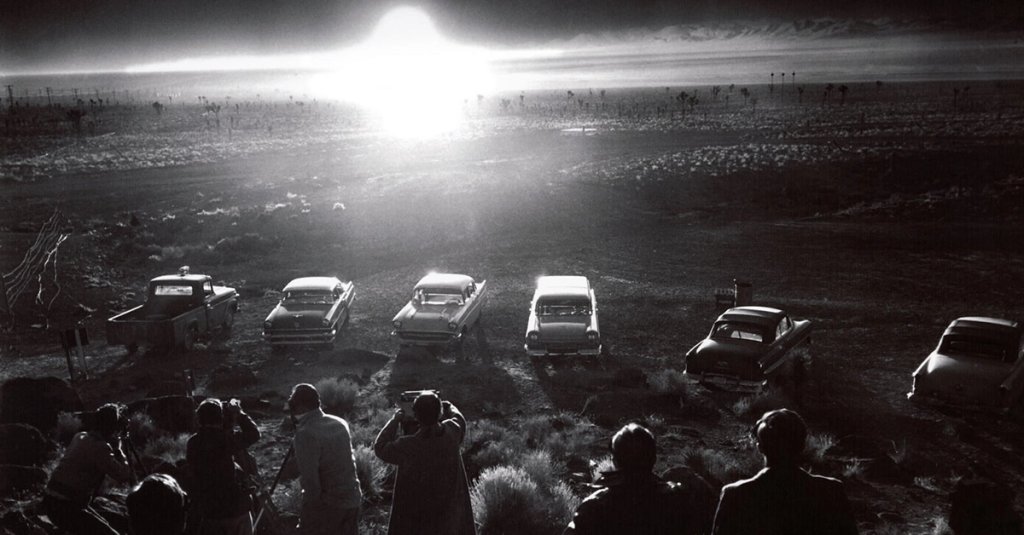
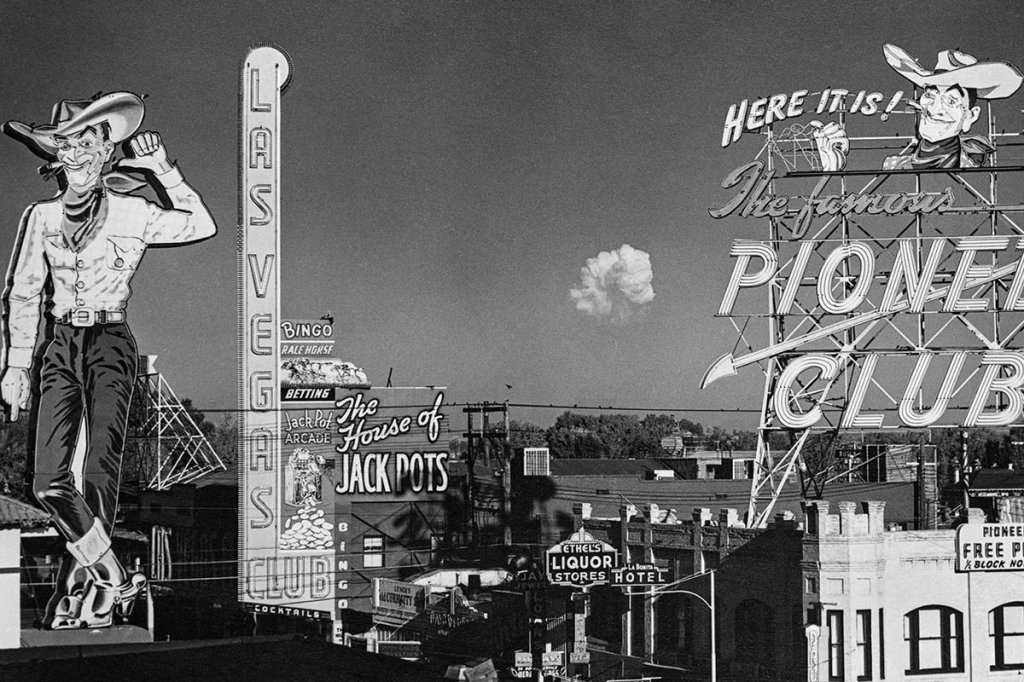
During the 1950s, mushroom clouds regularly rose on the horizon of the blistering Nevada desert, visible from hotel rooftops and cocktail lounges in Las Vegas. Rather than fleeing from these symbols of unimaginable destruction, Americans moved toward them.
Tourists gathered with cameras, newspapers printed test schedules, and casinos timed breakfasts and cocktails to coincide with nuclear detonations. Out of this surreal convergence of spectacle and science emerged one of the most striking and unsettling cultural icons of Cold War America: Miss Atomic Bomb.
Also Read: These specialized soldiers neutralize enemy nuclear weapons
From around 1952 to 1957, Las Vegas hosted a series of publicity stunts and informal pageants that blended showgirl glamour with atomic imagery. Bikini-clad performers posed with mushroom cloud-themed costumes and atomic wordplay, transforming nuclear power into entertainment.
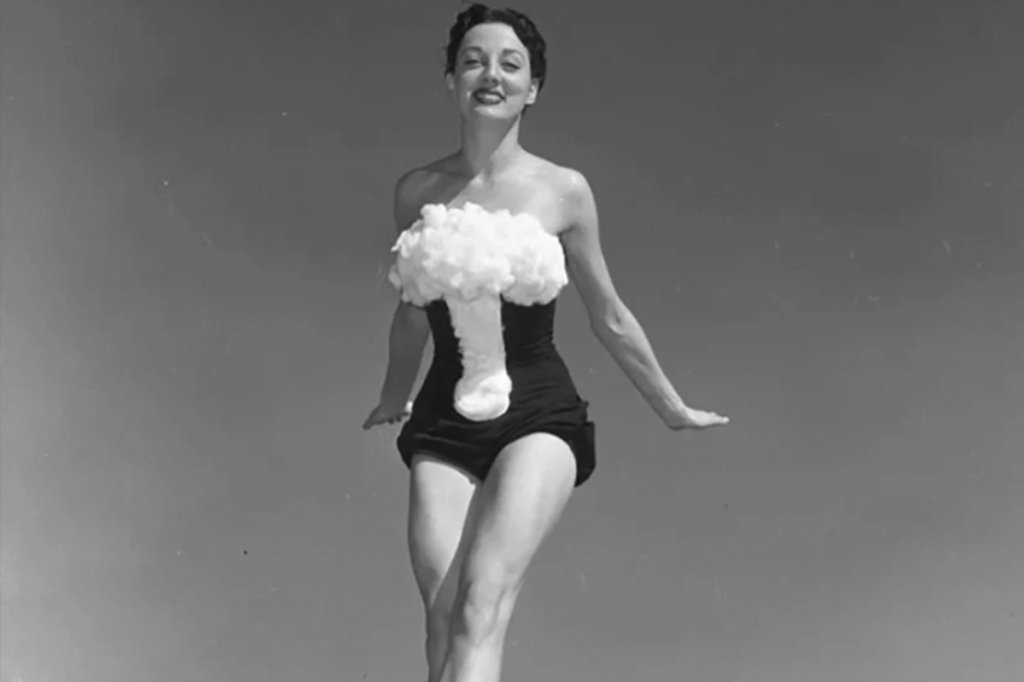
The most iconic image from this era featured Lee A. Merlin, crowned “Miss Atomic Bomb” in 1957, wearing a cotton mushroom cloud attached to her swimsuit. She has since become a visual shorthand for America’s deeply conflicted relationship with the atomic age. It encapsulated fear wrapped in fantasy and annihilation repackaged as glamour.
Las Vegas and the Atomic Frontier

To understand Miss Atomic Bomb, it is essential to understand Las Vegas in the early Cold War. During the post-World War II years, the city rapidly evolved from a desert outpost into a neon-lit playground defined by casinos, lounges, and elaborate stage shows. At the same time, just 65 miles northwest of the Strip, the federal government established the Nevada Test Site, where atmospheric nuclear testing began in 1951.
These nuclear detonations were not conducted in secrecy. They were often announced in advance, and their visibility from Las Vegas made them a strange form of public spectacle. Tourists crowded hotel rooftops at dawn to watch explosions light up the desert sky. Casinos hosted atomic-themed parties and marketed themselves as prime viewing locations. The bomb became more than a weapon. It became part of the city’s identity.
Recognizing an opportunity, the Las Vegas News Bureau and local casino owners leaned into atomic tourism. Las Vegas was marketed as a front-row seat to the future, a place where Americans could witness the cutting edge of science while enjoying cocktails and showgirls. In this environment, atomic imagery became inseparable from entertainment.
The Birth of Atomic Glamour
The Miss Atomic Bomb pageants were never formal beauty contests in the traditional sense. There was no central organization, no standardized judging criteria, and no consistent annual event. Instead, these titles emerged as promotional photo opportunities designed to generate publicity and reinforce Las Vegas’s reputation for spectacle.
Several variations appeared throughout the decade. In 1952, Candyce King posed as “Miss Atomic Blast.” In 1955, Linda Lawson carried the title Miss Cue, a playful reference to the mushroom cloud itself. Other performers appeared under titles such as “Miss A-Bomb.” Each reflected the era’s fascination with atomic wordplay and its tendency to trivialize complex and terrifying realities.
The women selected were typically showgirls, often performers from casino revues such as the Copa Girls. Already skilled in publicity work, they posed in atomic-themed swimsuits adorned with cotton, tulle, or feathered mushroom clouds. These soft materials transformed the harsh image of nuclear explosions into something whimsical and approachable. The bomb was no longer an instrument of mass destruction. It became a fashion accessory.
1957 and the Icon of ‘Miss Atomic Bomb‘
The most enduring image of the phenomenon dates to 1957. In a photograph taken by Don English, Lee A. Merlin stands confidently in high heels and a swimsuit, smiling directly at the camera. A dramatic cotton mushroom cloud billows from her waist, echoing the real explosions occurring in the nearby desert. The image is playful, surreal, and deeply unsettling.
For decades, little was known about the woman in the photograph beyond her stage name. Later research revealed her real name to be Anna Lee Mahoney, a dancer whose brief association with the title “Miss Atomic Bomb” would far outlast her performing career. Although the photograph was not particularly famous when it was taken, it has since become one of the most widely reproduced images in Cold War popular culture.
The power of the photograph lies in its contradictions. Beauty and annihilation coexist in the same frame. Optimism stands alongside existential threat. It captures a moment when Americans believed they could control and even celebrate forces capable of destroying civilization.
America’s Atomic Obsession
“Miss Atomic Bomb” was not an isolated oddity. It was part of a much broader American obsession with all things atomic during the late 1940s and 1950s. The word atomic became synonymous with progress, modernity, and national strength. It appeared everywhere in American life, from restaurants and appliances to fashion, architecture, and advertising.
Atomic diners, atomic cocktails, and atomic age designs filled the consumer landscape. Clothing featured abstract patterns inspired by nuclear imagery. Toys, comic books, and household goods adopted atomic-themed branding. Even suburban architecture embraced futuristic designs influenced by the promise of nuclear-powered living.
Children were fully immersed in this culture. Schools conducted duck and cover drills to prepare for a nuclear attack. Comic books introduced radioactive heroes. Science kits encouraged curiosity about atomic energy. The bomb was frightening, but it was also portrayed as manageable and even exciting. It symbolized America’s technological dominance and its belief in progress.
The Bomb as National Pride
In the early Cold War years, nuclear weapons were widely viewed as symbols of American power and security. The United States ended World War II with the atomic bomb, and for many citizens, it represented scientific triumph and moral authority. The devastating human consequences experienced in Hiroshima and Nagasaki were often abstracted or omitted from popular narratives.
“Miss Atomic Bomb” reflected this mindset perfectly. By transforming the bomb into a beauty queen, the pageants reinforced the idea that nuclear power was something to be celebrated rather than feared. The imagery reassured Americans that the forces shaping their future were under control and firmly in friendly hands.
The “Miss Atomic Bomb” phenomenon also reveals much about gender roles in 1950s America. Women were frequently used in advertising and popular culture to domesticate fear and sell complex ideas. Just as smiling housewives marketed new appliances, showgirls were used to make nuclear power appear safe and approachable.
Feminine beauty softened the brutality of the bomb. The pairing of glamour with destruction sent a subtle message that even the most terrifying technology could be rendered harmless through presentation and confidence. In a period characterized by anxiety and conformity, “Miss Atomic Bomb” reinforced a sense of calm and control.
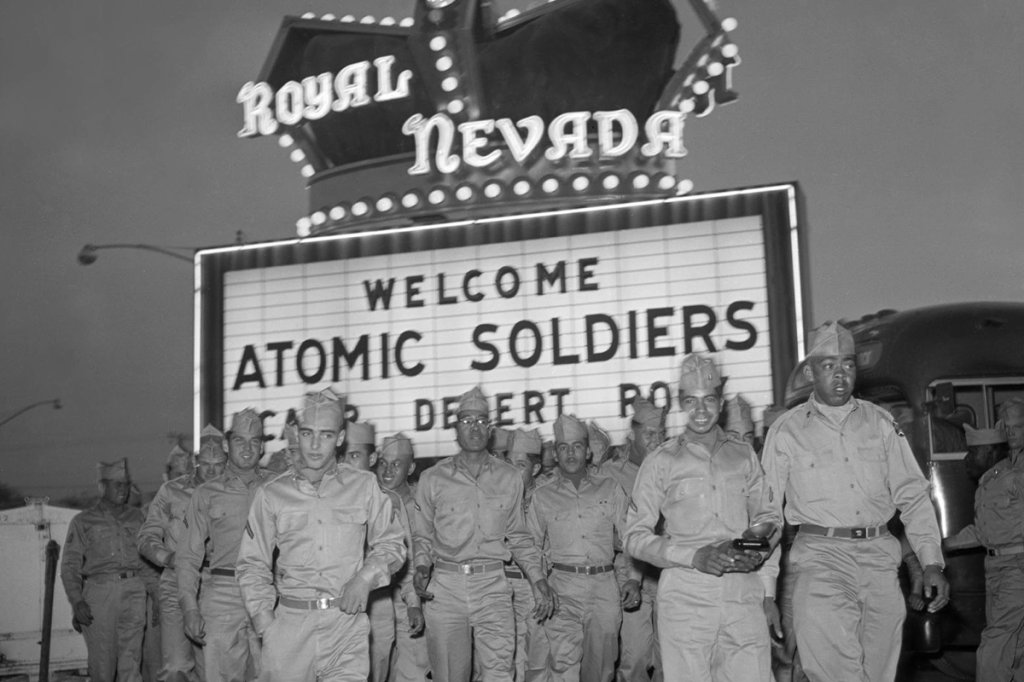
Viewed through a modern lens, the Miss Atomic Bomb imagery is deeply unsettling. We now understand the severe health consequences of radiation exposure. Communities downwind from the Nevada Test Site experienced elevated rates of cancer and long-term illness. Land and water were contaminated, and countless lives were affected by testing that was treated as entertainment.
The same mushroom clouds that inspired cotton costumes were poisoning communities. The same detonations that drew tourists were leaving lasting scars. This disconnect between spectacle and suffering is precisely what makes “Miss Atomic Bomb” such a powerful historical symbol.
By the late 1950s and early 1960s, however, America’s tone toward nuclear weapons began to shift. Scientific evidence of radioactive fallout became impossible to ignore. Popular culture grew more anxious, with films and literature exploring the terrifying implications of nuclear war rather than celebrating atomic progress.
In 1963, the Partial Test Ban Treaty ended above-ground nuclear testing by the United States. Without visible mushroom clouds, atomic tourism in Las Vegas faded. Atomic-themed promotions lost their novelty, and ‘Miss Atomic Bomb’ quietly disappeared from public view.
Remembering Miss Atomic Bomb
In recent decades, “Miss Atomic Bomb” has been rediscovered by historians, artists, and educators. The image now appears in museums, documentaries, and scholarly discussions about Cold War culture. Rather than being dismissed as kitsch, it is examined as a revealing artifact of American psychology during an era of profound uncertainty.
The photograph raises difficult questions about how societies cope with existential threats and how popular culture shapes public understanding of science and warfare. It forces viewers to confront how spectacle can obscure consequences.
“Miss Atomic Bomb” stands as one of the most striking cultural artifacts of the 1950s atomic age. Born from Las Vegas publicity stunts and fueled by America’s obsession with nuclear power, the pageant transformed the ultimate symbol of destruction into a moment of glamour.
The smiling face of Lee A. Merlin, later identified as Anna Lee Mahoney, reminds us that history is often stranger than fiction. In the shadow of weapons capable of ending civilization, Americans posed, celebrated, and crowned beauty queens. It was a moment when optimism and denial coexisted, when the future glowed bright and radioactive.
Studying the phenomenon today forces us to confront not only the past but also the enduring power of spectacle to mask consequence. The mushroom cloud may have been made of cotton, but the reality it represented was anything but soft.
Don’t Miss the Best of We Are The Mighty
• EJ ‘Skullcrusher’ Snyder is sometimes naked but never afraid
• Daniel Morgan’s riflemen were America’s original scout snipers
• These specialized soldiers train to neutralize enemy nuclear weapons