By mile 16, my calves locked so tightly I thought I might have to quit.
The pain came without warning. One moment I was moving steadily along the trail, focused on the rhythm of my steps, and the next my legs seized so sharply I had to slow to a painful shuffle.
Also Read: RED Friday returns as combat deployments ramp up
It was early morning along the Idaho–Montana border, the trail winding beside the raging Clark Fork River as it thundered through the canyon below.
Thirty-one miles is a long way to go when your body begins to rebel.
I had waited three years to commit to running a 50-kilometer race. When June of 2017 finally arrived, and I stood at the start line, I knew the day would test both my body and my mind.
Most of the race I ran alone.
Ultramarathons have a way of stripping life down to its simplest form: keep moving. I settled into a rhythm that carried me through the miles—run for half a mile, walk for thirty seconds, then run again.
Half a mile. Thirty seconds. Repeat.
The trail stretched through long, quiet sections where the only sounds were the crunch of gravel beneath my shoes and the steady rhythm of my breathing. Sometimes my mind wandered to strange places. I noticed heart-shaped rocks scattered along the trail and wondered how many people had stepped past them without ever looking down.
Other times, my thoughts disappeared completely. Just one foot in front of the other.
Top Stories This Week
By the time I reached the next aid station, my calves were cramping so badly I could barely keep moving. As I approached the table of snacks and drinks, I noticed something sitting among the cups and bananas—a large jar of pickles.
I asked the volunteer if I could have some of the juice.
She laughed and said, “You’re the first person who’s ever asked for that.”
I filled two cups and drank them both. Within minutes, the cramps eased, and I was able to move freely again. It wasn’t perfect, but it was enough to keep going. And that was all I needed.
But the physical challenge wasn’t the hardest part of that day. That came at the aid stations.
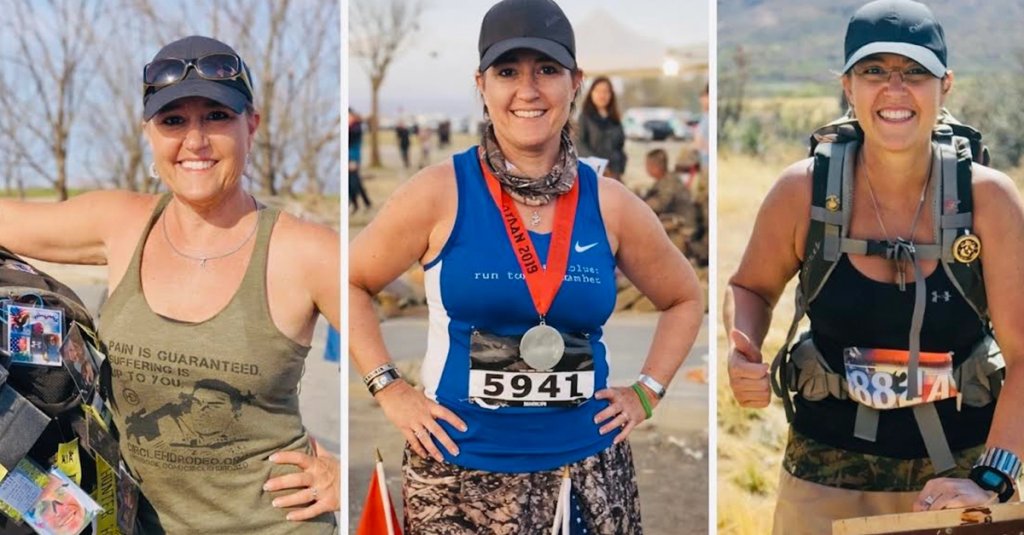
People often noticed the photographs attached to my running pack and asked who the men were.
Each time someone asked, I felt a wave of emotion rise in my chest.
The pictures were of Marines who had served alongside my son in Afghanistan, as well as other service members who never made it home—some killed in action, others lost to suicide after returning home.
As strange as it may sound, even while I was deeply grateful that my own son returned home safely, I came to understand something through the many families I met along the way. Over time, I visited with parents, spouses, and loved ones who shared a common hope: that their sons and daughters would not simply be remembered as another statistic or just someone who served.
They wanted people to know who they were as human beings—young men and women with dreams and plans for the future. Some had college scholarships waiting for them. Some had newborn children they would never get to meet. Yet each of them had chosen to serve their country.
Over time, people in the running community began to recognize me as the “three-star Marine mom,” the woman who ran carrying the faces of injured and fallen Marines.
I carried their faces with me for every mile.
When someone asked about them, I didn’t feel sadness as much as pride. It gave me the opportunity to speak their names and remind people that behind every sacrifice is a life, a family, and a story that deserves to be remembered.
The attention was never for me. It was for them. And I was honored to carry them along the trail.
By the last three miles, the sky opened, and rain began to fall harder than anything I had run through all day. I reached into my pack searching for my jacket, but by the time I managed to pull it out, I was already soaked through. The wind nearly pushed me sideways as I crossed a narrow bridge, and by the time I reached the finish line, I was shaking from the cold.
Then something unexpected happened.
A couple I had never met before walked up to me. They were from Anaconda, Montana—both retired Navy.
They smiled and said, “We’ve already paid for your massage. Go get it.”
Under a small tent nearby, I gratefully accepted a fifteen-minute massage. That’s when I realized my shoulder blade had been rubbed completely raw by my pack.
It was the same running pack I had worn since 2014. For seven years, I carried it through countless training runs and races, always with the photographs of those Marines attached.
That day marked the longest distance I would ever run.
Thirty-one miles across Montana trails had taken everything I had to give, but somehow the miles felt lighter knowing why I was running in the first place.
That pack didn’t stay on the trail. It traveled with me across oceans—to places like Poland, Ireland, Greece, and many other places. Along the way, I shared their stories with people I met, saying their names so that even strangers in distant places would know who they were.
I no longer run distances like that anymore. But the men and women I carried with me that day—and the families whose lives were forever changed—remain close to my heart. Their photographs now hang on the walls of my home, quiet reminders that some journeys never really end.
Any medal I earned along the way means very little compared to the privilege of carrying their names forward.
Don’t Miss the Best of We Are The Mighty
• Coast Guard families are underreported victims of the Homeland Security shutdown
• How a Navy veteran basically invented the sports drink industry
• What actor Blair Underwood learned from his mother’s life as a military spouse