Add We Are The Mighty (opens in a new tab)Adding us as a Preferred Source in Google by using this link indicates that you would like to see more of our content in Google News results.
(Ukraine Ministry of Defense)
Get We Are The Mighty’s Weekly Newsletter
Military culture and entertainment direct to your inbox with zero chance of a ‘Reply All’ incident
The true theater of modern conflict isn’t found in the charred husks of Soviet-era tanks that litter Ukrainian landscapes, or the sleek, cold lines of an aircraft carrier barreling through the Persian Gulf; it’s humming inside a small, white, inconspicuous, plastic dish tucked neatly under a camouflage tarp in a Ukrainian foxhole.
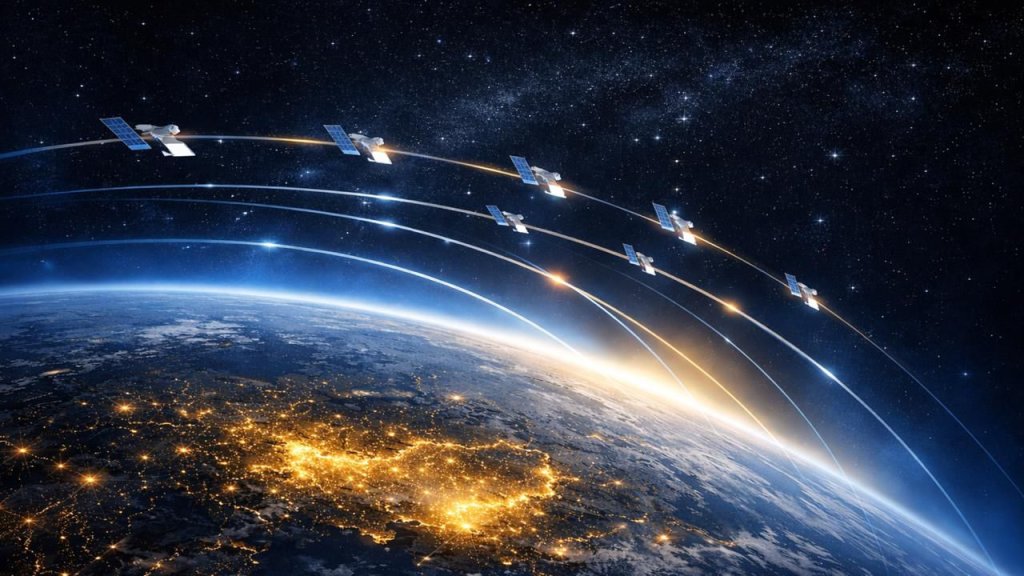
We are living through the first satellite war, an era in which the most lethal weapon on the battlefield isn’t a kinetic projectile but a steady stream of data flowing down from the sky. Starlink, a sprawling constellation of 10,000 Low Earth Orbit (LEO) satellites (with approximately 30 zooming by overhead at any given moment), has become the “digital backbone” for modern resistance.
It has also created a terrifying new paradigm of power; a world where a single private citizen can dictate the boundaries of a nation’s defense with little thought and a few lines of code.
This is what keeps Russian troops awake at night. (Ukraine Ministry of Defense)
To fully appreciate the gravity of this shift, you have to understand that Starlink isn’t just internet. It is a literal satellite swarm flying not too far above your head. While the legacy satellites of the Cold War era sat thousands of miles away in a sluggish, repetitive orbit, the Starlink network sits a mere 340-1200 miles above the dirt under our feet.
Closer proximity to Earth reduces the lag time between sending a signal, reflecting off the satellite, and its return (satellites closer to Earth can receive and transmit signals faster than those in higher orbits), providing the precision required to pilot explosive sea drones or coordinate artillery strikes in real time.
It is fast, it is portable, and as of 2026, it is the only thing keeping the lights on for command-and-control centers in the world’s most dangerous zip codes.
The Great Disconnection
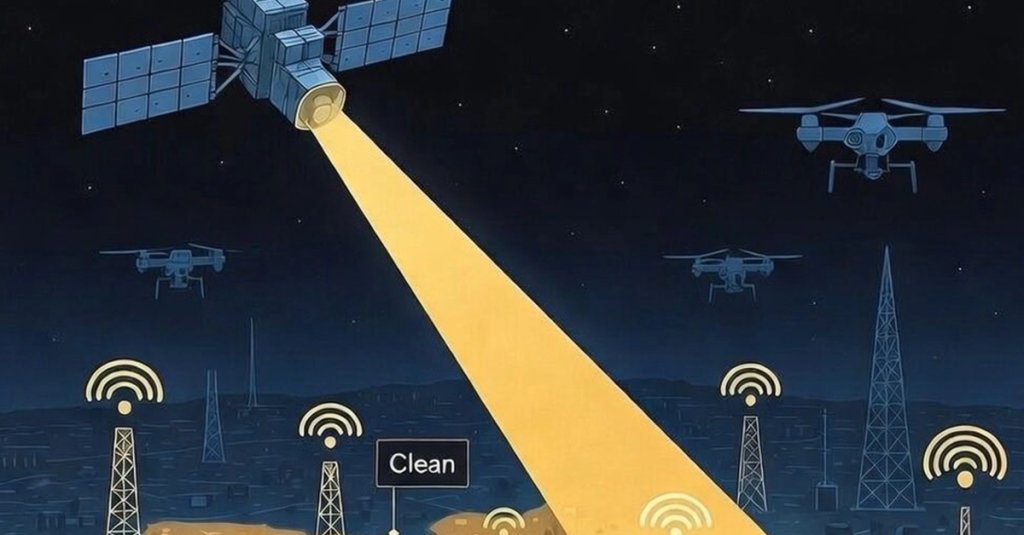
For years, the war in Ukraine has been a messy, Frankenstein landscape of old Soviet equipment and new-age tech. A shadow market of connectivity allowed the invading forces to piggyback on American innovation, with thousands of smuggled Starlink terminals appearing in the hands of Russian units who treated them like a quick energy fix for their failing, or non-existent, comms strategies (they were also using Ukraine’s 3G and 4G towers, which succeeded in getting tens of thousands of Russian fighters KIA or wounded).
Now, the rules of the game changed, with a ruthlessness that would make a boardroom boss blush.
In a massive, coordinated digital purge, SpaceX and the Ukrainian Ministry of Defense activated a nationwide Whitelist Verification System. Consider this less a gradual phase-out and more a digital purgatory. As of today, every terminal operating on Ukrainian soil must be registered and verified through government channels like the Diia portal, or it goes dark. Any unregistered Starlink terminal activated in Ukraine will emit a massive digital spotlight on its exact location.
The fallout was instantaneous and devastating. Across the front lines, from the scorched earth of Kupiansk to the occupied south, Russian assaults began to falter as their “unauthorized” terminals suddenly lost their handshake with the satellites. Without the ability to stream real-time drone footage, Russian commanders were left fighting blind, their tactical coordination dissolving into what front-line reports describe as a “catastrophe” for the invaders.
There is a tangible human cost to this “God-Switch” that is insufficiently accounted for in a slideshow; it’s found in the chaos of a disconnected battlefield. In one instance, reports from the Zaporizhzhia sector of Ukraine indicated a massive friendly-fire incident had occurred soon after the shutdown went into effect. A Russian assault group of 12 soldiers, severed from their command and invisible to their own observers, was mistakenly engaged and destroyed by their own units.
Once the signal dies, the machine will begin to eat itself. SpaceX has also implemented a hard “speed limit” on the network: if a terminal exceeds roughly 90 km/h, the signal cuts out immediately. It is a deliberate design choice that ensures a soldier can use Starlink to call home, but he cannot use it as the brain for a high-speed drone.
(Ukraine Ministry of Defense)
The Sovereignty Trap
This level of control brings us to the “God-Switch” itself, the geofencing capability that allows a private company to decide whether a war starts and ends or goes on ad infinitum. The 2022 Crimea incident remains the original sin of this new era.
When Ukraine requested connectivity to launch a sea-drone offensive against the Russian fleet in Sevastopol, the request was denied by one man: Elon Musk. The logic was a corrupted cocktail of caution, confusion, and geopolitics; an irrational fear that a successful strike on the Russian heartland would trigger a nuclear “mini-Pearl Harbor”.
The realization that a billionaire’s personal risk assessment could override a nation’s military strategy sent shivers through the Pentagon. Recognizing that this could eventually become a problem, a solution was quickly implemented: Starshield.
Starshield is an ultra-secretive $1.8 billion (we think) program designed to build a wall between the consumer product and the war-fighting machine. Starshield is a military-grade swarm, capable of real-time target tracking and secure communications, but with one critical difference: the keys to the “kill switch” are held by the U.S. Space Force, not a civilian board of directors or its majority stakeholder.
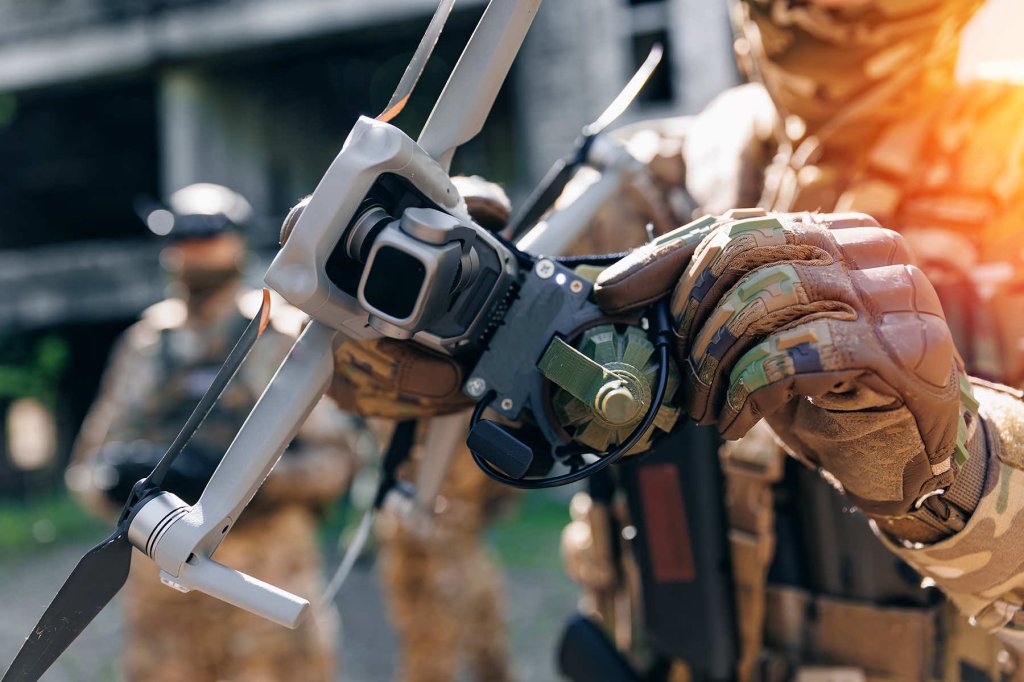
Without Starlink, Ukraine’s army of drones would be dead in the air. (Ukraine Ministry of Defense)
Smuggling Hope into the Dark
You are probably asking by now, if Starlink is so obviously flawed, then why, just why? Well, it’s because of how amazing it can actually be for humanity. Consider beyond the battlefields for a moment: Starlink has become the “last tenuous link” for many of those living under the thumb of tyranny and digital isolation.
In Iran, the regime has attempted to plunge its 92 million citizens into a total blackout to cover up the “nationwide massacre” of protesters. The Iranian government has deployed military-grade jammers and is actively hunting for the telltale signals of Starlink dishes on residential rooftops. Yet, an estimated 50,000 to 100,000 terminals continued to operate in secret, smuggled across borders to ensure that footage of human rights abuses can still reach the outside world. Unfortunately for Iranian citizens, the Ayatollahs successfully jammed or significantly degraded Starlink signals using those sophisticated radio-frequency jammers.
In Venezuela, the story took an even more dramatic turn following the U.S. military operation and the capture of Nicolas Maduro in early January of this year. As the country entered a volatile political transition, Starlink proactively provided “free service credits” to all users through Feb 3, 2026. It was a move that provided a temporary safety net of digital stability during a period of total uncertainty, demonstrating that Starlink can be used altruistically as readily as for “blackmail”.
The Humanitarian Burden
Viewing Starlink solely through the lens of combat would be doing a disservice. In the aftermath of the massive Tonga volcanic eruption and the devastating earthquakes in Turkey and Syria, the system was often the only thing that worked when ground-based fiber snapped, crackled, and popped before cell towers were trashed.
It turns a “comms-dark” disaster zone into a rescue hub in under 10 minutes. For the people of the Amazon or the remote hamlets of the Appalachian Mountains, it isn’t a weapon being wielded by a man; it is an equalizer that brings education and medicine to places the grid simply refused to go.
The grunts of old prayed for dry powder; the grunts of the present pray for a clear line of sight, and the people of the world cry out to be heard. Alas, when the world goes dark and the horizon tightens, the ability to flip a switch and pierce the fog of confusion is wonderful.
Make no mistake, Pandora’s Box has been opened. We are moving past the era of the “gentlemanly” satellites, those distant, neutral observers of our disputes. In their place stands the God-Switch, a private infrastructure that ignores borders and operates beyond the reach of treaties.
Our digital hunger has finally reshaped the map of the world. If you really think about it, we no longer inhabit a collection of nations; we live within signals. And, for better or worse, our future may depend on these signals and on who controls them.