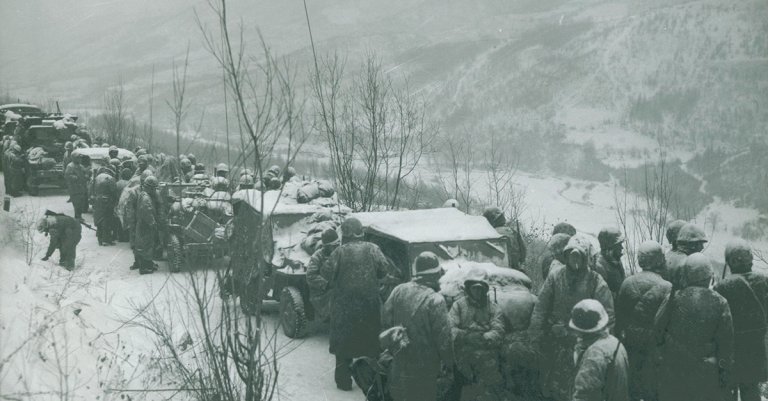
In 2026, I returned to Marine Corps Recruit Depot Parris Island not as a recruit, but as an educator participating in the U.S. Marine Corps Educators Workshop (EWS). The moment I stepped back onto the depot, memory arrived uninvited. The humidity, the cadence echoing across open ground, the unmistakable posture of Marines moving with purpose—it all felt immediately familiar.
Also Read: The friendly rivalry between ‘Hollywood Marines’ and Parris Island Marines
Parris Island is not an abstract chapter of Marine Corps history for me. It is deeply personal. It is where I arrived in 2007 as a young recruit determined to earn the title Marine, and where my journey ended prematurely with a medical discharge during basic training. I never earned the Eagle, Globe, and Anchor. Yet the values introduced on that island—discipline, accountability, resilience—never left me.
Nearly two decades later, EWS brought me back. Not to relive the past, and not to “finish” something left undone, but to understand the institution with clarity, maturity, and historical perspective. This return was not about nostalgia. It was about reconciliation, reflection, and respect for the Marine Corps, for those who train its recruits, and for the process that forges Marines generation after generation.
Parris Island Revisited With New Eyes
Walking Parris Island again, everything felt the same and yet entirely different. In 2007, my world was measured in seconds, commands, and stress. In 2026, I could observe the system as a whole. I was no longer reacting; I was learning.
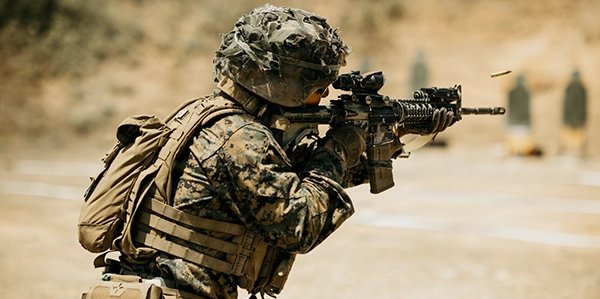
On the range, that shift became unmistakable. Watching Marines conduct live-fire marksmanship training, I stood behind the firing line as a Marine engaged with complete focus, eye protection on, rifle steady, spent casing frozen mid-air. The image captured more than a moment; it captured doctrine. Marksmanship in the Marine Corps is not about aggression; it is about control, repetition, accountability, and respect for the weapon.
As a recruit, the range felt overwhelming. As an educator, it felt methodical and deliberate. Safety procedures, instructor oversight, and discipline were everywhere. Bearing arms, I realized, is treated not as a right or privilege in training but as a responsibility.
Attention as a Cultural Value
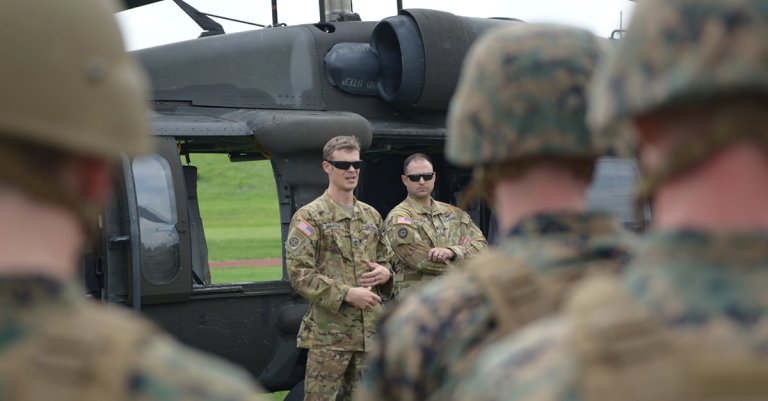
Another moment from EWS unfolded in a classroom setting. Marines in utilities sat alongside civilian educators, every eye forward, every posture alert. No phones. No side conversations. Just attention.
That image speaks to something fundamental about Marine culture: attention is respect. Whether in a squad bay, on the drill field, or in a briefing room, Marines are trained to listen first and act with purpose. Training is intense, yes, but it is not chaotic. It is controlled, intentional, and guided by instructors who understand exactly when to apply pressure and when to teach.
For me, as both a historian and classroom teacher, this was a powerful reminder that Marine training is education in its most disciplined form.
Physical Standards and Shared Effort
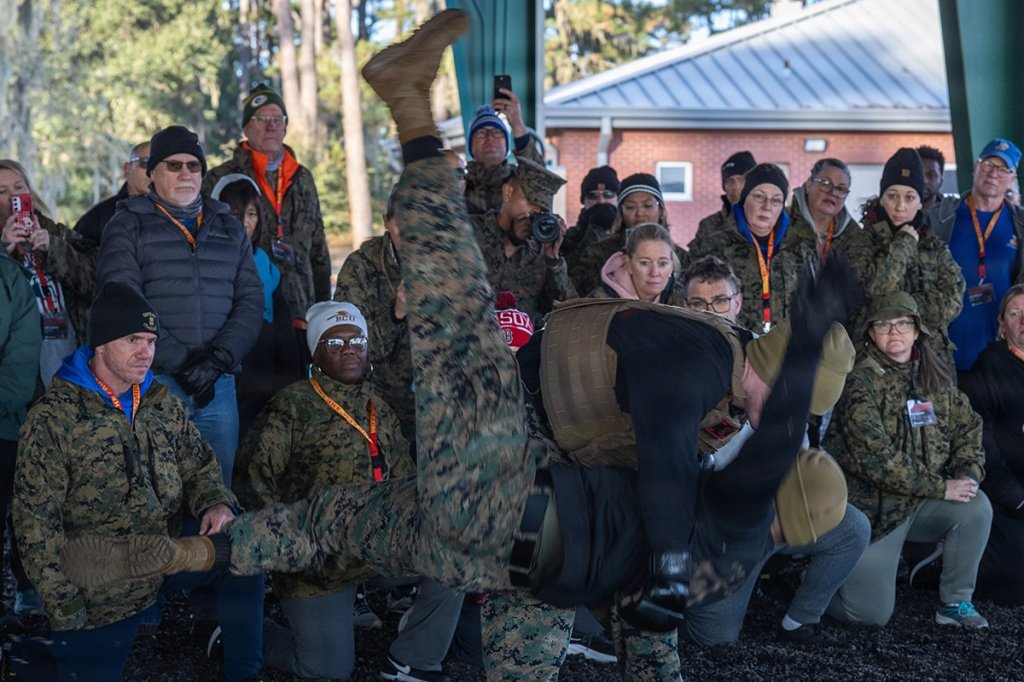
EWS did not allow educators to remain passive observers. We were placed into physically demanding environments not to break us, but to help us understand the standards recruits face daily. In one image, I am navigating a training structure alongside others, surrounded by Marines and instructors. The moment captures effort, balance, and teamwork, not performance.
For me, that carried emotional weight. In 2007, my body failed before my will did. Returning to a physically demanding training space, older, wiser, and still pushing, felt like closing a circle. Not by erasing the past, but by honoring it.
The Marine Corps does not define people by outcomes alone. It defines itself by standards. EWS reinforced that truth.
The Drill Instructor Reconsidered
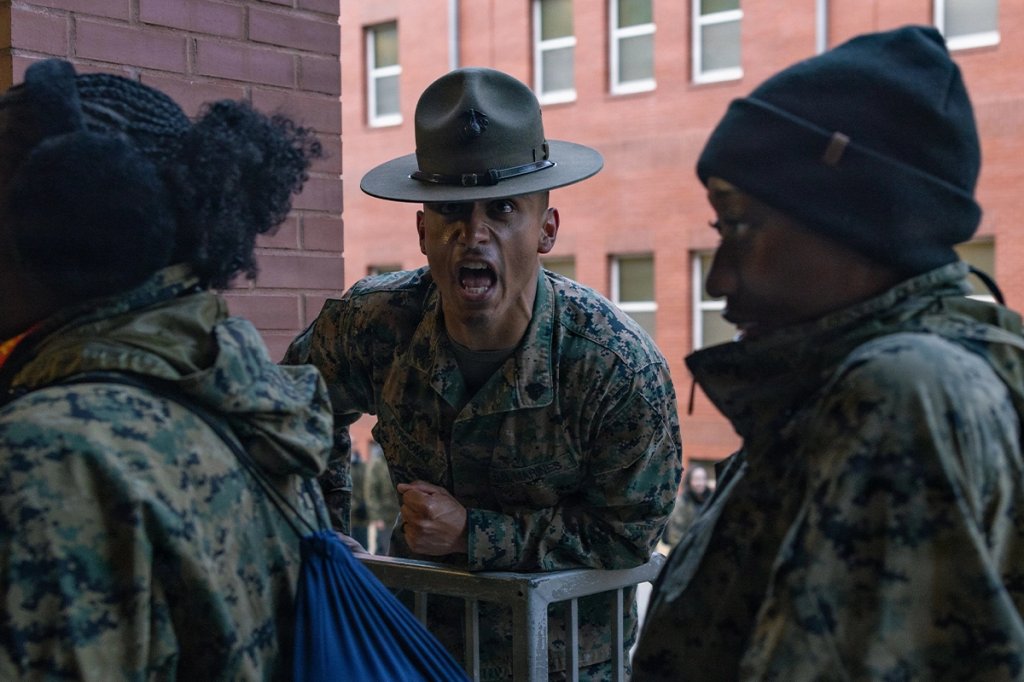
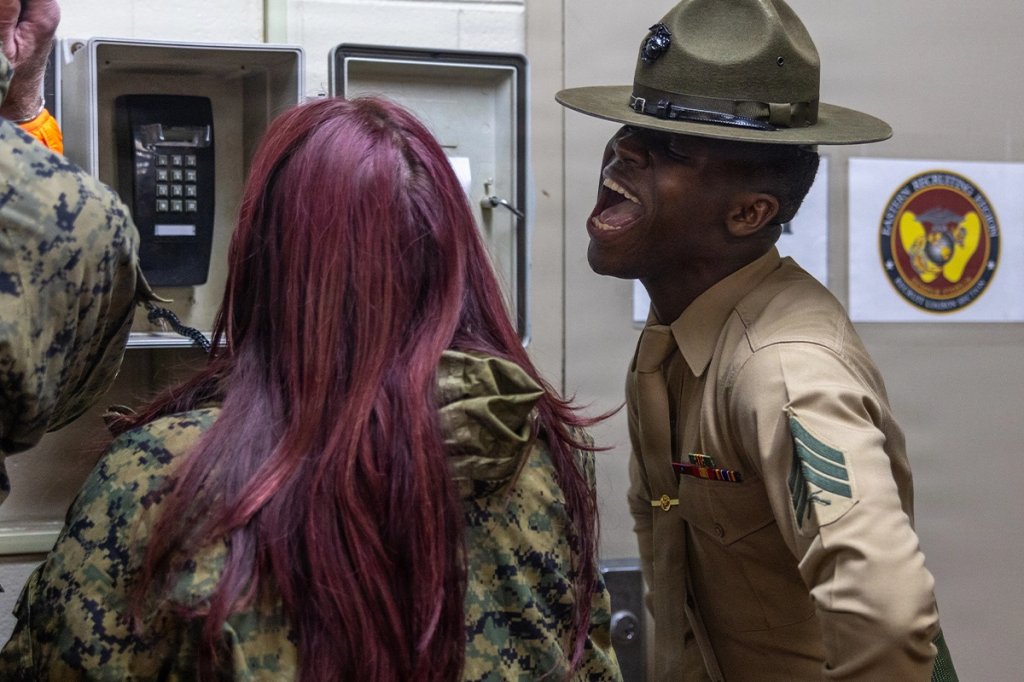
As a recruit, Drill Instructors felt like omnipresent forces of nature defined by volume and authority. Through EWS, I saw them again, but differently. I saw professionals operating within a system built on transformation, not intimidation.
Drill Instructors are educators. They are carefully selected, rigorously trained, and entrusted with absolute authority because the responsibility they carry is enormous. Their role is not cruelty; it is controlled intensity designed to strip away ego and replace it with accountability and cohesion.
Green Belt Drill Instructors
Within the Drill Instructor ranks are Green Belt Drill Instructors, certified in the Marine Corps Martial Arts Program (MCMAP), who form the backbone of recruit training. These are the DIs recruits interact with most often. They enforce standards relentlessly, teach fundamentals, and maintain the unforgiving pace of training.
Green Belts correct posture, movement, speech, and mindset simultaneously. There are no shortcuts under their watch. They represent consistency. Standards are applied evenly. Mistakes are corrected immediately. Expectations are non-negotiable. They are where discipline becomes habit.
Black Belt Senior Drill Instructors
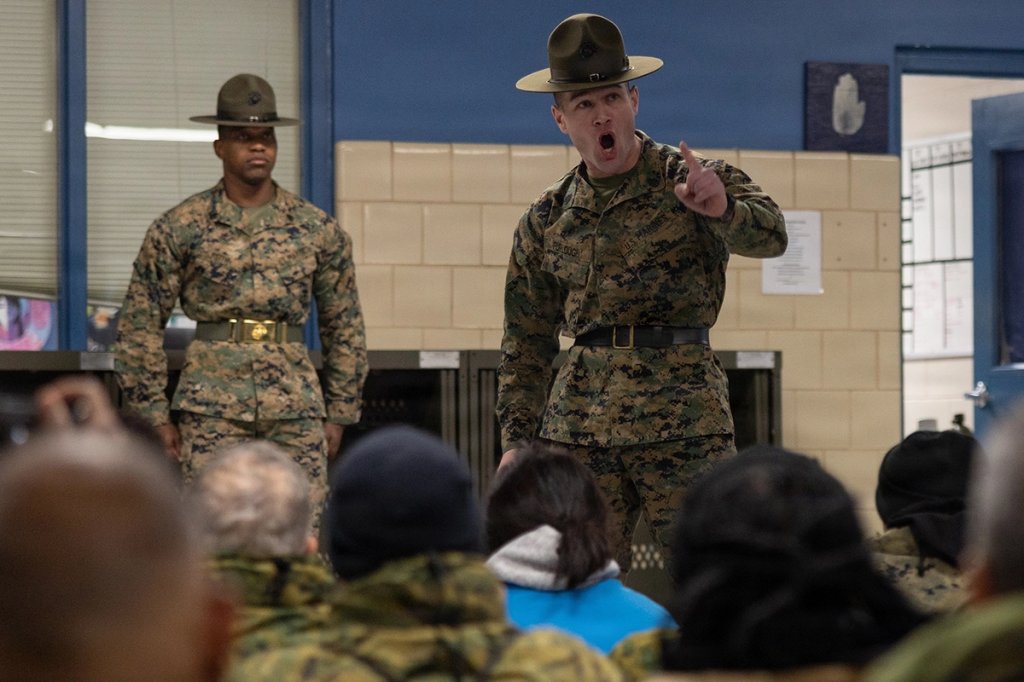
At the top of the hierarchy stand the Senior Drill Instructors (SDIs), typically Black Belts in MCMAP, seasoned leaders entrusted not only with recruits but with the Drill Instructors themselves. Where Green Belts enforce standards, Black Belt SDIs embody them. Their presence alone commands attention. They understand precisely when to apply pressure and when to pull back. Their authority is deliberate, measured, and absolute.
Watching SDIs operate during EWS was a masterclass in leadership. They were not performers. They were conductors, turning chaos into cohesion.
Two Depots, One Standard
While Marine Corps Recruit Depot Parris Island and San Diego operate under the same training curriculum, the same Crucible, the same physical standards, and the same core values, the environments in which Marines are forged create subtle cultural distinctions.
Parris Island: The Old School Forge
Located in the humid Lowcountry of South Carolina, Parris Island is synonymous with tradition. Surrounded by swamps, salt marshes, and isolation, it offers no illusions of comfort. Heat, humidity, and sand fleas test recruits just as much as Drill Instructors do.
Parris Island is also the exclusive training location for all female enlisted recruits, adding to its unique historical role. Many Marines describe it as “old school,” a place where tradition hangs heavy and the past feels ever-present.
Recruits respond with the sharp, unmistakable bark of “Aye, Sir!” a sound that carries authority across the island.
San Diego: Hollywood with Hills
Marine Corps Recruit Depot San Diego sits near one of America’s largest cities, earning West Coast recruits the joking nickname “Hollywood Marines.” The name is playful, but the training is anything but. San Diego introduces steep terrain, including the infamous Reaper hike, testing endurance in a different way.
Historically perceived, often unfairly, as more relaxed, San Diego has always enforced identical standards. One cultural distinction often noted is terminology. San Diego recruits traditionally respond with “Aye, Aye, Sir!” instead of “Aye, Sir!”
Different environments. Same Corps.
The Soundtrack of Transformation
Cadence is far more than a running song or marching chant. It is the audible expression of Corps culture in motion. Long before a recruit fully understands rank structure, customs, or history, they learn cadence. It sets the pace of their movement, regulates their breathing, and conditions them to function as part of a unit rather than as individuals. Cadence teaches synchronization before it teaches speed, and discipline before confidence.
At its core, cadence is a tool of transformation. When a Drill Instructor calls cadence, they are not simply filling silence; they are imposing order. Every step taken on beat reinforces uniformity. Every response conditions recruits to listen, react, and move as one. In those moments, exhaustion becomes shared, effort becomes collective, and hesitation disappears. Cadence turns chaos into cohesion.
In San Diego, cadence frequently takes on a more melodic, almost rolling rhythm. The terrain demands endurance, and cadence becomes a steady companion, carrying recruits up hills, through long conditioning runs, and across unforgiving pavement. The songs flow continuously, building momentum and allowing recruits to lock into a rhythm that pushes them forward one step at a time. The sound travels outward, echoing against hills and structures, a constant reminder that training never pauses.
Parris Island cadence, by contrast, is sharper and more abrupt. It strikes rather than flows. Commands are shorter, louder, and more forceful, cutting through humid air and swamp terrain. The cadence does not carry recruits; it drives them. It echoes across open spaces, bouncing off squad bays and parade decks, reinforcing the sense that tradition itself is speaking. On Parris Island, cadence feels older, heavier, and deliberate, as if every call is connected to generations of Marines who marched the same ground before.
Yet despite these stylistic differences, the purpose of cadence never changes. Whether melodic or commanding, it forges unity. It replaces individual pacing with collective movement. It teaches recruits to endure discomfort together, to maintain discipline under fatigue, and to respond instantly to authority.
Different voices.
Same rhythm of transformation.
Same Corps.
Full Circle at Parris Island
Returning to Parris Island through the Marine Corps Educators Workshop did not rewrite my experience as a recruit, but it reframed it. In 2007, I saw only the immediate challenge. In 2026, I could see the institution, the history, and the people behind the process.
Parris Island did not change.
I did.
EWS allowed me to stand where I once stood uncertain, now grounded in understanding. It reminded me that not every journey ends the same way, but every experience has value when placed in context.
Different roles.
Same island.
Enduring lessons.
Parris Island has a way of reminding you who you were, who you became, and why service, whether in uniform or in the classroom, still matters. This week reaffirmed that the values forged here don’t fade with time; they follow you for life and shape how you lead, teach, and serve others.
To make this experience even more meaningful, Commanding General Ahmed “Will” Williamson honored me in a way I will never forget by presenting me with his patch. A gesture that carries tremendous weight, history, and trust—one I will carry with me always.
Grateful for the Marines who trained us, the educators who shared this journey, and the institution that continues to set the standard.
Don’t Miss the Best of We Are The Mighty
• The Indian Scouts that forged the legacy of American Special Forces
• The heroism and legacy of US military chaplains in combat
• How ‘Major Payne’ became a Marine Corps comedy classic