Many creatures have served beside American warriors, from the nation’s earliest conflicts to the modern battlefield. Their roles have changed across the centuries as new technologies, landscapes, and missions emerged, but their loyalty and impact remain constant.
Related: American sailors enlisted a cat aboard a battleship during World War II
Some carried soldiers into battle, others delivered lifesaving messages through gunfire, and many served as watchful guardians, mine detectors, trackers, and silent scouts. Their stories span major wars and theaters and reveal a remarkable partnership between humans and animals that has shaped U.S. military history.
Horses and Mules
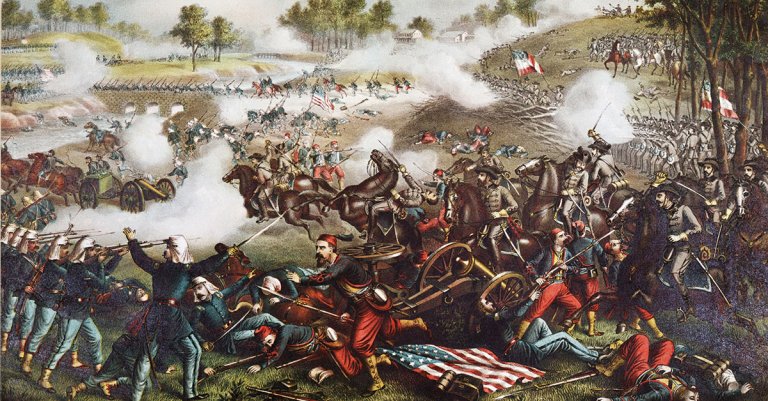
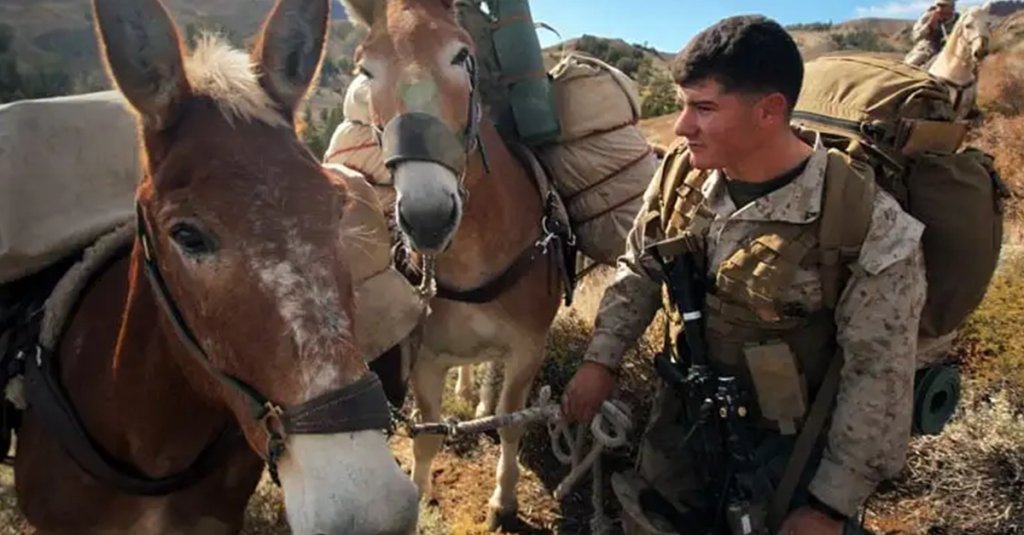
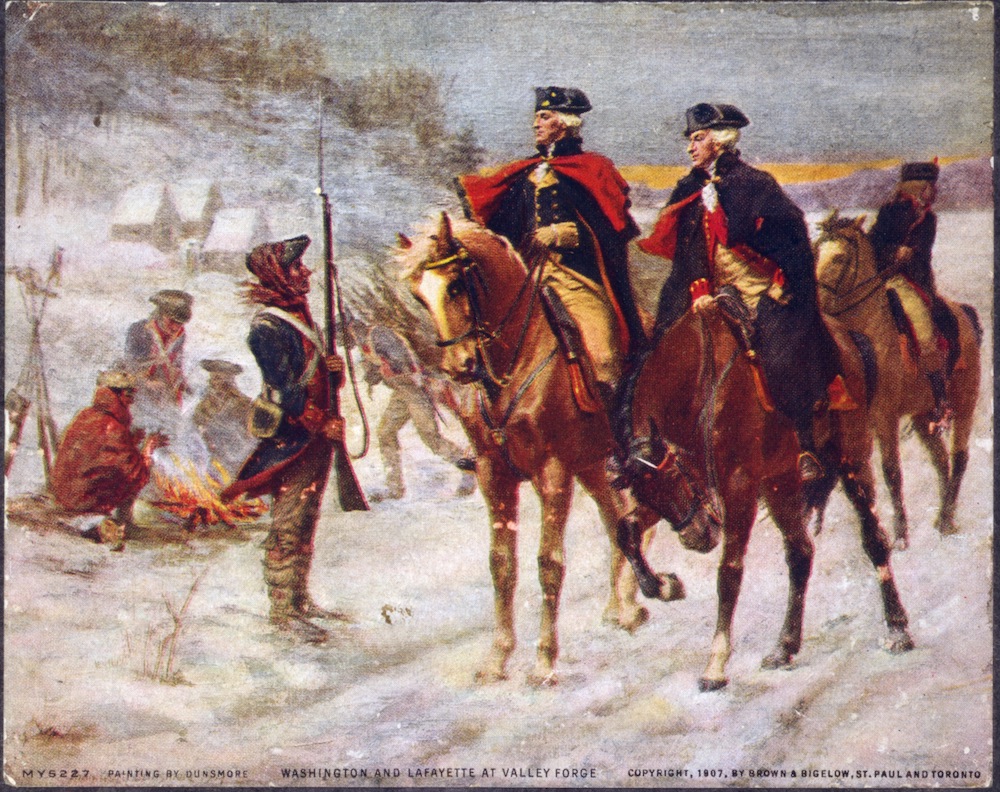
For generations, horses and mules formed the backbone of American military mobility. During the Revolutionary War, they carried riders who transported messages between commanders, hauled artillery through dense forests, and allowed leaders such as George Washington and Nathanael Greene to move quickly across shifting battle lines. Their importance grew even stronger in the Civil War when cavalry units became indispensable for scouting, raiding supply depots, and conducting rapid surprise attacks. Officers like Philip Sheridan built entire campaigns around the speed and agility of mounted troops.
As the United States expanded westward, horses and especially mules proved essential in the Indian Wars. They hauled telegraph materials, food, ammunition, and medical supplies across deserts and mountains, often in extreme weather. Their stamina made them more reliable than wagons or early mechanical equipment.
Although the early twentieth century introduced motor vehicles, World War I demonstrated the continued necessity of horses and mules. The muddy and shell-damaged terrain of Europe often made trucks useless, leaving animals to move artillery, transport critical supplies, and evacuate the wounded. Many horses served until the war’s end. Thousands died from exhaustion, disease, and artillery fire. Although most American warhorses were not eligible for later international animal awards, their sacrifice remains a foundational chapter in military history.
Dogs: Scouts, Sentries, Detectors, and Lifesavers
Dogs have participated in nearly every American war since World War I, evolving from simple messengers to highly trained specialists.
During World War I, dogs served primarily as messengers carrying orders between units when telegraph lines were destroyed. They also acted as scouts and sentries, alerting troops to enemy approaches. Their ability to navigate trenches and remain calm under fire made them invaluable in a war where communication frequently collapsed.
In World War II, the United States created the Dogs for Defense program, which trained thousands of family pets volunteered by Americans on the home front. These dogs guarded military installations, patrolled coastlines, detected mines, and served with infantry units overseas. Many deployed to the Pacific and European theaters, where they accompanied nighttime patrols and identified hidden enemy positions.
The Vietnam War marked a turning point in military dog operations. More than four thousand dogs are deployed primarily as trackers, scouts, and detection animals. Their work uncovering trip wires, tunnels, and ambushes saved countless American lives. Although official medals were rare, several Vietnam dogs have since been honored on memorials and received posthumous recognition for their service.
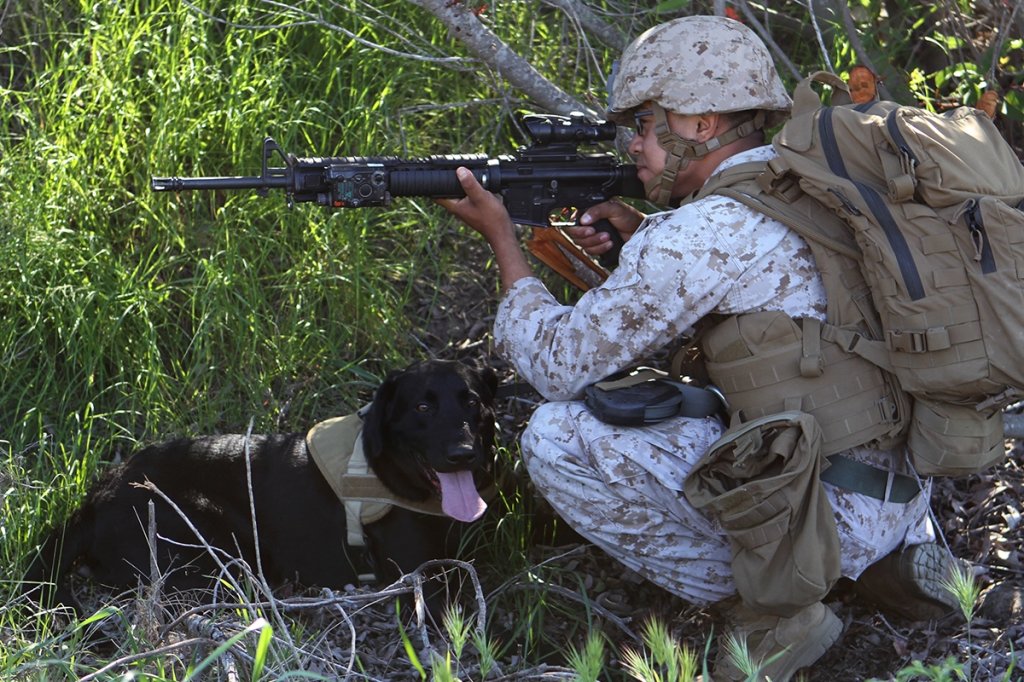
In more recent conflicts, such as Iraq and Afghanistan, dogs became essential to counter IED operations. Their ability to detect explosives surpassed even the most advanced technology. Special operations units, including Navy SEAL teams and Army Rangers, integrated dogs into raids, airborne insertions, and sensitive missions. One of the most well known modern war dogs a Belgian Malinois named Cairo accompanied the team during the operation that killed Osama bin Laden. Although Cairo did not receive a military medal, he is honored with unit-level commendations and historical recognition.
Some military dogs tied to American forces have received international honors. The British Dickin Medal, often called the animal equivalent of the Victoria Cross, has been awarded to several dogs with American connections. One example is Chips, a mixed-breed hero of World War II who attacked a German machine gun nest in Sicily and saved his unit. Chips originally received the Silver Star and Purple Heart, but these were later rescinded due to changing rules on animal awards. In 2018, he was posthumously awarded the Dickin Medal. Another American dog, Lucca, a Marine Corps explosive detection dog who served in more than four hundred missions in Iraq and Afghanistan, received the Dickin Medal in 2016 after being wounded by an IED.
Pigeons of World War I and World War II
Before radios became reliable, homing pigeons played an extraordinary and often heroic role throughout both world wars. Their natural homing instincts made them one of the most dependable forms of communication on the battlefield, especially when technology failed or enemy action destroyed telegraph lines.
During World War I, pigeons served alongside American forces in some of the most intense operations of the conflict. Nowhere was their importance more evident than during the Meuse-Argonne Offensive of 1918, when communication equipment frequently failed under the constant pounding of artillery. In this environment, a pigeon might be the only way to get life-saving information through enemy fire. The most famous of these birds, Cher Ami, carried one of the most consequential messages in American military history. During the ordeal of the Lost Battalion, nearly two hundred American soldiers were trapped behind German lines. Their position was unknown, and they were mistakenly being shelled by friendly fire. Cher Ami, despite being shot through the breast, blinded in one eye, and flying with a shattered leg, delivered their desperate message. Because of that single flight, the Lost Battalion was located and rescued. Cher Ami received the French Croix de Guerre for exceptional bravery and became a symbol of courage in service to American troops.
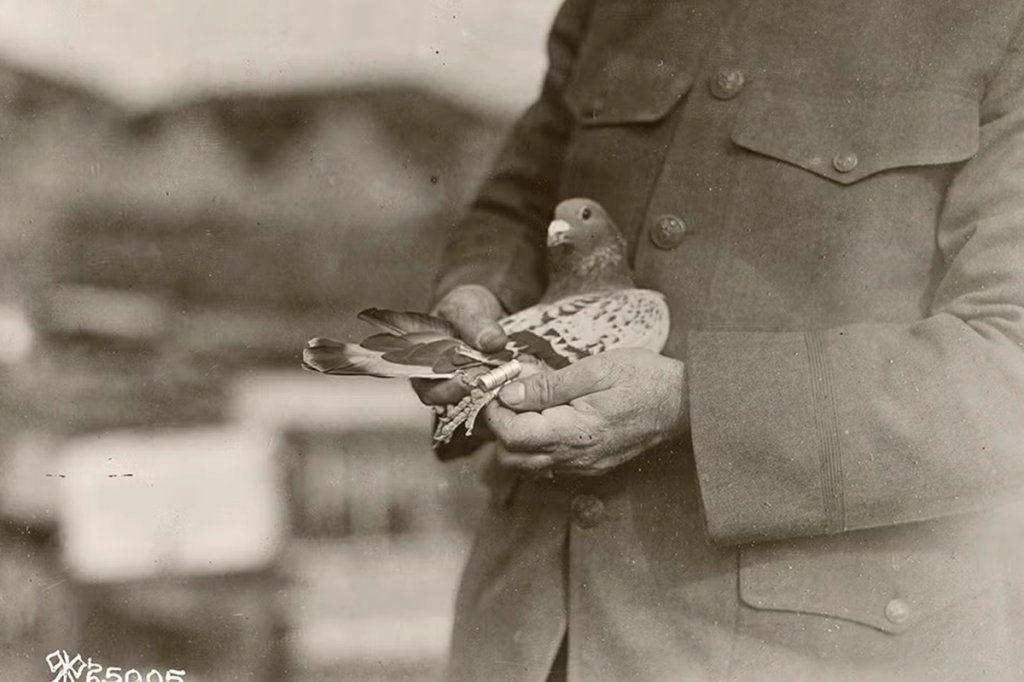
In World War II, pigeons continued to serve in both American and Allied missions. As radios became more common, pigeons shifted to roles in covert operations, naval communication, and intelligence gathering, where silence and reliability were essential. They were used to relay reconnaissance information from occupied territories, deliver messages from ships at sea, and support resistance groups in Europe. Their small size and ability to fly long distances made them ideal for missions where soldiers could not risk transmitting radio signals that enemy forces could detect.
Several pigeons working with American and British units were awarded the Dickin Medal, considered the animal equivalent of the Victoria Cross. This honor recognized animals whose heroic actions directly saved human lives. One of the most celebrated pigeons of the Second World War was G.I. Joe of the United States Army Pigeon Service. In 1943, British troops had successfully captured the town of Calvi Vecchia in Italy, but the air support command had not yet received the update. An American bombing run was minutes away from striking friendly forces. G.I. Joe flew more than twenty miles in just over twenty minutes, reaching the airfield in time to stop the attack. His flight saved more than one thousand Allied soldiers and earned him the Dickin Medal for gallantry.
These pigeons, alongside countless other war animals, demonstrate how even the most minor and most overlooked creatures played vital roles in wartime communication and survival. Their service stands as a unique and powerful part of U S military history, reminding us that heroism on the battlefield often comes from unexpected places.
The U.S. Army’s Desert Experiment
The Camel Corps stands as one of the most unusual and intriguing experiments in American military history. In the mid-1850s, the U S Army sought new solutions for operating in the challenging environment of the American Southwest, a region marked by scorching heat, vast distances, and limited water sources. Recognizing camels’ success in the Middle Eastern and North African deserts, Secretary of War Jefferson Davis approved the importation of several dozen camels to test their effectiveness for military transport.
The results were impressive. Camels could carry far heavier loads than horses or mules, often exceeding six hundred pounds. They traveled long distances with minimal water, endured harsh heat that exhausted traditional pack animals, and navigated rocky or sandy terrain with ease. Soldiers noted that camels handled difficult routes between Texas, New Mexico, Arizona, and California with remarkable endurance. They even outperformed military wagons on extended supply missions.

Despite their capabilities, the experiment faced challenges beyond the camels themselves. Many soldiers disliked working with the unfamiliar animals, describing them as stubborn and foul-tempered compared to horses and mules. The start of the Civil War ultimately ended the program as military priorities shifted and funding disappeared. With no formal Camel Corps remaining, the animals were sold at auction, transferred to private owners, or released into the wild. For decades, travelers in the Southwest reported sightings of stray camels wandering through the deserts, long after the military project had ended.
None of the camels received military medals or formal honors. Still, their legacy endures as one of the most fascinating attempts to adapt the U S Army to the extreme conditions of the American frontier. Their story reflects a period when innovation, experimentation, and the vastness of the West pushed the military to explore solutions that today seem almost unbelievable yet remain unforgettable parts of America’s desert history.
The Navy’s Marine Mammals
In the early 1960s, the United States Navy began one of its most innovative and scientifically advanced military programs, the Marine Mammal Program. This initiative focused on training dolphins and sea lions to perform underwater tasks that even the most sophisticated technology struggled to accomplish. Their natural abilities made them invaluable for missions requiring precision, stealth, and detection in environments too dangerous or inaccessible for human divers.
The first major wartime use of the program came during the Vietnam War. Navy dolphins were deployed to help protect Cam Ranh Bay and other key harbors by detecting enemy swimmers, marking underwater intruders, and locating explosive devices. Their sonar, far more sensitive than anything available through mechanical systems at the time, allowed them to find mines buried in silt or hidden in murky water where visibility was nearly zero. Sea lions also supported harbor security by identifying suspicious divers and delivering recovery lines to objects on the seabed.
Their success continued decades later during the Gulf War. As U.S. and coalition forces moved into the Persian Gulf, Iraqi forces laid dense and deadly minefields intended to cripple naval operations. Dolphins were tasked with locating these mines so that clearance teams could remove or neutralize them. Their work enabled warships, supply vessels, and humanitarian operations to move safely through threatened waterways. The animals performed these missions in challenging conditions, including strong currents, poor visibility, and the constant threat of enemy action.
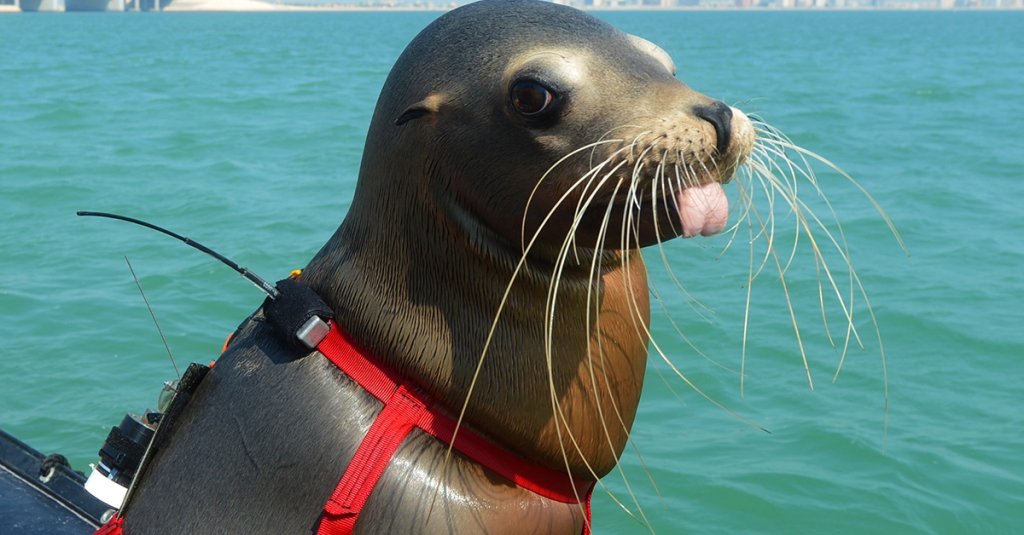
Over time, the Marine Mammal Program expanded its capabilities to include underwater surveillance, object recovery, and support for research into marine biology and sonar science. Dolphins and sea lions are trained using positive reinforcement, building strong relationships with their handlers, and working in environments where their natural abilities are fully utilized.
Although the Navy does not award military medals to marine mammals, their service has been honored in other meaningful ways. Public demonstrations, documentaries, museum exhibits, and official recognition from naval leadership have highlighted their contributions. These tributes acknowledge the lives they have saved and the unique partnership between humans and marine animals that continues to shape naval operations to this day.
The Marine Mammal Program remains active today, standing as a remarkable example of how nature’s design and human ingenuity can come together to protect lives and strengthen national security.
Unexpected Wartime Helpers
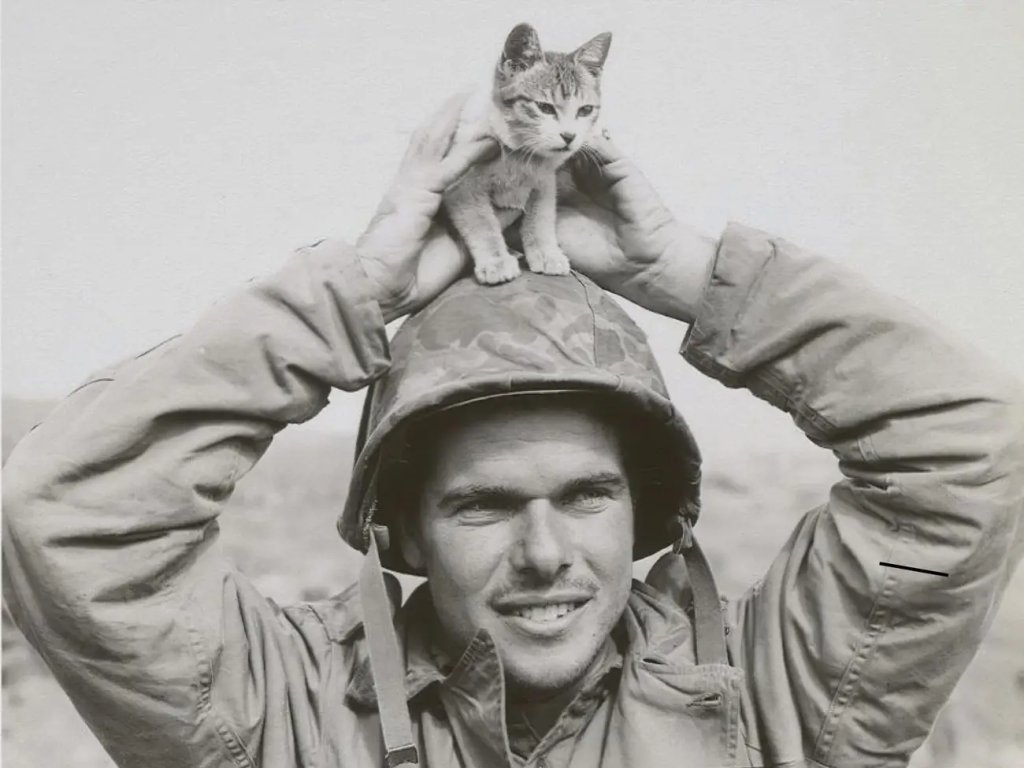
Throughout the history of the United States military, a wide range of animals have served in smaller yet essential roles, supporting daily operations and protecting human lives. Their contributions, though often overlooked, reveal how resourceful and creative the military has been when confronting the challenges of war.
Cats were among the most common unofficial helpers. Aboard naval vessels, they controlled rat populations that threatened food supplies, chewed through ropes and sails in earlier eras, and spread disease. Their presence on ships dates back to the earliest days of the U S Navy and continued well into the twentieth century. In trench warfare during World War I, cats served a similar purpose, protecting rations and equipment while providing much-needed companionship to soldiers enduring brutal conditions.
Canaries also played a critical but lesser-known role. Used primarily aboard troop and supply ships, these birds acted as early warning systems for toxic gases. Their sensitive respiratory systems enabled them to detect dangerous fumes before humans could, alerting crews to hazards that might otherwise have gone unnoticed. Though their use became less common as technology improved, canaries were a critical safety measure in the early 20th century.
One of the most unusual animal-related projects emerged during World War II when the United States experimented with bat-delivered incendiary devices. Scientists envisioned equipping bats with miniature timed explosives that would ignite fires in Japanese cities, where wooden buildings made urban areas vulnerable to widespread flame. Thousands of bats were tested at military facilities, and the project showed potential; however, it was ultimately abandoned in favor of the rapidly advancing atomic bomb program. No bats were deployed in combat, but the research remains a striking example of wartime experimentation.
These unconventional animal contributions demonstrate that the U S military has long been willing to explore unique solutions to complex problems. Whether through the natural abilities of cats and canaries or through experimental ideas like the bat project, animals have quietly shaped everyday operations, safeguarded soldiers, and added a surprising dimension to the nation’s military history.
Life After Service
Modern policy ensures that military working animals, especially dogs, receive dignified treatment after their service ends. Retired dogs are most often adopted by their handlers, who already share a strong bond with them. Others go to military families, law enforcement handlers, or civilians through adoption programs. Legislation passed in 2016 ensures that retired military working dogs deployed overseas are brought back to the United States for adoption, correcting injustices from earlier eras such as the Vietnam War.
Marine mammals retire to specialized care facilities, and ceremonial horses from units such as the Caisson Platoon live out their days on approved farms. The military now recognizes that these animals have earned comfort and respect in retirement.
Today’s Veteran Service Dogs

After returning home from deployment, many veterans rely on service dogs to assist with physical injuries and psychological trauma. These dogs help with mobility tasks, interrupt nightmares, detect rising anxiety, and provide grounding during flashbacks or panic attacks. For veterans with post-traumatic stress symptoms, service dogs often become essential companions, offering stability and emotional support during recovery.
Organizations, including K9s for Warriors, America’s VetDogs, and Patriot Paws, work to pair trained dogs with veterans at no cost. Many veterans credit their service dogs with helping them rebuild confidence, restore independence, and reconnect with family and community.
The Special Operations Forces K9 Memorial in Tampa, Florida
One of the most moving tributes to military animals stands at the U.S. Special Operations Command Memorial in Tampa, Florida. The Special Operations Forces K9 Memorial features a life-size bronze statue of a military working dog wearing full combat gear. It honors the hundreds of dogs that served and often died alongside Navy SEAL teams, Army Rangers, Green Berets, Marine Raiders, Air Force Special Tactics units, and other elite American forces.
Plaques surrounding the statue tell the stories of individual dogs and their handlers, many of whom deployed on some of the most dangerous missions of the modern era. The memorial stands as a solemn reminder that these animals were not equipment but teammates. For handlers and families, it provides a place to grieve, reflect, and honor the loyalty and sacrifice of these remarkable animals.
The history of animals in U S military service is a story of loyalty, bravery, and partnership. From the horses that thundered across Civil War fields to the pigeons that flew through gunfire in the world wars to the dogs who detected hidden bombs in Iraq and Afghanistan, these animals shaped missions and saved lives across every era of conflict. Some received medals, others became legends, and all left behind a legacy of service that continues today in both combat operations and the healing companionship they offer veterans at home.