The Great Depression was the most severe economic crisis in modern American history. It began with a downturn in August of 1929 and was punctuated by infamous the stock market crash the following October. Economic shock waves rippled through every sector of society, leaving millions unemployed, hungry, and homeless.
By 1933, nearly a quarter of the American workforce was out of a job, banks had failed, and families struggled to survive in makeshift homes and shantytowns. This period of hardship reshaped American society, inspiring both ingenuity and protest and giving rise to a unique subculture of transient workers known as “hobos.” Their experiences, as well as the cultural artifacts and survival strategies they developed, provide a fascinating window into this transformative decade.
Economic Catastrophe
The 1920s, often called the “Roaring Twenties,” had been a decade of prosperity and excess for many Americans. However, the prosperity was unevenly distributed, and the economy was built on risky stock speculation, overextended banks, and fragile industries. On October 29, 1929—known as “Black Tuesday”—the stock market crashed, wiping out billions of dollars in paper wealth. The effects were immediate and devastating. Banks failed in unprecedented numbers, wiping out personal savings. Factories closed, and agricultural prices collapsed, leaving farmers unable to sell their crops.
By the early 1930s, the unemployment rate had soared to nearly 25%, meaning one in four workers had no steady income. Families lost their homes, cities swelled with the homeless, and rural areas suffered from the devastating Dust Bowl, which made farming nearly impossible in parts of the Great Plains. Millions of Americans found themselves displaced, and young men in particular took to the rails, traveling from town to town in search of work, food, and safety.
Life on the Margins
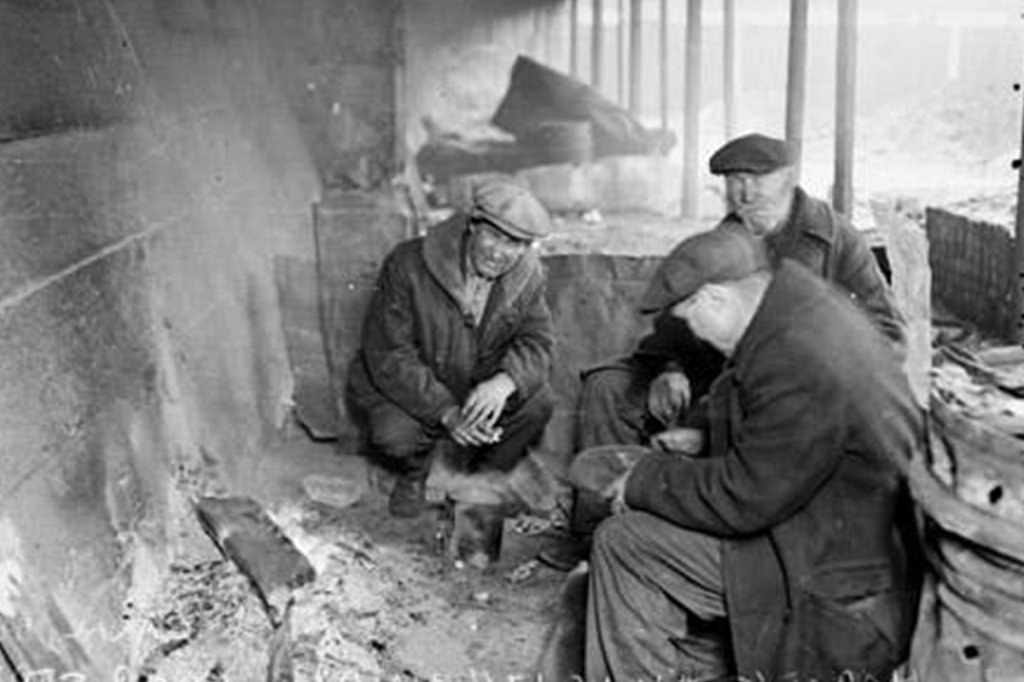
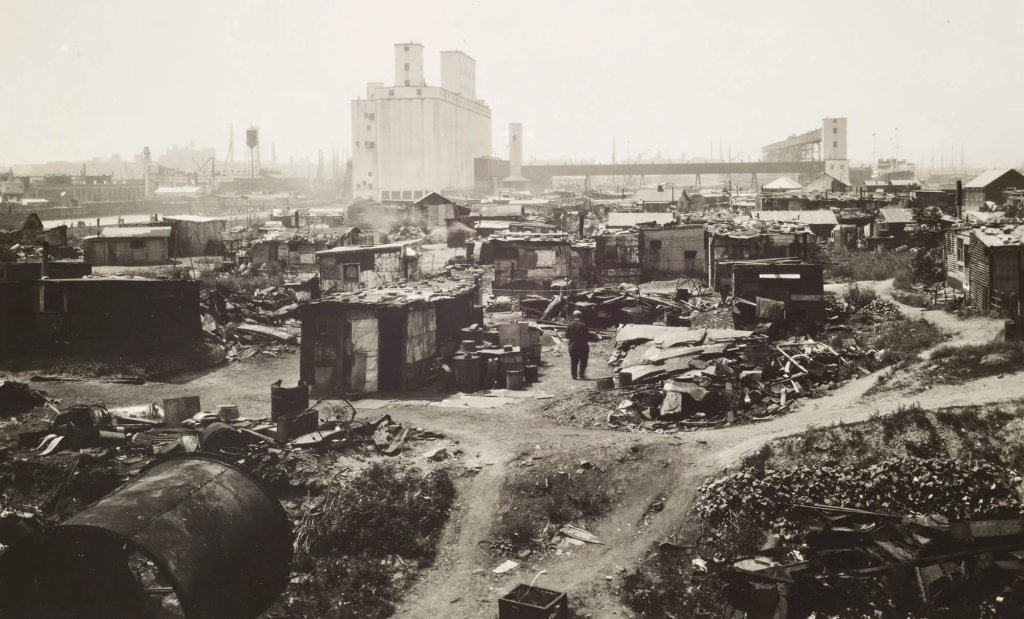
As unemployment and homelessness increased, Americans improvised. Makeshift communities sprang up across the country, often on the outskirts of cities, filled with tents, shacks, and scavenged materials. These communities were mockingly called “Hoovervilles,” named after the sitting president, Herbert Hoover, who was widely blamed for the economic collapse and perceived inaction.
Hoovervilles were a striking testament to both desperation and resilience. They lacked basic sanitation, plumbing, or heating, yet families made do. Cardboard, scrap wood, and tin became the building materials of choice. Some residents created “Hoover Heaters,” rudimentary cardboard or tin devices used to trap heat and survive the winter. Others stayed in temporary shelters referred to as “Hoover Hotels,” which offered minimal protection from the elements but no real comfort.
Life in the Hoovervilles was harsh. Disease and malnutrition were constant threats, and residents often faced hostility from local authorities or wealthy neighbors. Despite these hardships, these communities were also hubs of solidarity. Residents shared resources, organized informal schools for children, and helped each other find work or trade. The Hoovervilles symbolized both the failure of government response and the ingenuity of ordinary Americans in the face of systemic collapse.
The Bonus Army
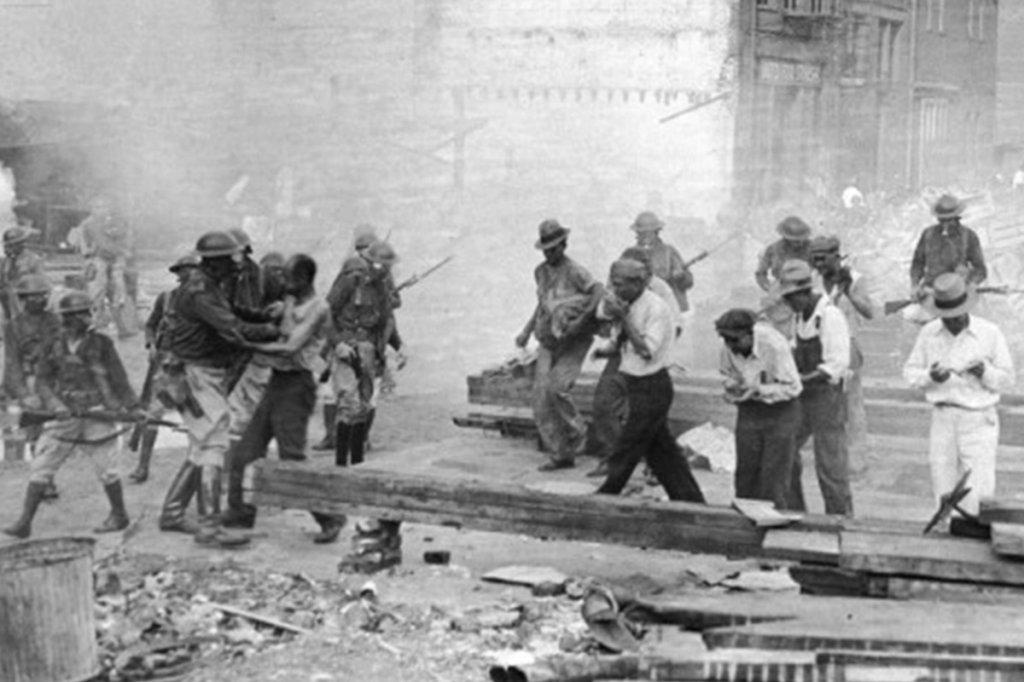
One of the most dramatic events of the early Depression was the Bonus Army March of 1932. World War I veterans, many struggling with unemployment and poverty, marched to Washington, D.C., demanding early payment of a service bonus promised by the Adjusted Compensation Act of 1924. Nearly 20,000 veterans and their families set up camps on the National Mall, hoping to pressure Congress into granting their claims.
President Hoover and many politicians viewed the march as a threat. When tensions escalated, Douglas MacArthur, the Army Chief of Staff, was ordered to disperse the veterans. MacArthur exceeded his orders, using cavalry, tanks, and tear gas to force the marchers out of the city. The violent eviction of veterans shocked the nation and further eroded Hoover’s popularity. The incident highlighted both the desperation of the era and the federal government’s initial inability to respond to widespread social and economic crises humanely.
Hobos: The Transient Workforce
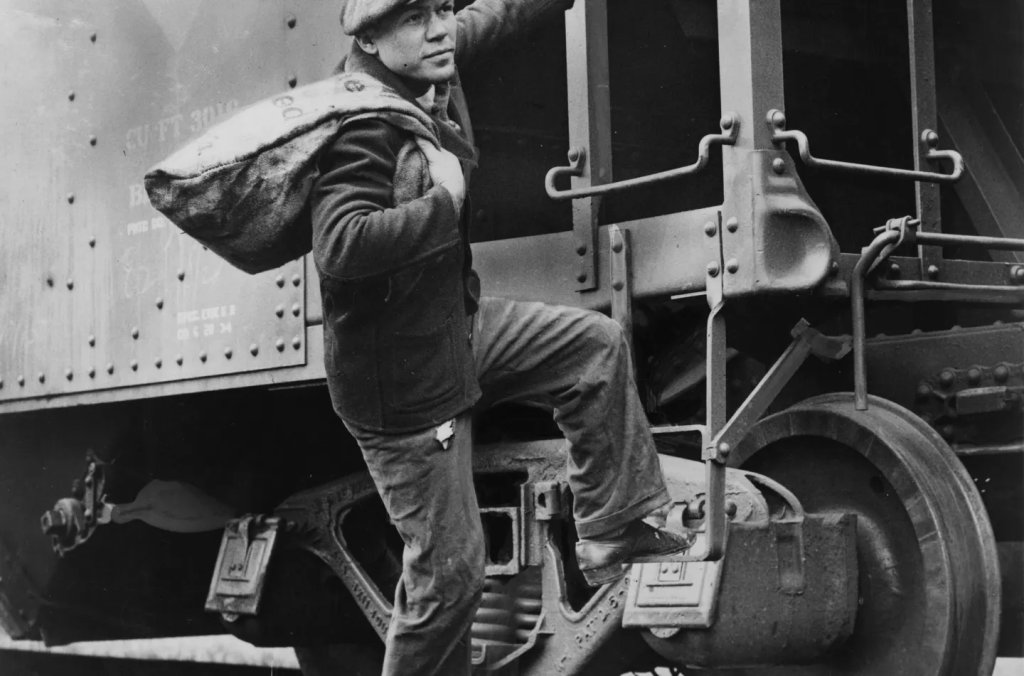
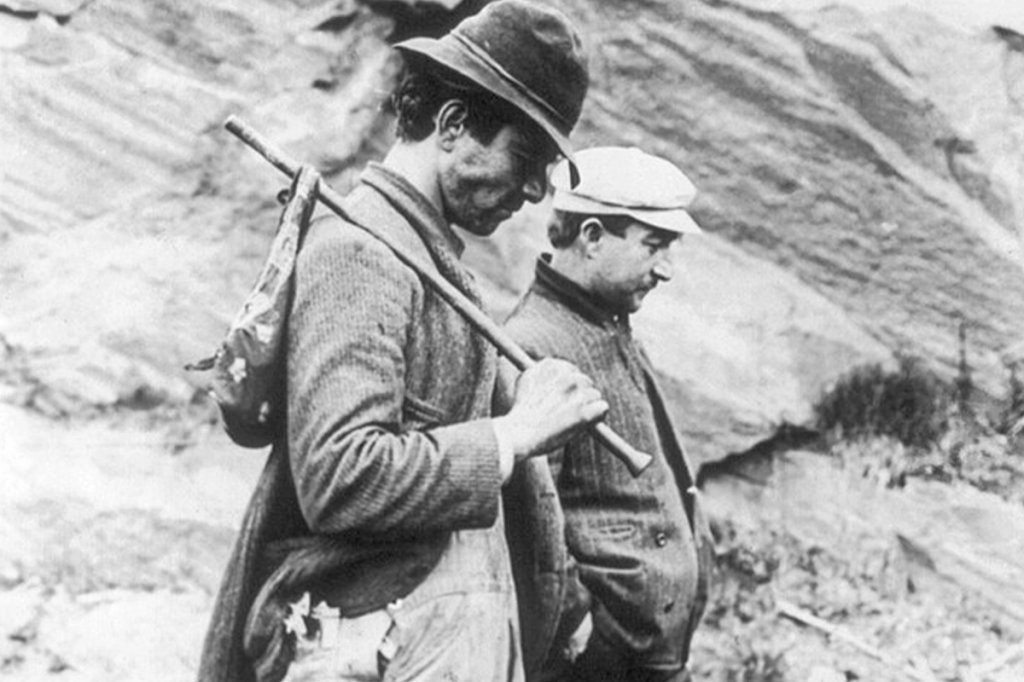
Amid this backdrop, thousands of young men and some women adopted a nomadic lifestyle, riding freight trains in search of work. These hobos were not simply homeless; they were resourceful, self-reliant individuals who created a mobile subculture with its own rules, traditions, and networks.
Hobos faced constant dangers: police harassment, train accidents, hostile townspeople, and exposure to the elements. Hunger and disease were daily realities, and finding work or shelter required skill, timing, and local knowledge. To survive, hobos developed a sophisticated communication system: hobo signs.
An Underground Network
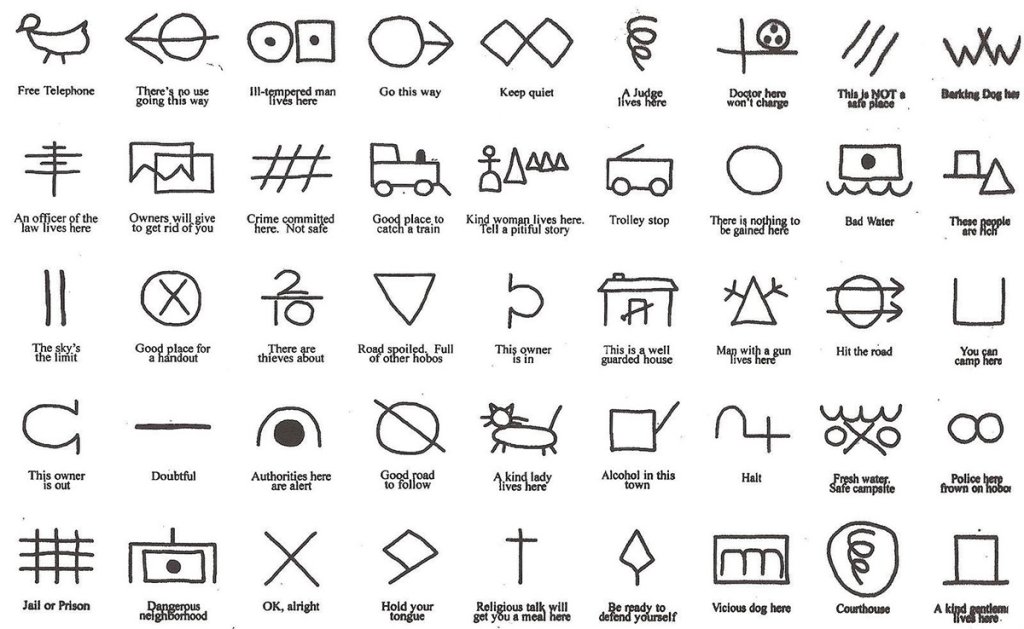
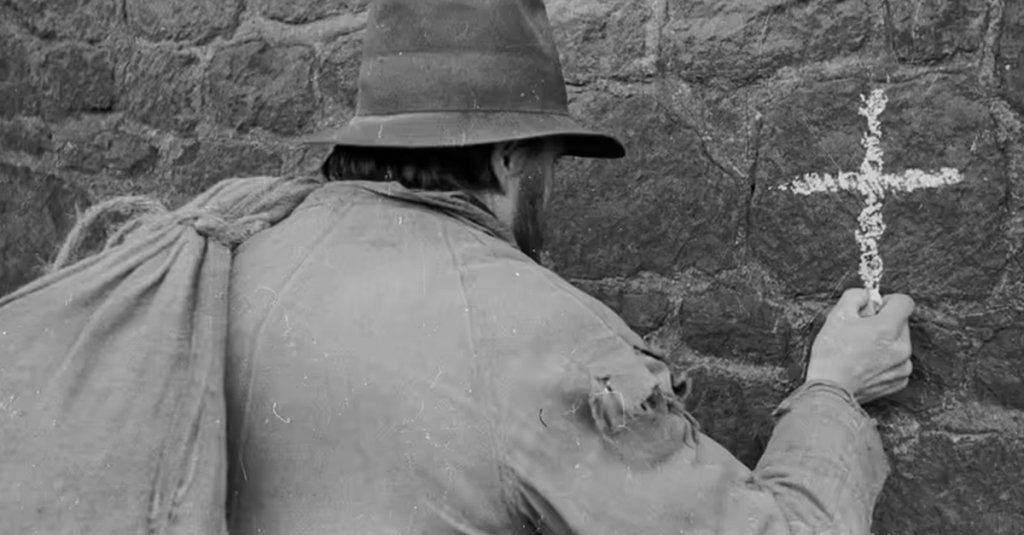
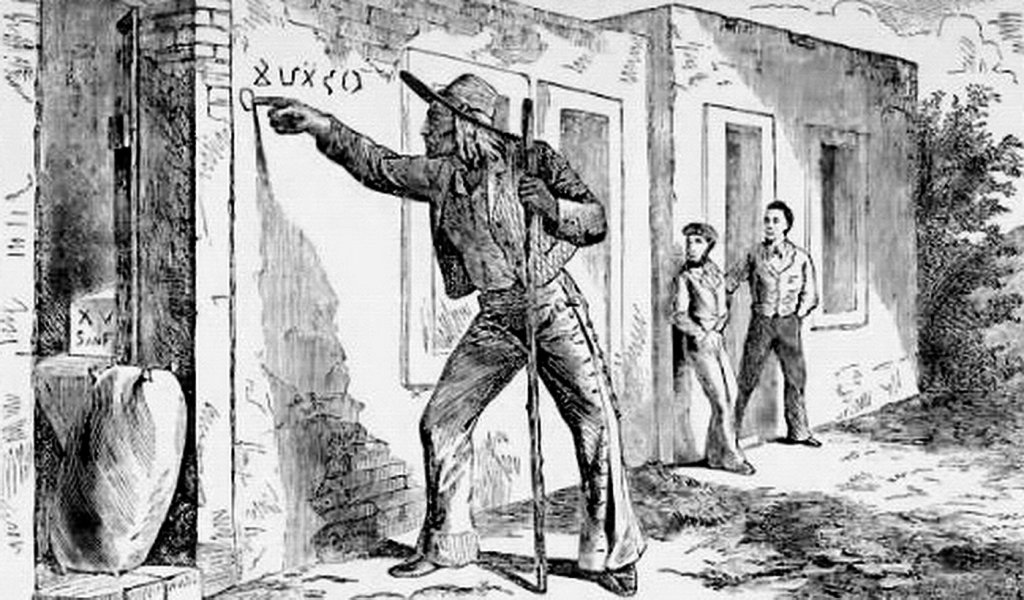
Life on the rails was dangerous, so the hobos developed a secret system of communication using chalk or charcoal symbols. These signs were drawn on fences, posts, sidewalks, and walls, conveying crucial information about safe places to camp, sources of food and work, and areas to avoid. In effect, this network functioned as an underground guide, helping travelers navigate an often unforgiving landscape.
Hobo signs were both practical and inventive. A circle with an X might indicate a friendly house willing to provide a handout, while a triangle with hands warned of a homeowner armed with a gun. Symbols could also mark fresh water sources, free medical care, or safe campsites. By sharing this information, hobos created a community of support and cooperation, despite the isolation and hardship of their nomadic lifestyle. These signs were often temporary, erased by rain or property owners, yet they represented an ingenious way for people to communicate and survive in a time of extreme poverty and uncertainty.
The cultural impact of hobo life extended beyond survival. Songs like “Big Rock Candy Mountain” captured the hopes and dreams of this transient population, imagining a world free from labor, law, and hardship. Hobo signs, along with these songs and stories, serve as enduring reminders of human creativity and resilience. They illustrate how, even in the most desperate circumstances, people can build networks of mutual aid and community, leaving a legacy of ingenuity and resourcefulness that continues to resonate in historical memory.
Hobo signs were symbols drawn with chalk or charcoal on fences, posts, sidewalks, or walls. These markings provided guidance to other travelers, indicating friendly houses, safe campsites, available work, food, water, and warnings about danger.
Some common signs included:
Food and Work:
- Two Shovels: Work available.
- Circle with X: Handouts or food available.
- Cross with Smiley Face: Doctor will provide free medical care.
Dangers and Warnings:
- Triangle with Hands: Homeowner has a gun.
- Horizontal Zigzag: Beware of a barking dog.
- Circle with Arrows: Hobos not welcome; leave immediately.
Safe Spots and Conditions:
- Square with Slanted Roof & X: House already tricked or burned by another hobo.
- Square Missing Top Line: Safe place to camp.
- Wavy Line over an X: Fresh water and campsite nearby.
- Top Hat: Wealthy resident; potential for help.
This secret language functioned as a primitive communication network, sharing real-time information in an era before the internet, mobile phones, or even widespread telephones. Hobo signs allowed travelers to navigate unknown towns, find sustenance, and avoid threats, forming a unique culture of cooperation amid hardship.
The Human Toll
The Great Depression affected nearly every American. Families struggled with poverty, malnutrition, and disease. Children often went without adequate food or schooling, and adults faced shame and loss of identity tied to unemployment. Rural communities were devastated not only by economic collapse but also by environmental disasters, such as the Dust Bowl, which destroyed crops and forced thousands to migrate westward in search of work.
Urban areas saw a rise in homelessness, crime, and social unrest. Hoovervilles became visible symbols of despair, while political protests and marches reflected widespread dissatisfaction with government response. Social bonds were strained, yet communities often banded together to survive, creating informal networks of support, barter, and mutual aid.
Depression-Era Culture Endures
Hobo signs, Hoovervilles, and cultural expressions like “Big Rock Candy Mountain” remain enduring symbols of the Depression. They reflect human creativity, resilience, and the capacity to form networks and communities in the face of adversity. Hobos developed a shared system of knowledge that allowed them to survive, while Hoovervilles demonstrated both the failures of government and the determination of ordinary people.
The experiences of the Depression also reshaped American political consciousness, inspiring labor movements, reforms in social welfare, and a recognition of the government’s role in protecting citizens’ economic security. The crisis left an indelible mark on literature, music, and popular culture, influencing generations of Americans and providing lessons about resilience, solidarity, and the necessity of systemic reform in times of economic crisis.
The Great Depression was a period of profound hardship that transformed American society. From the shantytowns of Hoovervilles to the rail-riding culture of hobos, millions of Americans faced hunger, uncertainty, and danger. Through ingenuity and solidarity, hobos developed an underground communication system of hobo signs that guided them through a harsh and often hostile world. Songs like “Big Rock Candy Mountain” captured their dreams and longings, providing hope and shared identity.
Government inaction, exemplified by Hoover’s policies and the violent dispersal of the Bonus Army, highlighted the urgency of reform. The New Deal provided some relief, but it was the industrial and military mobilization of World War II that ultimately pulled the nation out of depression. The legacy of this era is a testament to human resilience, creativity, and the enduring drive to survive and help one another, even in the darkest of times.
I use the following assignment to teach this content to students. This worksheet covers recognition, interpretation, mapping, and reflection, giving students a complete hands-on experience with hobo culture and the Great Depression.
Classroom Assignment:
Decoding the Rails: Hobo Signs and Survival During the Great Depression
Name: ________________________
Date: ________________________
Part 1: Introduction
During the Great Depression, millions of Americans faced unemployment, poverty, and homelessness. Young men and some women traveled across the country as hobos, hopping freight trains and searching for work, food, and shelter. To survive, hobos created a secret system of communication using chalk or charcoal symbols called hobo signs. These signs were drawn on fences, posts, walls, or sidewalks and indicated where it was safe to camp, where food or work could be found, and which areas were dangerous.
Songs like “Big Rock Candy Mountain” captured the hopes of hobos for freedom and comfort, but hobo signs were practical tools that helped them navigate real dangers and scarcity during this difficult time.
Part 2: Hobo Sign Recognition
Below are some common hobo signs from the 1930s. Study each symbol carefully. Write what you think it might mean and then compare it with the historical meaning provided by your teacher.
| Hobo Sign | Your Interpretation | Historical Meaning |
|---|---|---|
| ⭕ with X | Good place for food or handout | |
| △ with hands | Homeowner has a gun; danger | |
| □ missing top line | Safe place to camp | |
| ~ over X | Fresh water and campsite nearby | |
| Top Hat | Wealthy resident; potential help | |
| ☓ with smiley face | Doctor will treat hobos for free |
Extension: Try creating 1–2 original hobo signs you think could have been useful. Draw them in the space below and explain their meaning:
Part 3: Mapping Exercise
Below is a blank map of a fictional Depression-era town. Features include a train station, farm, factory, wealthy neighborhood, and empty lots. Using the hobo signs above, mark where a hobo might place each symbol.
Instructions:
- Place the signs logically according to their meaning.
- Write a short paragraph below explaining how a hobo would use your map to find food, work, and safe places while avoiding danger.
(Insert or draw your map here or on a separate sheet.)
Paragraph:
Part 4: Reflection Questions
Answer the following in complete sentences:
- How did hobo signs reflect the creativity and resilience of people during the Great Depression?
- In what ways did this secret communication network act as a form of community?
- How are modern communication tools (apps, social media, online reviews) similar to or different from hobo signs?