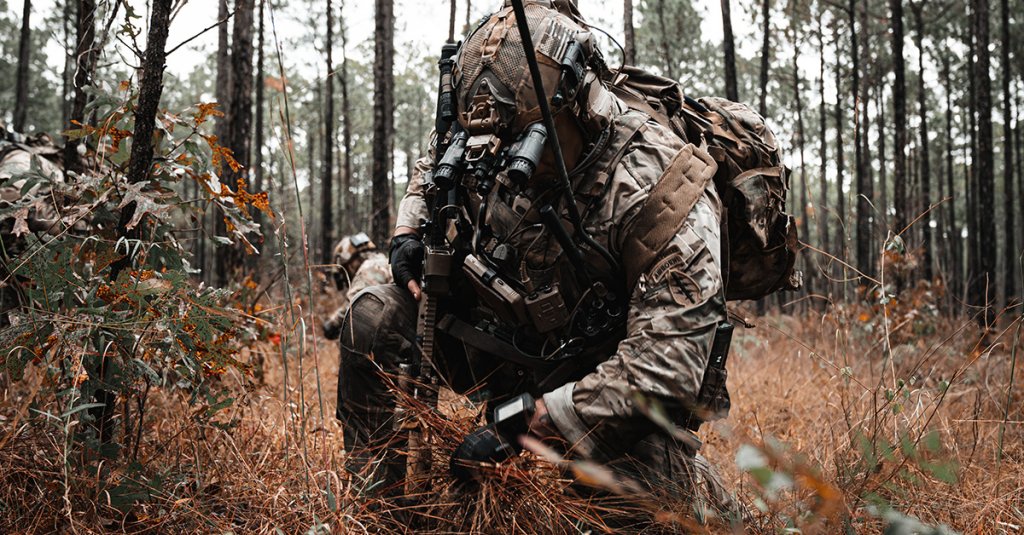
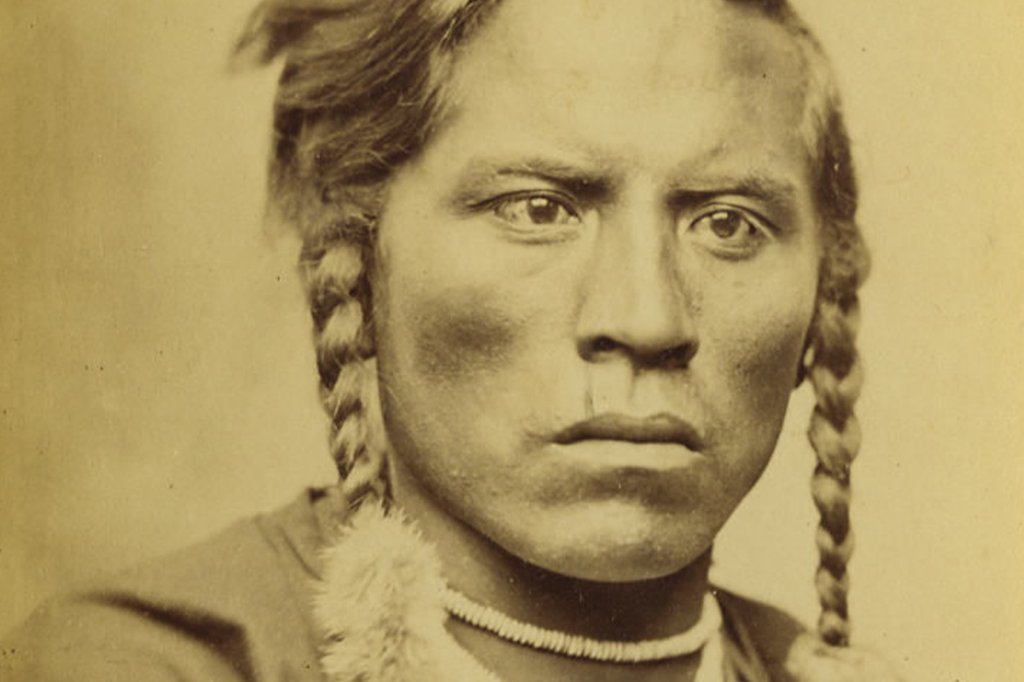
For generations, the Indian Scouts served as the essential eyes and ears of the United States Army across the vast, unforgiving landscapes of the American West. Decades before radios, satellites, night-vision devices, drones, or GPS changed warfare, these Indigenous warriors perfected the arts of tracking, reconnaissance, infiltration, and survival.
Related: The original Green Berets: tracing the roots of US Special Forces
Their contributions not only shaped the campaigns of the 19th-century frontier but also built the intellectual and cultural foundation of today’s United States Army Special Forces. The crossed arrows worn by every Green Beret are not an abstract symbol. They are a living connection to the Indigenous scouts who pioneered the principles of unconventional warfare in North America.
Masters of the Land and Shadows
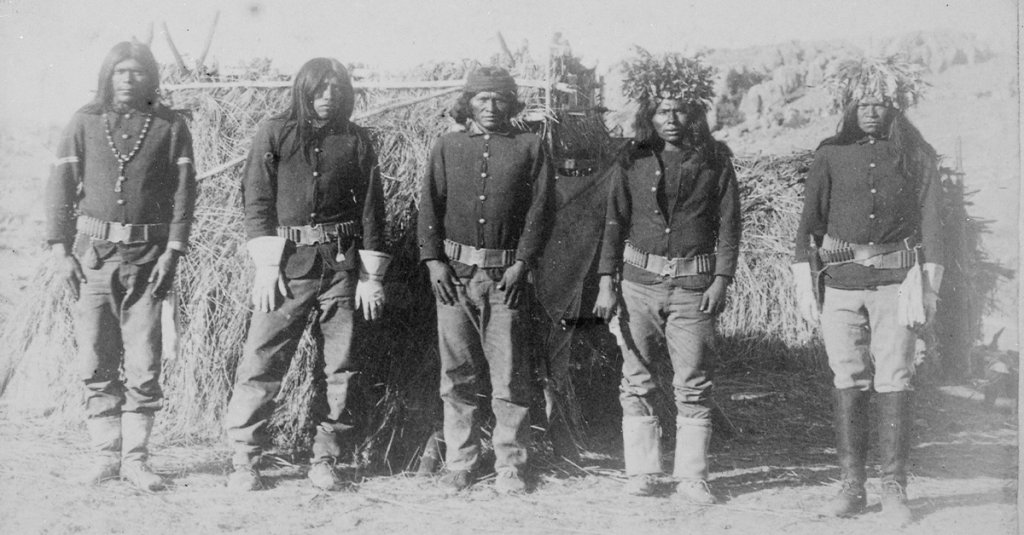
Beginning in the 1860s, the U.S. Army recruited Indian Scouts from many tribal nations, including the Apache, Navajo, Crow, Sioux, Pawnee, Arikara, Cheyenne, and Shoshone. These scouts possessed knowledge and instincts that no amount of formal military training could duplicate. They could read tracks left hours before, identify the weight distribution of a rider’s body from hoof prints in soil, detect alterations in the silence of a canyon, and move through forests or deserts without leaving a trace. Their mastery of water sources, migration routes, and seasonal cycles meant they could navigate regions where entire conventional units might perish.
Their skills were not limited to tracking. The Army relied on them as interpreters, diplomats, informants, cultural guides, and shock troops during fast-moving engagements. Their understanding of terrain, human movement, and tactical deception made them indispensable during the Apache Wars, the Northern Plains campaigns, and operations along the Rio Grande.
Precision and Adaptability
Indian Scouts frequently determined the success of major military operations. During the Apache campaigns, their ability to locate hidden encampments or estimate the direction of a small war party gave U.S. commanders a strategic advantage in an era defined by small, mobile warfare. In the northern plains, Crow and Arikara scouts provided essential intelligence prior to and during the Great Sioux War. Their real-time reconnaissance helped commanders avoid ambushes, select routes, and understand enemy intentions.
Their reputation grew so widely that Army officers often requested specific scouts by name. A small group of scouts could accomplish reconnaissance tasks that would require entire companies of soldiers working for days. Their tenacity, endurance, and stealth formed the earliest template of what modern militaries would later call special operations.
The Medal of Honor Indian Scouts
Between 1870 and 1890, at least 16 Indian Scouts received the Medal of Honor for extraordinary bravery. Although many citations were brief, each reflects acts of courage that saved lives and altered the outcomes of military expeditions. Among the most notable honorees were:
Chiquito, Apache Scout
Recognized for gallant conduct during campaigns in the Arizona Territory. His actions included pursuing raiding parties through extreme terrain and confronting enemy forces at close range.
Kelsay, Apache Scout
Awarded for leading soldiers through the formidable Tonto Basin and fighting in hand-to-hand engagements during the Apache Wars.
Elato, Apache Scout
Cited for repeatedly advancing under hostile fire to provide intelligence on enemy positions.
Nannasaddie, Apache Scout
Honored for bravery during a series of engagements in which he scouted ahead of Army detachments and exposed himself to fire while locating the enemy’s stronghold.
Blanquet, Apache Scout
Recognized for placing himself between soldiers and enemy fire during surprise attacks.
Rowdy, Apache Scout
Honored for extraordinary valor during the 1886 Cherry Creek Campaign and for rescuing wounded troops under fire.
Other recipients such as Kosoha, Machol, and Nantaje served with equal distinction. While not all citations reveal the full story, the historical record shows that these scouts repeatedly risked their lives in environments where even veteran cavalrymen hesitated to operate. Their courage established a standard for reconnaissance units that persists to this day.
The Blueprint for Elite Irregular Forces
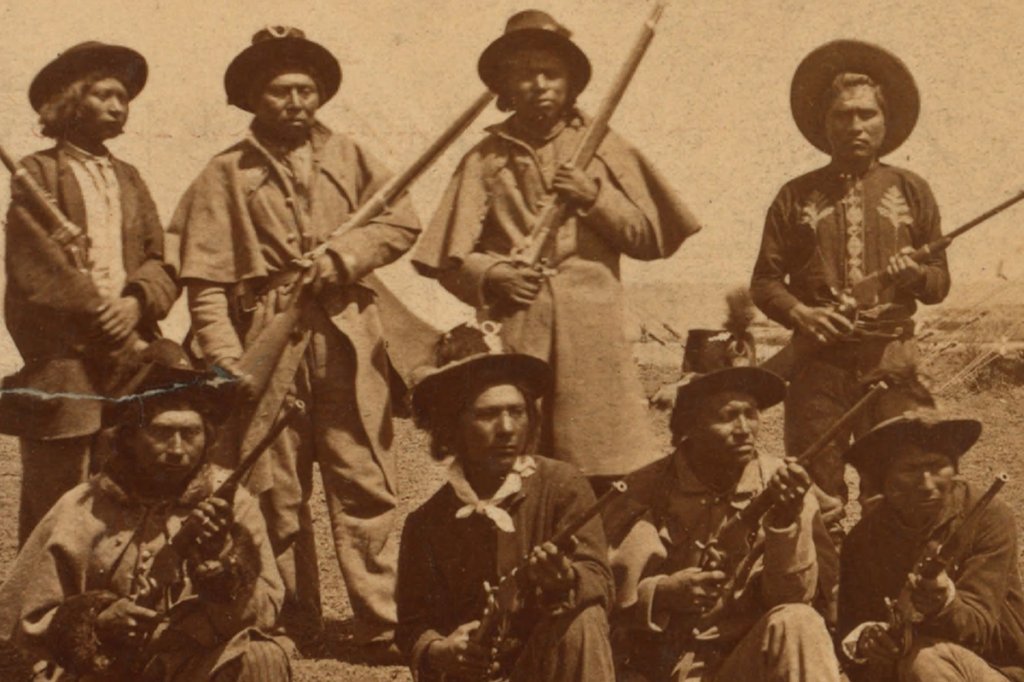
The Army’s success with Indian Scouts directly influenced the recruitment of specialized units in later decades. No group exemplifies this evolution more than the Black Seminole Scouts, first enlisted in 1870. Their cultural history blended African American resistance traditions with Seminole warrior culture. Their migration from Florida to Indian Territory, then to Texas and northern Mexico, created a community with unparalleled knowledge of the borderlands.
The Army recognized that this unique background made them ideal for frontier service. The structure and tactics of the Indian Scouts had already demonstrated the value of culturally specialized, highly skilled irregular forces. The Black Seminole Scouts followed this model and became one of the most effective small units in frontier history. Their service, combined with that of Indigenous scouts, helped define the ethos of American irregular warfare.
A Symbol of Honor: The Crossed Arrows
In 1890, the Army authorized a new insignia for the Indian Scouts consisting of two crossed arrows. This symbol represented courage, frontier knowledge, and mastery of stealth. The crossed arrows remained the official insignia of the Scouts until their disbandment in 1947.
Five years later, when the U.S. Army Special Forces were formally established in 1952, their founders adopted the crossed arrows as the branch insignia. The choice was deliberate and reverent. The Special Forces were created to perform missions that echoed the work of the Indian Scouts, including deep reconnaissance, unconventional warfare, working with local populations, gathering intelligence, and thriving in environments where traditional forces struggled.
Every Green Beret who wears the crossed arrows is honoring a legacy born in the canyons, plains, and deserts of the nineteenth century. The lineage from Indigenous scouts to modern special operators is one of continuity, shared purpose, and deep respect.
Why This History Matters Today
The story of the Indian Scouts, the Seminoles, the Black Seminoles, and all frontier auxiliaries is not simply a chapter in military history. It is the foundation of America’s modern special operations community and a testament to the contributions of Indigenous and Afro-Indigenous peoples whose traditions shaped U.S. military doctrine.
Today, Florida has taken bold steps to ensure that students, veterans, and communities understand this legacy. House Bill 1329, passed unanimously by both chambers of the Florida Legislature in early 2024, mandates the teaching of veteran history, including the Seminoles and Black Seminoles, whose service profoundly shaped American military strategy.
The legislation reinforces Florida’s commitment to honoring veterans by strengthening transition assistance programs, expanding support for veteran employment and small businesses, and establishing the Major John Leroy Haynes Florida Veterans’ History Program to preserve the oral histories of those who served. By requiring schools to teach the importance of Veterans Day and Memorial Day, the state ensures that present and future generations appreciate the sacrifices of the warriors who came before them.
BLKOPS Foundation: Carrying the Legacy Forward
Organizations such as the BLKOPS Foundation are leading the national effort to educate Americans about this forgotten chapter of military history. Through public programming, school outreach, veteran engagement, and online resources at www.blkopsfoundation.org, the foundation preserves the legacy of the Black Seminoles and the Indian Scouts while empowering veterans to tell their own stories.
Their work ensures that the history of irregular warriors, frontier scouts, and culturally distinct military units remains alive. By connecting past to present, BLKOPS helps Americans understand that the tactics, culture, and resilience of these nineteenth-century warriors live on in today’s Special Forces.
An Enduring Lineage of Courage
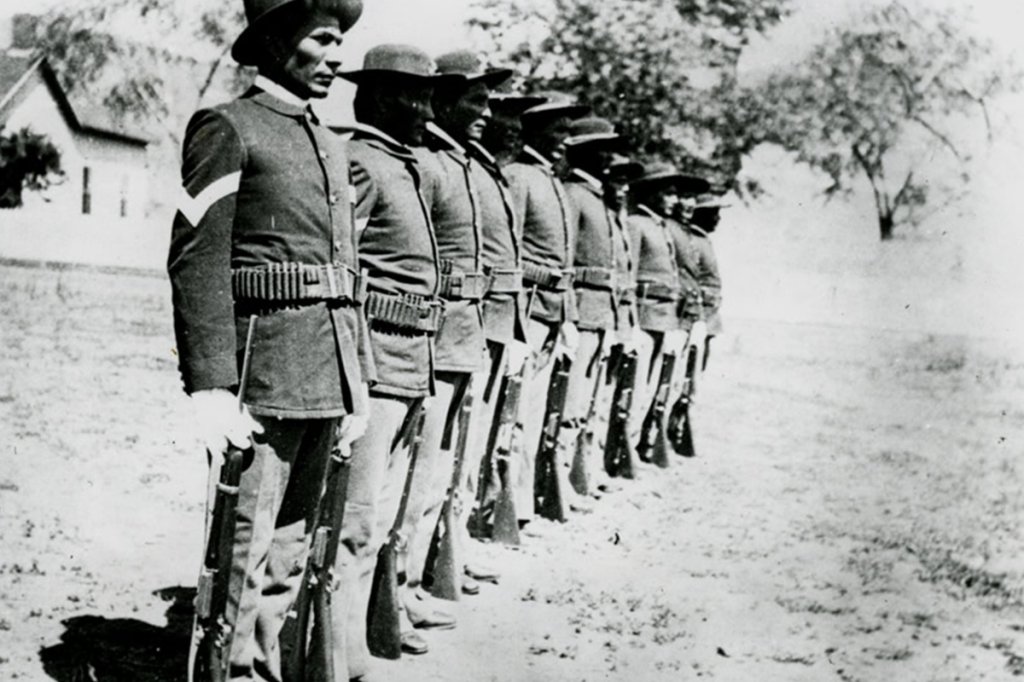
From the frontier trails of the nineteenth century to the remote battlefields of the twenty-first, the lineage of the Indian Scouts runs unbroken through American military history. Every mission conducted behind enemy lines, every act of deep reconnaissance, every instance of cultural engagement, and every soldier who carries the crossed arrows on their collar is part of a living tradition.
The Indian Scouts were not only warriors of their time. They were the originators of an American way of unconventional warfare. Their legacy is preserved in the history of the Seminole and Black Seminole fighters, in the doctrine of the Special Forces, in the education of future generations, and in the work of veterans and organizations committed to telling their story.
They were the first to walk the shadowed trail. Today’s special operators follow in their footsteps.
Don’t Miss the Best of We Are The Mighty
• 250 years of the Marine Corps and legacy of Native American warriors
• The Seminole Wars: Florida’s longest conflicts
• The Seminole War that America forgot to call a slave rebellion