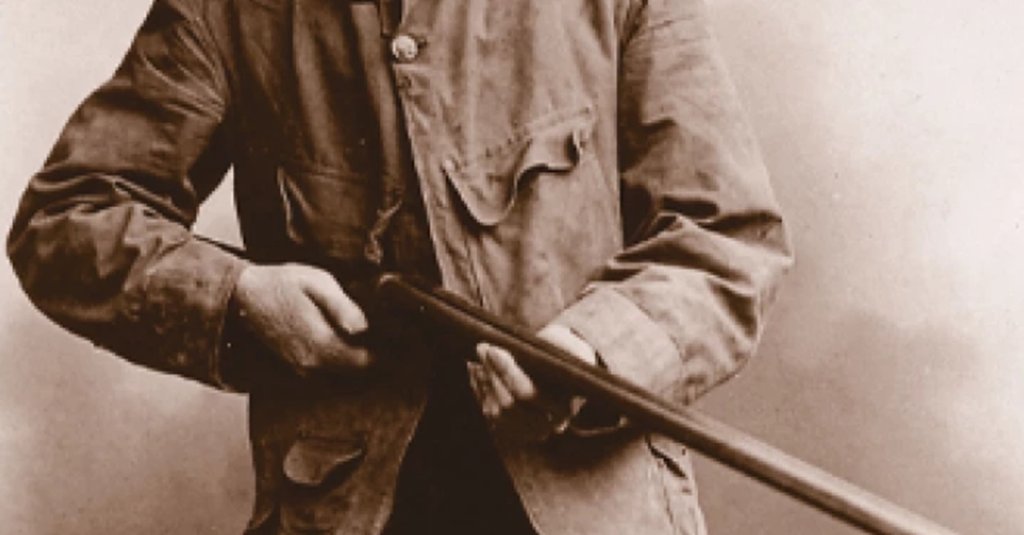
On New Year’s Eve 1876, in a dusty little settlement on the Texas frontier, three Medal of Honor recipients ended up at the same party.
By sunrise, one of them was dead.
A double-barreled shotgun blast ended the life of Adam Paine, a Black Seminole scout who had earned the medal for fearless service on the Texas frontier. The man who pulled the trigger, Claron A. Windus, had his own Medal of Honor for equally selfless service. When Windus shot Paine, it became the only documented time in American history that one Medal of Honor recipient intentionally killed another.
Related: The Indian Scouts that forged the legacy of American Special Forces
The setup reads like a cross between an episode of “Forensic Files” and a dark Western: a teenage drummer boy turned cavalry bugler on the frontier and a Black Seminole Scout nicknamed “Bad Man” in a lawman–outlaw showdown where everyone involved has already gone above and beyond the call of duty at one point in their lives. And no one is entirely sure of how it really went down.
A Drummer Boy Grown Up
The Medal of Honor is the last word in American gallantry. It’s the award no one imagines ever being on both sides of a fatal shooting. Claron Augustus Windus and Adam Paine came to that medal from very different directions.
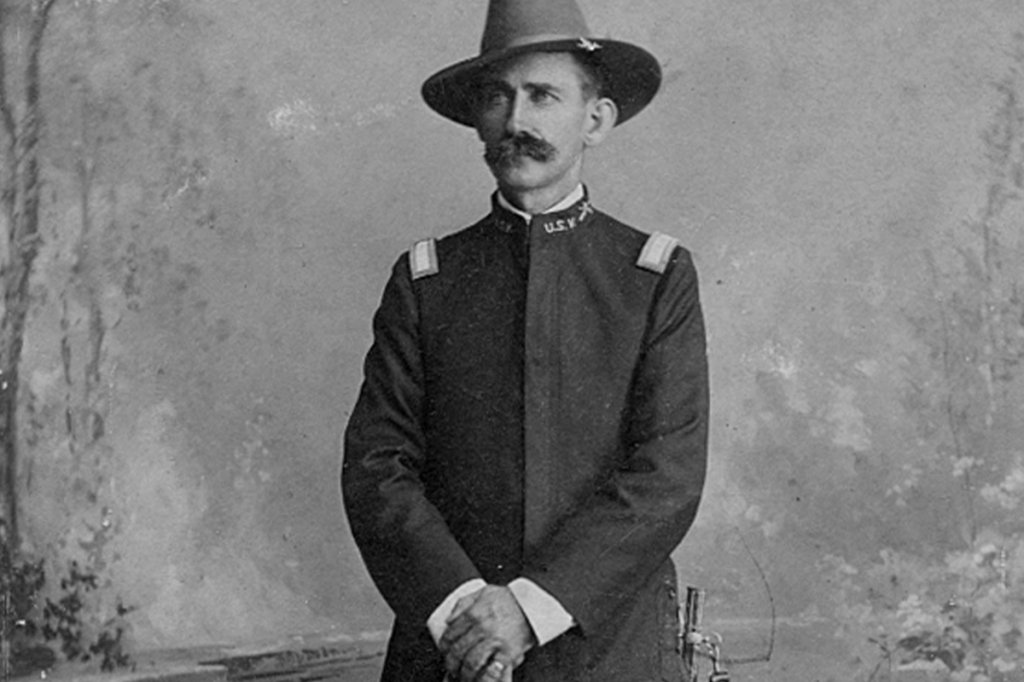
Windus was a kid from Janesville, Wisconsin, who lied about his age to enlist in the Civil War. He ran away from home in 1864 and joined the 5th Wisconsin Infantry as a drummer boy, seeing combat during the Siege of Petersburg later that year.
After the war, still too young and apparently still addicted to the life of a soldier, he lied again and enlisted in the regular Army’s 6th U.S. Cavalry. Stationed in Texas, he wasn’t exactly a model soldier at first. He was court-martialed in 1868 for desertion and theft of Army horses and spent a year doing hard labor.
But in July 1870, that all changed. Windus was a bugler and orderly with a mixed detachment sent out from Fort Richardson, a key base for operations against the Comanche, Kiowa, and Cheyenne to protect settlers in Texas. The mission that day was to recover mail stolen in an Native attack. Caught on the flooded North Fork of the Little Wichita River, the small column was hit by roughly 100 Kiowa warriors under Kicking Bird.
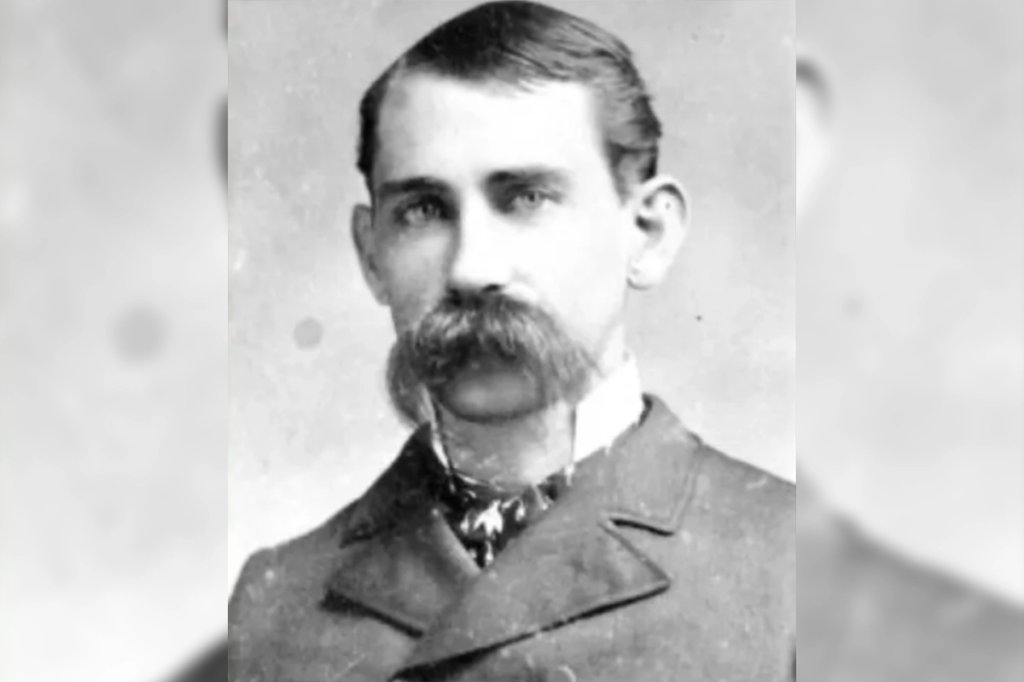
For hours, the detachment fought a running withdrawal under fire. Windus moved between roles, assisting the surgeon with wounded men, helping clear sharpshooters, and then volunteering with two others to ride through hostile country to get help from Fort Richardson.
They survived, reinforcements rode out, and the command survived. For “conspicuous acts of bravery,” Windus and 12 of his comrades received the Medal of Honor that October. A few years later, he was out of the Army and wearing a different badge: Deputy Sheriff of Kinney County, Texas, based in the little town of Brackettville.
“Bad Man”
Adam Paine (sometimes spelled “Adan”) was born around 1843 near Alachua, Florida, to Black Seminole parents, descendants of self-emancipated Black people who had joined the Seminole in Spanish Florida and fought alongside them.
After their forced removal to Indian Territory (what is today Oklahoma), the Black Seminoles were still at risk of kidnapping and being dragged back into slavery. So in 1850, a group led by John Horse and the Seminole leader Coacoochee (also known as “Wild Cat”) did something bold: they left for Mexico and resettled there as border fighters, the Mascogos.
Two decades later, the U.S. Army needed those same skills back. On the Texas–Mexico border, Black Seminoles were recruited as the Seminole Negro Indian Scouts, elite trackers who knew the land, languages, and raiding patterns better than anyone. Officers raved that they were “excellent hunters and trailers, and brave scouts… splendid fighters.”
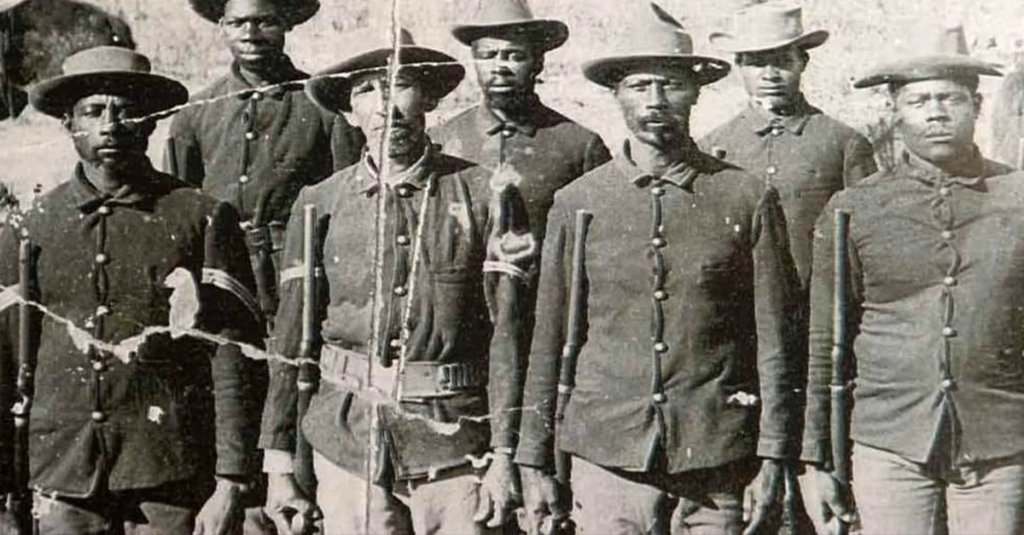
Paine enlisted in the U.S. Army at Fort Duncan on Nov. 12, 1873. The other scouts nicknamed him “Bad Man,” not because he was useless in a fight, but because he went hard. He wore a leather headpiece tipped with buffalo horns and carried himself like someone who fully expected trouble (was probably looking for it) and didn’t intend to lose.
He earned his Medal of Honor during the Red River War. In September 1874, while attached to Col. Ranald Mackenzie’s 4th Cavalry, Paine helped track Comanches into Palo Duro Canyon and then fought with what Mackenzie later praised as “more cool daring than any scout I have ever known.” He rendered “invaluable service” during the fight, enough that when Mackenzie recommended men for the Medal of Honor, Paine’s name went up with them.
He received the medal on Oct. 13, 1875, the first of the four Black Seminole scouts who would ultimately earn it: Paine, Pompey Factor, Isaac Payne, and John Ward. That group later became known as the “Unconquered Four.”
Paine’s story after the Army is where it veers away from the kind of Medal of Honor narrative we’re accustomed to reading and turns into something much messier. He was discharged in 1875 at Fort Clark and took work as a teamster for the Quartermaster Department at Fort Brown. But he wasn’t built for the quiet life in garrison.
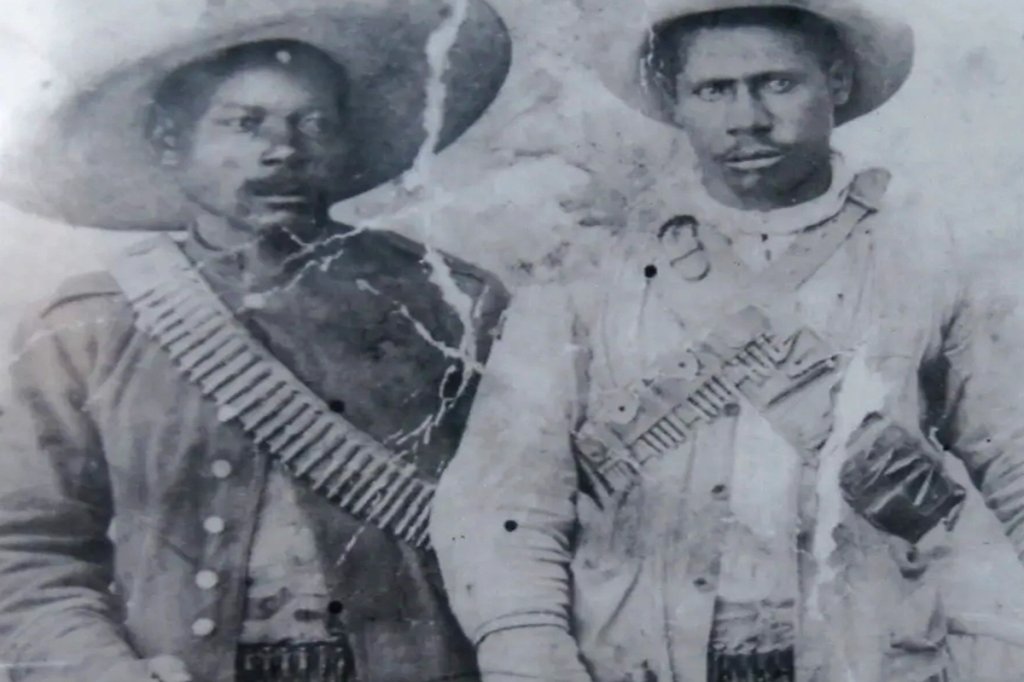
On Christmas Eve 1875 in Brownsville, he clashed with a white cavalryman in a heated argument that ended with Paine stabbing the soldier through the heart. From that point on, he was an outlaw. A Black outlaw. In Texas. In the days of the “Wild West.” His life expectancy in Texas would be short so he went on the lam.
Paine drifted along the border with a cattle thief and bandit named Frank Enoch, slipping back and forth across the Rio Grande whenever Texas law got too interested. Lawmen didn’t see a U.S. Army war hero in Adam Paine; they saw a murder suspect who kept skipping back over the line and daring them to do something about it.
Eventually, one of those lawmen, Deputy Sheriff Claron Augustus Windus, did something.
New Year’s Eve in Brackettville
By late 1876, Windus had been Deputy Sheriff in Kinney County for about a year. The Sheriff, L.C. Crowell, got word that several wanted men (including Paine and Enoch) were going to be at a New Year’s celebration in the Seminole camp outside Brackettville. So the sheriff and his deputy rode out to crash the party.
Inside that community gathering, the cast of characters looked like something Louis L’Amour might have written: Deputy Sheriff Claron A. Windus, Medal of Honor recipient for the Little Wichita fight; Adam Paine, former Seminole scout, Medal of Honor recipient, wanted for murder; and Isaac Payne, another Black Seminole scout and future Medal of Honor recipient for heroism at Eagle’s Nest Crossing.
Historical accounts disagree on what happened next. That’s part of what makes the story so legendary… and unsettling. When the Kinney County posse moved in, the situation went bad in a hurry.
What historians know for sure is that Windus carried a double-barreled shotgun, and that Paine ended up on the wrong end of it at extremely close range. Enoch was also shot and eventually died of his wounds, while Isaac Payne and another man, Dallas Griner, grabbed horses and bolted for Mexico.
Everything else depends on which source you trust most.
One detailed frontier account has Windus jamming the shotgun into Paine’s stomach and firing at such close range that the flames from the muzzle set Paine’s clothes on fire. A biography of Windus keeps it cleaner, simply stating that he shot and killed Paine “while attempting to arrest four fugitive felons.”
According to the National Park Service, Windus was searching for Paine in connection with the earlier Brownsville killing and “blasted him from behind” without asking any questions, citing witnesses from the Seminole community.
All three are accounts of the same moment, with the same cast of characters, but all with very different framing. Either way, Paine never made it to a courtroom, let alone get a fair trial. The man who survived Comanche raids and frontier campaigns died in a scatter of buckshot on the ground during a New Year’s Eve party.
Isaac Payne eventually came back to Texas, re-enlisted as a scout, and lived long enough to retire from the Army decades later.
Windus faced no legal consequences. Within weeks, he resigned as a deputy sheriff and slid into a safer, more lucrative local role as Kinney County tax assessor. With early knowledge of tax-delinquent properties, he built himself into one of the largest landowners in the area and reportedly owned the first house in Brackettville with indoor plumbing.
But his military career didn’t end there, either. During the Spanish–American War, Windus came back yet again, this time as a captain in the 9th U.S. Volunteer Infantry. He deployed to Cuba in 1898, caught malaria, and was sent home. After the war, he returned to his life in Texas until his death in 1927 at Fort Sam Houston’s hospital.
All four of the Black Seminole scouts who received the Medal of Honor, including Adam Paine and Isaac Payne, are buried in the Seminole Indian Scout Cemetery near Brackettville, a few miles from where Windus is buried in the town’s Masonic cemetery.
In one tiny Texas town, there are five Medal of Honor recipients in the dirt, and one of them killed another.