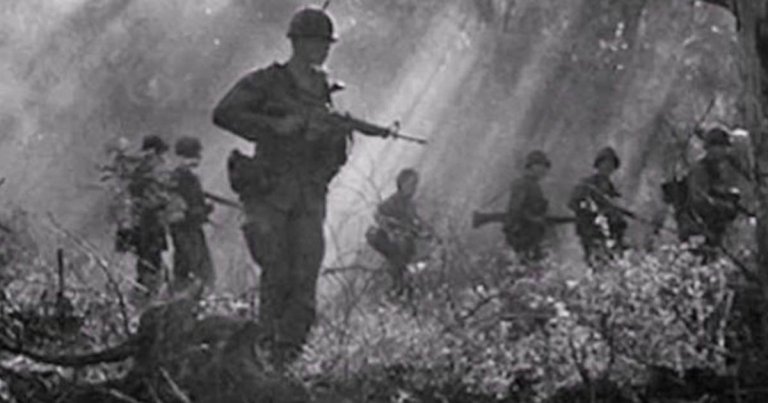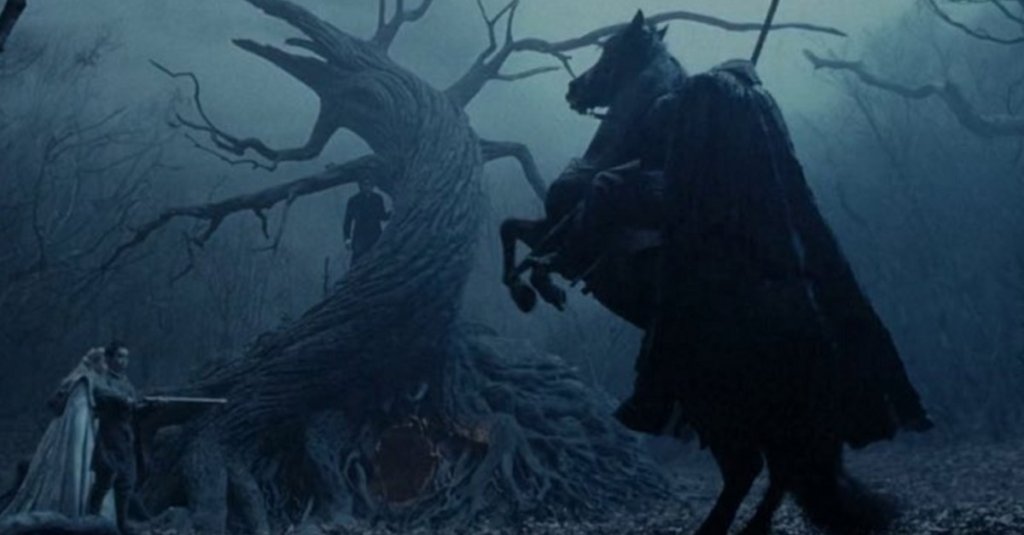
For believers, ghosts are the spirits of the departed who, for some reason, have either refused to move on to the afterlife or come back from it. Depending on who you ask, the spirits of the departed may have some unfinished business from their lives on Earth, return as omens or warnings of the future, or simply can’t accept that they’re dead and unable to enjoy the pleasures of modern-day life.

In war, there’s gonna be death, and the Revolutionary War was no different. The families of those killed in action were heartbroken. Those who were actually killed probably weren’t thrilled about it. The only ones happy about those deaths were the enemy. With men from one state marching off to fight in another, some colonial families may never have known the actual fates of their loved ones.
Related: DNA science and public databases offer a new way to identify soldiers’ remains
People deal with death in many different ways, and in the earliest days of the American Revolution, people were a lot more religious, a lot more superstitious, and more ready to believe in ghosts. It was a kind of reassurance; after all, if ghosts were real, then so too was the afterlife, the soul, and thus, God. Seeing loved ones, whether it was real or perceived, was also a way to say goodbye.
With that in mind, it’s no wonder that ghost stories from the period endure to this day, and none of the ghosts on the list is more famous than.
1. George Washington at Mount Vernon
Legends never die. This one won’t even fade away. Since his death in 1799, America’s first Commander-in-Chief has repeatedly been spotted in the room where he died. The first major sighting came from Josiah Quincy III, a prominent Boston politician, who slept in the room in 1806. Quincy had actually hoped to see the former president’s spirit that night, later telling his son that he’d hoped “he might be found worthy to behold the glorified spirit of him who was so revered by his countrymen.”
Quincy was in luck—Washington showed up. Apparently, the ghost had returned with some new business he needed to attend to. When Quincy was shown into Washington’s tomb later in that stay, he found it in a state of disrepair. Relic hunters had repeatedly broken into the tomb to steal things, with little regard for how they left it, notably leaving the coffin’s velvet cover “in tatters.”
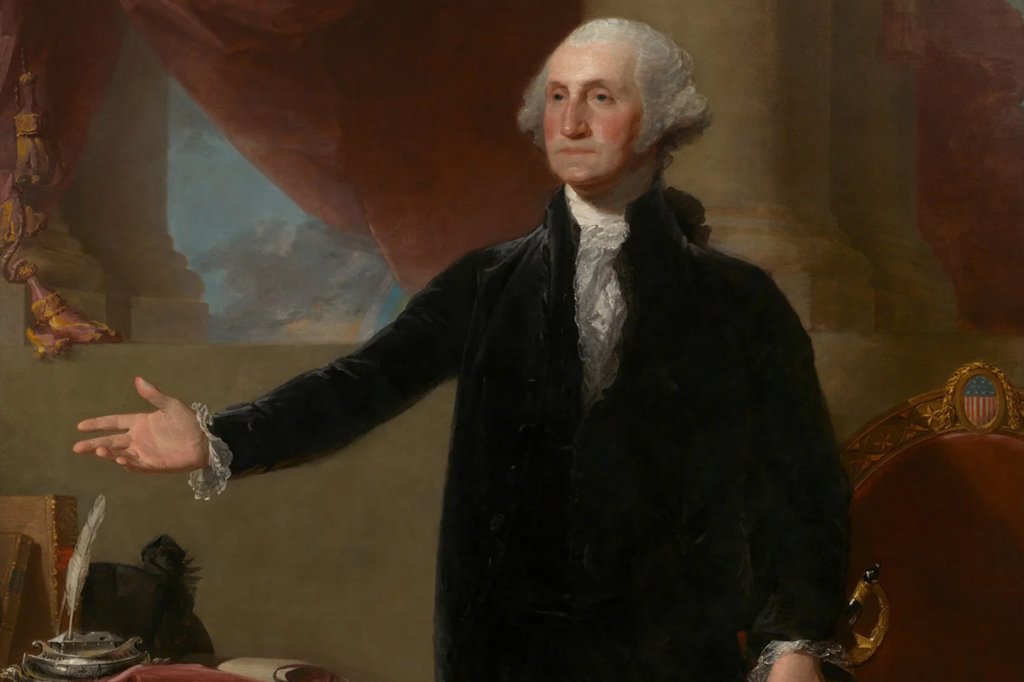
Other visitors who stayed in his former bedchamber report not necessarily seeing George Washington, but definitely feeling his presence, even hearing a sword clanking around in the room. Guards at the museum also reported that alarms would go off after hours. First in the stable, then in Washington’s bedchamber, a series of events that were frequently repeated. The guards never found anything but believed it was the president arriving home to unsaddle his horse and go to bed.
2. Soldiers at Jockey Hollow
How would you like to spend eternity hanging out at the worst place you’ve ever deployed? For Revolutionary War troops, one might think the 1777-1778 winter at Valley Forge had to be the worst. But in 1779, soldiers at Jockey Hollow saw 28 separate snowstorms and 15-foot snow drifts, with temperatures below freezing. Some were barefoot and almost naked, forced to sleep without shelter, and yet, dozens of ghosts apparently remain there.
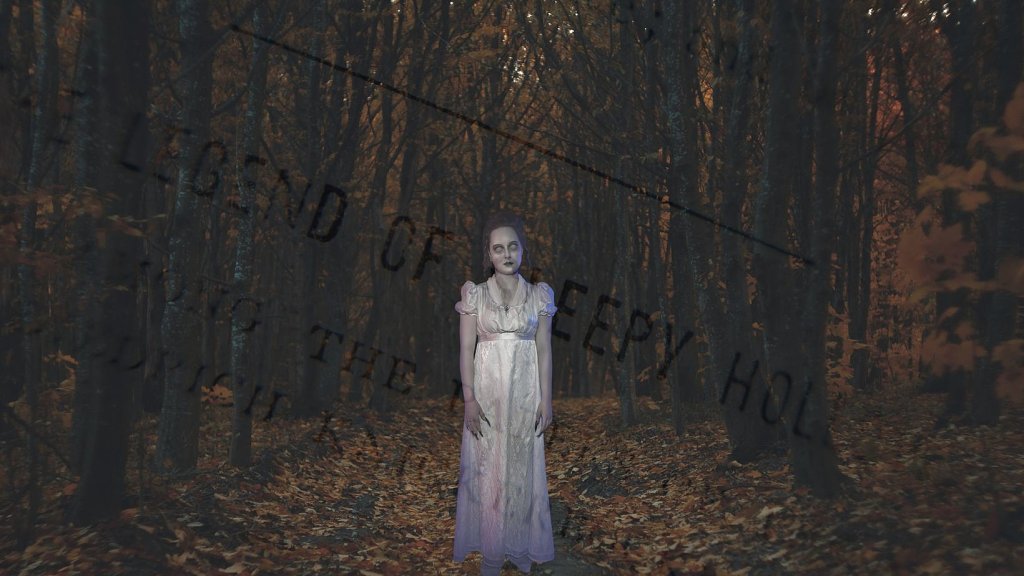
Today, Jockey Hollow remains largely untouched and looks the way it did when the colonial troops spent the winter of 1779 in its freezing hellscape. At the base of a hill, however, lies a cemetery full of unmarked graves, noted only with a large boulder. Visitors and Revolutionary War reenactors have reported seeing columns of colonial soldiers marching among the trees, hearing mysterious drum and fife bands, and shadows dashing around the huts of the site. There are even reports of an apparition of a woman wearing a white dress and carrying a lantern.
3. Mad Anthony Wayne’s Eternal Search for His Bones
It’s always good to give our American heroes a proper burial. General Anthony Wayne got two. He was a storied Revolutionary War leader who fought the British in Canada, and at the Battles of Brandywine, Germantown, Yorktown, and elsewhere. He’s best known for harassing the British during retreats. His nickname, “Mad” Anthony Wayne, was either because of his temper or for the fact that he would rather die fighting in a bayonet charge against superior numbers than be captured.

These general officers were almost certainly crazy
Wayne died in 1796, just before taking command of the Legion of the United States, the country’s first formal standing army. He was initially buried at Fort Presque Isle in Pennsylvania. Some 13 years later, his son wanted to reinter his father near the elder Wayne’s boyhood home on the opposite end of the state, 400 miles away. When they dug him up, however, the remains were pretty well intact. Rather than drag a corpse across the state, they boiled the flesh off his bones. Somehow, that seemed better.
The stock of Gen. Wayne was reburied at Fort Presque Isle, while his bones were carted off toward Delaware County. Along the way, however, some of the bones got lost, and no one was entirely certain that the skeleton was complete. His bones were interred anyway, putting the matter to rest… for the living. Legend has it that a spectral Wayne can be seen every New Year’s Day (his birthday) walking along old Route 322—the route his bones took—looking for the ones he lost.
4. The Screaming Lady of Fort Mifflin
Originally built in 1772, Fort Mifflin lies 15 miles south of Philadelphia. It was actually renamed Mifflin by the colonial rebels once the Revolutionary War broke out. Its strategic position covered the Delaware River and prevented British ships from sailing up to the city. Even after the redcoats captured Philadelphia in 1777, the patriot troops kept harassing them from the fort. To finally wrest control of Fort Mifflin, the British launched an intense artillery barrage, with some claiming they fired a thousand cannonballs every minute. More than half the defenders were killed or wounded over five days.
More than half a dozen ghosts have been seen in and around the fort ever since. A lamplighter walks the grounds, even though all the lights are electric. The hammering of a blacksmith can be heard at night. There’s even a man dressed in Revolutionary War garb who provides tours and answers questions, but disappears. But none are more haunting than the Screaming Woman.
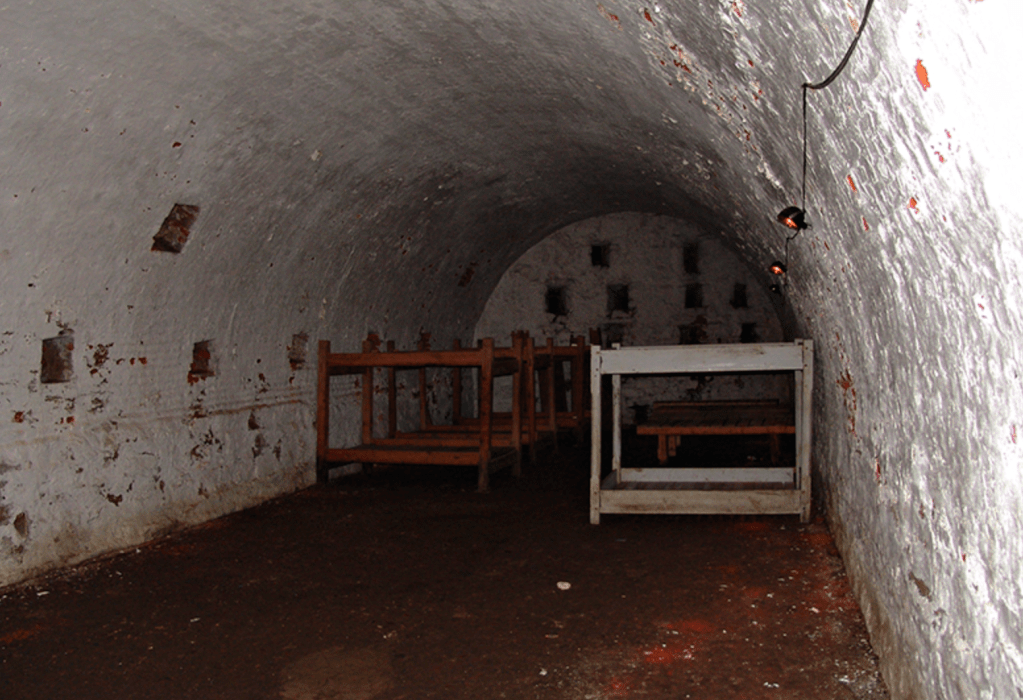
Legend has it that her name is Elizabeth Pratt, a local whose daughter was in a relationship with one of the officers stationed there. She threw her daughter out because of the courtship, but the girl soon died of dysentery. The mother’s grief was so intense, the story goes, that she killed herself. And to this day, her spirit will let out a blood-curdling scream that echoes throughout the fortification.