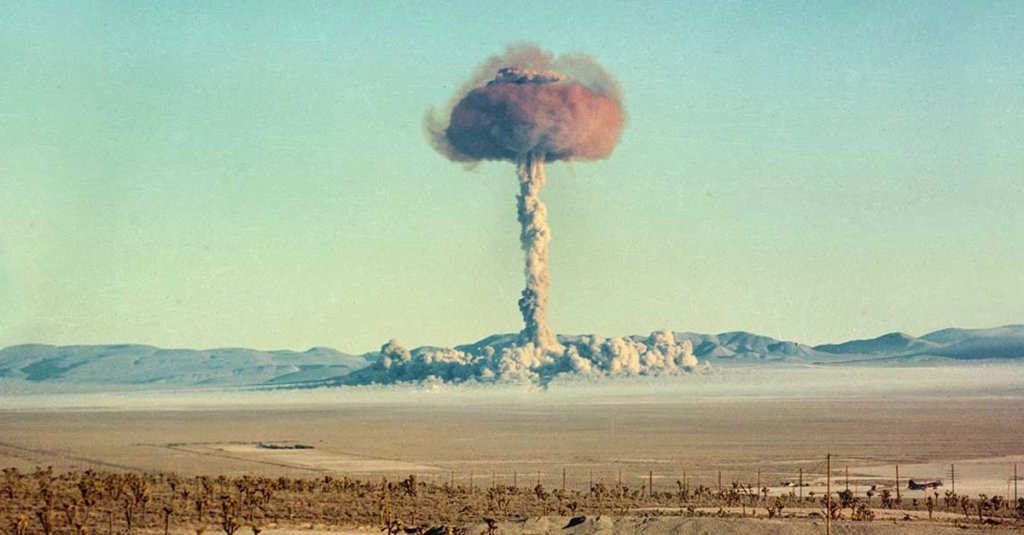
America’s interstate system was born out of dreams of connection, and—for a brief moment—the belief that nuclear bombs might literally blast the nation’s highways into existence. Long before today’s drivers zipped across Interstate 40 or cruised along I-95, scientists and policymakers debated whether the future of American transportation would be carved by bulldozers or shaped by atomic fire.
The answer would define not just how Americans traveled, but how the nation imagined its future in an age when the atom promised to solve every problem. What emerged was a story of two competing visions. One was practical and transformative. The other was spectacular and ultimately catastrophic.
The Federal Aid Highway Act of 1956
In the mid-20th century, the United States faced a challenge unlike any it had faced before. Automobiles had become essential to American life, Cold War anxieties shaped national planning, and the country’s fractured network of roads no longer matched its economic and strategic needs. On June 29, 1956, President Dwight D. Eisenhower signed the Federal-Aid Highway Act, launching what would become the largest public works project in United States history: the Interstate Highway System.
The act committed $25 billion over 13 years to build 41,000 miles of high-speed, limited-access highways linking every major metropolitan region. These roads were more than asphalt ribbons. They were arteries of commerce, tools of national defense, and symbols of modern American mobility. The system served a dual purpose. In peacetime, it fueled economic growth and suburban expansion. In wartime, it allowed rapid military mobilization across the continent.
A Road Built from Experience
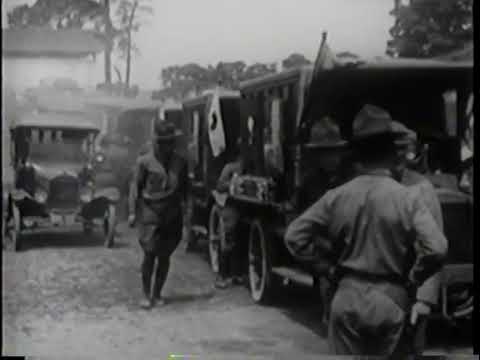
1919 Transcontinental Motor Convoy – Firestone Homestead Visit
Eisenhower’s push for a unified highway network came from two transformative experiences. In 1919, he participated in a cross-country Army convoy that attempted to travel from Washington, D C, to San Francisco. The trip took 62 grueling days. Vehicles became mired in mud, bridges collapsed under the weight of Army trucks, and entire towns lacked dependable roads. The convoy was a wake-up call. The United States was a modern nation with a pre-industrial transportation system.
Decades later, during World War II, Eisenhower witnessed Germany’s Autobahn network, whose smooth, strategically designed highways allowed efficient military logistics. The contrast was stark. The Autobahn demonstrated the power of modern infrastructure to move armies as well as people and goods. These experiences convinced Eisenhower that a modern highway system was essential for national defense, economic vitality, and the American way of life.
Re-transforming Economics, Defense, and Culture
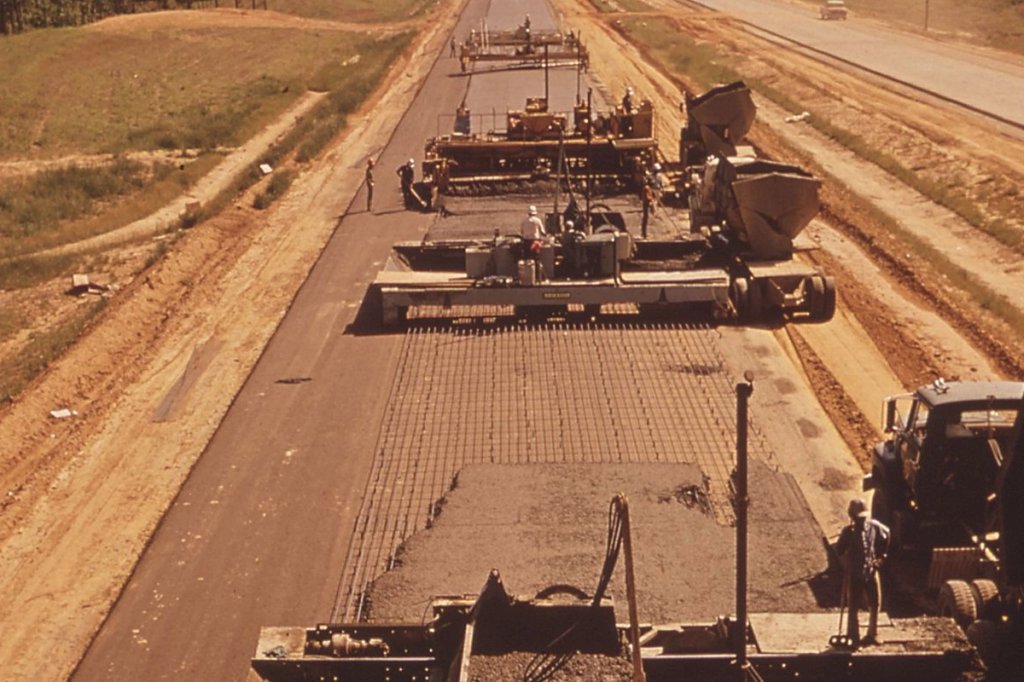
The Federal-Aid Highway Act reshaped the nation at every level. The Highway Trust Fund, funded by a $ .03-per-gallon federal gas tax, ensured steady funding for the massive project. The effects rippled outward for decades.
Economically, the interstate system created millions of jobs and accelerated suburban growth, expanding the reach of American families and commerce. Shopping centers, distribution hubs, and entire industries grew around new highway interchanges. The automotive, oil and gas, and construction material sectors expanded rapidly.
Strategically, the system served as a backbone of Cold War defense planning. Some stretches were intentionally built wide and straight enough to double as emergency airstrips. Military bases were positioned near major corridors to speed deployment in case of national emergency.
Culturally, the interstate fueled a new American mythology based on the open road. Roadside motels, neon lit diners, gas stations, and family road trips became fixtures of postwar identity. However, the system also came with human costs. Highways carved through urban neighborhoods, often minority communities, and displaced thousands of families in the name of progress.
By the early 1990s, more than 46,000 miles of interstate highway connected the nation and permanently altered how Americans lived, traveled, and understood distance.
The Atomic Alternative: Project Plowshare’s Radical Vision
While bulldozers and concrete ultimately built the interstates we know today, another possibility simmered beneath the surface. This was a bold and almost unbelievable plan to use nuclear explosions to clear the way for America’s highways.
In 1957, as part of Eisenhower’s Atoms for Peace initiative, the United States Atomic Energy Commission launched Project Plowshare, a program to explore peaceful uses of nuclear technology. To scientists and policymakers of the era, the atom was not only a weapon. It was a tool with unlimited potential. Nuclear excavation promised to reshape the earth’s surface with unprecedented speed, creating canals, harbors, reservoirs, and even roadways through mountains that would otherwise require years of labor.
This atomic optimism culminated in one of the most dramatic proposals in American engineering history.
The Dream of a Nuclear Highway
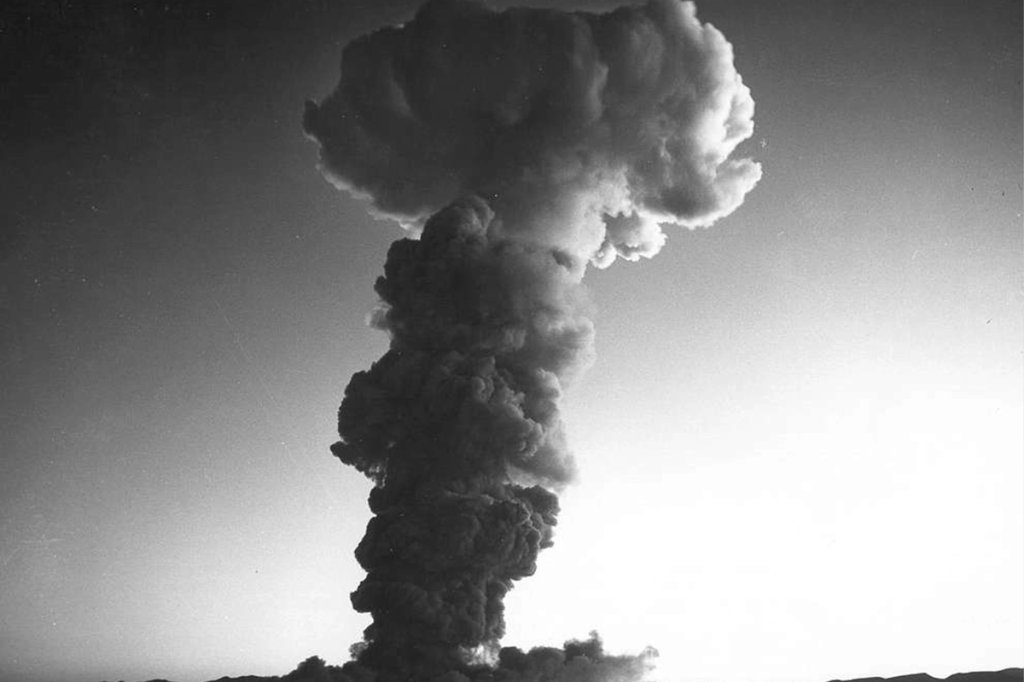
In the early 1960s, the Atomic Energy Commission, in partnership with the Santa Fe Railway and California’s Division of Highways, unveiled Project Carryall. This was a plan to blast a highway and railway pass through the Bristol Mountains of Southern California using nuclear bombs.
The project’s location was near the desert town of Amboy, where Interstate 40 would later run. Instead of dynamite and heavy equipment, Project Carryall proposed detonating 22 nuclear devices, ranging from 20 to 200 kilotons, to carve a massive 1.5-mile-long cut through the mountains. A smaller atomic blast would create a drainage basin to prevent flooding.
Supporters hailed the project as a pioneering demonstration of nuclear excavation technology. If successful, Project Carryall could reshape infrastructure planning worldwide. Why spend years drilling and blasting through rock when a nuclear device could move millions of tons of earth in seconds?
The Fallout
Despite its grand ambitions, Project Carryall collapsed under the weight of practical and moral concerns. As the 1960s progressed, the timeline for interstate construction became increasingly urgent. California officials realized that waiting years for nuclear test approvals would delay the construction of Interstate 40 well beyond federal deadlines. In the end, the bulldozer was faster than the atom.
Environmental concerns posed even greater obstacles. The 1962 Sedan test, an underground nuclear explosion in Nevada, created a massive crater but also spread radioactive fallout across the continental United States. The public had seen the consequences firsthand. In Alaska, the Project Chariot proposal was abandoned after fierce opposition from Native Alaskan communities who feared radioactive contamination of food sources and ancestral lands.
By the mid-1960s, the growing environmental movement and rising public skepticism of nuclear technology made the idea of detonating twenty-two atomic bombs for a highway politically impossible. Project Carryall was quietly shelved in 1966, and Interstate 40 was built using conventional methods. What had once been imagined as a nuclear showpiece of modern engineering became a mountain pass carved by human labor rather than atomic force.
The Long Fade of Project Plowshare
Although the nuclear highway died, Project Plowshare continued into the 1970s. Between 1961 and 1973, more than two dozen nuclear tests were conducted in pursuit of peaceful atomic engineering. Yet each test produced the same troubling conclusions. Radioactive contamination was unavoidable, costs were enormous, and public acceptance was nonexistent.
In 1970, the National Environmental Policy Act required environmental impact assessments for major federal projects, placing even more scrutiny on nuclear excavation. By 1977, Project Plowshare was officially terminated. Its legacy was one of brilliant vision, overshadowed by environmental devastation and a reminder that technological ambition without caution can leave scars for generations.
Two Paths, One American Future
The intertwined stories of the Federal Aid Highway Act and Project Plowshare reveal two very different visions of American progress. One path was grounded in practicality and became a triumph of engineering that reshaped the nation. The other sprang from atomic era optimism that imagined nuclear energy could remake landscapes overnight. Both visions reflected America’s determination to connect people and regions, even if one proved too dangerous to pursue.
Today, as millions of Americans travel the interstates that cross the continent, few know how close the nation came to having stretches of highway forged not by machines but by mushroom clouds. The interstate system stands as a testament to what can be achieved through thoughtful and sustained investment and also what should remain confined to the realm of nuclear dreams.