
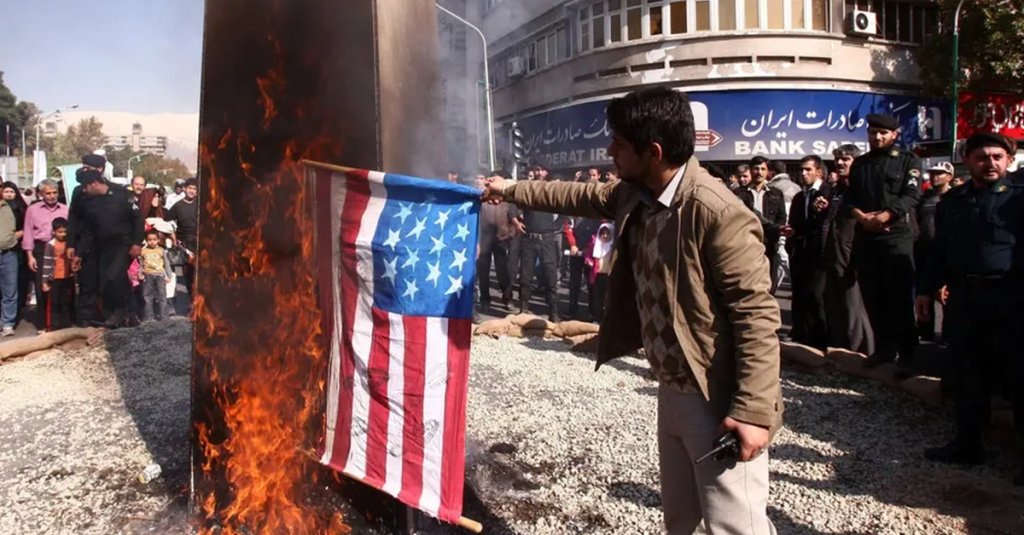
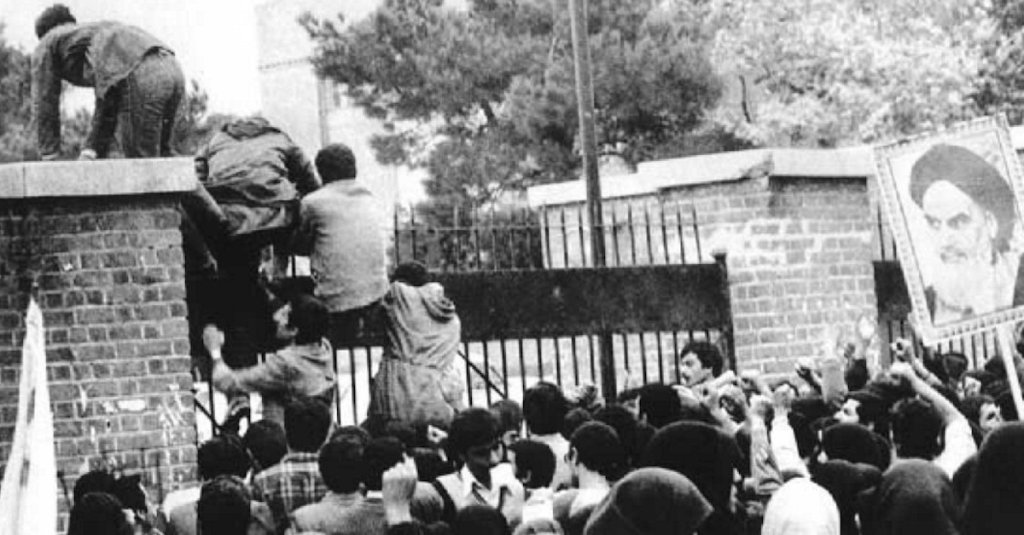
On Nov. 4, 1979, Iranians scaled the walls of the U.S. embassy in Tehran and ignited one of the most consequential diplomatic crises in modern history. What followed was 444 days of captivity for 52 American hostages, a failed military rescue mission in the Iranian desert, a daring CIA exfiltration disguised as a Hollywood production, and a political reckoning that reshaped the U.S. presidency and the architecture of American special operations forces.
Also Read: Operation Eagle Claw: The story behind the failed hostage rescue in Iran
More than four decades later, tensions between the United States and Iran once again dominate global headlines. Operation Epic Fury is now the most direct and dramatic confrontation between the two nations. For many in the United States, the animosity goes back to the Hostage Crisis of 1979. For Iranians, the beef is much older.
The Shah Abdicates
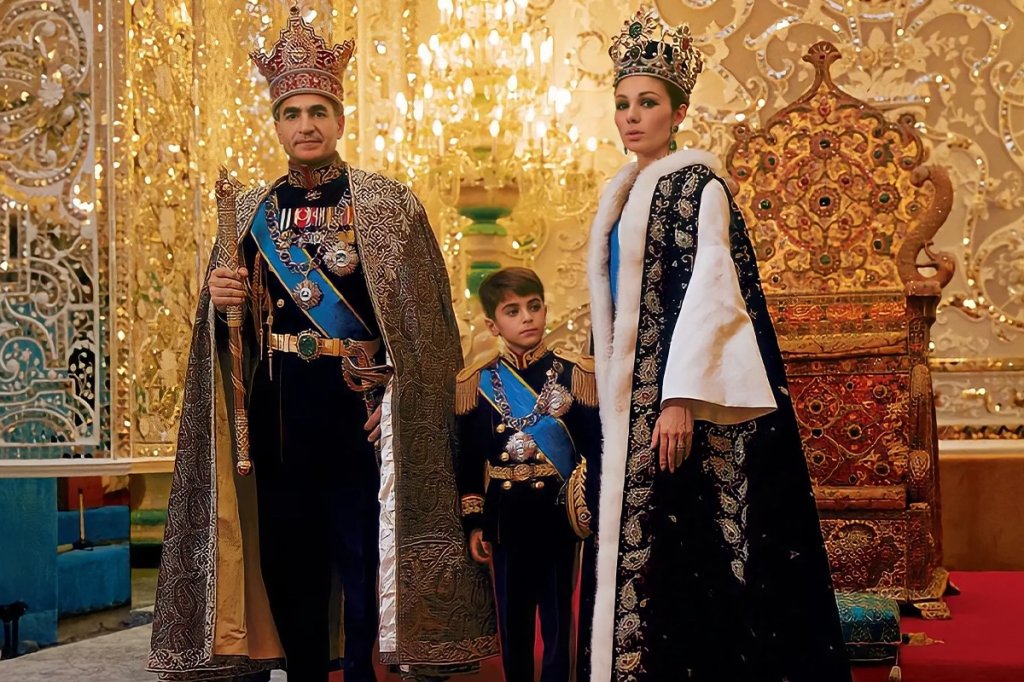
During the Cold War, the United States supported Shah Mohammad Reza Pahlavi as a strategic bulwark against Soviet influence in the Middle East. The U.S. military and intelligence agencies maintained radar stations and electronic intelligence gathering missions in the Shah’s Iran.
But domestically, Pahlavi’s rule grew increasingly unpopular. His regime was notoriously corrupt and authoritarian. For all of the Shah’s perceived “enlightened” Western leanings, his government still operated a secret police force, the SAVAK, which was every bit as brutal and oppressive as the one used by today’s Iranian regime.
In 1971, the Shah hosted a 2,500th anniversary party for the Persian Empire. It was an elaborate, decadent, and—above all—expensive affair. It included a military parade of troops dressed as Persian Immortals, a five-hour, seven-course meal, and thousands of imported birds, all at a newly-constructed tent city. It was estimated to have cost upwards of $200 million at the time ($1.6 billion in 2026 dollars), at a time when many of Iran’s 30 million citizens were living in poverty.
The economics of the Shah’s Iran in 1979 look much the way they do in the Islamic Republic today, which is why so many Iranians are taking to the streets. High inflation restricts the purchasing power of average Iranians. Business owners (popularly referred to as the “Bazaari”) are unhappy with the government’s economic policies and restrictions. Labor unrest and strikes were rampant.
These historical parallels also explain why the Ayatollah’s government cracks down so hard on Iranian protests. They’re using the same playbook that led to the Shah’s abdication, and the Ayatollah is resisting a similar fate. The key difference between 1979 and today, however, is the presence of a unifying opposition leader.
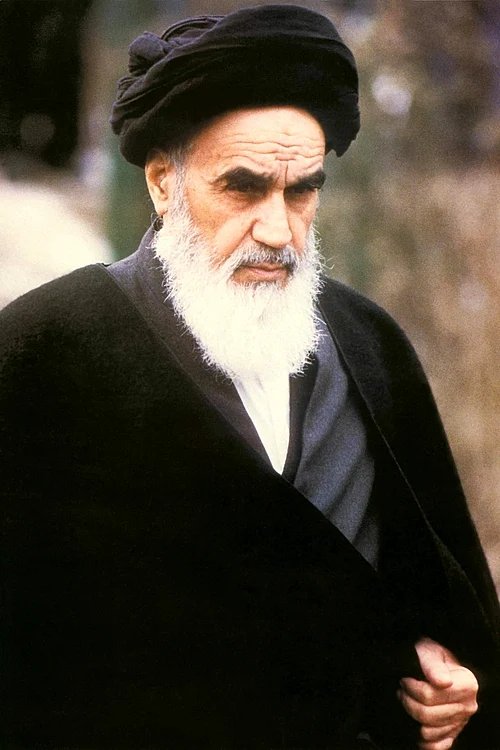
In 1979, opposition coalesced around the exiled cleric Ayatollah Ruhollah Khomeini, who denounced the Shah, his policies, and his lifestyle. From exile in France, Khomeini called for an Islamic government rooted in Shia religious authority and national sovereignty. When Pahlavi fled Iran, Khomeini returned from exile to eventually establish the Islamic Republic of Iran.
For many Iranians, the United States was not a distant observer but a central antagonist. The Shah had ruled since 1941 but was increasingly reduced to a figurehead until 1953. American intelligence operatives helped oust the country’s pro-democratic Prime Minister, Mohammad Mosaddegh, after he tried to nationalize British-owned oil companies. The Shah’s power increased and quickly became oppressive and authoritarian.
Memories of the 1953 coup thatrestored the Shah’s power remained vivid.
But what few Iranians—or really anyone—knew was that the Shah was battling lymphoma and needed treatment. His allies petitioned President Jimmy Carter to allow Pahlavi entry into the United States to get that treatment. Carter, in his White House diary, wrote that he knew what would happen to the embassy in Tehran if he allowed the Shah entry into the United States. After former Secretary of State Henry Kissinger and former Vice President Nelson Rockefeller increased the political pressure on Carter, the president finally relented.
Carter’s prediction came true, and it would seal the fate of his presidency.
Top Stories
The Embassy Seized
On Nov. 4, 1979. Iranian students aligned with Khomeini stormed the U.S. embassy compound in Tehran. They overwhelmed Marine guards and staff, seized classified documents, and took dozens of Americans hostage. While some detainees were later released, 52 Americans would remain captive for 444 days.
The crisis quickly became an international spectacle. Images of blindfolded diplomats and chanting crowds filled television screens across the United States. Walter Cronkite, the most trusted man in America, began concluding his CBS Evening News broadcasts with a count of the days American hostages were held captive in Tehran.
Iranians demanded the extradition of the Shah to stand trial, framing their actions as a stand against imperialism and foreign interference. For President Carter, the crisis posed an agonizing challenge. He faced the dual imperatives of securing the hostages’ safe release while juggling the political pressure to for a U.S. military response, one he knew would result in the hostages’ deaths.
He did what he could: imposed economic sanctions, froze Iranian assets, and began diplomatic negotiations. Still, months passed with no resolution. Meanwhile, the 52 hostages endured a prolonged ordeal marked by isolation, psychological pressure, and uncertainty. Back in the United States, public frustration mounted as diplomatic efforts stalled. Carter’s administration appeared weak, and the crisis became a central issue in the 1980 presidential election.
He ultimately authorized a complex and ultimately doomed rescue mission, Operation Eagle Claw.
Tragedy at Desert One
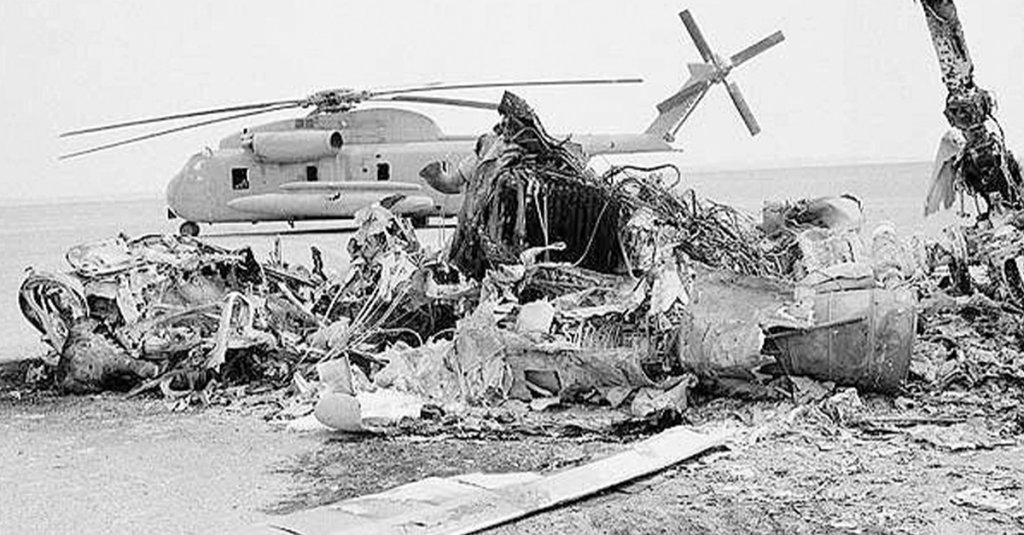
Operation Eagle Claw was an intricate plan involving multiple aircraft, special operations, and a remote desert staging site inside Iran. Led by Delta Force founder Col. Charlie Beckwith, it called for Delta Force soldiers, supported by Army Rangers and other special operators, to fly from the USS Nimitz in the Arabian Sea via eight RH-53D Sea Stallion helicopters and six C-130 Hercules aircraft to a remote desert staging site called Desert One.
There, they would refuel and consolidate before proceeding to a hideout near Tehran. From there, the rescuers planned to assault the U.S. Embassy and Iranian Foreign Ministry (where three hostages were being held separately) using trucks disguised as local vehicles, extract the hostages, and evacuate them via helicopters to a nearby airfield seized by Rangers, finally exfiltrating on C-141 Starlifters.
From the outset, the operation was plagued by mechanical problems and environmental challenges. Severe dust storms (called haboobs) impaired visibility and damaged equipment. Several helicopters malfunctioned, reducing the available fleet below the minimum required to proceed safely. The operators requested to abort the mission, and President Carter gave the okay.
During the withdrawal, however, tragedy struck. In the dust kicked up by a takeoff attempt, one of the helicopters collided with a C-130 transport aircraft, triggering an explosion that killed eight American servicemen. The next day, images of burned wreckage in the Iranian desert reverberated around the world.
Carter publicly accepted responsibility, but the failed mission exacerbated perceptions of his administration’s weakness. The disaster also exposed deficiencies in interservice coordination and special operations capabilities within the U.S. military. By 1987, lessons learned would lead to the creation of the United States Special Operations Command, fundamentally reshaping American special operations.
The “Canadian Caper”
But not all the Americans working at the embassy on Nov. 4 were captured by the Iranians. Six American diplomats managed to walk away as the building was being overrun. They found refuge in the homes of Canadian officials in Tehran, including Ambassador Ken Taylor. Their presence remained a closely guarded secret.
Before the rescue attempt at Desert One was even planned, CIA officer Tony Mendez devised an escape plan for these hideaways. He proposed creating a fake Hollywood film production company that would send the six diplomats out of Iran as members of a Canadian film crew scouting locations for a science fiction movie called “Argo.”
The ruse had convincing depth. The CIA developed a script, placed advertisements in Hollywood trade publications, and established a production office to lend credibility. Canada provided the Americans with Canadian passports and backstories as film professionals. In January 1980, Mendez escorted them through Tehran’s airport. Despite tense scrutiny from Iranian authorities, the group boarded a commercial flight and departed Iran safely.
The mission, later known as the “Canadian Caper,” remained classified for years. When details emerged, it was celebrated as a triumph of creativity and international cooperation. The story reached popular audiences through the 2012 film “Argo,” but its true significance lies in the reminder that intelligence work often depends on imagination, not firepower.
![Argo - Official Trailer 1 [HD] thumbnail](https://i.ytimg.com/vi/T29kIOXpj6o/hqdefault.jpg)
Argo – Official Trailer 1 [HD]
Decades of Tension
In the decades following the hostage crisis, the U.S.–Iran relationship evolved into a complex web of indirect confrontations. Iran supported proxy groups across the Middle East, while the United States maintained military alliances with regional rivals. In 1983, Islamic Jihad detonated bombs at the U.S. Embassy and the Marine Corps barracks in Beirut, killing hundreds of Americans, including CIA officers and Marines.
During the decade-long Iran-Iraq War, American and Iranian forces came in direct conflict on a few occasions, most notably Operation Praying Mantis, when the U.S. destroyed two of Iran’s oil platforms and damaged or sunk six of its ships.
Read Next: The US Navy unloaded on Iran in the largest surface battle since WWII
During the Iraq War, Iran’s Revolutionary Guard Corps armed and advised Shia-backed militias fighting the American occupation of Iraq, which forced the United States to lay siege to the Sadr City area of Baghdad in an attempt to isolate and destroy the Iran-backed Mahdi Army. Iran’s most notable development during the 2003-2011 war, however, was the use of Explosively Formed Penetrators (EFP), armor-piercing explosives for improvised explosive devices (IED), that would kill hundreds of U.S. troops in Iraq.
It wasn’t long before attention increasingly focused on Iran’s nuclear program. Iran announced its successful uranium enrichment during the presidency of Mahmoud Ahmadinejad, who was a vocal critic of Israel’s existence in the Middle East, and according to some translations, its entire existence.
Western governments and Israel feared Iran’s uranium enrichment activities could lead to nuclear weapons. Diplomatic efforts, including multilateral agreements, sought to curb the program in exchange for sanctions relief. Yet these agreements proved fragile, and cycles of escalation resumed. An agreement, the Joint Comprehensive Plan of Action (also known as the “Iran nuclear deal”), was signed in 2015, but the United States withdrew from the accord in 2018 under President Donald Trump.
Iran, which was in compliance with the agreement, began to violate the JCPOA’s terms after Trump rescinded the deal, and it was no longer able to receive the economic benefits it was promised. Its centrifuges doubled, as did the degree to which it was enriching uranium. The Biden Administration tried to revive the agreement, but progress was slow and Iran eventually withdrew entirely in 2025.
Operation Midnight Hammer
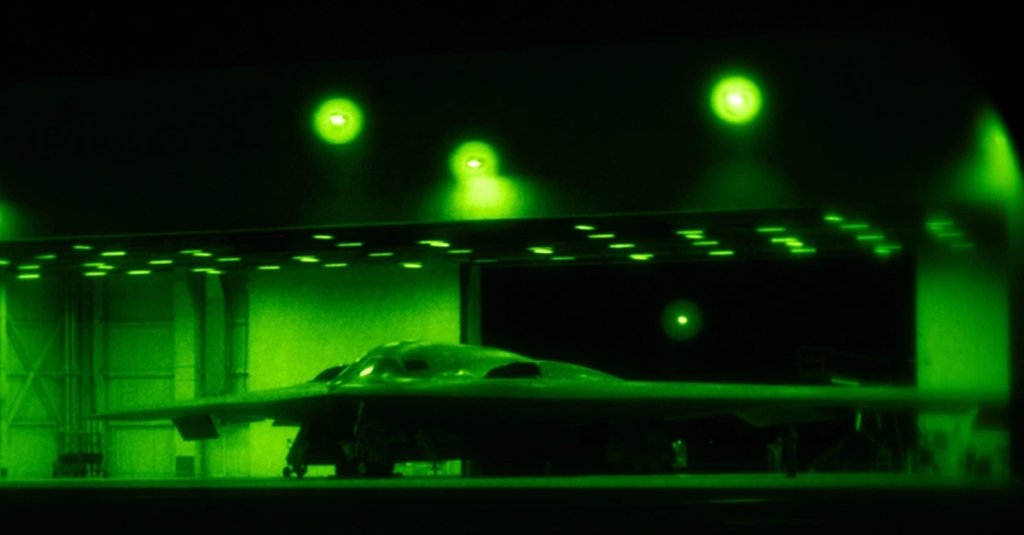
On June 22, 2025, the rhetoric and saber-rattling came to a head when the United States and Israel launched what was arguably the most significant strike against a nuclear program since Israel’s Operation Opera against Iraq in 1981.
Airstrikes designed to neutralize Iran’s nuclear ambitions hit three main development centers: Fordow, a deeply buried uranium enrichment facility carved into a mountain near Qom, and long considered nearly immune to conventional munitions; Natanz, Iran’s primary enrichment complex; and Isfahan, a key nuclear research and conversion site.
The headliner of that operation was the deployment of the GBU-57 Massive Ordnance Penetrator (MOP), a 30,000-pound bunker-busting bomb, the largest non-nuclear bomb in the U.S. arsenal, designed specifically for targets like Fordow. It was delivered by B-2 Spirit stealth bombers flying from Diego Garcia in the Indian Ocean—an extraordinarily long-range mission requiring multiple aerial refuelings.
Israel might have acted on its own to disrupt the Iranian nuclear program, but only the B-2 bomber could deploy the MOP, and so American intervention was necessary to strike Fordow. Midnight Hammer didn’t end the nuclear program, but it was a major setback for Iran. It was also a threshold moment in the U.S.-Iran conflict as the first direct U.S. military strike on Iranian soil targeting Iranian state infrastructure.
It also set the stage for Operation Epic Fury in February 2026. As the latest operation unfolds, policymakers and citizens alike confront a familiar tension between decisive action and unintended consequences. The events of 1953, 1979, and 2015 remind us that crises rarely end cleanly. They reshape policy, redefine leadership, and alter the course of events in ways that are difficult to predict.
Don’t Miss the Best of We Are The Mighty
• The US Navy unloaded on Iran in the most explosive surface battle since WWII
• The Massive Ordnance Penetrator is a 30,000-pound bunker buster bomb
• Lessons Learned: How Iran was able to bruise the US Navy’s 5th Fleet
Sponsored Content
‘The Fix’ is an action movie for the post-War on Terror world
Loading comments…
Comments couldn’t be loaded. Please refresh the page.