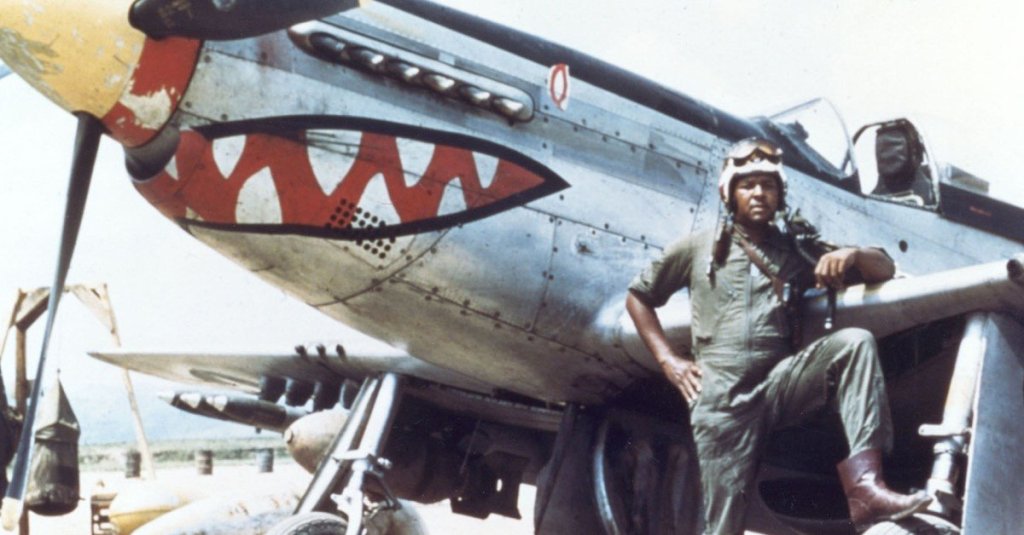
There are many legendary alumni of the U.S. Air Force: Billy Mitchell, Jimmy Stewart, and —for better or for worse—George Carlin. We’ve all heard about those legendary astronauts and fighter pilots who did things that live in the annals of world history, or went on to have epic post-military careers.
Many airmen do things during their service that are equally worthy of resounding across generations, but for some reason get lost in the sauce. Here are five of those lesser-known and seldom-told tales about noteworthy Air Force legends who served around the Wild Blue Yonder.
1. The Tuskegee Airman Who Almost Shot Moammar Gadhafi
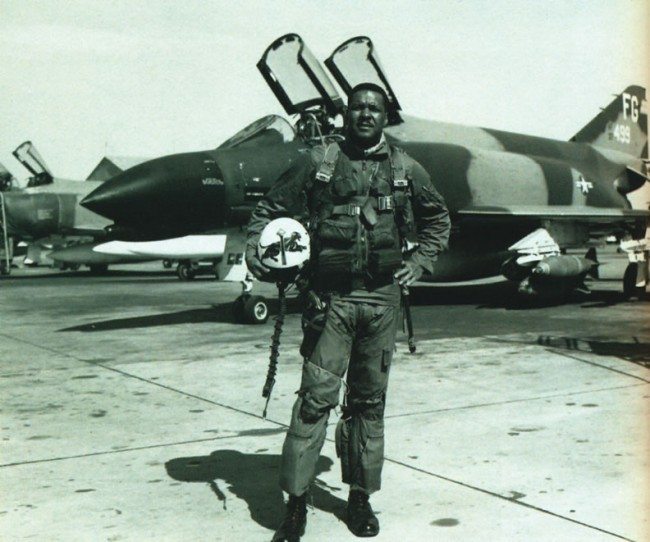
Established in the wake of World War II, Wheelus Air Force Base was situated just outside the city of Tripoli, Libya. In 1969, a coup brought then 27-year-old Moammar Gadhafi to power. As part of his rise to prominence, the young would-be dictator demanded the closing of the American bases in what he now considered his country.
Before the base could be formally closed and handed to the Libyans, Gadhafi ordered a column of half-tracks to drive at full speed right through the middle of the base’s housing area. Gadhafi himself waited outside Wheelus’ main gate for the armored column to return.
Unfortunately for Gadhafi, the commander of Wheelus Air Force Base was Colonel Daniel “Chappie” James, Jr., one of the original Tuskegee Airmen. “Chappie” was a veteran of World War II and had also flown missions in Korea and Vietnam. And he was not happy with the Libyans.
When he found out what was happening, James strapped his .45 onto his belt and went right to the base’s main gate. He immediately shut down the barrier and walked to face off with Gadhafi. The Tuskegee Airman was not impressed with the dictator.
“He had a fancy gun and holster, and he kept his hand on it,” James recalled. He ordered Gadhafi to move his hand away from the weapon. The dictator complied with Colonel James. “If he had pulled that gun, he never would have cleared the holster.”
Gadhafi never sent another column.
2. The Original Airman Snuffy
By the time airmen leave Joint Base San Antonio, they will have come to know the tribulations of Airman Snuffy; he’s the “every-airman,” the average airman, sometimes the slacker airman. Airman Snuffy is the example Air Force instructors use to describe a situation.
“Let’s say you’re charge of quarters duty one night,” an Air Force Military Training Instructor might say. “Airman Snuffy reports a fire…” or “Airman Snuffy applies a tourniquet to the injured area. What else should he do?”
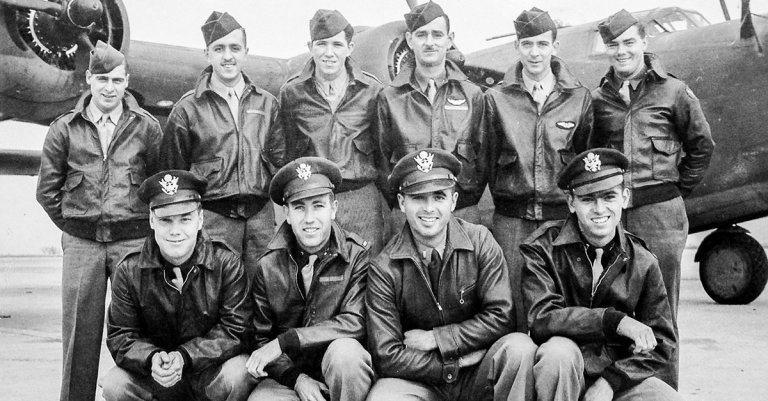
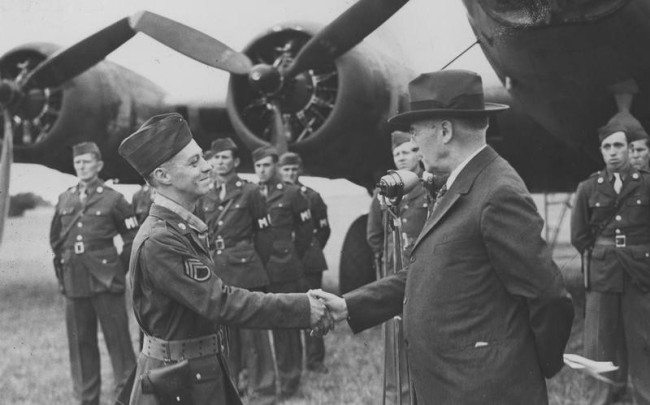
Airman Snuffy is not just an example… he’s a real person who did something legendary. During World WarII, he had a full name. Sergeant Maynard “Snuffy” Smith was the 306th Bomber Group’s slacker in residence.
Before joining the Army Air Corps, he was known as “spoiled,” living off an inheritance, and was forced to join the Army by a judge as a sentence for failure to pay child support. No one wanted to fly with him. He didn’t like taking orders, especially from younger officers. He chose to be an aerial gunner because it was the fastest way to make rank and thus, pay.
His first mission took him over St. Nazaire, France—a target known as “Flak City.” On the way back from the mission, the pilot mistook what he thought was southern England for the heavily fortified city of Brest, France. German fighters suddenly ripped his plane to shreds: the wing tank had been shot off and was pouring fuel into the plane.
The fuel caught fire, and then everything else caught fire. The plane became a flying inferno. Soon, the fire on the plane started to burn so hot that it set off ammunition and melted a gun mount, camera, and radio. Airman Snuffy started to throw whatever wasn’t bolted down out of the plane, lest it melt or explode.
When the German fighters returned, Snuffy manned the B-17’s machine guns to repel them. But he also had to start putting out the fire. When the extinguisher ran out, he dumped the plane’s water and urine buckets on the fire. He even peed on the fire in the middle of repelling another German fighter attack.
When all else failed, he wrapped himself in available clothing and started to put out the fire with his body.
Airman Snuffy administered aid to the six wounded men on the plane. So, to recap: he spent 90 minutes alternatively shooting down German fighters, putting out fires, throwing hazardous material out of the plane, and giving first aid to his wingmen.
The plane made it back to England and landed with 3,500 bullet and shrapnel holes in the fuselage and nothing but the four main beams holding it together. Ten minutes after landing, the whole thing collapsed. For his actions on board the plane, Airman Snuffy was awarded the Medal of Honor, becoming the first enlisted airman to receive the award.
When Secretary of War Henry Stimson arrived to give Airman Snuffy the Medal of Honor, he was noticeably absent from his own ceremony, having been put on KP duty for disciplinary reasons.
3. The Combat Cameraman Who Lived the Entire History of the U.S. Air Force
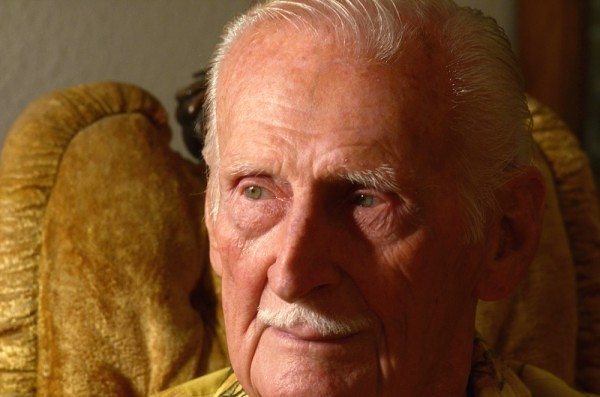
Douglas W. Morrell was a U.S. Army Air Corps (and later U.S. Air Force) combat cameraman with a long service record. During World War II, he was assigned to bomber units in Europe and North Africa. He flew 33 combat missions over Germany, Austria, Italy, Hungary, France, Yugoslavia, and Albania.
In March 1944, his B-24 was shot down over the Iron Gates of Romania. Evading capture in Romania (an Axis country from the beginning of the war), he walked for 25 days across occupied Yugoslavia and Albania, where he bribed fishermen with his .45-caliber pistol and $100 in gold certificates for a lift to Italy across the Adriatic Sea.
Two months later, he was documenting bombing raids against the oil fields of Ploesti when his bomber was knocked out of formation. He bailed out right before it exploded, killing half the remaining crew. He was immediately captured by the Germans upon landing and was held as a POW in Bucharest. Morrell made an escape attempt from his POW camp via a trap door in the mess hall.
He walked halfway through Bucharest before a German army truck stopped him. Morrell told the Germans he was an Italian pilot, trying to make it back to Bulgaria. He caught a ride with the Germans until he reached a post near the Danube, where he was outed by an Italian kid who spoke to Morrell in Italian.
“I couldn’t understand him, ” Morrell recalls. “He told the Germans I wasn’t Italian and they took me back.”
Morrell was held in the POW camp until Romania capitulated in August of 1944. He stayed in Bucharest for a few days until the Russians, who treated the American POWs as allies, liberated it.
“They found out I was an ‘Americanski’… they got me in there, said ‘we drink!’ and poured glasses of vodka. They’d toast: ‘ Stalin. Roosevelt. Churchill,'” he remembered. “I’ve never been that blasted in all my life.”
He left the Air Force in 1947. This was not the end of his combat career, however. Morrell was soon right back in, re-enlisting in 1952. He saw service in the Sahara documenting missile tests, in the Pacific islands documenting nuclear tests, in Iceland documenting Russian movements, and even in the Panama Canal Zone.
By the time the Vietnam War began to escalate for the United States, Douglas Morrell had become Chief Master Sergeant Morrell. At age 50, he was filming operations over the Ho Chi Minh Trail in Laos when his O-2 Skymaster’s wing was shot halfway off by anti-aircraft fire. He and the pilot bailed out at 5,000 feet, taking fire the entire way down.
He landed in the jungle, just yards from a truck depot on the Ho Chi Minh Trail itself, guarded by six anti-aircraft gun positions. For nine hours, he called in rescue teams and directed fire on the enemy positions before finally allowing himself to be rescued.
4. The Racecar Driver Who Taught Himself to Fly, Then Broke All the Records
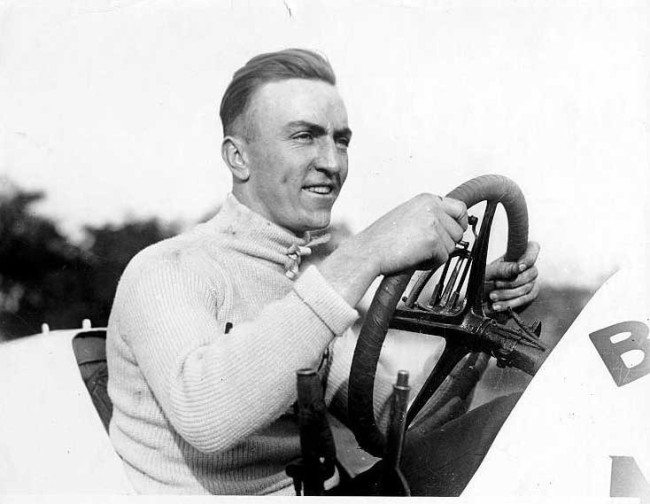
Teaching yourself to fly seems like a terrible idea, especially during World War I, when most pilots were college-educated, and you’re an enlisted aircraft mechanic. Not so for Eddie Rickenbacker, the racecar driver-turned airman who learned to be an engineer through a correspondence course.
Rickenbacker enlisted immediately after the U.S. entered the Great War. He arrived in France in June of 1917. By May of the next year, he had taught himself to fly, earned an officer’s promotion, and had shot down his fifth enemy craft, earning the title of “Ace.”
By September 1918, Rickenbacker was in command of his entire squadron, the 94th Aero Squadron. By the time of the Armistice on Nov. 11, 1918, he had racked up 26 victories, a record he held until World War II, and had flown 300 combat hours, more than any other American pilot in the war.
Captain Rickenbacker was known for flying right at formations of enemy aircraft, no matter how outnumbered he was, and winning every time. Through the course of the war, Rickenbacker was awarded the Distinguished Service Cross with six oak leaf clusters, the Croix de Guerre with two palms, the Legion d’Honneur, and was later awarded the Medal of Honor.
After World War I, Rickenbacker went on to found his own car company, his own airline, and wrote a popular comic strip, which became a film and radio program.
5. Charlie Brown and Franz Stigler, Enemies Who Became Friends
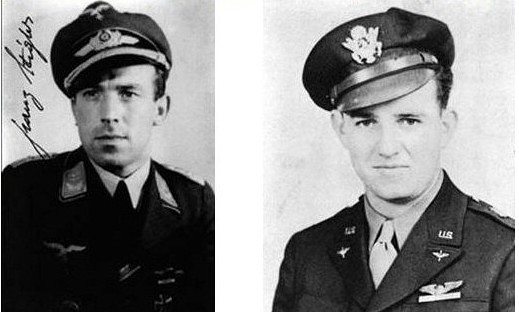
In 1943, 2nd Lt. Charlie Brown was piloting his B-17 Flying Fortress, dubbed “Ye Olde Pub,” back to England after bombing industrial centers in Bremen. During its run, the nose was torn apart by flak fire, causing the plane to drop out of formation and come under attack from fifteen enemy fighter planes.
The plane lost sixty percent of its electric capacity, its oxygen, and half its rudder. Of the ten crewmen on board, the tail gunner had been killed, and the rest were wounded. Brown himself was hit in his right shoulder. He then passed out from oxygen deprivation and woke up to find the bomber in a 4,000-foot dive. He pulled the plane up and headed home, having been left for dead by the pursuit fighters.
On the way back to England, German ground personnel spotted the bomber. The Luftwaffe dispatched ace fighter pilot Oberleutnant Franz Stigler to finish it off. He had already shot down two B-17s that day and needed one more kill to earn the Knight’s Cross, the highest Iron Cross award for bravery and leadership.
Stigler easily caught up to the crippled Allied plane in his Messerschmitt 109, but wondered why the Flying Fortress hadn’t started shooting at him. From his cockpit, he could see how badly damaged the plane was, how the crew struggled to care for the wounded, and even Brown’s face as he struggled to bring Ye Olde Pub and its crew back home alive with one good engine. He’d never seen a plane so badly damaged and still flying.
“You are fighter pilots first, last, always,” A commander had told Stigler’s unit when he was stationed in North Africa. “If I ever hear of any of you shooting at someone in a parachute, I’ll shoot you myself.”
Stigler looked to the man struggling at the bomber controls. Brown looked back. To Stigler, these men were like men in parachutes. Even though getting caught letting the bomber go would mean execution, he just couldn’t shoot them down.
The German moved to fly in a formation on Brown’s left, a formation German ground spotters would recognize as friendly. He escorted Brown’s bomber halfway over the North Sea and departed with a salute.
After the war, Stigler moved to Canada. Brown returned to the United States. Over 40 years later, Stigler responded to an ad Brown had placed as he searched through newsletters of former Luftwaffe pilots for the German ace who had spared his crew. One day, Stigler responded:
“Dear Charles, All these years I wondered what happened to the B-17; did she make it or not?”
The two became close friends after meeting (on the ground) in 1990. The story of Stigler and Brown is told in detail in the 2012 book, “A Higher Call: An Incredible True Story of Combat and Chivalry in the War-Torn Skies of World War II.”