Military families already juggle deployments, PCS moves, and inconsistent schedules—throw in multiple kids in different sports, and the chaos can feel Olympic-level. Here’s how to survive the season without burning out or breaking the budget.
When you’ve got more than one kid in cleats, jerseys, or leotards—and you’re also managing the rollercoaster that is military life—“busy” doesn’t even begin to cover it. Between overlapping practices, double-booked game days, and the eternal quest for matching water bottles, it’s easy to feel like your family schedule was designed by a madman with a whistle.
But fear not, fellow sports parent. With a little strategy, a lot of communication, and maybe some slow cooker magic, you can manage the madness like a pro. These 10 sanity-saving tips will help you stay organized, reduce stress, and actually enjoy watching your kids do what they love.
1. Stagger Practices (If You Can Swing It)
Let’s start with a dream scenario: different kids, different days, minimal overlap. It doesn’t always work out this cleanly, but when possible, request practice days that won’t leave you teleporting between fields at warp speed. Coaches—especially in youth leagues—are often willing to accommodate if they know you’re juggling multiple schedules. Ask early, ask kindly.
2. Divide and Conquer: Alternate Parental Presence
When one kid has a soccer game across town and the other’s doing tumbling in a totally different zip code, divide and conquer is the name of the game. Alternate which parent attends which event, and if you’re solo parenting, enlist backup: grandparents, neighbors, or the battle buddies you trust most. Both kids feel seen. You feel slightly less like you’re losing your mind. Win-win.
3. Team Up With Other Parents (Carpool Like a Boss)
You don’t need to wear a cape to be a hero—you just need a reliable car and a good carpool rotation. Partner with other sports parents to shuttle kids to practices and games. Not only does this lighten your load, but it also builds a community that shows your kids that teamwork happens off the field, too.
4. Plan Meals Like You’re Deploying
Between evening practices and weekend tournaments, dinner can become an afterthought (and fast food, a fifth food group). Save your budget and your health by prepping meals ahead. Think casseroles, slow cooker meals, and grab-and-go options. Bonus points if you keep protein bars and cut fruit in the car for those “I forgot to eat” moments.
5. Create a Master Family Calendar (Color-Coding Optional, Sanity Essential)
Whether you’re old-school with a whiteboard in the kitchen, team Google Calendar, or you’ve managed to budget that bonus for a Skylight calendar, keep one central spot where every game, practice, snack duty, and uniform-washing day lives. Make it visible. Share it with your partner. Invite older kids to check it weekly. It’s not just about keeping track, it’s about sharing responsibility.
6. Use Downtime to Actually… Down Time
When the season ends (or at least pauses), resist the urge to immediately sign everyone up for something new. Use the off-seasons to rest, reconnect, and breathe. Take a family weekend trip. Have movie nights. Sleep in. Remember: rest is productive, too.
7. Pack Smart: The “Go Bag” Rule
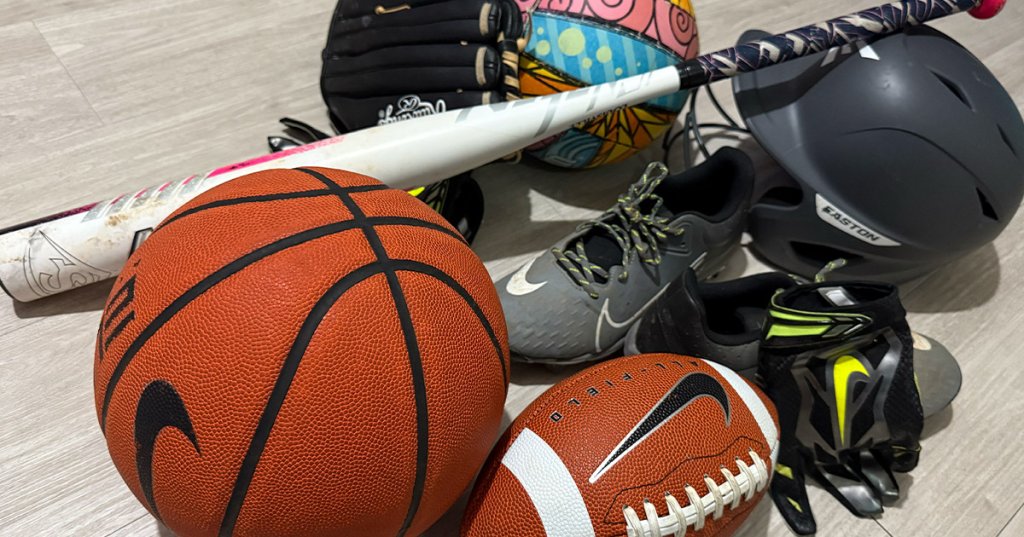
Keep a sports “go bag” in the car stocked with essentials: snacks, water, first aid, an extra pair of cleats or socks, and a backup jersey (because someone will forget theirs). I am not going to tell you about the time we made it all the way to the youth center and my son had no uniform bottom on (only his compression tights) or the time he had only one shoe. For the sidelines? Throw in a camp chair, blanket, and some activities for siblings stuck spectating–– and don’t forget your stadium cushion for long nights of high school sports.
8. Do Homework on the Sidelines (Literally)
Practice nights are prime time to squeeze in schoolwork. As a parent with an athlete who also had a heavy AP course load, my kid spent many nights pulling all-nighters to get her work done after games. Keep a homework caddy in the car with pencils, notebooks, and a charged tablet. It turns bleacher time into productivity time—and helps avoid late-night cram sessions at the kitchen table.
9. Talk It Out: Set Boundaries and Expectations
Even the best planners hit a wall. Be honest with your kids about the family’s time, energy, and financial limits. If something has to give, let them help decide what stays. It’s a great lesson in teamwork, sacrifice, and making smart choices—without burnout.
10. Celebrate Like You’re All MVPs
When your kids hit milestones—personal bests, goals scored, even just showing up and giving their all—celebrate it as a family. Recognition builds resilience. Plus, it reminds everyone that this hectic life? It’s not just about winning, it’s about showing up for each other.
Final Whistle
Managing multiple sports schedules in a military household might feel like you’re coaching a varsity team while also leading a recon mission. But with strategy, support, and the occasional coffee-fueled sideline cheer, you’ve got this. Remember: you’re not just raising athletes, you’re raising adaptable, disciplined team players. And that’s worth every early morning and sideline snack run.