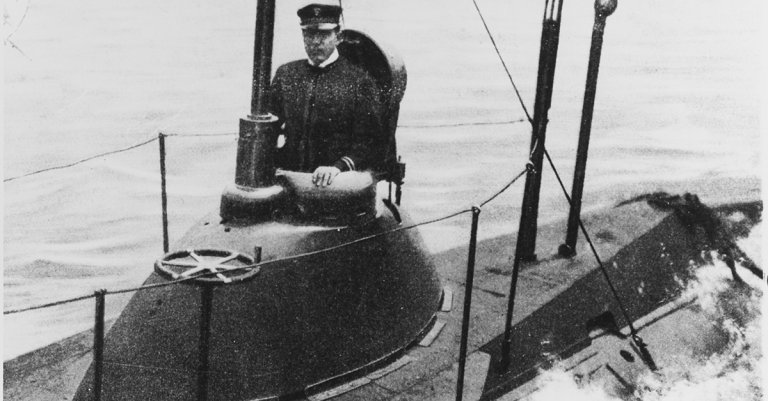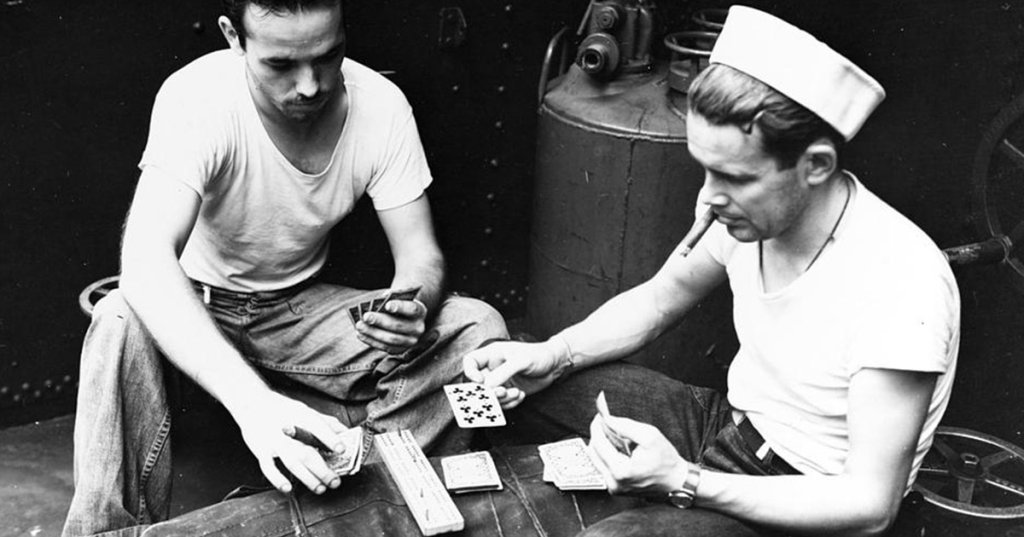
Military life is full of traditions and lore that have been passed down through generations of service members. Among the saltiest of Navy traditions is cribbage: the unofficial game of the U.S. Submarine Force. Cribbage has both a rich history and profound meaning among submariners. Learning to play cribbage with the submariner in your life can not only help you understand a new game but also gives you a glimpse into what their world is like under the surface.
Life aboard a submarine is unlike any other environment in the military. Submariners spend months underwater in tight spaces with limited options for recreation, therefore, entertainment must be compact and simple. With cribbage, a deck of cards, a wooden board, and tiny pegs are all it takes to create hours of competition and camaraderie.
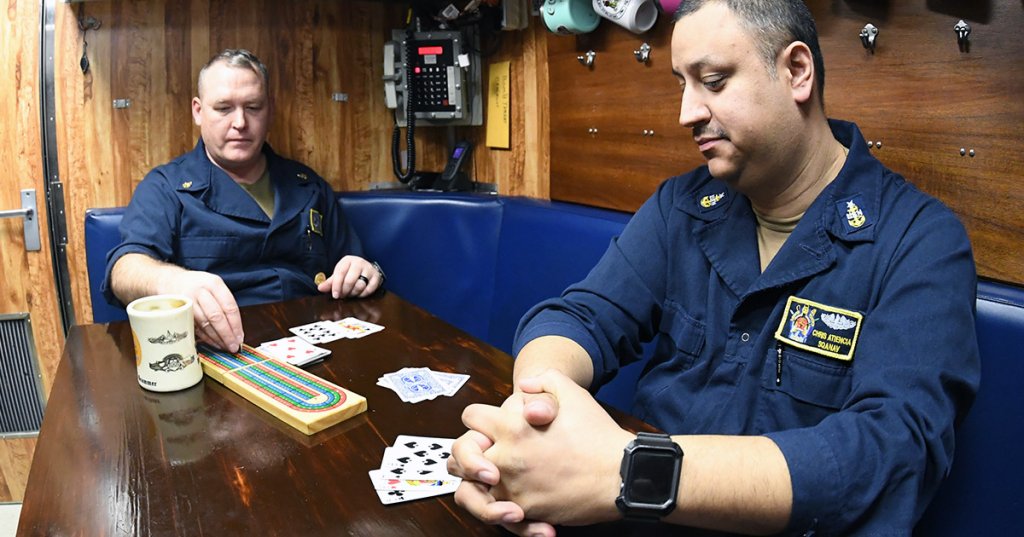
For everyone who is not familiar with the game, players score points by forming combinations of cards—pairs, runs, or totals of fifteen—and move pegs along a board to track their points. Games can be quick but each is very strategic, and every hand exciting and rewarding.
Officers square off against enlisted sailors, tournaments are started during deployments, and even after leaving the service, veterans teach the rules to family and friends. You’ve probably heard about this board game, but what you might not know is how this time-honored contest is more than strategy and counting.
Aside from being an exciting game, cribbage is also a living thread of submarine history, one that ties today’s submariners to the generations who came before them. Although cribbage was invented by British soldier and poet Sir John Suckling in the 17th century, it wasn’t until World War II that it became a popular pastime among sailors in the Navy, particularly the Submarine Force, where the story of cribbage in the “Silent Service” begins.
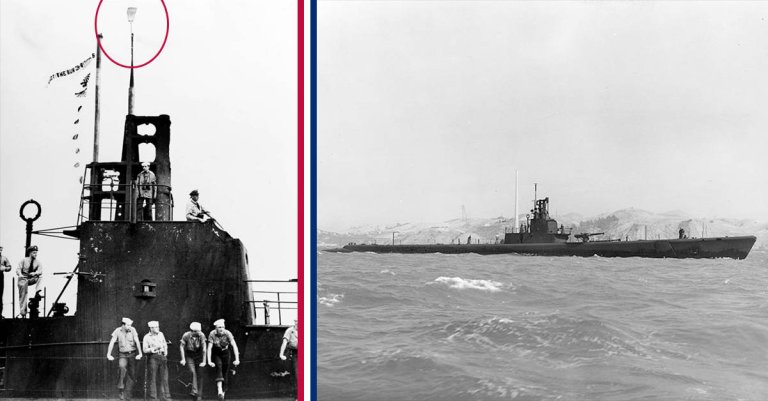
In 1943, the USS Wahoo was on its fourth war patrol, tackling an uncharted mission to the extreme north of the Yellow Sea; a place no submarine had gone before. While on this patrol, tension filled the Wahoo’s air like diesel exhaust and the sub’s skipper decided to make time on patrol less intense.
Commander Dudley “Mush” Morton and his executive officer Richard “Dick” O’Kane, decided to start a game of cribbage, the classic card game that combines strategy and dealer’s luck. Players score points by creating combinations of cards and moving pegs along a wooden board. That day aboard the USS Wahoo, Morton handed O’Kane a “perfect 29” on the very first deal. It was a legendary hand of four fives and a jack, the rarest hand in cribbage, and the odds of dealing one are an amazing 216,000 to 1.
It was an unforgettable moment for everyone witnessing the game.
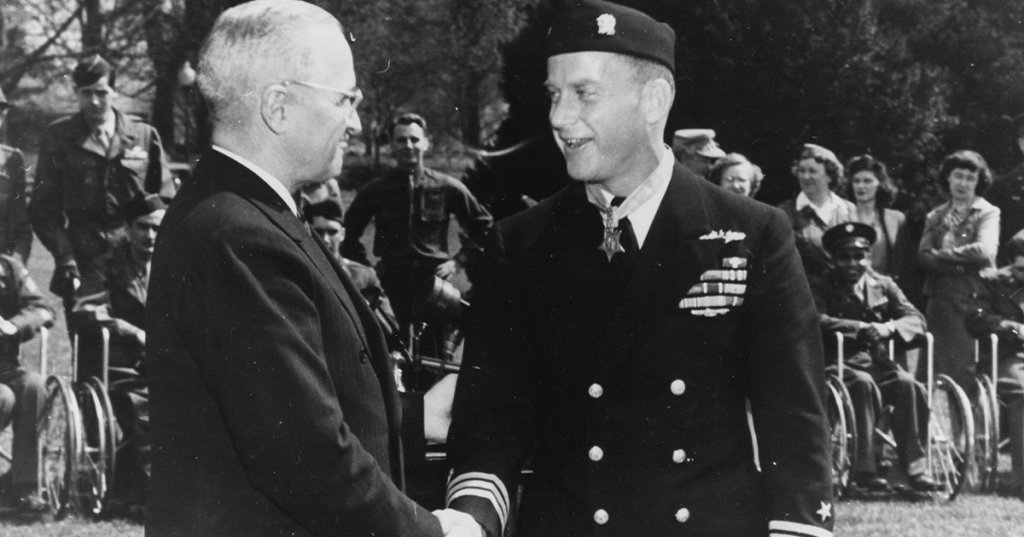
This lucky deal was taken as a sign by the crew, a lucky omen that later allowed the Wahoo to sink two Japanese freighters. Three days later, a cribbage game continued in the wardroom, where a 28-point hand was dealt. The following day, the USS Wahoo sank two more freighters and one again the next day. O’Kane decided to have his fellow officers sign the five winning cards and frame them as keepsakes.
The USS Wahoo’s patrol ended with a new record for enemy ships sunk, and a new tradition of playing cribbage underway started. O’Kane would later command the USS Tang, sinking more than 30 ships weighing more than 118,000 tons on five patrols, the most ships and highest tonnage sunk during World War II by one submarine.
Tang would be struck by her own torpedo while on patrol in 1944, while O’Kane and eight other survivors became prisoners of the Japanese. O’Kane would reitre in 1957, but the crew of the second USS Tang presented him with a new cribbage board to replace the one that was sunk in 1944.
After O’Kane died in 1994, his wife gifted his lucky cribbage board to the U.S. Navy’s Submarine Force. It has resided in the wardroom of the oldest fast-attack submarine in the United States Pacific Fleet ever since. When that submarine is decommissioned, the board is passed along to the next oldest.
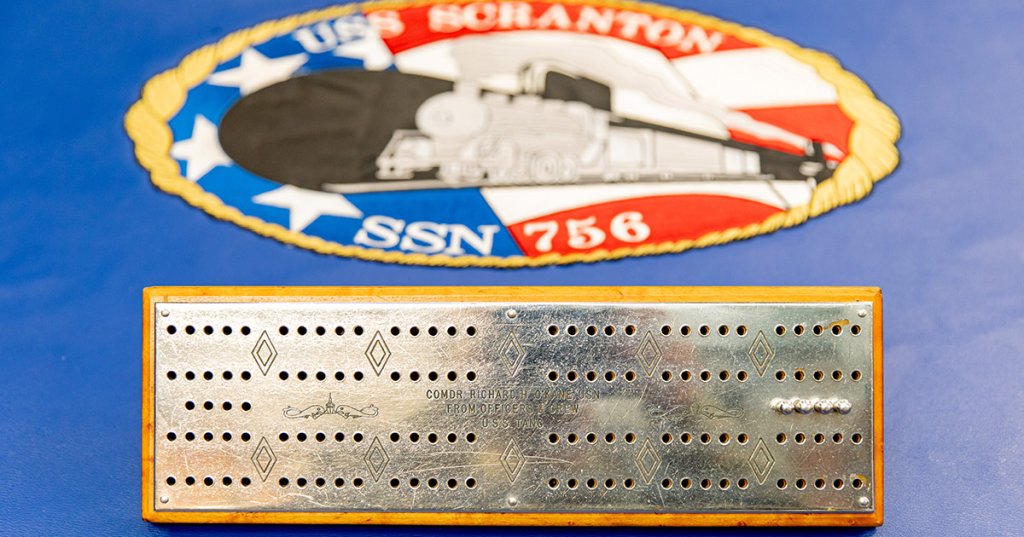
The famous cribbage board currently resides aboard the USS Scranton, a Los Angeles-class fast-attack submarine, where it’s been since March 2025. Assigned to Submarine Squadron 11 and homeported at Naval Base Point Loma in San Diego, the Scranton proudly carries this storied piece of Submarine Force tradition.
The story of Morton’s 29 helped solidify the place of cribbage in the Submarine Force and the story has added itself to the traditions and lore of Navy service and Military tales. In the silence of the deep, a cribbage board keeps tradition alive and crews connected.