
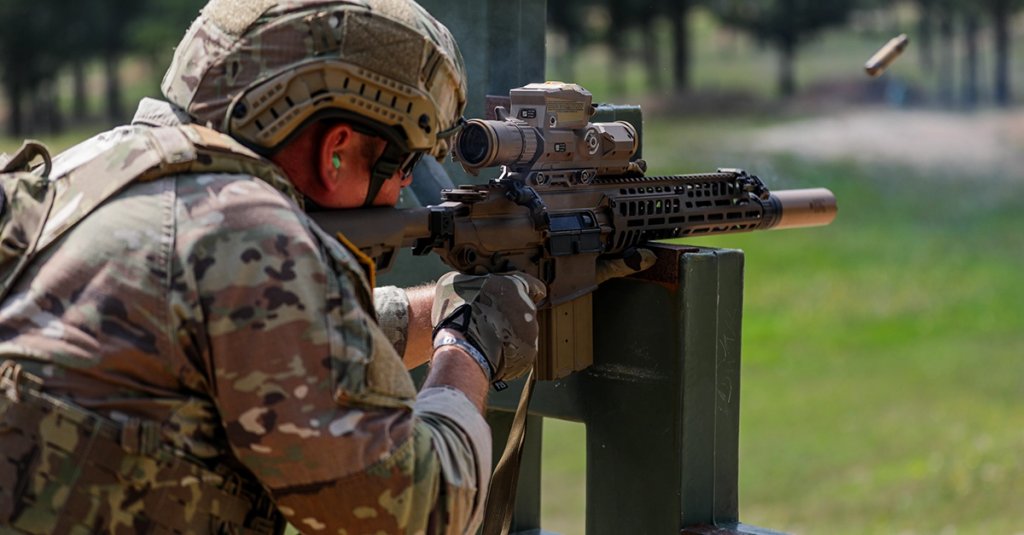
For the last 20 years, the M4 Carbine has been the Honda Civic of the U.S. military. It was lightweight, easy to maneuver, and you could find parts or ammo literally anywhere on the planet. It was the ultimate weapon for a force designed with speed and volume of fire in mind. But that era just slammed into the brick wall of time.
The Army’s new replacement, the XM7 Next Generation Squad Weapon, is not a Civic. It is a main battle tank you have to carry in your hands. If you listen to the grumbling in the barracks, the reviews aren’t great. The loudest complaints will undoubtedly come from light infantry and airborne units, communities that feel every additional pound during long marches or jumps.
The shade is understandable, but it misses the strategic point. The Army didn’t build the XM7 to make soldiers happy (we are forever Charlie Brown getting the football snatched away); they built it because the M4 stopped deleting people effectively.
The Simple Science
To understand the anger, you have to look at the numbers, because the jump from 5.56mm to the new 6.8x51mm Common Cartridge is violent. We aren’t just changing calibers; we are changing the laws of physics we operate under.
The M4 was a “poodle shooter” that allowed for rapid follow-up shots. The XM7 operates at 80,000 psi of chamber pressure. That is not a typo. That is roughly the same breech pressure as an M1 Abrams main gun. To contain that kind of explosive force without blowing up in a soldier’s face, the rifle has to be heavy.
Once you bolt on the mandatory XM157 fire control optic and the suppressor, you are hauling a 13-pound system. You are effectively asking a rifleman to clear rooms with a weapon that weighs as much as a light machine gun.
The Anxiety of the Empty Mag
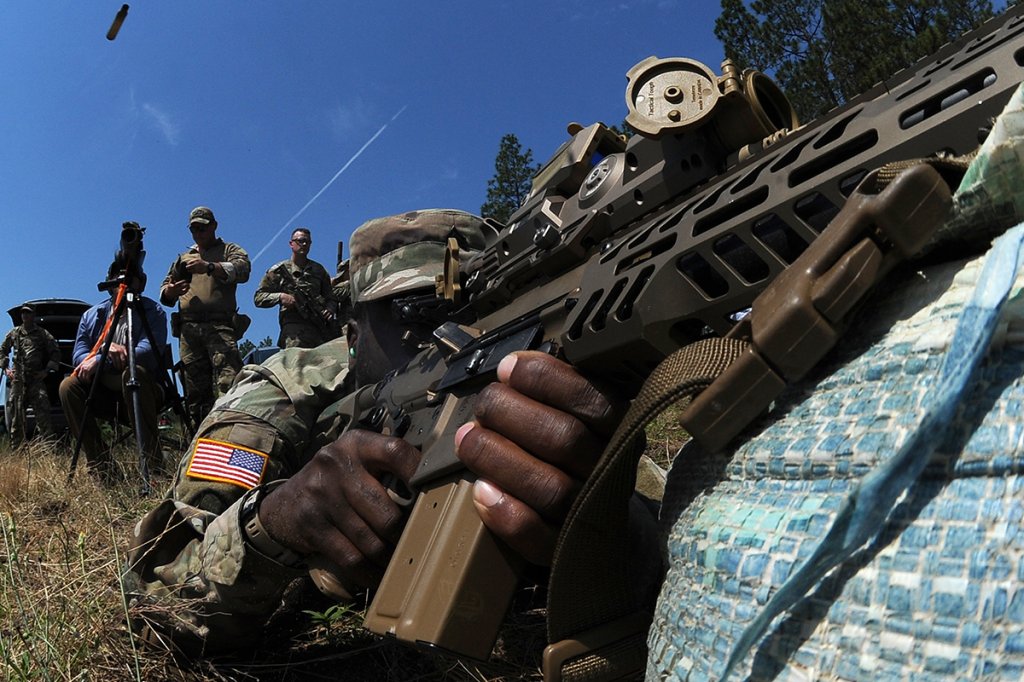
The weight is bad, but the math is worse. The combat load calculation is going to keep squad leaders up at night. The new 6.8mm rounds are physically larger than the old 5.56mm rounds. If you want to keep your kit weight manageable, you can’t carry the ideal 210 rounds anymore. You are likely dropping to 140 rounds, that’s less, a lot less.
Creating a new battlefield anxiety was probably not part of the research and development. With a 20-round mag (down from the standard 30), the concept of “suppressive fire” dies a quick death. You simply don’t have the ammo to keep heads down by volume alone. Every trigger pull is now a calculated financial decision, both in terms of recoil and ammo supply.
The Logistical Orphan
There is another issue looming over this rollout that goes beyond sore ankles. The XM7 ends the NATO standard ammo. For two generations, the greatest strength of the Western alliance was the ability to toss a magazine to a British, German, or French ally in the middle of a firefight. We all spoke the common language of 5.56mm.
That conversation is now over. The XM7 turns American infantry squads into logistical orphans. If you run dry in a firefight in Eastern Europe, you cannot borrow ammo from your allies. You are fighting with proprietary technology on a logistical island. Until NATO allies spend the billions required to catch up, U.S. forces are effectively fighting alone in terms of small arms supply.
The Cheat Code Optic
If the rifle is the villain of this story, the optic is the hero. Sig Sauer and the Army knew the recoil would be unmanageable for average shooters, so they sort of cheated. The solution is the XM157 Fire Control System built by Vortex.
It isn’t really a scope per se; it’s a ballistic computer attached to a rail. It features a laser rangefinder that calculates drop and windage instantly, effectively giving every “expert” badge holder a sniper’s brain.
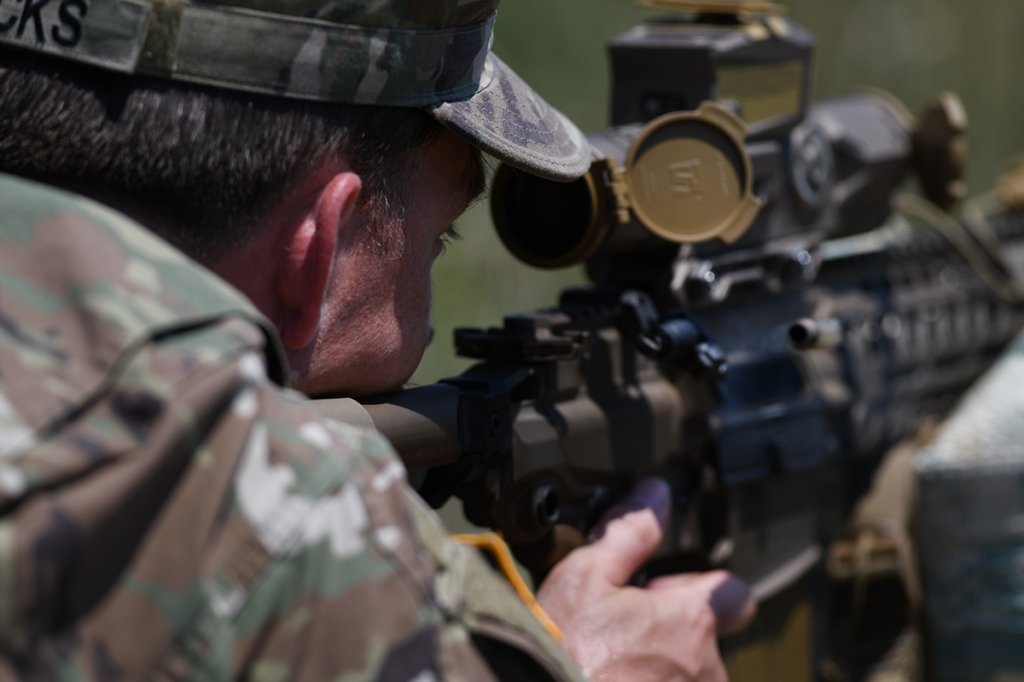
The transition is simple: the gun is miserable to carry, but it allows average shooters to score first-round hits at 600 meters. The Army is betting that you won’t care about the weight when you can drop a target before they are even close enough to shoot back.
The Test of Time: From Fallujah to Taiwan
To really understand the XM7, you have to play a game of “What If.” If we had taken this rifle to Iraq in 2004, the reviews would have been even worse. Imagine clearing the tight stairwells of Fallujah with a 13-pound, suppressed rifle that is nearly as long as a musket; this would have been a tactical nightmare. In that fight, speed was life, and the M4 ruled.
But if you took it to the Pech River Valley in Afghanistan, the story changes. Years over years spent getting pinned down by Taliban machine guns on ridges 800 meters away, well outside the effective range of the M4.
We had to wait for air support to solve the problem, or let your M2 50.cal and 240 gunners rip through precious ammo. The XM7 would have allowed a squad leader to end that fight in minutes. However, the Army is betting that the next war will look more like the mountains of Afghanistan than the bedrooms of Iraq.
The Near-Peer Reality
This brings us to the elephant in the room: China. The driving force behind the 6.8mm switch wasn’t just range; it was armor. The People’s Liberation Army (PLA) is fielding high-quality body armor that can effectively stop 5.56mm rounds.
In a potential conflict over Taiwan, hitting the target isn’t enough; you have to penetrate in quick succession. The XM7 was built to erase that advantage, ensuring that one hit on a PLA soldier actually takes them out of the fight permanently.
Even in the potential jungle, dense urban combat of a Venezuela scenario, the heavier round offers a hidden advantage known as “barrier blindness.” In the dense foliage and canopies, 5.56mm rounds are easily deflected by thick vines or even branches. The 6.8mm punches right through overgrown flowers, and that cinder block wall in the barrio, turning what used to be “cover” into a grave site.
The Bottom Line
The XM7 is a thick, scary, smoke session for a generation raised on “high speed, low drag” gear. It is heavy, loud, and will let you know if your technique is poor. Alas, the complaints about comfort ignore the reality of the modern enemy.
We are no longer fighting men wearing a keffiyeh and Crocs with socks; we are preparing for adversaries wearing body armor similar to ours, designed to eat 5.56mm rounds like it’s baby’s first BB gun.
The XM7 is miserable to live with; we all get it, but in a near-peer fight, when your men’s backs are against the wall, you can guarantee the enemy you hit with it will go down for good; then you can shoot down that damn wall for good measure.
Don’t Miss the Best of We Are The Mighty
• What troops really think of the Army’s new XM7 rifle
• Why the Army doesn’t need the Sig Sauer M7 rifle
• These are 10 of the longest-serving weapons in the US combat arsenal



Sponsored Content