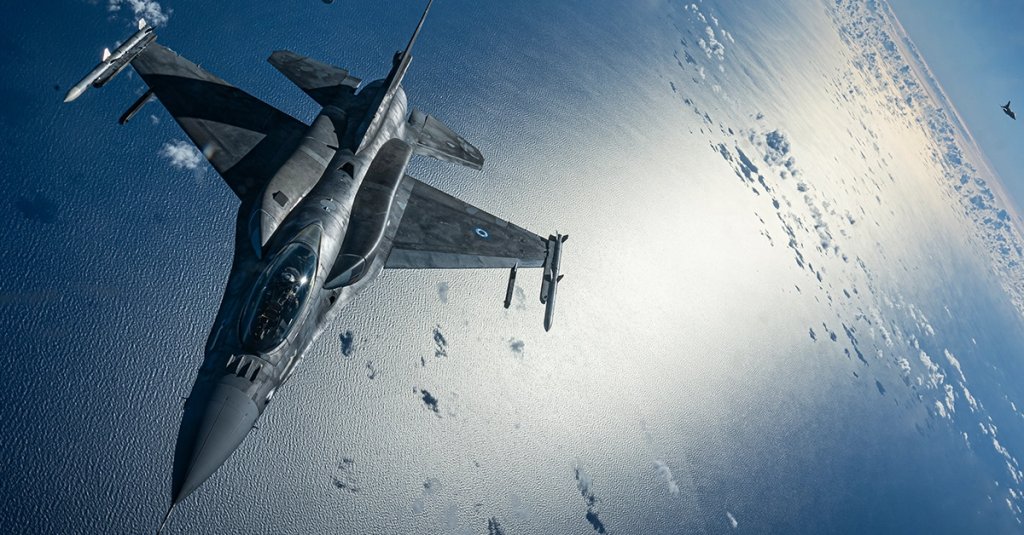
The F-16 Fighting Falcon was originally designed to be a daytime air superiority fighter, but over the decades of its service life, it has evolved into an all-weather, multi-role attack platform. The first F-16 rolled off the manufacturing line in 1976, and ultimately more than 4,500 aircraft followed it.
During the design of the F-16, some elements of other aircraft, including the F-15 and F-111, were incorporated to enhance it and “reduce its size, purchase price, maintenance costs, and weight,” according to the Air Force. The result was a lighter aircraft (without compromising its strength) that is capable of flying more than 500 miles.
Related: Artificial Intelligence just flew an F-16 Fighting Falcon for the US military
The Fighting Falcon (aka the “Viper” in aggressor squadron circles) remains technologically advanced and lethal throughout its full range of mission areas, which is remarkable considering the legendary Col. John Boyd and his “fighter mafia” first conceived of the airplane in the late 1960s.
Here are four design features that were years ahead of their time when they first hit the fleet and remain so today:
1. Fly-by-Wire Flight Controls and Side-Stick Controller
Unlike every airplane built before it, the F-16 was designed to be aerodynamically unstable until it reaches supersonic airspeeds.
As a result, there is no mechanical linkage between the stick and the moving parts of the airplane. A computer interface is required to interpret pilot inputs and move the flight controls accordingly, technology known as “fly by wire.” Because the F-16 is designed for high-G loading, the stick is mounted on the right side of the cockpit instead of in the center to make it easier on the pilot’s right arm. It barely moves; full throw is only one-eighth of an inch.
2. Bubble Canopy
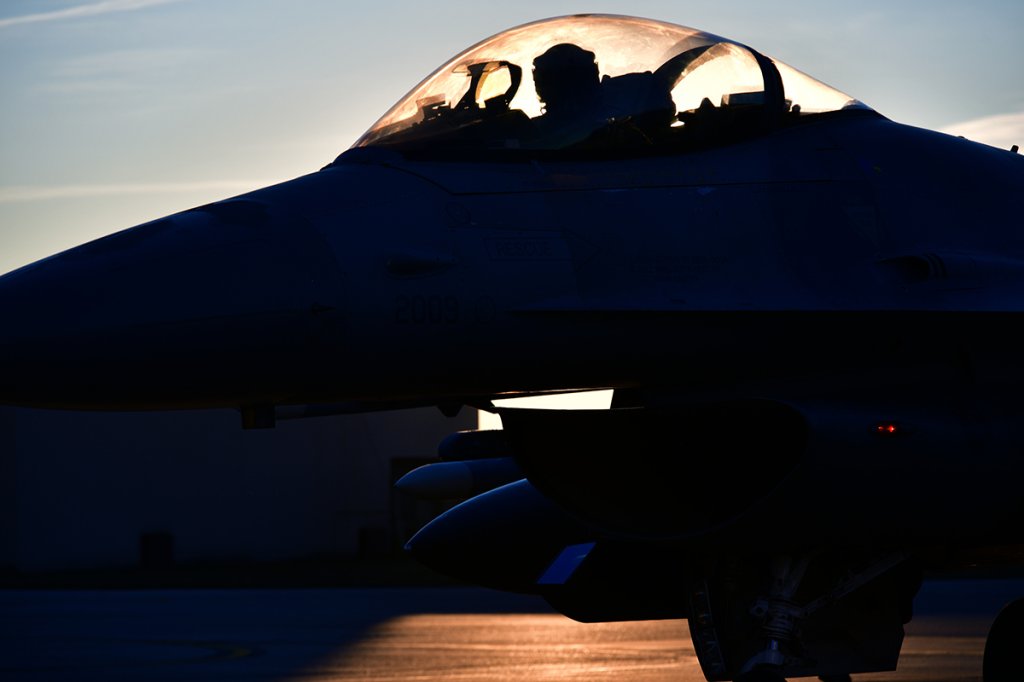
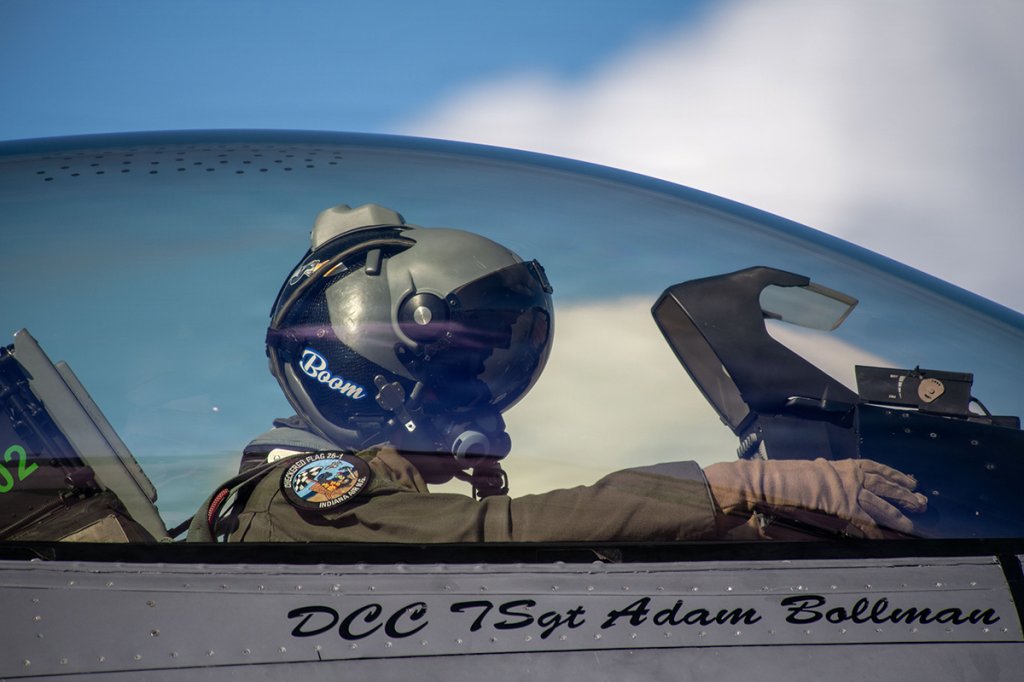
The pilot sits up very high relative to the canopy rail in the F-16, giving him superior visibility in all quadrants, including at 6 o’clock. The bubble canopy is designed to enhance this feature, and new pilots talk about feeling like they’re going to fall out of the airplane at first.
Unlike other fighters, there is no canopy bow forward of the pilot, so the forward view is completely unobstructed. The net result is a fighter that gives pilots an advantage in the dogfighting arena where “lost sight means lost fight.”
3. Reclined Ejection Seat
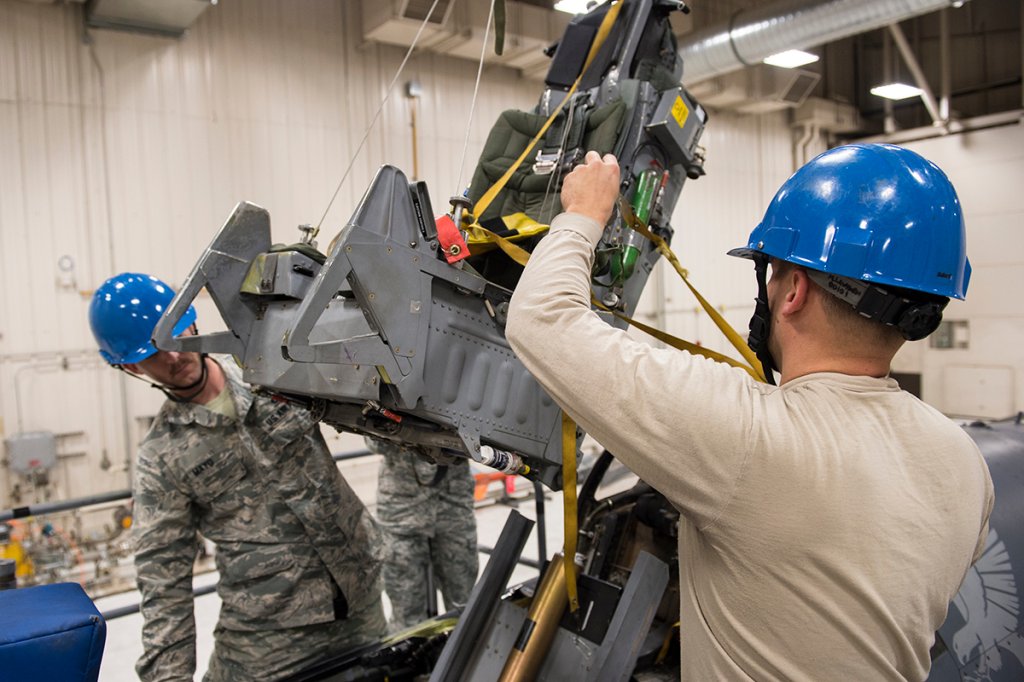
Because the F-16 is designed to pull 9 Gs or more (compared to 6.5 for most other American fighters) the ejection seat is tilted 30 degrees back (compared to around 12 degrees on other ejection seat aircraft) for superior G tolerance by the pilot.
Pilots sit almost like they are riding a reclining bicycle. Their knees are up high, which makes for a very comfortable ride while killing MiGs and other bad guys.
4. Multi-Function Displays
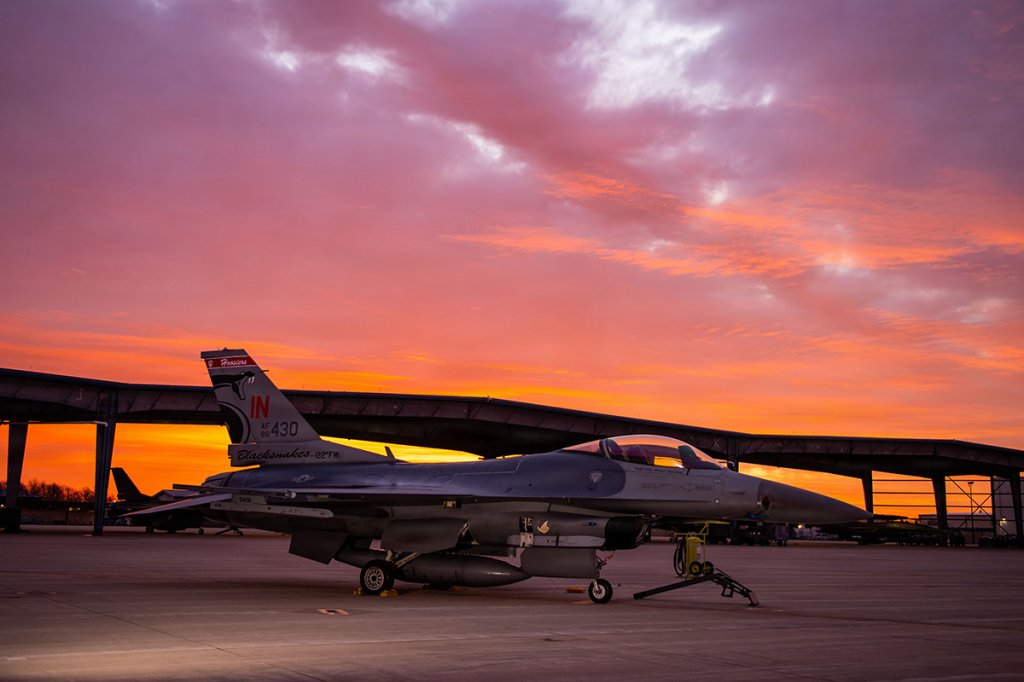
The F-16 was one of the first military aircraft with a “glass” cockpit instead of the legacy “steam gauges,” which allows a pilot to tailor his displays for a particular mission as well as personal preference. Multi-function displays also allow software upgrades with very little trouble, which has helped to keep the Fighting Falcon relevant and in the fight for decades.
A fourth-generation fighter, the F-16 Fighting Falcon is constantly innovating, but what it has achieved already is pretty impressive. It has flown missions in 29 countries, been on more than 13 million sorties and is approaching 20 million flight hours, according to its manufacturer, Lockheed Martin.
Those numbers will keep on growing, as will likely the F-16 Fighting Falcon’s reputation in the military aviation community.