For decades, Russia’s military has lived in the West’s imagination as a looming, mechanized nightmare: the kind that comes with gray paint, ominous marching music, and enough tanks to remind anyone of World War II’s Eastern Front. And to be fair, Moscow has (allegedly) built some genuinely formidable hardware.
But the problem with trying to flex all the time is that history has a way of kicking the legs out from under the propaganda, because alongside the successes sits a glorious junk drawer of big, expensive, and public disasters.
Related: Russia’s only aircraft carrier is a floating hell for the crew
There are some projects that the Kremlin would love us to forget. They were ambitious projects that promised to change warfare and instead became cautionary tales. From a tank that couldn’t handle basic physics to high-profile platforms plagued by breakdowns, fires, delays, and public embarrassment.
These are the moments Russia would very much prefer you didn’t bring up at parties.
1. Tsar Tank
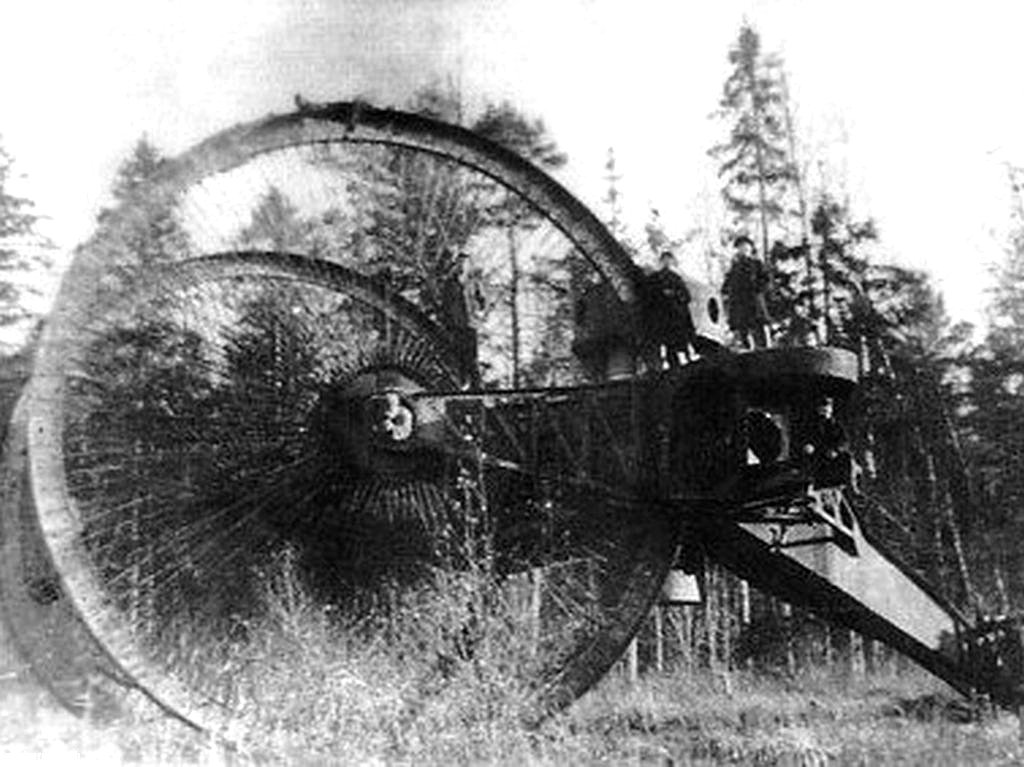
The Tsar Tank has achieved almost mythical status since the unusual vehicle was first tested in 1914. Due to weight miscalculations, its tricycle design often caused the rear wheel to get stuck, and its lack of armor left its operators exposed to artillery fire.
Ask any tanker, and they’ll tell you there’s nothing worse than being in a scary-looking, attention-grabbing vehicle on the battlefield, then getting stuck without the armor that “armor” is supposed to promise.
Actually, you don’t need to ask a tanker; you can ask anyone.
But the Tsar Tank wasn’t Russia’s only tank failure.
2. The T-80 Tank
The Soviet Union’s T-80 was the first production tank to be equipped with a gas turbine engine, introduced in 1976. It was basically the USSR’s attempt to put a Lamborghini engine in a Ford Pinto and pretend it was a revolution in armored warfare.
On paper, its gas-turbine engine gave it great acceleration and cold-weather performance; in reality, it guzzled fuel so badly that it had the range of an elderly man on oxygen and demanded a logistics tail the Soviet system just wasn’t built to support. It was expensive, maintenance-heavy, and unforgiving in the hands of short-service conscripts.
Then came the First Chechen War, where poor tactics met bad design. Like other Soviet tanks, the T-80 stored ammunition in the crew compartment without blow-off panels, so when it was hit, the whole turret had a nasty habit of rocketing into low orbit, which did not impress the guys inside. The experience was so bad that Russian commanders openly swore off using T-80s in cities afterward, a brutal verdict on what was supposed to be one of the USSR’s premier tanks.

3. The Raduga Air-to-Surface Missile
The Raduga Kh-22 was supposed to be the carrier-killer nightmare that kept NATO admirals awake at night. What the Russians got was a precision weapon about as precise as lobbing a refrigerator off a cliff.
Designed in the 1960s, it needed big, vulnerable bombers to lug it around, which was no problem for the USSR, actually. But it also took forever to prep, and was Its guidance and reliability were so sketchy that in peacetime it had a habit of going off course or failing outright, which is not what you want from a weapon carrying a massive conventional or nuclear warhead at Mach 3 during a nuclear war with the world’s only other superpower.
By the time Russia started firing “modernized” versions at land targets in Ukraine, the Raduga was so inaccurate it was basically an extremely fast, extremely deadly war crime just waiting to happen. It was (and still is) a Cold War relic pretending to be a precision weapon in a world that moved on without it.
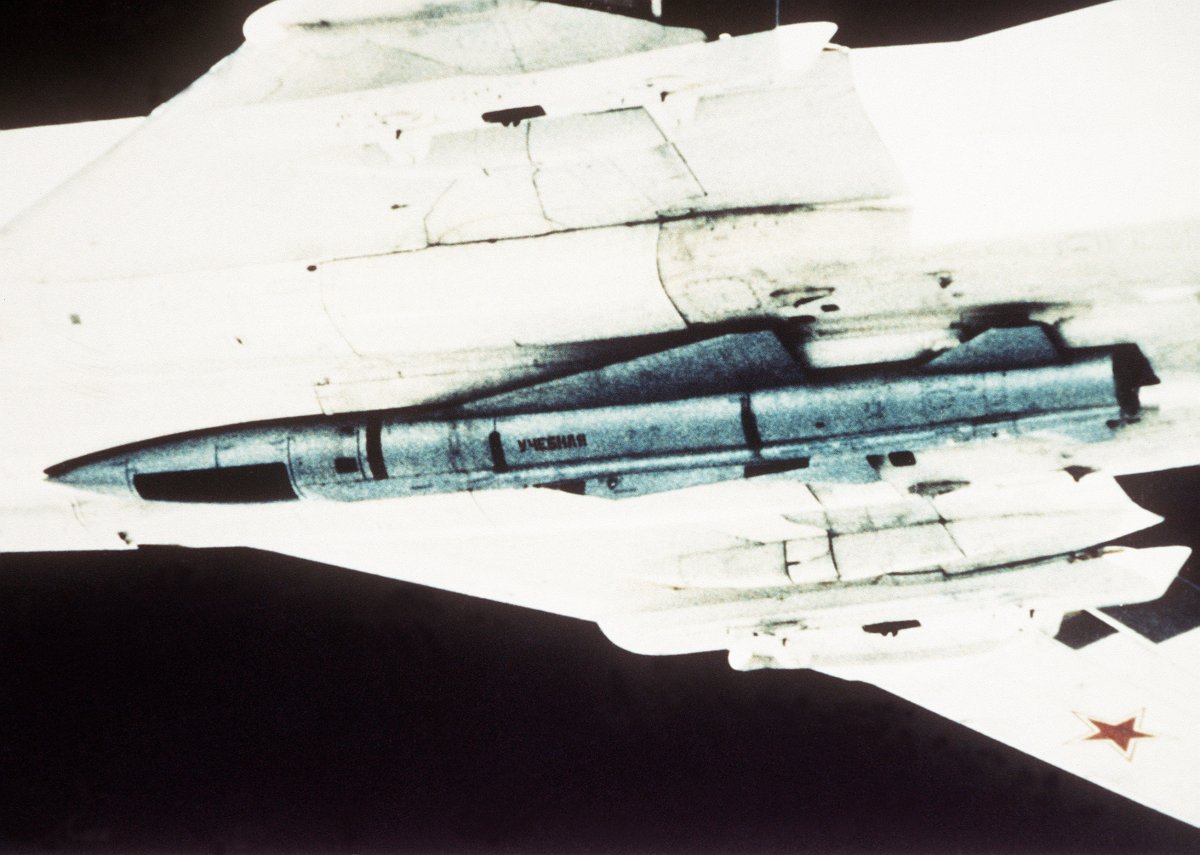
What it wasn’t designed to do was hit friendly territory, but that’s exactly what happened in 2002 when one of the rockets misfired during Russian military exercises and struck the Atyrau region of western Kazakhstan to the great embarrassment of Russian Defense Minister Sergei Ivanov.
4. MiG 1.44
The MiG 1.44 was supposed to be Russia’s answer to the F-22, but it never got close to being a real frontline fighter, but turned out more likea high school science fair project. Conceived in the 1980s as a “fifth-generation” design, it was dragged down by chronic funding shortages, constant redesigns, and the total economic chaos of the post-Soviet 1990s.
By the time the lone prototype finally flew in 2000, it literally failed to be anything it was supposed to be: The airframe relied on draggy canards and a dirty overall shape that made genuine stealth basically impossible, and its supposedly “advanced” avionics were actually obsolete. It didn’t enter serial production, didn’t equip any combat units, and ended up as more of a publicity prop than a warplane.
In the end, the MiG-1.44 didn’t just fail to rival the F-22; it highlighted how far behind Russia’s advanced fighter programs had fallen.

Thirty years later, the status of the MiG 1.44 remains something of a mystery after it performed its first and only flight in February 2000. The only known prototype was put in long-term storage in the hangar of Gromov Flight Research Institute in 2013.
5. The Admiral Kuznetzov
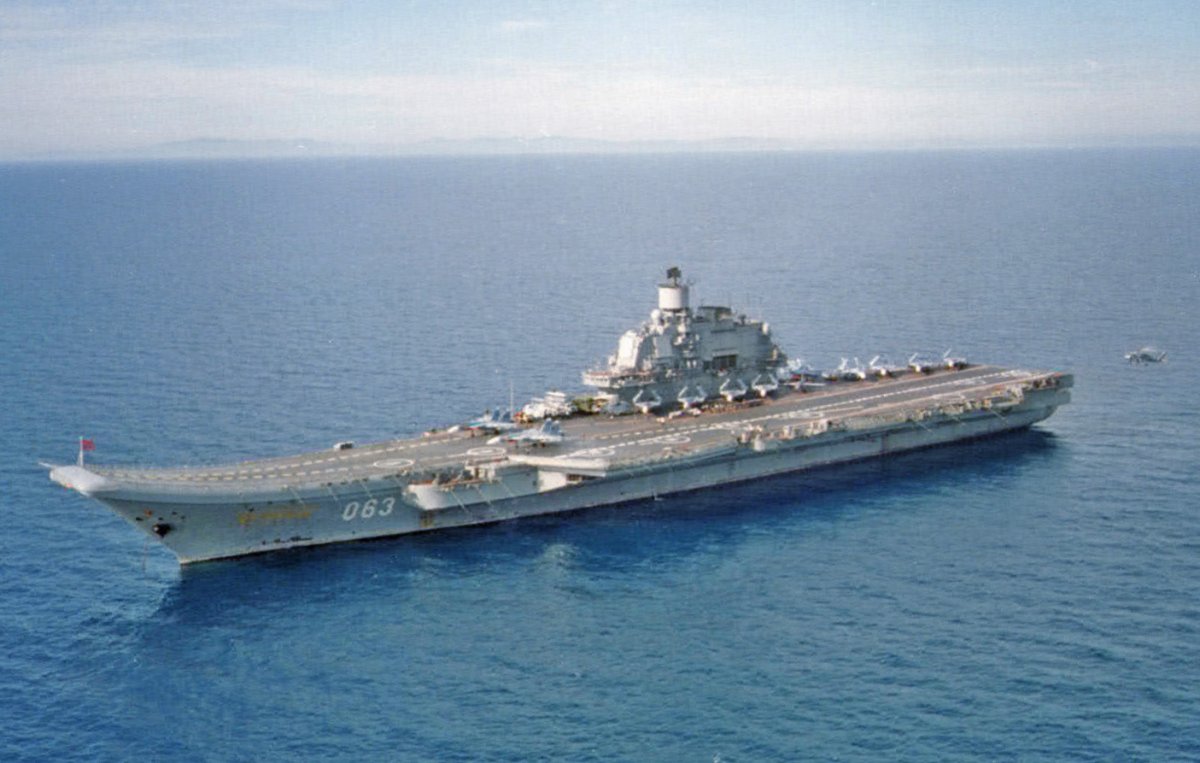
Some things never change, like Russia’s poor performance at sea hasn’t changed since 1905. The Russian Navy’s lone carrier has spent most of its life looking less like a flagship and more like a. The Admiral Kuznetsov has been plagued by unreliable propulsion that leaves it in need of an ocean-going tug just to leave port. This is like driving a jalopy and having your wife follow you to work with a tow truck.
The ship’s big combat debut off the coast of Syria in 2016–2017 was embarrassing rather than impressive, with two modern fighters lost to botched carrier landings in just a matter of weeks. They were more of a danger to themselves than to ISIS. Back home, its “modernization” has been a saga of mishaps: the massive PD-50 dry dock sank under it, punching a hole in the flight deck, and a later shipyard fire killed workers and caused serious damage.
For a ship meant to project power and prestige, Kuznetsov has mostly projected the image of a navy struggling to keep its only carrier operational at all.
7. The Sineva Missile
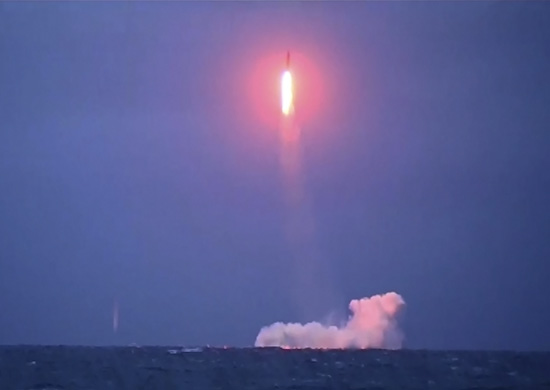
The R-29RMU2 Sineva was marketed as a symbol of Russia’s modern, reliable nuclear deterrent, but its record doesn’t exactly scream “confidence.” It’s an upgraded version of a 1970s liquid-fueled SLBM, which means it inherits all the joys of handling toxic, corrosive propellants on cramped submarines, along with the maintenance burden that comes with it.
While Russian officials like to boast about extreme-range test shots, the missile remains tied to aging Delta IV–class subs, limiting its future and making it more of a stopgap than a true next-generation system. Compared with newer solid-fuel designs, Sineva is more complex to support, more finicky to operate, and increasingly out of step with where sea-based nuclear forces have gone, turning what was supposed to be a showpiece into a reminder that Moscow is still stretching legacy tech rather than fully replacing it.
8. Russia’s “Bison” Amphibious Ship
In 2013, shocked sunbathers on Russia’s Baltic coast were confronted with a giant military hovercraft bearing down on them. A spokesperson from Russia’s navy said the beach was supposed to have been cleared for the exercise. It was Russia’s Bison military hovercraft, which looked fierce on paper, but in practice was a loud, time consuming beast that perfectly showcased the downside of going huge for the sake of huge.
The Project 1232.2 “Zubr” class, known as “Bison,” was the world’s largest hovercraft, designed to haul tanks, troops, and vehicles straight onto a hostile shore. The problem was that its sheer size and four gas-turbine engines made it incredibly noisy, fuel-thirsty, and hard to hide, which is not ideal for something meant to close with a defended beach. Its complex skirt system and engines demanded constant care, it was expensive to run, and it depended on specialized infrastructure that only a few bases could really support.
On top of that, as precision weapons and cheap drones improved, the idea of sending a giant, hot, easily tracked target skimming loudly over the water toward modern coastal defenses started to look less like bold amphibious warfare and more like putting all your eggs in one big target of a basket.

Russian navy military hovercraft ploughs into crowded beach – Russian epic FAIL
9. The Tundra Early-Warning System
Russia’s Tundra early warning system was supposed to be the sleek, modern space layer that rescued Moscow from its creaky old Oko satellites, but it’s spent most of its life as an understrength, behind-schedule mess. The plan called for a constellation of around ten Tundra satellites plus geostationary assets; Russia managed to launch only a handful, never completed the architecture, and then ran into sanctions, production problems, and budget strain that stalled further deployments.
By the end of 2025, outside analysts were warning that as few as one Tundra satellite might still be functioning, which is not so much a “constellation” as a lonely blip in orbit. Meanwhile, the broader Russian early warning network is still heavily dependent on aging ground-based radars with known coverage gaps and a history of reliability concerns, exactly what a robust space layer is meant to backstop.
Put together, Tundra looks less like a confident 21st-century upgrade and more like a half-finished patch job bolted onto a Cold War system that never really got the love it needed.
Technical problems with its original launch suffered a series of delays forcing the country to largely rely on its outdated existing satellites. In the first years after its launch two satellites, which were operational for only a few hours each day anyway, finally went offline, leaving Russia unable to detect missiles from space.
10. The T-14 Armata Tank
The T-14 Armata was sold as Russia’s wonder tank, but in practice it’s a spectacularly sh*tty program that never lived up to its own press. Moscow once talked about buying thousands; instead, there’s no proper assembly line, the handful of vehicles that exist were basically hand-built, and sanctions crippled the plan to tool up real production. Even the Russian government eventually admitted the obvious: Deputy Prime Minister Yuri Borisov said outright that the T-14 is too expensive to mass-produce, so the army will stick with upgraded T-72s and T-90s.
When a full-scale land war arrived in Ukraine, the “super tank” either didn’t show up at all or appeared only in tiny numbers before being pulled back, with British intelligence and Russian industry boss Sergey Chemezov both suggesting it’s too costly and too vulnerable to risk losing in real combat. At this point, the T-14 looks less like the future of Russian armor and more like an overhyped, overbudget prototype the Kremlin is scared to actually use. Not the vibe you want to project to an enemy like the Ukrainians.