Czech-born composer Julius Fucik was known for his love of military marches. Also known as the “Bohemian Sousa,” Fucik was raised in formal conservatory study, serious instrumental training, and the day-to-day rigor of military band life, which is basically musical boot camp with better hats. Not many Americans are going to be familiar with him (unless “late 19th-century Austro-Hungarian waltz composers” started trending on TikTok recently), but every one of them would instantly recognize at least one of his works.
And that work is “Entry of the Gladiators.”
Go ahead and listen to that song. It’s important that you know which one we’re talking about for the rest of this piece. Trust us. You know it. You just don’t think it could ever be called “Entry of the Gladiators.” You think of it as “The Circus Song” or some kind of clown music. Julius Fucik did not.

This one is not on Julius Fucik, to be clear. He was probably one of the most skilled and capable composers of his day. At the Prague Conservatory, he studied bassoon with the famed pedagogue Ludwig Milde and composition with Antonín Dvořák, while also taking violin lessons with Antonín Bennewitz and working on percussion. So he came up fluent in melody, harmony, and the nuts-and-bolts of rhythm section discipline.
If that wasn’t enough of a pedigree, he also served in the Austro-Hungarian regimental band, where “training” meant learning to write so wind and brass parts could work outdoors, rehearsing with drill sergeant precision, and conducting music built to synchronize crowds, parades, and morale. He started as a military musician in 1891 and later became a bandmaster.
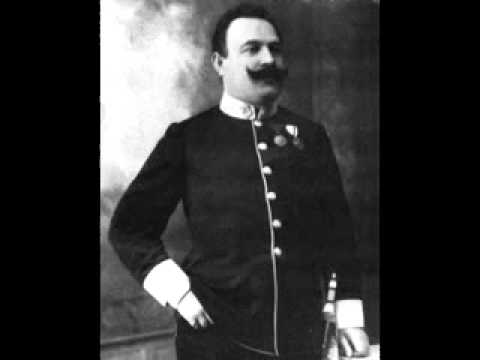
As we mentioned, Fucik was a Sousa fan who loved composing marches, and he pretty much served in the Austrian military just to do that. By 1897, he had joined the Austro-Hungarian army twice in order to play music. It was that same year, while in the 86th Infantry Regiment in Sarajevo, that he composed what was initially called “Grande Marche Chromatique,” but later changed to “Einzug der Gladiatoren,” or “Entrance of the Gladiators.” Becuase he apparently had a thing for Romans.
No matter what his intentions were for the future of his music may have been, no one really gets to dictate what history does with… well, anything.
More than 120 years later, the cultural meaning of the song has sure changed. No longer associated with martial might or sword duels in the blood and sand of the Colosseum, the song is now more easily teamed up with clowns, lions, and everything else in a modern three-ring circus.

Fucik was a serious composer who studied at a legendary music conservatory and even served under the baton of another musical legend, Josef Wagner, the “Austrian March King.” He played in the military bands for decades, performing for tens of thousands of people, and even started his own orchestra and publishing company. So how did his theme, intended as gladiator entrance music on a WWE level, become a joke?
It became clown bait when Canadian Louis-Philippe Laurendeau rearranged the song for a smaller band in 1910. Laurendeau reworked it for American wind groups, and publisher Carl Fischer put it out in 1901 under the snappier title “Thunder and Blazes,” as if “Entry of the Gladiators” was somehow a tad understated. It soon became the best-known clown theme in the world (and has pretty much stayed there).

Thunder And Blazes
This was the same time when circuses like PT Barnum’s and the Ringling Brothers’ were becoming a strong cultural phenomenon in the United States, according to the website “The Sound and the Foley,” which also does a pretty great job of explaining the science and musicality behind that kind of spread.
Though no one knows exactly when or how the song first became inextricably linked with the circus, or which circus used it first, the two are now culturally linked. Both men, Laurendeau and Fucik, died in 1916, never knowing their work would become synonymous with the circus rather than as battle anthems.