Every day, it seems something new and “unprecedented” is taking place, leaving the modern-day news seemingly stranger than fiction. With weapons – and the destruction of those weapons – as part of that, it comes as no surprise with mentions of war and violence. Whether it’s internal battles among countries, the formation and dissolution of new alliances, or news of violence and unrest, information spreads faster than ever.
While war and arguing are nothing new, neither is the idea of another world war; it’s a topic that has been portrayed on the silver screen for decades. From writers predicting the future of conflict, to directors allowing it to play out on screen, it’s a tale that’s been told over and over again. In fact, the mentions date back to the early 1900s, with World War III being named specifically as early as the ‘30s.
However, almost all have agreed that the third world installment will be nuclear.
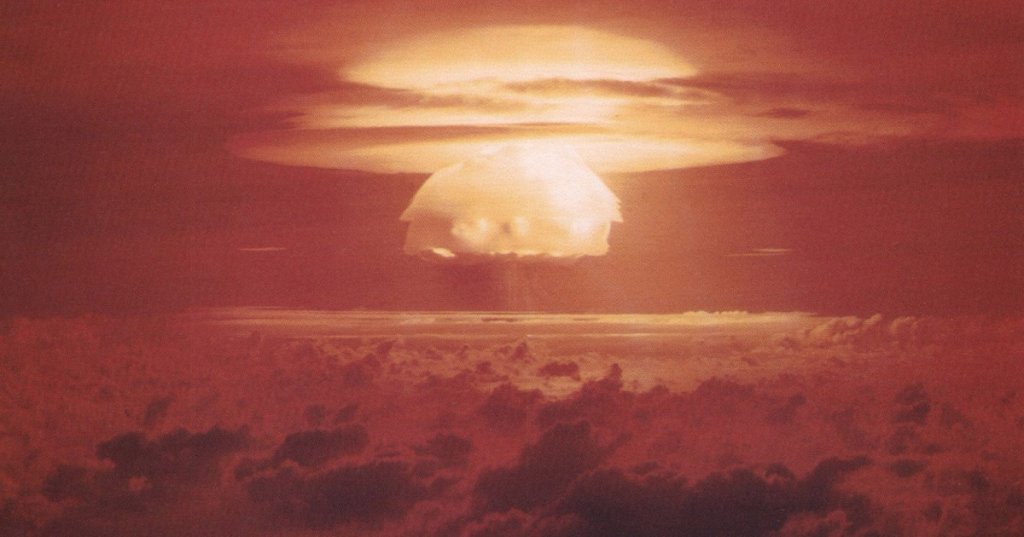
What’s interesting, of course, is that creative minds believed there would be a third world war before there was ever a second one. This is likely due to the focus on futuristic events, creating new inventions, and a fascination of destructive bombs, which were far more crude at the time.
Take a look at pop culture’s past efforts to predict a World War III and how each went down.
1907: In a novel titled “The War in the Air,” author H.G. Wells outlined a massive world conflict that prompted the loss of life as we know it. In the book, those who survived the violence were left to rebuild their lives among the wreckage.
Wells penned another book seven years later called “The World Set Free.” This time around, nuclear weapons take out huge portions of Europe. Set in the year 1956, it’s said that the new, destruction-heavy weapons were conceived by Wells’ research of scientific data, which was aware of radioactive decay at the time, including its long-lasting collapse.
While research on nuclear elements was done at the time, it wasn’t deployed as a weapon until 1945, during World War II.
1930s: In 1939, a cartoon strip told the story of multiple world wars. Artist James Thurber’s “The Last Flower” continued Wells’ notion of survivors living in a world of ruin. In Thurber’s timeline, WWXII was the one to take out civilization. The cartoon was an anti-war statement and is considered to be a predecessor to the graphic novel.
1940s: Enter actual nuclear weapons. Theories about future world wars were unleashed in pop culture. Known as the “atomic age,” artists around the world began incorporating mass destruction into their art, whether for a political statement or a creative endeavor. This also branched into music, as seen in songs like “When They Found the Atomic Power” by Hawkshaw Hawkins or “Atomic Cocktail” by Slim Gaillard. However, few, if any, mentions of another world war came into popularity at this time.

Atomic Cocktail
1950s: Sometimes called “The Age of Anxiety,” this is the decade when the idea of World War III comes to life. The U.S. actively feared another world war, fueled by communism and the Soviet Union testing its own atomic bomb. ” In 1951, an issue of Collier’s Magazine outlined a detailed account of WWIII with an article called, “Preview of the War We Do Not Want.”
In their scenario, the third world war began as the Soviets invaded Yugoslavia, with the U.S. retaliating with three months of bombing, followed by the Soviets upping the ante by bombing key U.S. cities, including New York, Washington D.C., Philadelphia, and Detroit. But it wasn’t just a scenario playing out in print; movies followed the same outline. With science fiction on the rise, key themes included science, weapons, revolt, and the destruction of cities, many of which featured large, multi-country conflicts.
In 1951’s “The Day the Earth Stood Still,” humans were threatened by aliens: they had to achieve peace or be destroyed. The 1953 movie “The War of the Worlds” has a similar theme, except this time, the humans choose to fight the aliens. In 1955’s “This Island Earth” and 1956’s “Forbidden Planet,” alien planets explode, with the notion that Earth could be next. The 1957 book “Niourk” details New York City after World War III ended.
Two years later, “Alas, Babylon” did the same thing, albeit in Florida. That book was adapted for the small screen in 1950. Then, 1959’s “The World, the Flesh, and the Devil” follows characters after a nuclear war, during which most of Earth and its population have been destroyed. The same year, “On the Beach” outlined characters waiting for nuclear fallout after bombs had been exchanged.
Although it was released in 1949, George Orwell’s “1984” did not gain prominence until the 1950s. It followed the world after an atomic war in which the world was divided into three political superpowers.
1960s: In the early 1960s, three separate movies explored the concept of accidental nuclear war and its subsequent dangers. It included “Dr. Strangelove,” “Fail-Safe,” and “Seven Days in May.”

Fail-Safe (1964) – Trailer
Outspoken against war, musician Bob Dylan mentioned a third world war three times in his album, “The Freewheelin’ Bob Dylan.” A 1968 book (and later movie) is set in a version of Earth that was rattled by nuclear war due to “World War Terminus.”
On “Star Trek: The Original Series,” Spock mentions WWIII on Earth when he estimates 36 million people died in the episode “Bread and Circuses.” This would have been roughly 10.6% of the U.S. population.
1970s: The 1970s began with a bang when the movie “Colossus” was released. It explored the potential use of artificial intelligence in preventing World War III during the Cold War. Then, in 1972, “Dr. Who and the Daleks” features time travelers discussing a nuclear war between world superpowers. World War III is mentioned again in 1977, when a missile silo and secret government documents are the main plot points in “Twilight’s Last Gleaming.”

Twilight's Last Gleaming (1977) TV Spot HD Reconstruction
1980s: The next decade didn’t need fictional world war references, as the general public thought a nuclear exchange was actually on the horizon. In 1982, a quarter-million people stood in West Germany to protest nuclear bombs.
A larger gathering was held later that year in New York, calling for a nuclear freeze. Of course, real life also impacted entertainment of the time, including pictures, movies, books, and TV, bringing back themes that were mainstays in the 1950s. Songs like “99 Luftballoons” by Nena discuss an accidental nuclear holocaust, while bands The Varukers and Discharge both sang about nuclear war and the loss of Earth as we know it.
Meanwhile, as film and TV technology advanced, so did the depth to which a potential World War III could be depicted. “Red Dawn,” from 1984, depicted a communist invasion sparked by a poor wheat harvest. A 1983 film from the James Bond series features the namesake character preventing World War III.
“Spies Like Us” is another film featuring the Soviet Union, where WWIII is started with an accidental launch of a missile. Meanwhile, “The Day After,” “Testament,” and “Threads” were all TV-made movies that included a World War III theme, all against the Soviet Union. “The Day After” was viewed in more than 40 countries and set viewing records that stood for more than 60 years. By 1982, NBC created a miniseries named “World War III,” in which the war begins when the Soviets attempt to cut off the Alaska oil pipeline.
The Day After 1983 – Trailer
In many of these, bombs are revealed in color and key details, revealing more to the viewer about the destruction they can cause. These films subsequently caused a massive anti-war and anti-nuclear following.
Mystery writer Tom Clancy began his novels with undertones of a third world war in 1984’s “The Hunt for Red October.” In “Red Storm Rising,” the war begins with Middle Eastern oil being threatened by the Soviets and Islamist terrorist attacks.
Comics, which had gained considerable popularity by then, also regularly covered World War III. Examples include X-Men’s “Uncanny,” “Batman: The Dark Knight Returns,” “V for Vendetta,” “Strontium Dog: Portrait of a Mutant,” and “Batman: The Killing Joke.” Meanwhile, “The Simpsons” has mentioned WWIII multiple times during its multi-decade run.
“Star Trek” again mentioned WWIII at this point, this time raising the death count to 600 million, in a war that took place between 2026 and 2053. Finally, the decade ends with a movie, “Rock & Rule,” in which a new species is created after a third world war.
1990s: In 1992, a third world war is mentioned in the Canadian movie “Buried on Sunday.” This came at a time when the Cold War had ended and public fear about a potential nuclear war had abated. American films still explored global destruction, even without nuclear weapons, in movies like 1998’s “Armageddon” and “Deep Impact” and then in “Blast from the Past” in 1999.
“Star Trek: First Contact” sticks to its World War III lore in 1996, again referencing the 600 million death count. However, this time they discuss major cities and central governments that were destroyed. “Green Mars” also mentions WWIII, outlining huge companies taking over the world four decades after the war; this one depicts a 2061 war with 100 million lost.
The video game “Fallout” is based on a World War III theme, focusing on the fallout from the main world powers.

Atomic Bombings Opening Scene | Fallout (2024)
2000s: After the attacks of September 11, 2001, global tensions became heightened more than ever. This time, however, the idea of war surrounded terrorism rather than communism. World War III became a central theme in video games like “Tom Clancy’s EndWar,” “Battlefield: Bad Company,” “Frontlines: Fuel of War,” “Star Ocean: The Last Hope,” and “Call of Duty: Modern Warfare 1-4.” However, some of these games still feature Russia and/or communism as the main enemy.
“World in Conflict” and “Turning Point: Fall of Liberty” transport us back in time and to an alternate reality, where world wars were fought stateside, and the U.S. lost, rather than creating World War III.
“Fail Safe” was remade in 2000 but retained its 1960s time period. Two years later, the book “Metro 2033” features characters in the aftermath of a nuclear war.
Later in the 2000s, video games set in WWIII continued, such as “APOX,” “Homefront,” more “Metro” versions, and “Ace Combat: Assault Horizon.” Meanwhile, “X-Men First Class” from 2011 depicts WWIII taking place. “Red Dawn” (another remake), “The Show Must Go On” also depict World War III. TV show “Salvation” also gets in on the theme, as does “Sing Goddess The Wrath of the Fonz,” a novel.
By 2020, the way people communicate in pop culture had undergone significant changes. This meant that when a U.S. airstrike killed the Iranian Quds Force commander, it didn’t wait for a book or movie; it went straight to the internet. Memes began flooding online about World War III and a subsequent draft. A potential nuclear war became a trending topic on then-Twitter, while the movie “Tenet” was themed around avoiding a new world war.
“Star Trek” again mentions its WWIII, this time in the series “Strange New Worlds.” Finally, a 2022 survey by the American Psychological Association revealed that 7 out of 10 Americans believed the U.S. was heading toward a third world war.

STAR TREK : Strange New Worlds | Captain Pike Inspires a Civilization.
While WWIII has yet to become a reality, there’s no denying that pop culture has been brought into existence time and time again. From nuclear wars to multiple world wars, many times over, it’s a common theme in science fiction and beyond. Only time will tell if and when a version turns out to be true.