If you listen closely during the first week of January, you can hear the collective snapping of tendons across America. We are entering a specific season, one that gives rise to the “New Year Resolutioner.” A time when perfectly rational citizens suddenly decide to assault their own bodies with the strategic planning of a private on his first pay weekend. It is a mass casualty event of pulled hamstrings and bruised egos.
But for two specific groups, the future recruit staring down a ship date and the veteran realizing their “freedom weight” has become a puffy liability, this isn’t about resolutions. It is about readiness. The issue is that both groups usually walk into the gym (a fluorescent-lit purgatory of bad advice and TikTokery), then immediately fail. They train for aesthetics when they should be training for violence or longevity.
Also Read: The M60 ‘Pig’ caught plenty of hate, but the love was real
The human body doesn’t care if you are shipping out to Basic Training or just trying to get up from a chair in your 40s. It only understands progressive overload. The XM7 rifle is heavy because physics demands it; similarly, your fitness standard must be heavy because reality demands it. Whether you are building up for war or trying to keep the wheels from falling off after service, the hardware is the same. The mission is the only variable.
The Foundation: The Ruck March
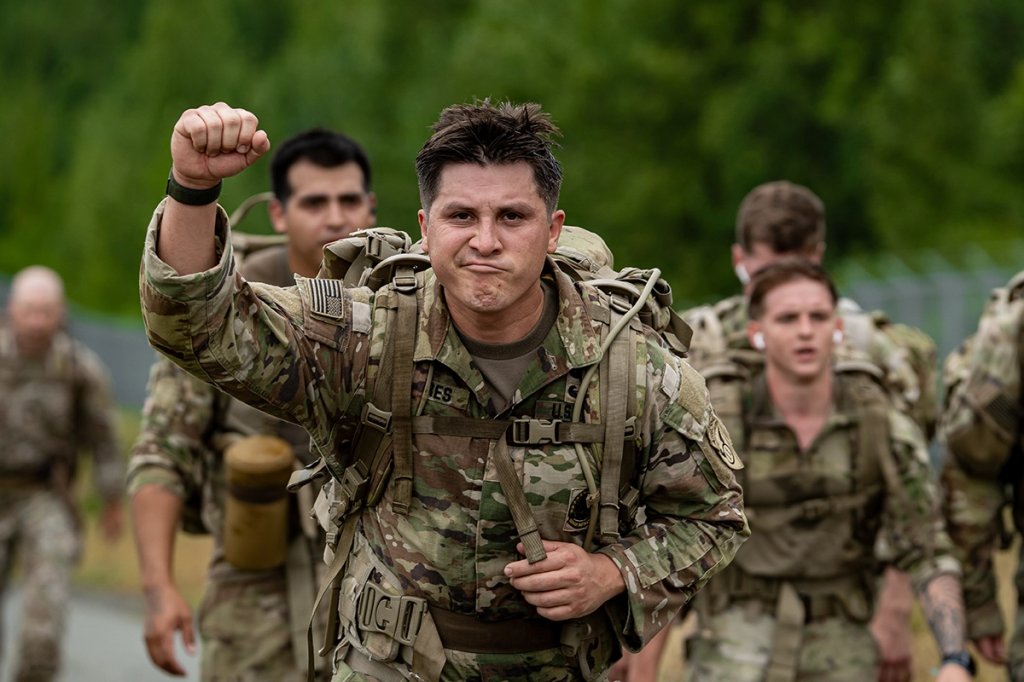
If you want to spot a rookie, look for the guy trying to bench press 185 pounds on day one. If you want to spot a pro, look for the guy walking with a backpack (Look up Milo of Croton… you’re welcome).
Rucking is the bastard child of the fitness world; it isn’t fancy by any stretch of the imagination, it doesn’t look cool on Instagram fitness, and it is downright miserable, but in a fantastic way. It is also the single most effective tool for building a body that won’t quit.
For The Recruit: Conditioning is Crucial
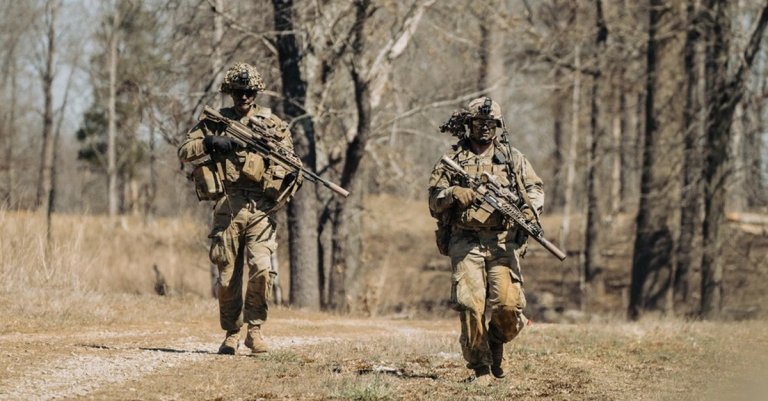
If you are entertaining the idea of entering any service, the ruck is going to be your weapon of choice for this mission. Most recruits think the enemy is the Drill Sergeant; the real enemy is the stress fractures, sprained ankles, and torn-up feet. You are about to put your skeletal structure under a load it was not designed for. It has been conditioned to carry beer, ramen, and occasionally your drunk friend to their door (hey, that’s being a good friend AND a good start to your fitness journey).
If you don’t condition your legs and hips now, you are going to walk in as a recruit and walk out with a medical discharge. Your goal is the 15-minute mile standard. Do not run. Running with a ruck is a great way to destroy your knees before you finish watching “Rocky II” for the fifth time.
You’ll need to develop a “funky” shuffle (in the Army it’s called the Airborne shuffle), a step-off that feels unnaturally fast but sustainable. You are hardening your feet and your traps so that when you finally put on that issued MOLLE gear, it doesn’t feel like a form of punishment; it just feels like a Tuesday. A wise person once said, “It isn’t the mountains ahead that wear you out, but the pebble in your shoe.”
For The Veteran: The Cardio Life Hack
For the veteran, the ruck is the answer to the question: “How do I do cardio without my knees sounding like a satchel of gravel?” You spent years destroying your joints for the government; there is no need to continue that destruction for free. Rucking lets you burn calories at a rate comparable to jogging, but with none of the jogging (now, that’s magical!).
There is no impact. It is pure, low-heart-rate “Zone 2” work. Load up 25-35 pounds, hell, throw a couple of bricks in a sturdy bag, and walk for 20 minutes. It fixes the posture you ruined sitting at a desk, then a couch, then a recliner, and burns the “tactical muffin top” without making you hate life.
Respect Your Redline
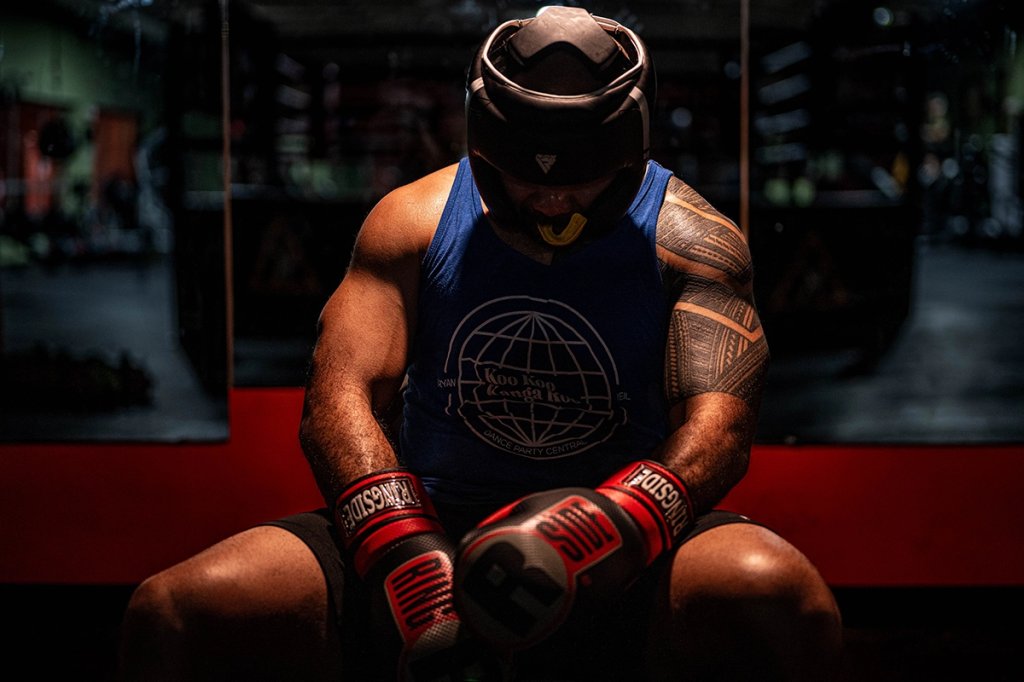
The heart is a pump, not an emoji. You cannot will it to perform; you have to engineer it. The mistake most people make is running “junk miles,” that middle-ground jog that is too slow to build speed and too fast to build endurance.
For The Recruit: Performance
You are training for a test that is designed to make some people vomit; the military loves to operate in the “anxiety zone.” You need to get comfortable with feeling like you have a fever. Your prescription is intervals. You don’t need a 5k; you need 400-meter and 800-meter repeats at a pace that feels like a panic attack. You are trying to increase your VO2 max, simply the maximum amount of oxygen your body can use during your training. You need to be the Honda Civic that thinks it’s a Ferrari. If you aren’t gasping for air at the end of the session, you are just exercising, not training.
For The Veteran: The Talk Test
Do not try to run like you are 23. You most likely aren’t. If you try to hit those recruit intervals, you will likely blow out your o-ring (or an Achilles). Your new standard is the “Talk Test.” If you cannot hold a conversation while you are jogging, you are going too fast. It feels agonizingly slow, like driving a tank in a school zone, but this is how you rebuild an aerobic base. You want to be efficient, not explosive.
Gravity is the Only Equipment

We have convinced ourselves that we need $50,000 machines to get strong. This is a lie sold by “Big Fitness.” The Army has spent decades proving that the only equipment you need to become lethal is the floor and your happy place.
For The Recruit: The “No-Rep” Nightmare
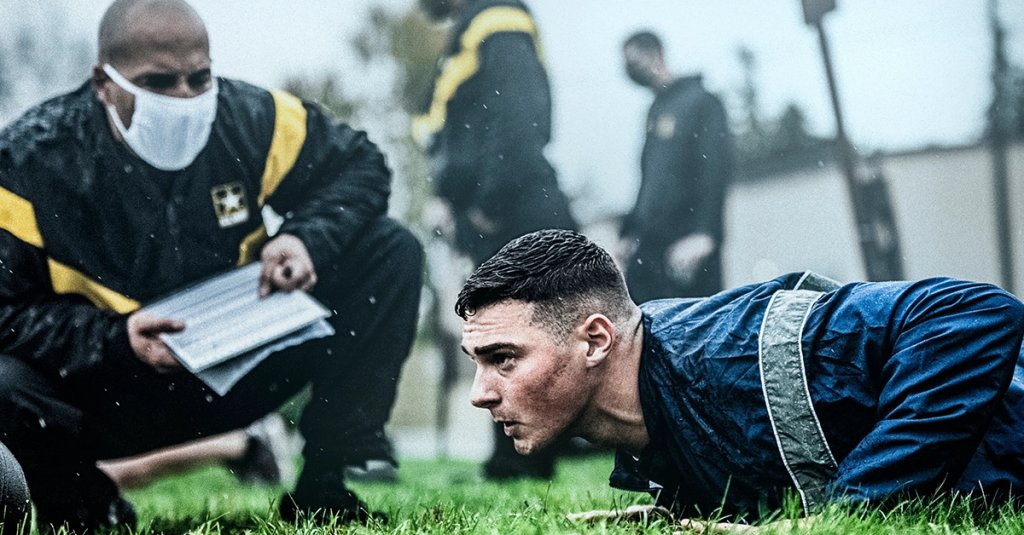
You think you know how to do a push-up. You don’t. At least, not the way a grader wants to see it done these days. The Army’s shift to the Hand-Release Push-up (HRP) was… a choice. It forces a dead stop at the bottom, thus eliminating momentum and those half-reppers who would brag about their high score.
You need to practice this specifically, fully disengaging your hands from the dirt every single rep. Why? Because in Basic, you are just one error in judgment away from getting your soul mounted on a wall. Muscle memory is key. If you train sloppily, you will fail loudly.
For The Veteran: The Anti-Aging Answer
For the washed-up warrior, the Hand-Release Push-up is actually a form of therapy. Years of slouching over keyboards have rolled your shoulders forward. The HRP forces you to retract the shoulder blades, opening up the chest, and strengthening the upper back. Do them slowly. Controlled. You aren’t trying to max the score; you are trying to reverse the aging process.
However, this mission is not over until you’ve conducted recovery. Most people treat the end of a workout like a scientific protocol; they immediately drop the weights on the floor, chug a protein shake, and then sit in a car for twenty minutes before they are out of the anabolic window (spoiler: that is not a thing).
If you do not complete your recovery now, you are effectively borrowing mobility for tomorrow at a high interest rate.
The first step is the dreaded foam roller. Do not mistake this for a massage; it is self-inflicted myofascial release, a polite term for smooshing the weakness out of your soft tissues. This is about survival, though.

Your IT bands and quads are going to feel like tight fishing line after rucking. You need to roll them out until your eyes water… and that is not hyperbole. If it doesn’t hurt, you aren’t doing it right. You are manually breaking up the adhesions that turn flexible muscle into jerky. It’s your new ibuprofen. That “bad knee” often isn’t a bad knee; it is a quad muscle so tight it is pulling your patella into your throat. Two minutes on that freaking roller is worth the hours of relief.
Once the tissue is mashed into submission, you must lengthen it; static stretching will assist. Do not bounce. Bouncing is for basketballs. You are looking for long, static holds of at least thirty seconds. Focus on the hinge points, the hips, and the thoracic spine. Recruits need to open their hips to survive the sprint-drag-carry; veterans need to open their thoracic spine because they have spent the last decade hunching over smartphones like a depressed sewer dweller.
Finally, listen to your body. If a specific joint feels like it is grinding, that is a warning light on the dashboard. Never ignore a warning sign. Ice is your friend, but movement is your savior. The goal of all this, from the rucking to the rolling, is not just to pass a test or pour yourself into pants that don’t have an elastic waistband; It is to ensure that you are fully mission-capable for the next day. Because in the military, and in life, the only easy day was yesterday.