Some weapons win firefights, and then some weapons decide whether a firefight is even allowed to happen.
In Iraq and Afghanistan, the MK19 Mod 3 automatic grenade launcher lived firmly in the second category. It didn’t need to be fired often to do its job. This beast’s presence, mounted high, visible, unapologetic, was more than enough to ease anxiety. Its presence rewrote behavior, redrew boundaries, and simplified decisions in wars defined by the fog.
This was not about precision or finesse. It was about controlling the battlespace in environments where space was a problem.
A GWOT problem that begged for the MK19
The Global War on Terror wasn’t fought against formations that wanted to meet you head-on. It was fought against enemies who had to understand cover, distance, and deniability. Mud-brick compounds, alleyways, grape rows, palm groves, rooftop firing points, and the ever-present problem of “Hey! Is that guy a farmer or a spotter?”
Related: Why the M240B earned cult status with GWOT veterans
This is where the Mk-19 started to gain its fanbase. Firing 40mm high-explosive grenades at a steady, adjustable rate, it occupied a strange middle ground between machine guns and indirect fire. No need to be an expert marksman here; all you really needed was a good line of sight and permission.
Mounted on Humvees, MRAPs, towers, and combat outposts, the MK19 became a solution to one of the GWOT’s most persistent tactical headaches: how do you control an area without constantly escalating to air or artillery?
The answer was often sitting on a pintle mount, staring back at the world, begging you to mount it and get to thumping.
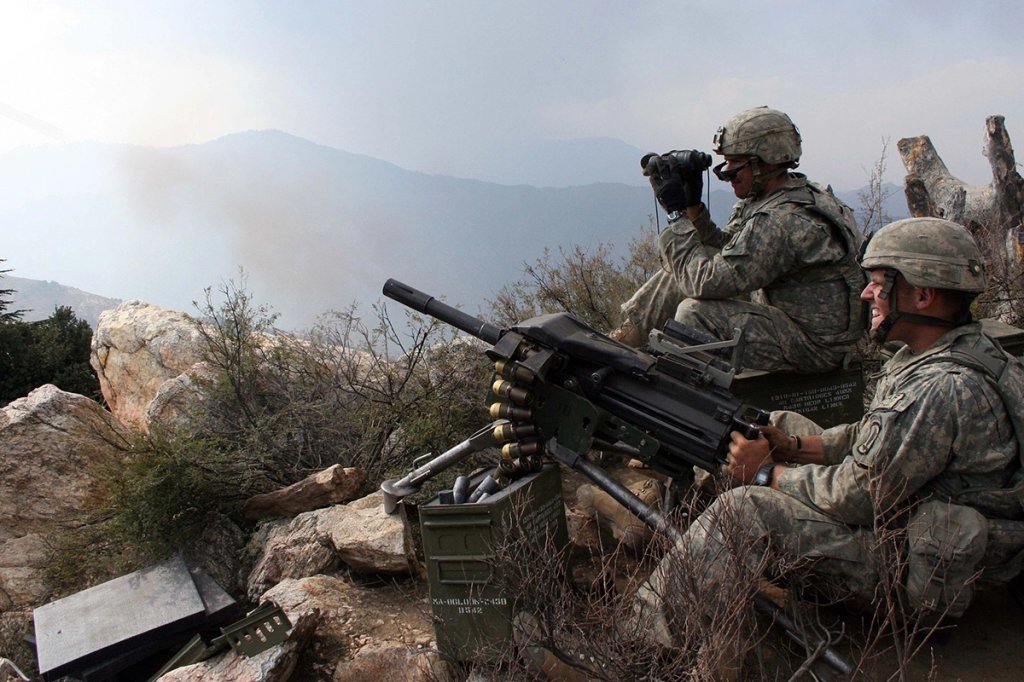
The Psychology of Dominance
Rifle fire can be ambiguous sometimes. Even machine-gun fire can be misinterpreted in the chaos of a combat environment. The Mk-19, on the other hand, was unmistakable once it got going.
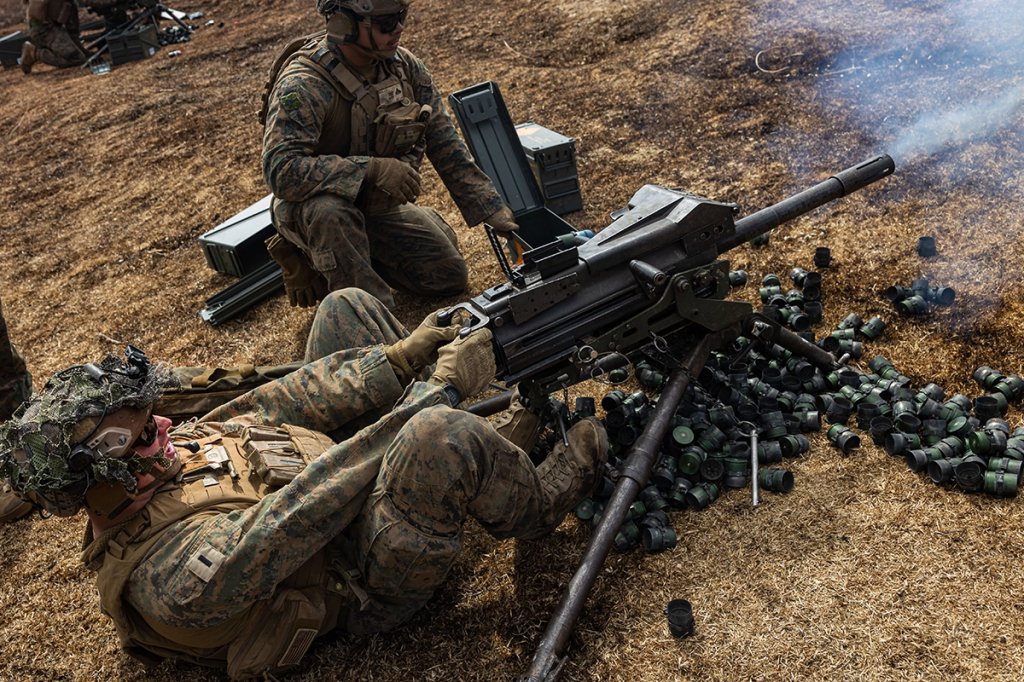
The weapon announced itself through peacocking. The beefy barrel, the bulky receiver, the linked grenades feeding into the tray, it was immediately clear that this was not a system meant for warning shots or half-assing. Everyone within view understood the rules had changed, and most cover was now a liability.
This mattered in the GWOT more than most conflicts. Deterrence wasn’t hypothetical. It was immediate and local. Crowds dispersed faster. Vehicles reconsidered checkpoints. Fighters who might probe a perimeter with AK-47 fire thought twice when they knew a belt-fed grenade launcher was pointed in their general direction.
In many cases, the Mk-19’s greatest contribution was the rounds it never fired.
Towers, Turrets, and the Enforcement of Distance
Unlike the weapons you carried, the MK was where you decided to live at the moment. It became part of the terrain, always quietly sitting in the background. On towers and COPs, it defined engagement rules. On convoys, it turned vulnerable stretches of road, where distant ambushes would cause nightmares for our logistics, into manageable spaces.
We called these attacks from afar “spooky action at a distance”; we quickly found out that Albert Einstein coined this phrase back in 1935; we then found out that his estate is quite litigious. Anywho, the Mk-19 excelled at enforcing that distance regardless.
If a group was caught bunching up, they got whacked. It made lingering and loitering into extreme sports. It forced anyone with bad intentions to stay farther away than they intended to be. In fights where proximity favored the enemy, area denial mattered more than brute force.
This wasn’t about chasing targets. It was about shaping their available movements. You didn’t need to eliminate a threat if you could make the environment inhospitable to hostile intentions.
In that role, this system was tantalizingly effective.
Overkill in Theory, Restraint in Practice
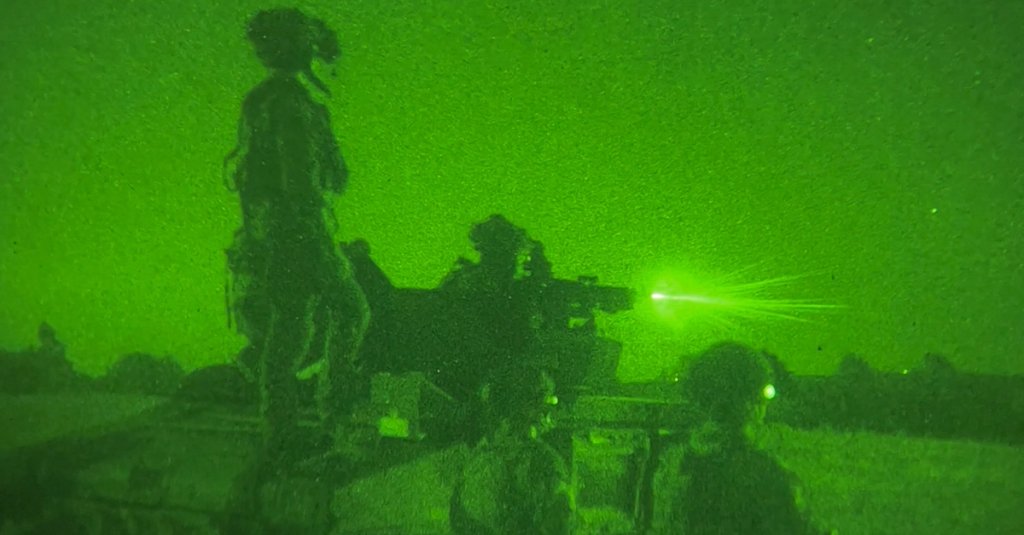
From the outside, the Mk-19 looks like overkill, and the service members would say it’s, well, overkill, so what? A 40mm grenade does not leave much room for nuance; it was not designed for subtlety. That reality made its employment a constant exercise in judgment and discipline.
Rules of engagement mattered. Backstops mattered. So did the fact that much of the fighting took place among civilian populations. Leaders and gunners alike have to weigh risk versus reward, or, as we used to say, “Is the juice worth the squeeze?” Bringing it out of standby status was a signal, not just to the enemy, but to everyone around you.
This tension is part of the weapon’s legacy in the War on Terror. It was gloriously devastating, yes, but it was also carefully controlled far more often than people assume. Many gunners spent entire deployments behind an Mk-19 without ever pulling the trigger in anger; accidentally, however, is a story for another time.
Restraint doesn’t diminish the weapon’s impact in any way. It reinforces it; this builds trust.
Why Troops Trusted It

Despite its weight, its chonk, and its reputation for eating belts and gnawing on them, the MK19 inspired confidence. It wasn’t fast or subtle, but it was honest, if not mercurial. When it worked, though, it worked exactly as expected.
For troops on towers or in vehicles, the MK19 represented something rare in the GWOT: a safety net. If things went sideways, there was an option that didn’t rely on radios, airspace, or near-perfect coordination. You could see the problem. You could address it directly.
That psychological comfort mattered. It reduced the feeling of exposure. It reminded people that they weren’t limited to rifle fire and luck.
A Less Elegant Weapon Made for a Messier Time
Now, the Mk-19 didn’t make anyone a Terminator; it was more the Cheech and Chong of weapon systems when you think about it. It emerged during the Cold War but came into its own in conflicts that refused to follow the traditional rules of war.
Its success in the GWOT wasn’t accidental, either. It was the result of a weapon that accepted chaos as absolute and focused on controlling what it could, remaining calm, going with the flow.
It didn’t care about body armor. It didn’t care about bravado. It cared about space, timing, and keeping things chill. In wars defined by ambiguity, that simplicity was powerful. As the U.S. military continues to modernize, the Mk-19 remains in service not because it is elegant, but because it is very useful. There are still situations where nothing else fills the same niche as effectively.
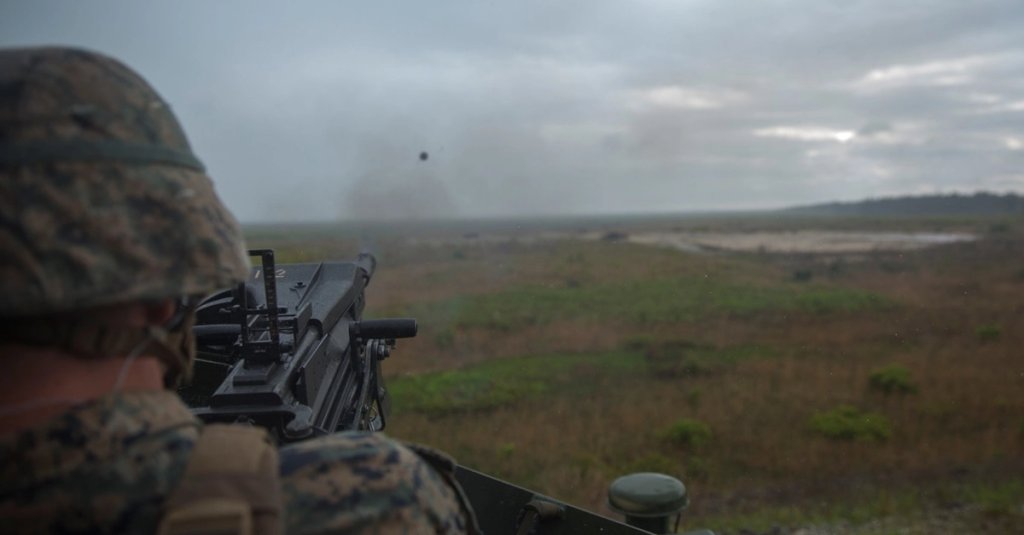
It’ll never have the cultural mythos of a rifle or evoke the love of an automatic weapon. Its legacy is quieter, more existential. It lived above the fight, watching, waiting, deciding outcomes before they happened.
In the GWOT, it didn’t have to end engagements; we had the 240B and M2 .50-cal’s for that. What it did exceedingly well was prevent them. It reminded everyone within its line of sight that some spaces were no longer available; it was time to go on and git.
That may not be glamorous, but it is profoundly important. And it’s why, long after the wars that defined it fade into history, the MK19 will still be mounted, loaded, and trusted, doing exactly what it was always meant to do.